

Leather workshops
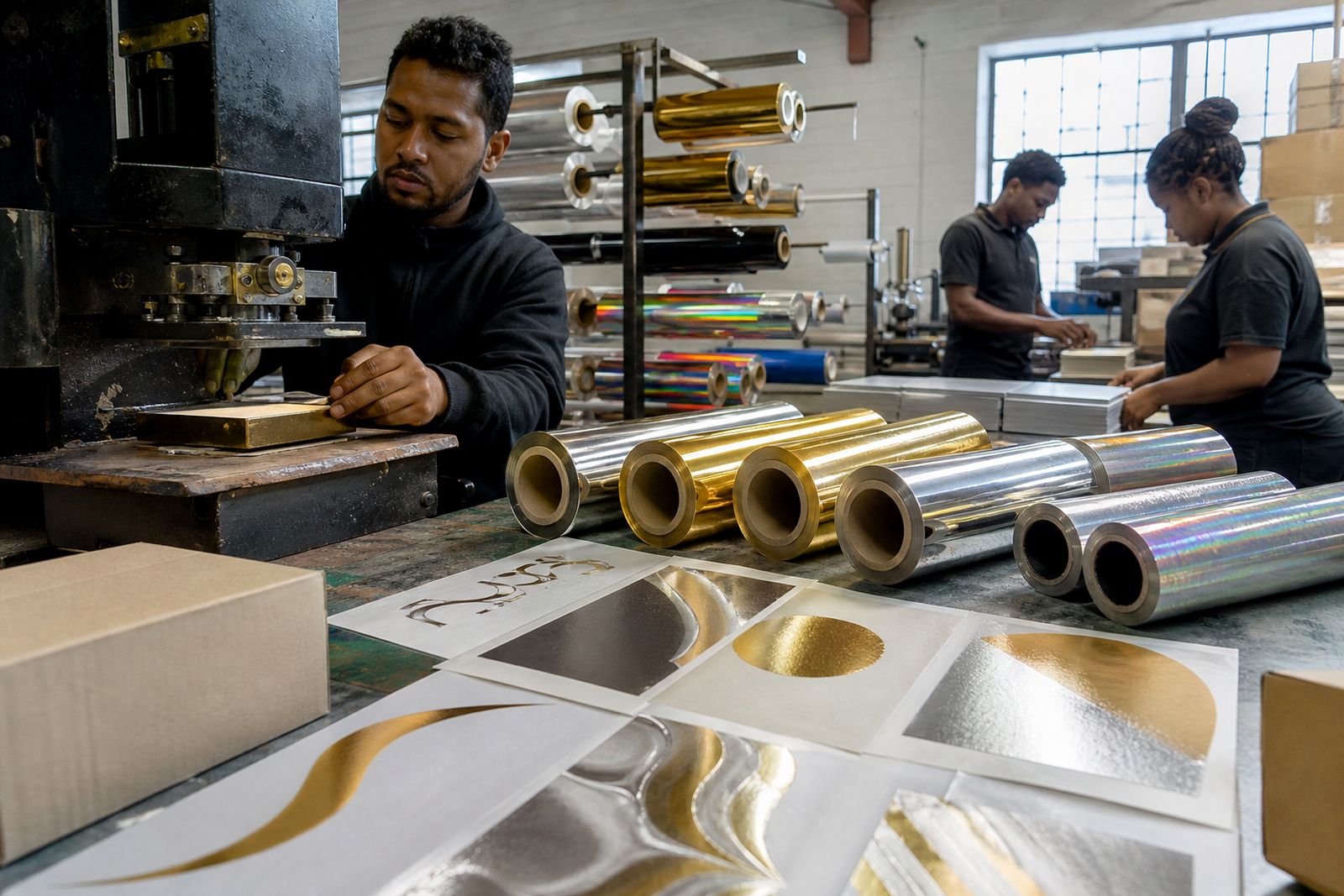
Choose the right foil for leather goods, then test it on your own substrate before production. We help with samples, slit widths and press-side setup.
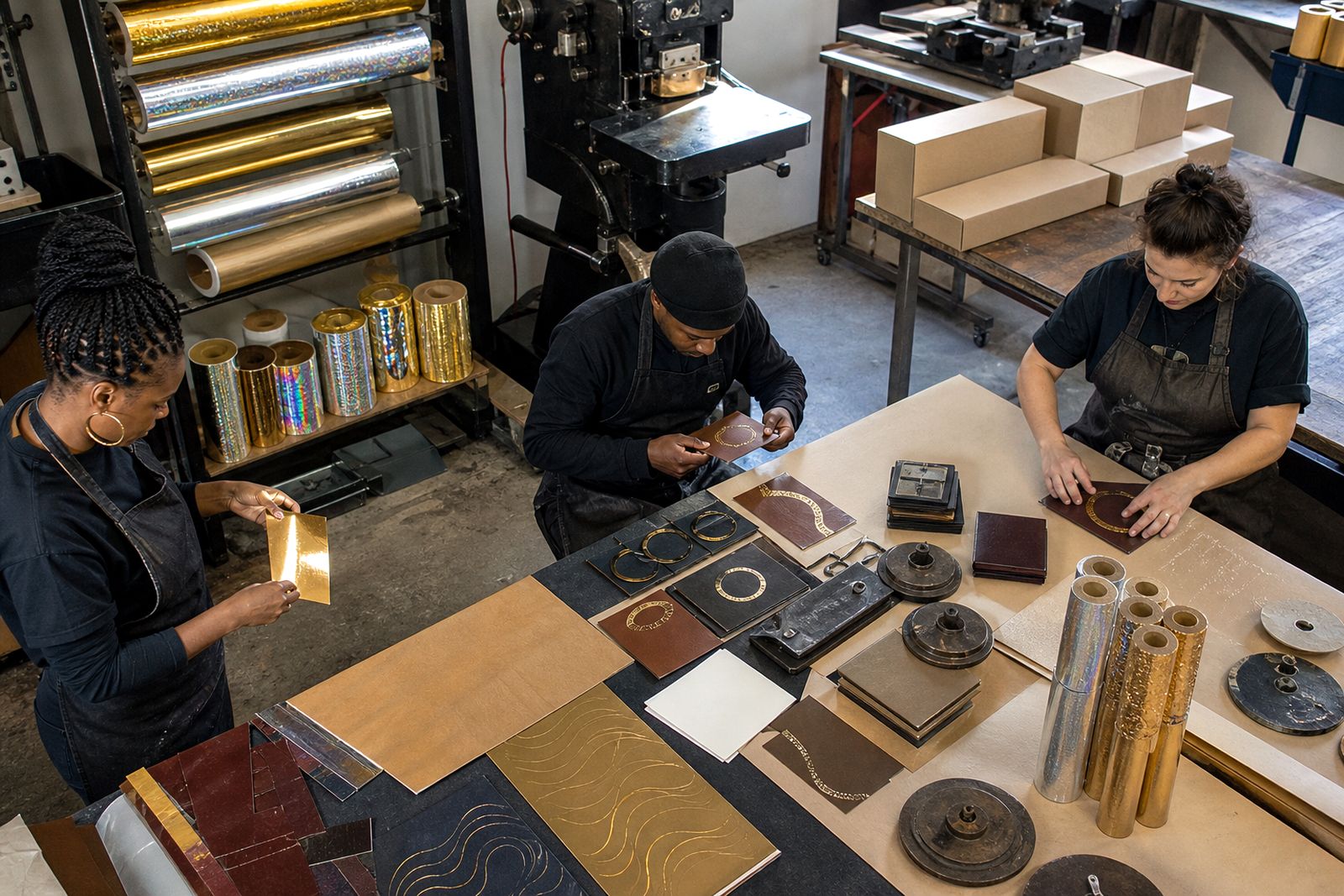
Foils that suit leather
Leather work needs foils that release cleanly and stay readable on shaped pieces, stitched panels and textured grain. For genuine leather and PU leather, the starting point is usually a specialty foil made for the substrate, rather than a general paper or carton foil.
Depending on the finish you want, the range can include metallic gold, silver, copper, bronze, mirror and satin, as well as pigment foils in black, white and process colours. For branding, numbering and decorative detail, holographic, diffraction and security foils can also be considered.
Foil choice should match the surface, the artwork and the press. Leather pieces often need a softer heat window and careful control of dwell, pressure and release profile so the image transfers without flattening the grain more than necessary.
Start with samples
Before placing production orders, ask for swatch books or samples and test them on the actual leather you use. Different hides, coatings and PU finishes can respond differently, even when the artwork is the same.
A practical sample test should check edge sharpness, coverage, adhesion and how the foil behaves after handling. If the design includes fine detail, small text or dense solids, test those areas separately as well.
For workshop planning, it helps to keep a simple record of which foil, die and press settings were used on each material. That makes repeat jobs easier and reduces waste on future runs.
Use the contact form to ask for samples and advice on a suitable test set-up.
Press settings to test
Leather finishing usually starts with testing, not fixed settings. Typical starting ranges vary by foil and substrate, but the aim is to find the lowest setting that gives clean release and full detail.
| What to test | Why it matters |
|---|---|
| Temperature window | Helps the foil release without scorching or over-softening the surface |
| Dwell time | Affects coverage, detail and how the foil settles into texture |
| Pressure | Controls contact on grain, seams and recessed areas |
| Release profile | Supports clean transfer and consistent pull-off |
For platen, cylinder and roll-to-roll presses, the set-up should suit the die, the material thickness and the finished piece shape. Brass, copper and magnesium dies each behave differently, so the test run should match the tooling you will use in production.
Tooling and make-ready
Leather articles often need careful make-ready because the surface can vary across the same job. Raised areas, curves, stitched edges and cut-outs may all need attention before the first pull.
- Check the die face for even contact
- Confirm the artwork sits correctly on the piece
- Test pressure across the whole image, not only the centre
- Watch for over-pressing on softer areas
- Allow time for clean alignment on repeat work
If you are working with large runs, short repeats or mixed formats, slit-to-width foil rolls can help reduce waste and keep handling tidy at the press. Ask for a slit width that suits your machine and your job layout.
Order the right way
For leather workshops, the most useful order is usually one that begins with a sample, then moves to the foil type, slit width and quantity needed for the actual job. That keeps ordering tied to production rather than guesswork.
If you need foils for leather goods plus related work on plastics, textiles or soft-touch laminate, it is often sensible to group the request so the same supplier can advise across materials. Brand owners and trade printers often use a similar approach when comparing finishes across products.
For repeat work, keep the approved sample, note the press, die and substrate, and refer back to it when reordering. If you need a new recommendation, start with the contact form and ask for a practical sample-and-test plan through contact.
What our Hot Stamping Foil customers say
Verified Google reviews
Also worth a look
Ask about a foil for your job
Send a note through our contact form with the substrate, the press you run (platen, cylinder or roll-to-roll), the finish you are after and the run length, and we will come back with a foil grade, a sample and a quote.
Open the contact form