

Support
Get help with orders, lead times, returns, technical questions and sample requests for foil work.
How to order
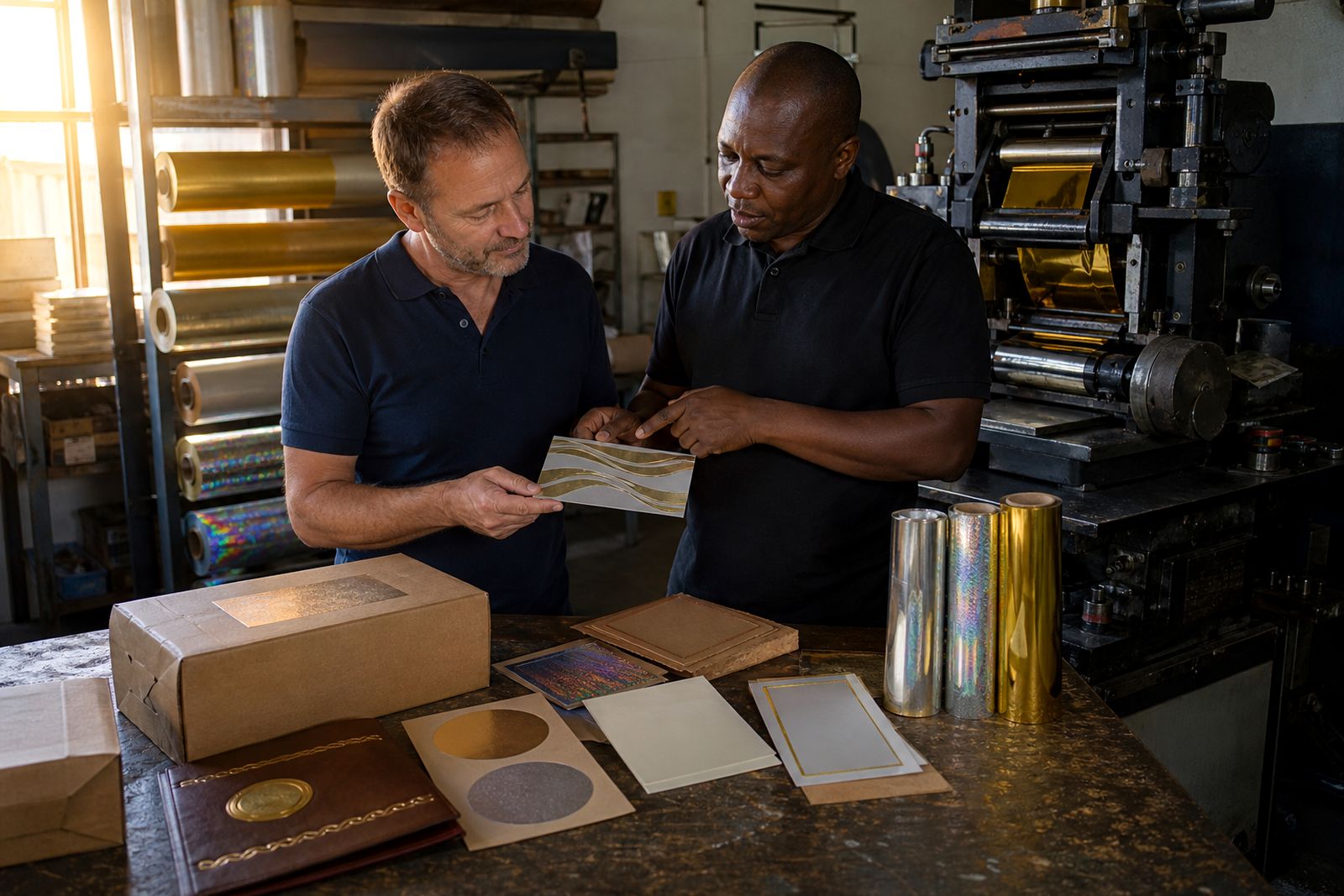
For foil orders, start with the foil family, colour and roll width you need, then add the press type and the substrate you are running. If you are unsure, ask for a swatch book or sample strips before you place a production order.
When sending an enquiry through the contact form, include:
- Foil type such as metallic, pigment, holographic, diffraction, security or specialty foil
- Substrate such as coated board, labels, cartons, book covers, leather, plastics, textiles or soft-touch laminate
- Press type such as platen, cylinder or roll-to-roll
- Die detail such as magnesium, copper or brass, if known
- Roll width and any slit-to-width requirement
- Job use such as fine line work, solid area, overprint or security detail
You can also browse product families, applications and finishes before you send your request.
Lead times and returns
Lead times depend on the foil type, roll size, slit width and whether the order is standard stock or a special request. If your job is time-sensitive, say so in the contact form and note your press date, so the order can be checked before confirmation.
Keep your order note clear and complete. It helps to mention the finish you are after, the substrate, the press type and whether the job will run in one pass or needs testing first. If you need more planning detail, see Resources or Project notes.
For returns or credits, contact support as soon as you notice an issue and include the order reference, the foil description and clear photos of the pack, print or test strip. Keep the roll, packaging and any sample pieces safe until the matter has been reviewed. Do not send a return before checking the next step through the contact form.
Technical help and samples
For good transfer, test against the actual substrate and die combination. Start with a sensible test window and adjust in small steps. As a guide, many hot stamping jobs begin around 100 to 140 degrees Celsius, then move up or down to suit the foil, stock and press setup.
Typical setup points to test include:
- Temperature window on the press
- Dwell time on the impression
- Pressure from the platen, cylinder or roll-to-roll unit
- Release profile for clean lift and good image edge
- Make-ready and die alignment
Ask for help if you see poor adhesion on coated board, soft-touch laminate or textured stock, or if the foil is not releasing cleanly from fine details. A note with the substrate, foil type, die metal and the result you are getting will save time. For sample requests, include the finish you want to test and the application, then use the contact form. If you are still choosing between finishes, compare solutions and showrooms & counters.
| What to send | Why it helps |
|---|---|
| Foil type and colour | Helps match the right material |
| Substrate and press type | Helps judge transfer conditions |
| Die material and artwork size | Helps with setup and fine detail |
| Photo or sample of the issue | Helps diagnose release or adhesion problems |
Support
Ordering rolls
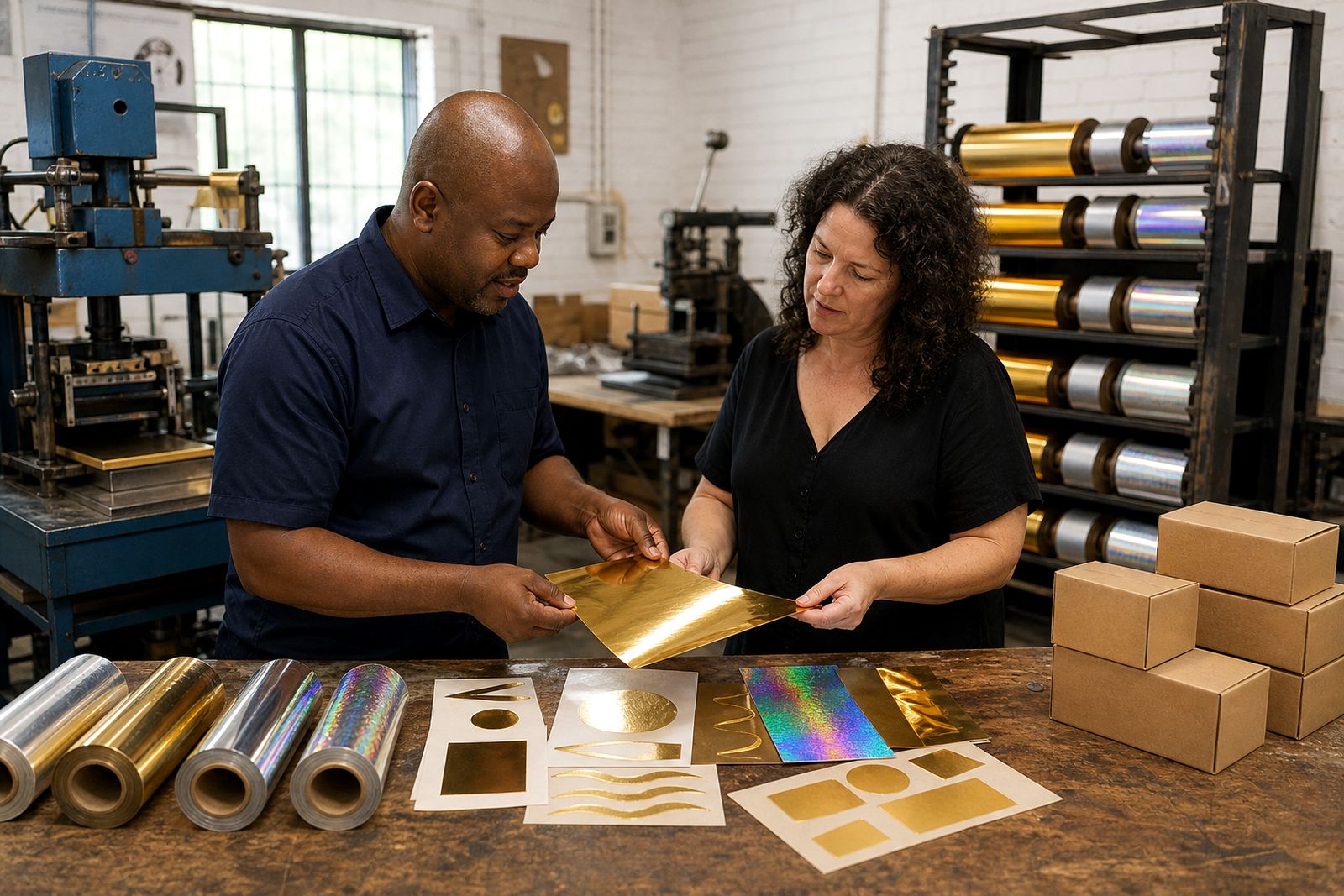
Practical ordering guidance for trade hot stamping foil rolls, including what to include on your purchase order and contact form.
Read more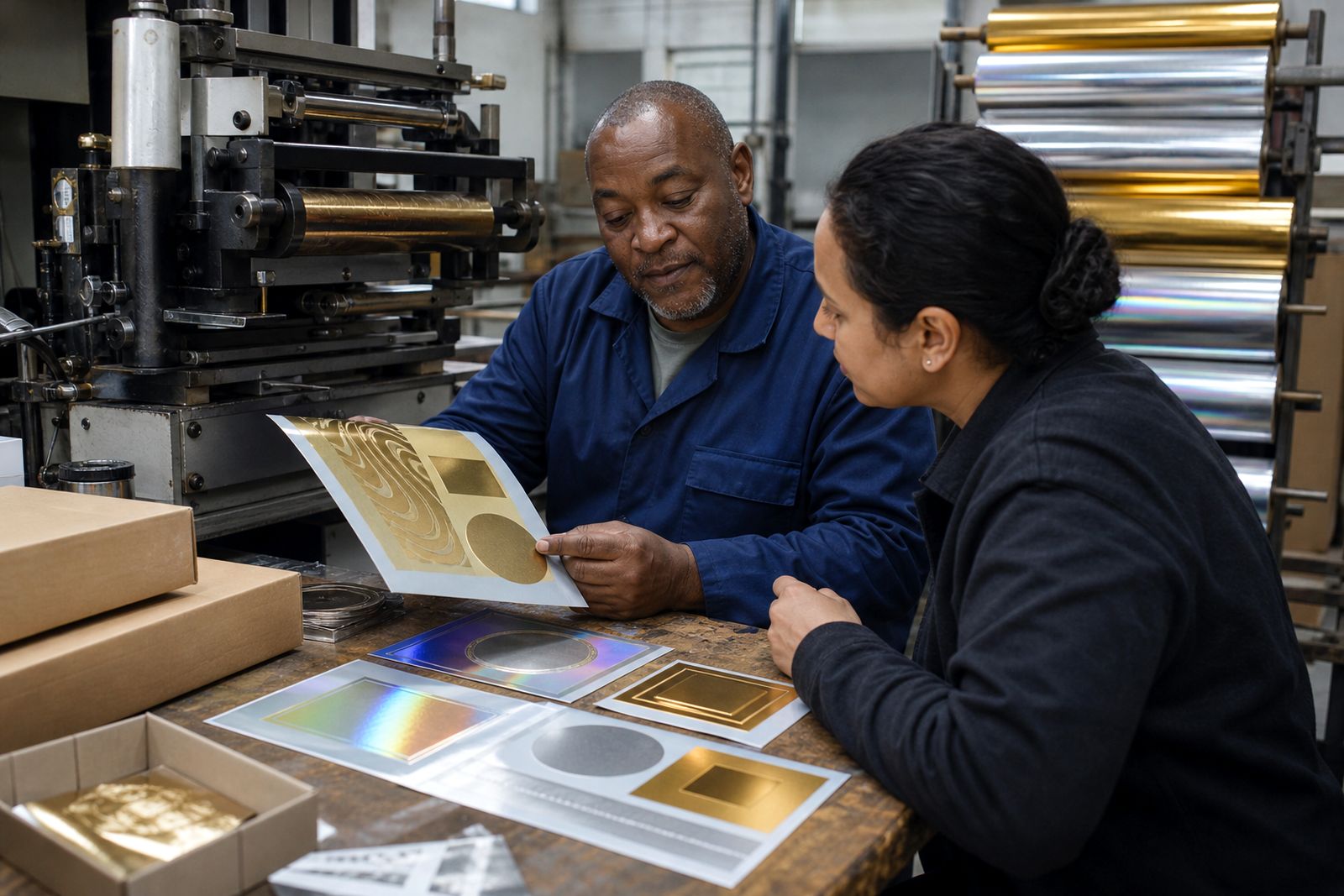
Lead times
Practical lead-time guidance for stocked metallics, indent pigment and security foil orders, plus what to send in the contact form.
Read more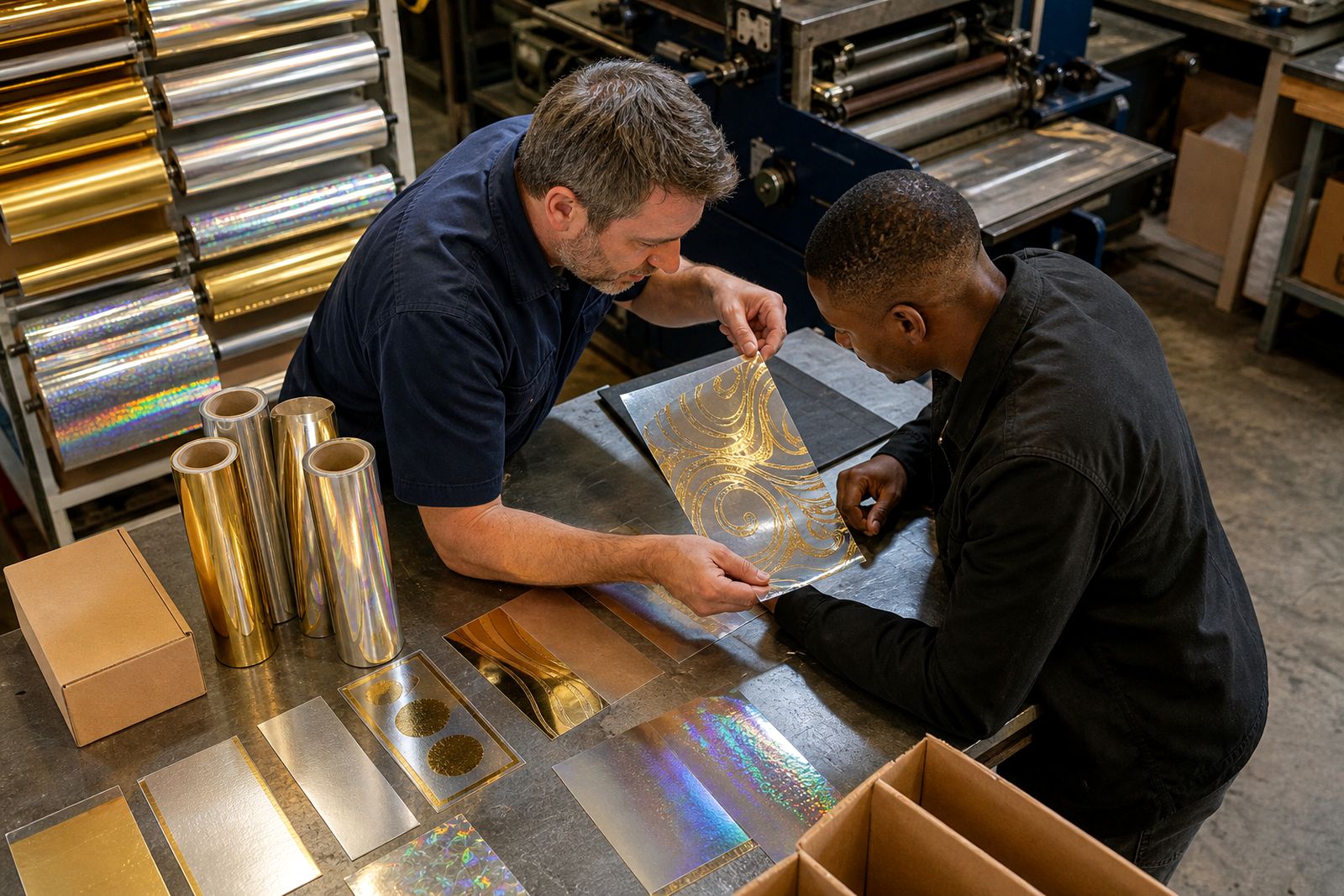
Returns and credits
Practical guidance on when foil rolls may be returned or credited, and what details support needs to assess a claim.
Read more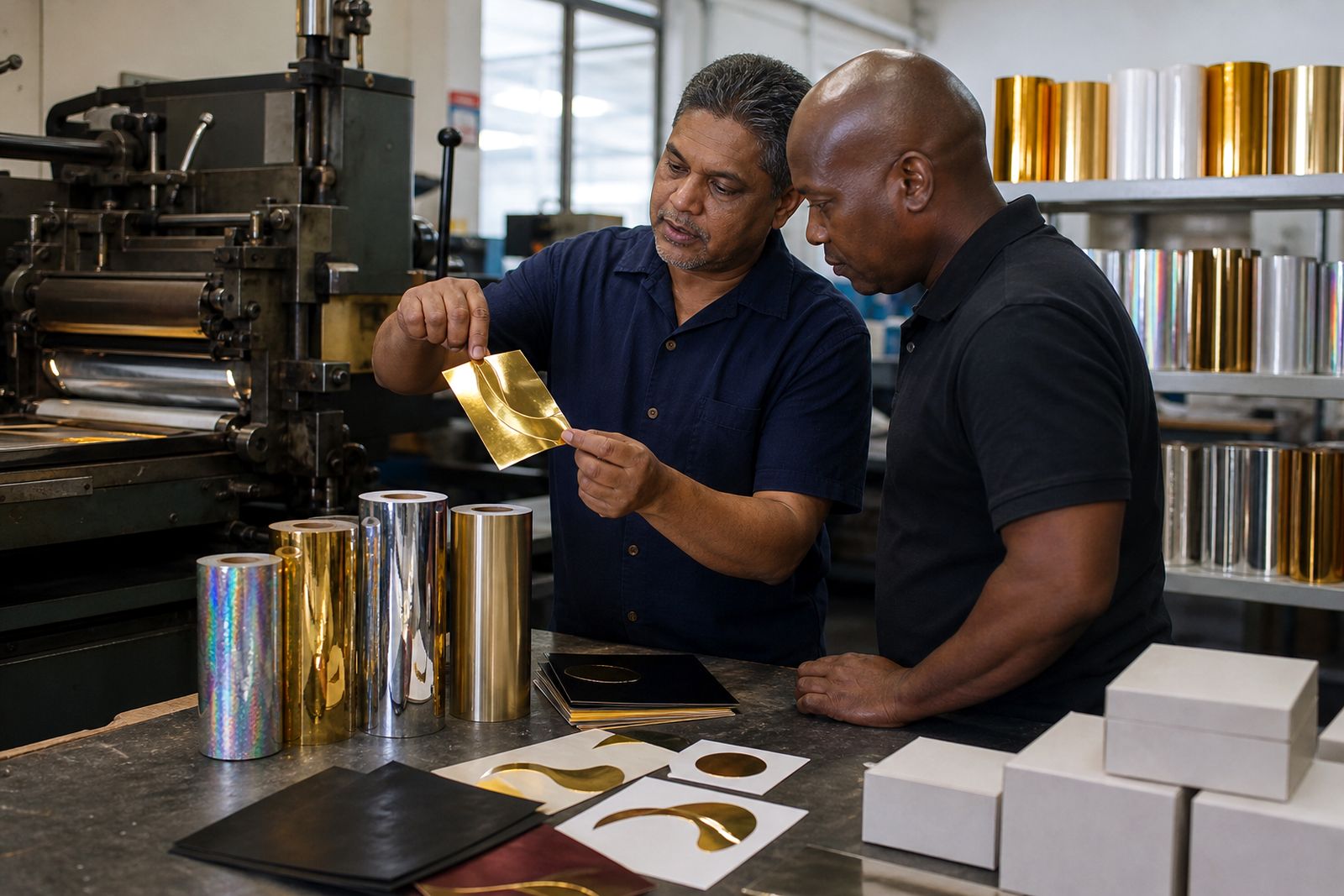
Technical help
Practical press-side help for hot stamping foil make-ready, fault-finding and foil selection on platen, cylinder and roll-to-roll presses.
Read more
Sample requests
How to request swatches, drawdowns and trial rolls, and what details help Stampingfoil advise the right foil for your press.
Read more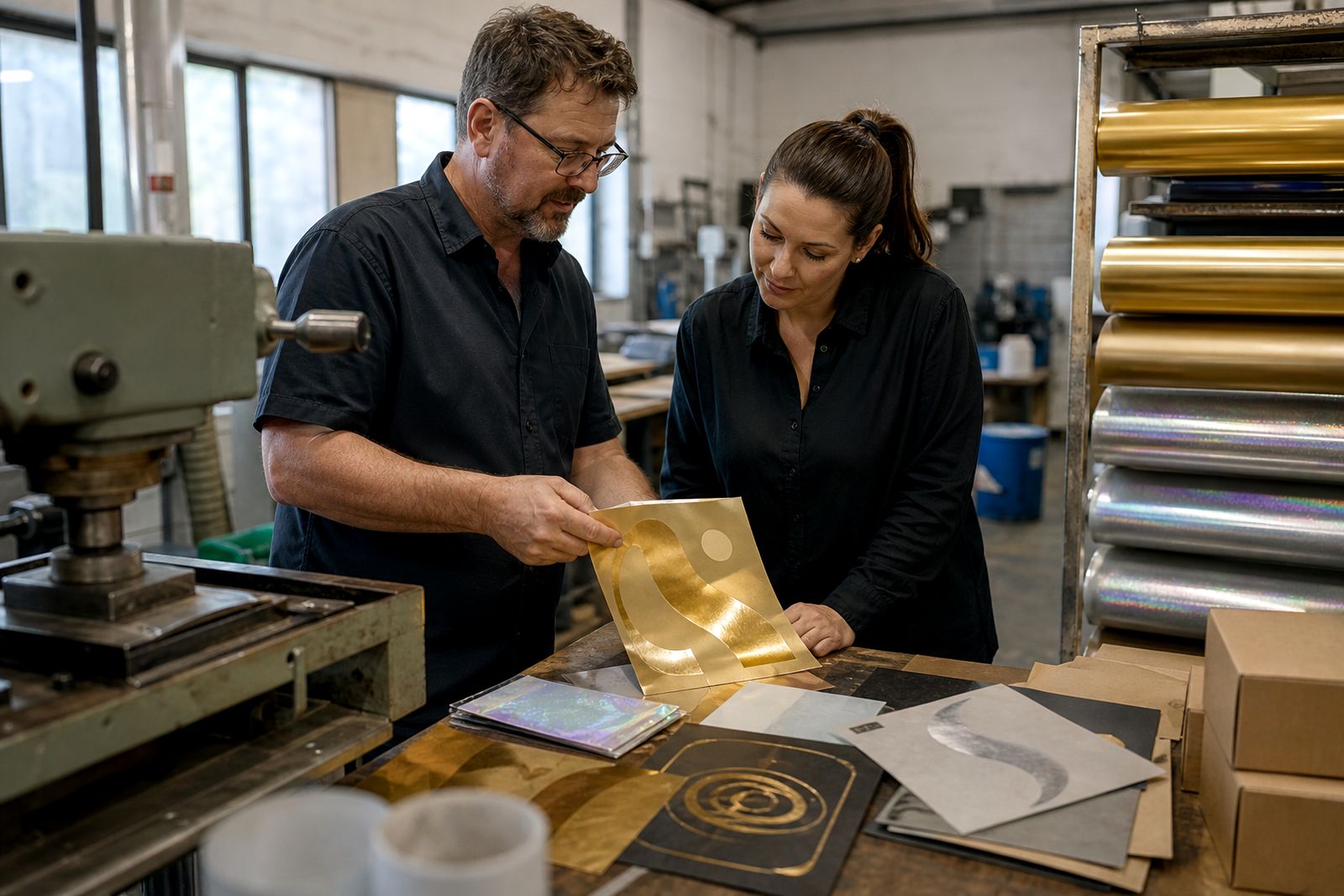
Account setup
Practical steps to open a trade account with Stampingfoil, including what to send, what we need to verify, and how to request samples or quotes.
Read moreWhat our Hot Stamping Foil customers say
Verified Google reviews
Ask about a foil for your job
Send a note through our contact form with the substrate, the press you run (platen, cylinder or roll-to-roll), the finish you are after and the run length, and we will come back with a foil grade, a sample and a quote.
Open the contact form