

Technical help
Need help getting foil to release cleanly? Use this guide for make-ready checks, starting settings and what to send through the contact form.
Start with the basics
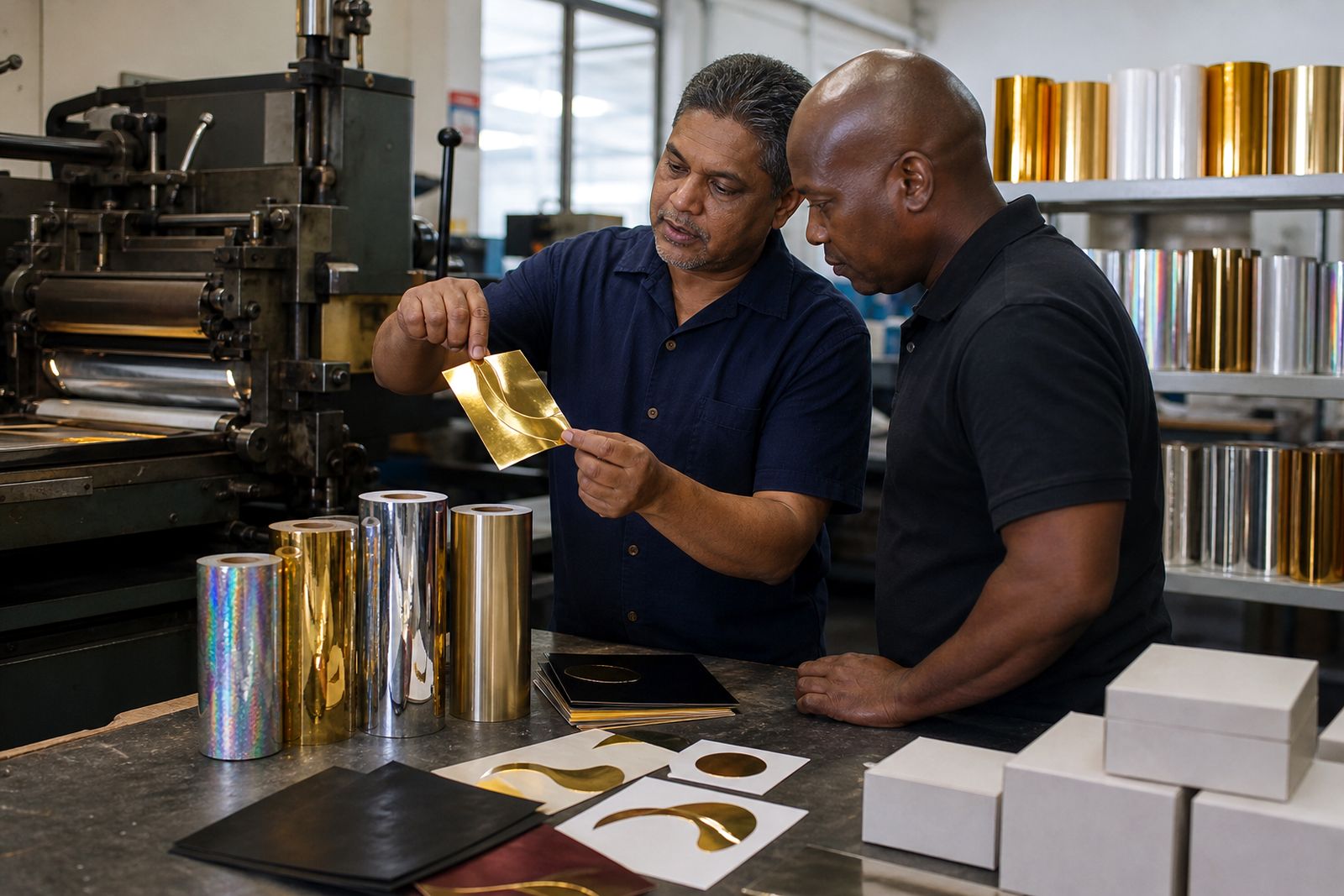
When a foil job is not holding or is picking up unevenly, begin with the easiest variables first. Check the substrate, the die, the press and the foil roll before changing more than one thing at a time.
- Confirm the foil type matches the stock, such as metallic, pigment, holographic, security or specialty foil.
- Check whether the board, label stock, plastic, textile or soft-touch laminate needs a different temperature window.
- Make sure the die face is clean, level and suited to the image area.
- Use a small test area before running full sheets or full roll length.
If you are unsure which foil to start with, see Products or send a sample request through Sample requests.
What to test first
For most make-ready work, change one setting at a time and record the result. A good starting point is to test temperature, then dwell, then pressure, then release.
| Check | What to look for |
|---|---|
| Temperature | Start with a typical test range for the foil and substrate, then move up or down in small steps. |
| Dwell | If the image is light or patchy, give the foil more time under heat before increasing pressure too far. |
| Pressure | Uneven pressure can leave thin areas, breaks or dull patches, especially on large solids. |
| Release | Poor release can point to the wrong foil grade, too little heat, or a die that is not transferring evenly. |
For coated board, soft-touch laminate and other difficult surfaces, use a controlled test strip and note any change in adhesion.
Match foil to the job
Different jobs need different foil families. Metallic gold, silver, copper, bronze, mirror and satin foils behave differently from pigment foils, holographic and diffraction foils, and security foils.
- Labels and cartons often need clean release and sharp detail.
- Book covers may need more careful pressure control on textured or coated surfaces.
- Leather goods usually need a different approach from board or film.
- Plastics and textiles often need trial testing before a production run.
If you are comparing options, ask for swatch books or samples through Sample requests. For foil slit to roll width, see Ordering Rolls.
Set up the press correctly
Press setup depends on whether you are running platen, cylinder or roll-to-roll equipment. The same foil can behave differently on each press type, so keep a written record for each machine and substrate combination.
- Check die alignment and impression consistency across the full image.
- Keep make-ready tight so the image area sits flat and even.
- For magnesium, copper and brass dies, confirm the die is suitable for the detail level and run length.
- Watch for transfer issues at the edges, which can point to uneven pressure or a die that needs adjustment.
If a job needs repeat runs, keep the tested settings with the job notes so the next setup starts closer to the target.
Send the right details
When you use the contact form, include as much practical detail as you can. That helps support give usable press-side advice instead of general suggestions.
- Foil type and colour family.
- Substrate, finish and whether it is coated, uncoated or soft-touch.
- Press type, die material and image size.
- What is happening on press, such as poor release, patchy solids, fine detail loss or adhesion problems.
- Your current settings for temperature, dwell and pressure, plus what you have already tested.
Use the contact form for technical help, then we can advise on the next test or suggest whether another foil grade may suit the job better. For production planning, you can also check lead times and Returns & Credits.
What our Hot Stamping Foil customers say
Verified Google reviews
Also worth a look
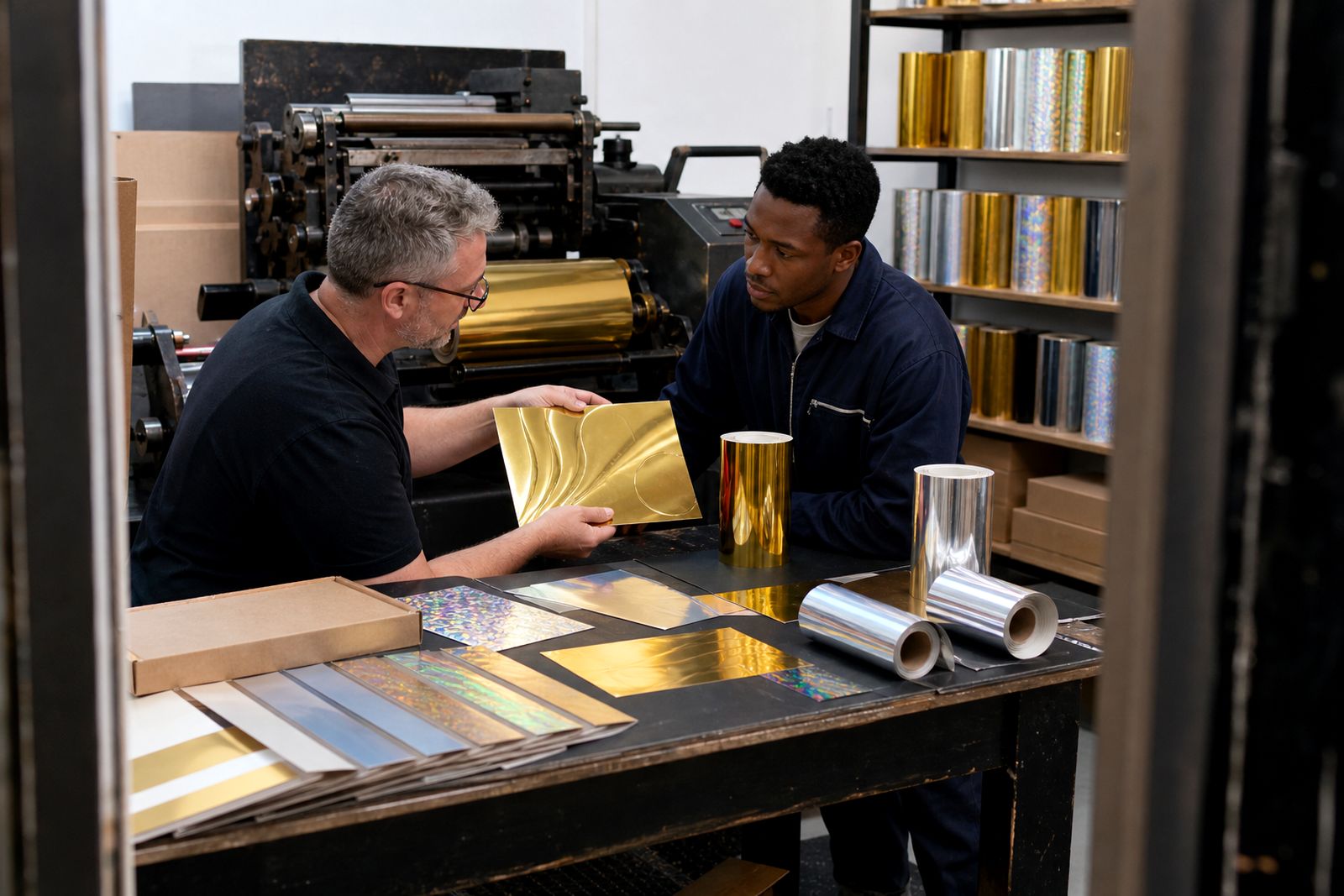
Ask about a foil for your job
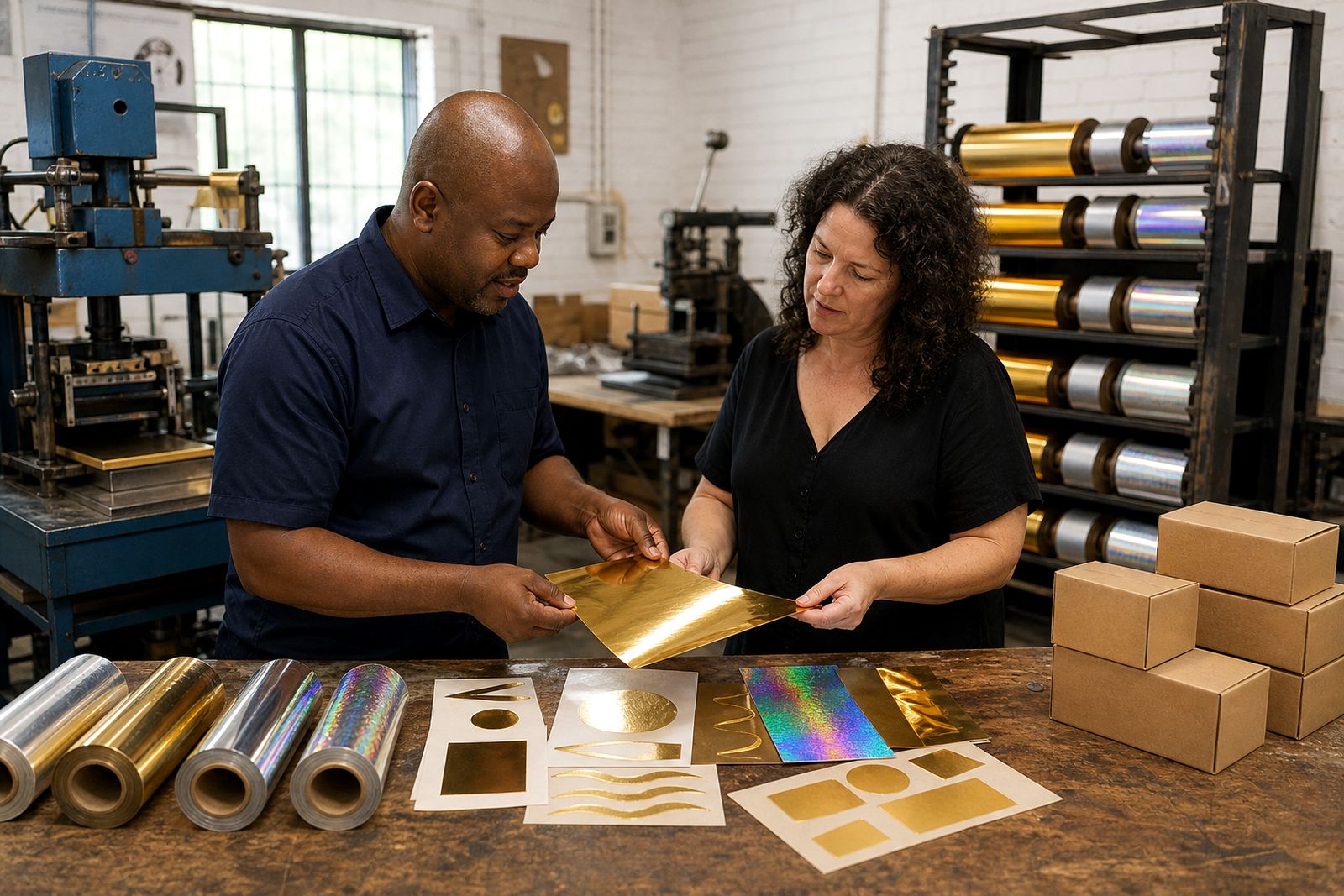
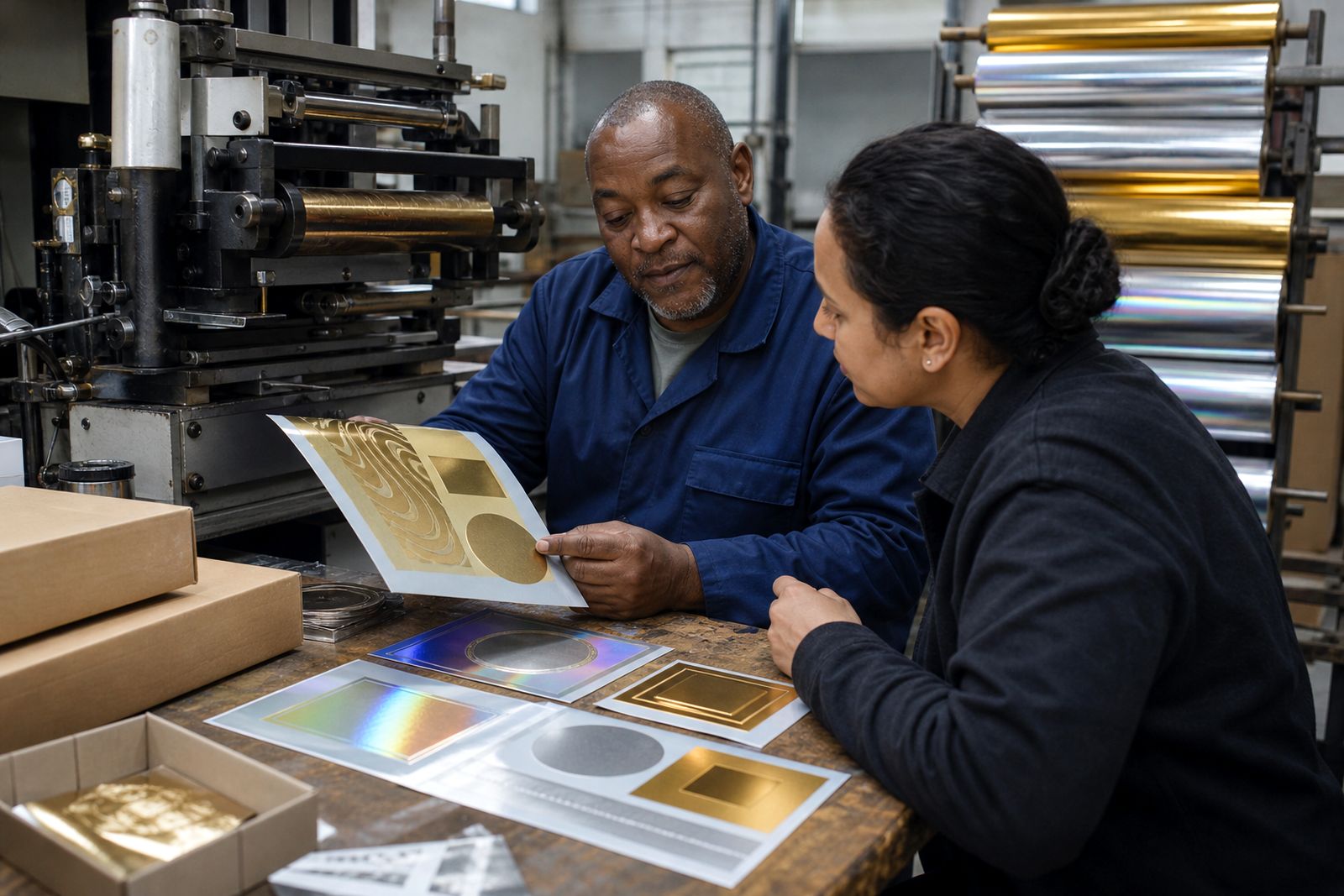
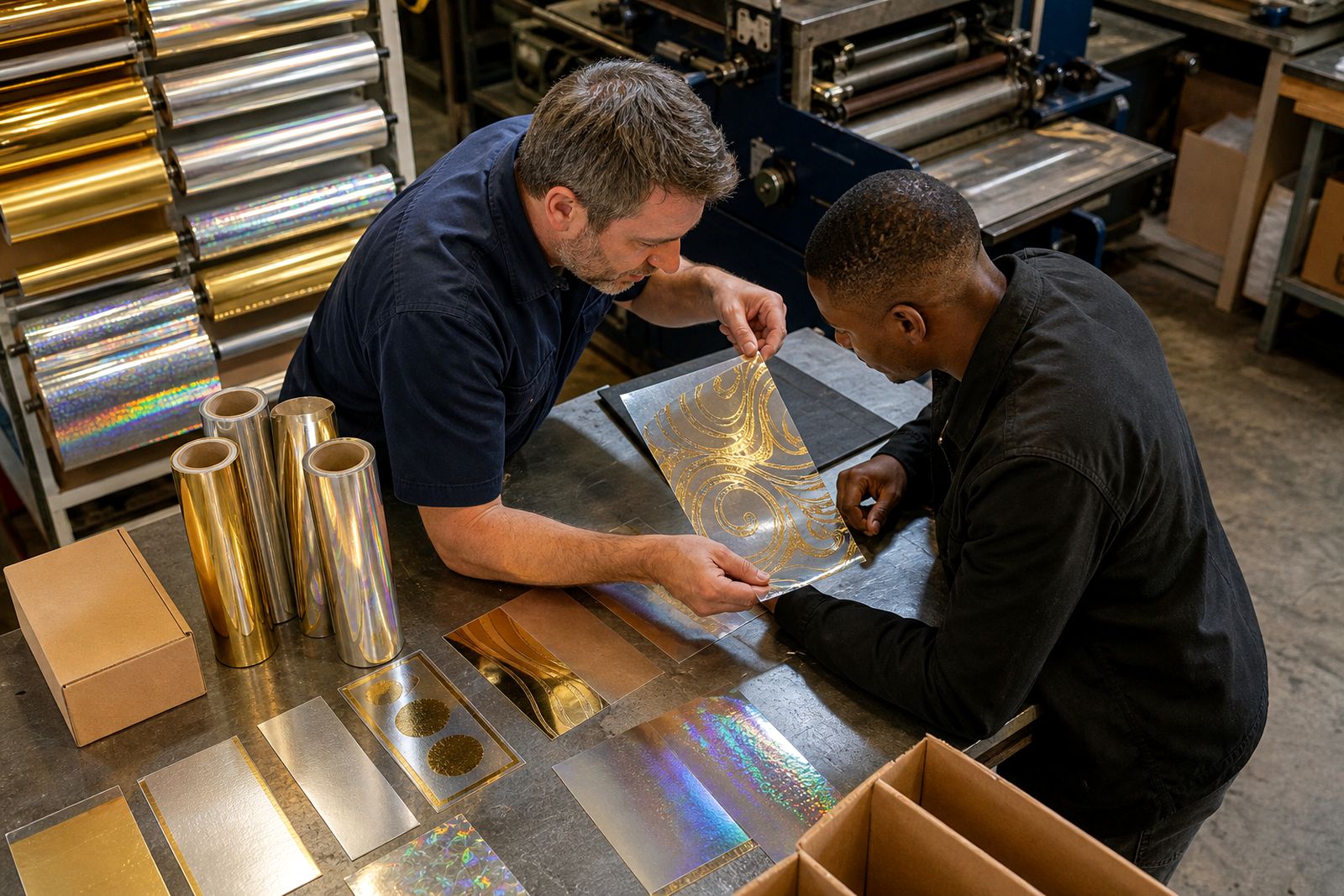
Send a note through our contact form with the substrate, the press you run (platen, cylinder or roll-to-roll), the finish you are after and the run length, and we will come back with a foil grade, a sample and a quote.
Open the contact form