

Short-run studios
Need foil that changes over quickly and runs cleanly on smaller studio jobs? Stampingfoil supports short-run production with practical foil, samples and setup advice.
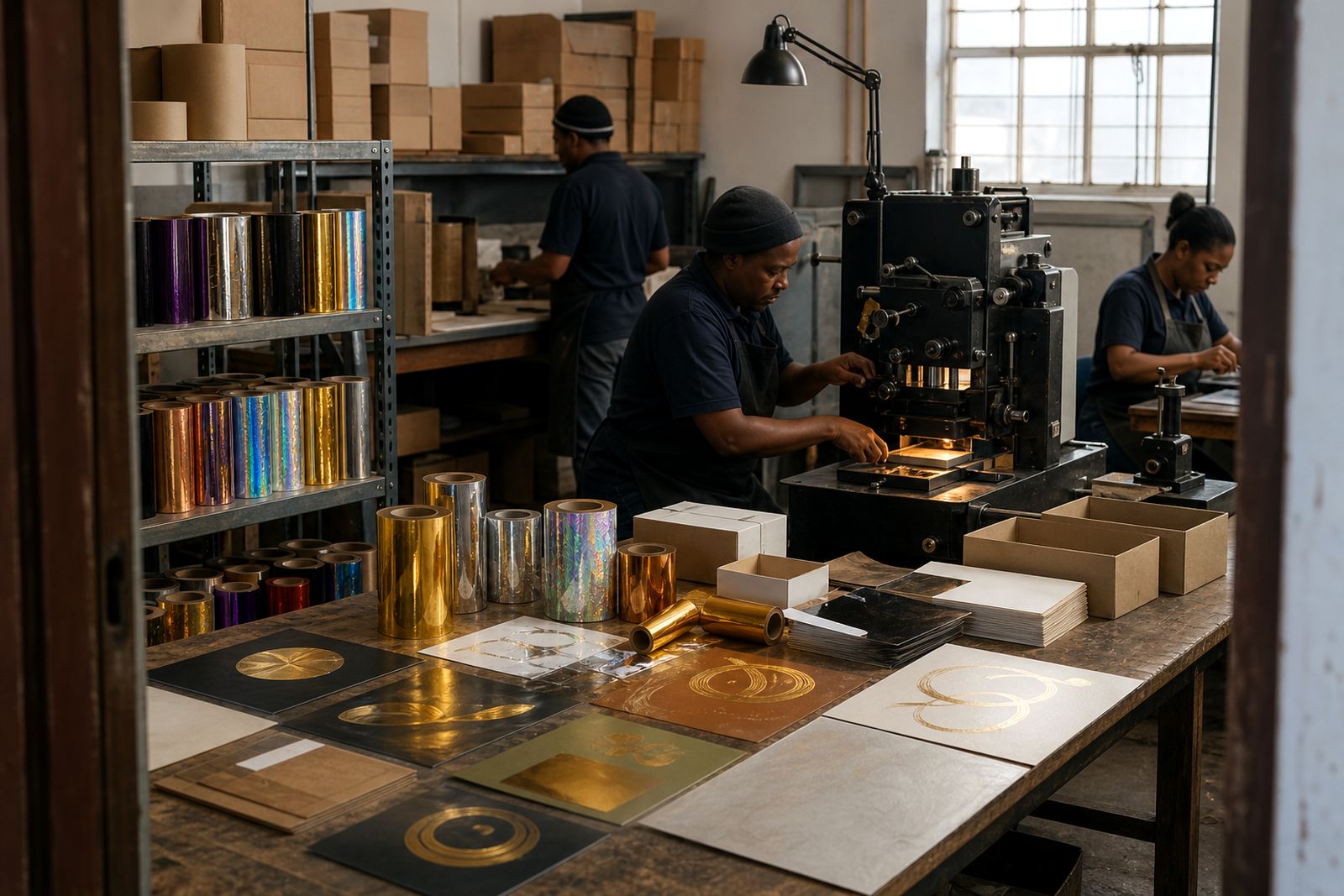
What short-run studios need
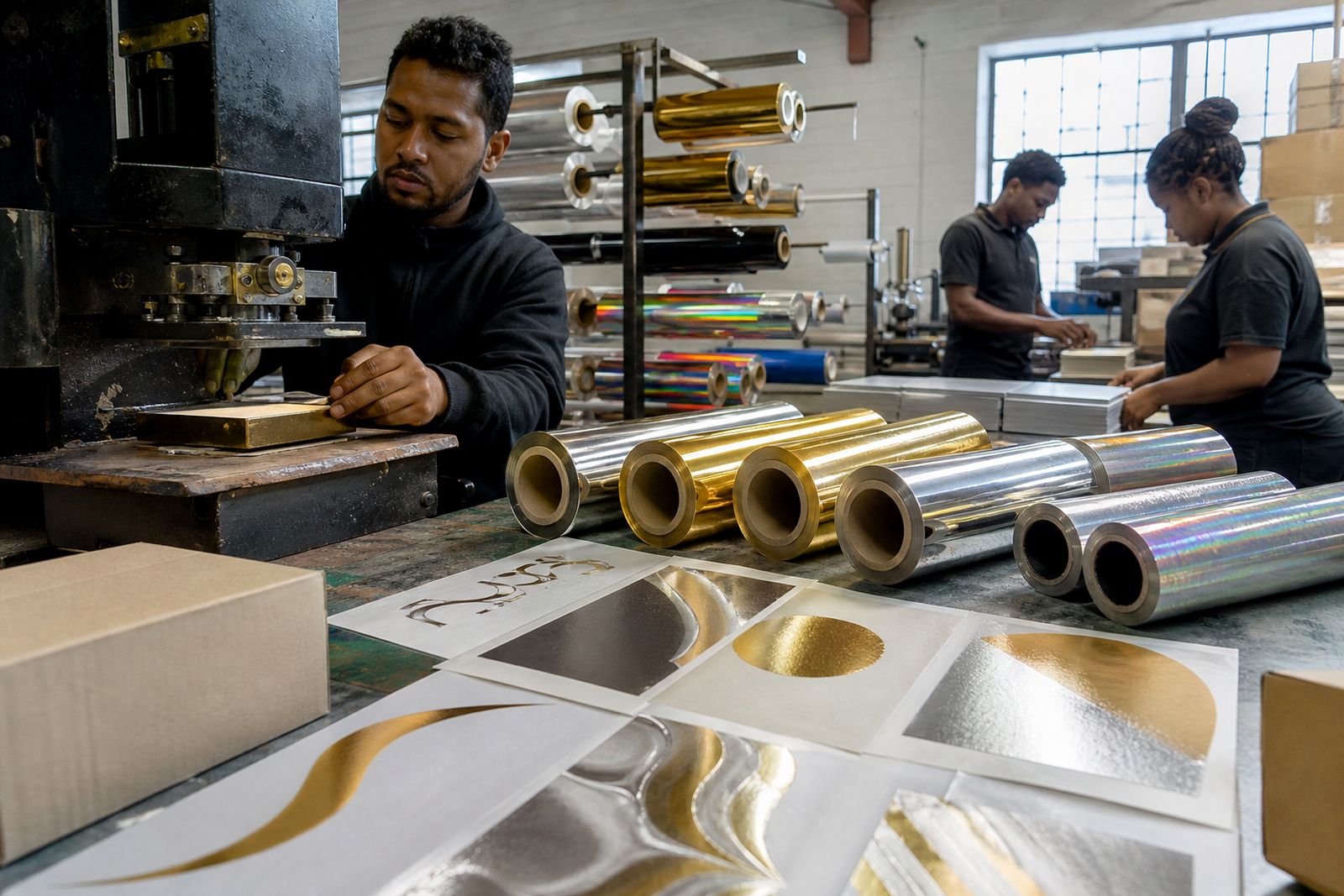
Short-run work usually needs small roll lengths, fast colour swaps and foil that behaves predictably when jobs change from one design to the next. That means a supplier who can help with the right roll width, clear swatch references and sensible starting settings for your press.
For studio production, the main aim is to keep make-ready tight and waste low. That applies to book covers, labels, cartons, presentation pieces, invitations and branded items where the foil area is small but the finish still needs to look clean and consistent.
- Smaller rolls slit to width for shorter jobs
- Clear guidance on foil release and laydown
- Advice for platen, cylinder and roll-to-roll presses
- Samples for checking colour and coverage before ordering
If you are setting up a new look or repeating an existing one, start by comparing swatches and requesting a sample through the contact form.
Foils that suit studio work
Short-run studios often need a wide mix of finishes for different briefs. Metallic foils such as gold, silver, copper, bronze, mirror and satin are common choices for premium branding, while pigment foils in black, white and process colours suit cleaner graphic work and bold contrast.
Holographic and diffraction foils can add movement and reflection, while security foils are useful where an extra visual layer is needed. Specialty foils are also available for leather, plastics, textiles and soft-touch laminate, which helps when your jobs move beyond standard paper or board.
| Foil type | Typical studio use |
|---|---|
| Metallic | Brand marks, titles, borders and premium accents |
| Pigment | Flat colour, reverse detail and strong graphic contrast |
| Holographic and diffraction | Special effects and attention-catching finishes |
| Specialty | Leather, plastics, textiles and soft-touch laminate |
For related production needs, see products and applications.
Sampling before you commit
Short-run buying works best when the foil is checked on your own substrate and press before the full job starts. A swatch book can help with colour choice, but a sample is better when you need to confirm coverage, detail sharpness and how the foil releases on your actual stock.
If you are working on coated board or soft-touch laminate, testing matters even more. Different surfaces can change how quickly the foil transfers and how much heat or pressure is needed. A small trial helps you avoid surprises when the full run begins.
- Compare swatches for colour direction
- Request samples for press testing
- Check fine detail, solids and reverse areas
- Confirm finish on your actual substrate
Need help choosing a starting point? Use the contact form and ask for a sample match or a quote.
Press setup basics
For short-run foil work, the setup usually matters as much as the foil itself. Press temperature, dwell, pressure and release all need to work together, and the right settings depend on the substrate, die material and press type.
A practical starting range for testing is usually somewhere around 95 to 130 degrees Celsius, but that should always be confirmed on press. Magnesium, copper and brass dies can behave differently, and platen, cylinder and roll-to-roll presses each need their own make-ready approach.
Pay attention to temperature windows, dwell time and pressure rather than chasing a single setting. If the foil looks patchy, over-pressed or dull, adjust in small steps and test again. Press-side advice is available to help refine the release profile before the job goes live.
Ordering for repeated short runs
When a design comes back again and again, keep the foil reference, substrate notes and press settings together so the next run starts faster. That is especially useful for studios handling repeat labels, small carton runs, branded stationery or limited edition pieces.
It also helps to keep the foil stored by job and finish, so metallics, pigment colours and effect foils are easy to identify. If you are not sure whether to hold stock or order on demand, the practical choice depends on how often the job repeats and how many colour changes your studio handles.
- Keep a simple record of foil type, width and finish
- Note the substrate and press used on the last run
- Store approved samples with the job ticket
- Use the label houses and packaging converters sections for related production needs
For support on short-run foil supply, samples or repeat orders, send a request through the contact form.
What our Hot Stamping Foil customers say
Verified Google reviews
Also worth a look
Ask about a foil for your job
Send a note through our contact form with the substrate, the press you run (platen, cylinder or roll-to-roll), the finish you are after and the run length, and we will come back with a foil grade, a sample and a quote.
Open the contact form