

Cape Town counter
Bring a printed sample or the stock you plan to run, and compare foil options with practical press advice before you go to press.
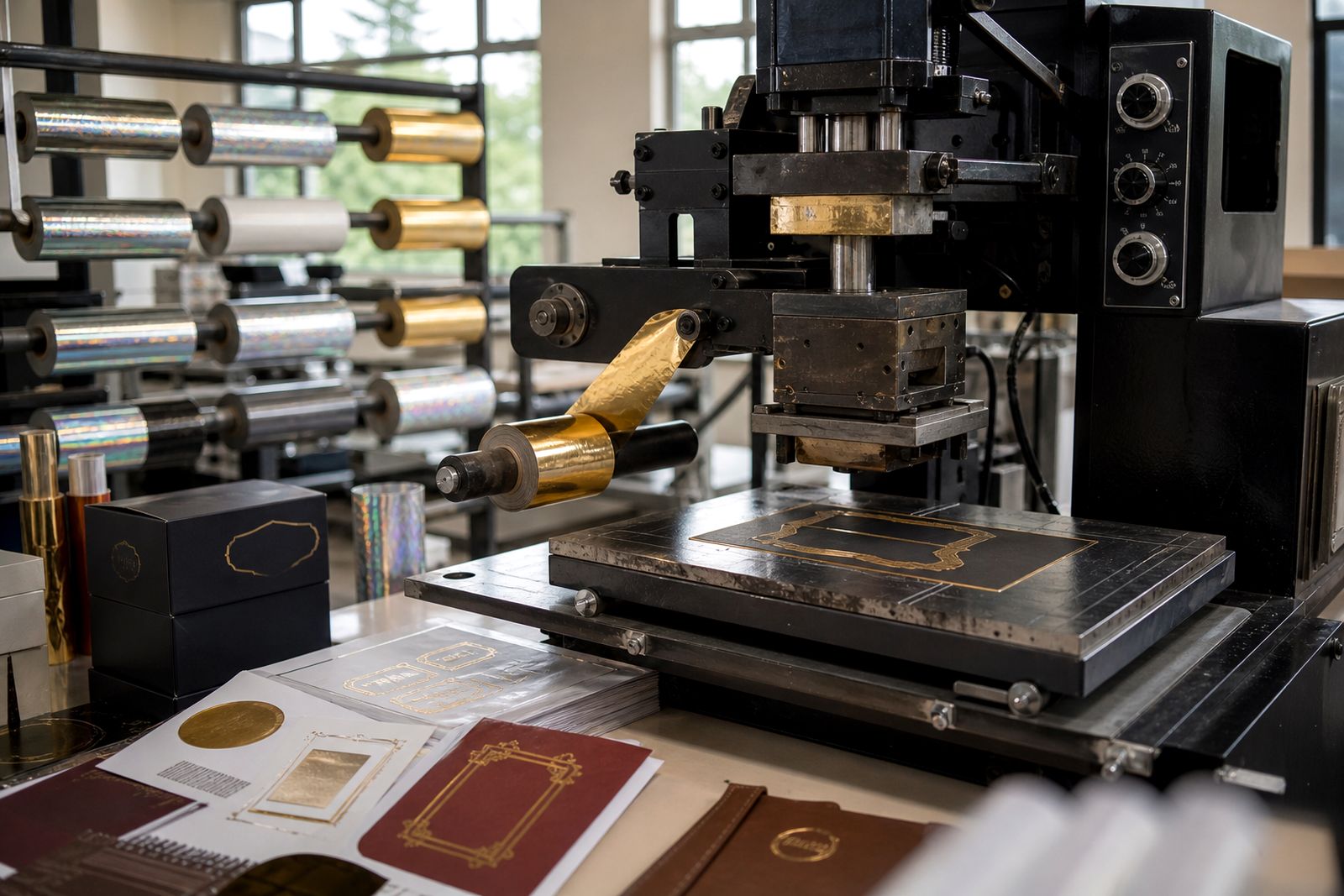
What to bring to Cape Town
A useful visit starts with the actual material, not a guess. Bring a printed sample, a board offcut, label stock, leather offcut, plastic sample or the substrate you plan to run so the foil choice can be checked against the real surface.
If you are working on coated board, soft-touch laminate, cartons, book covers, labels or leather goods, it helps to bring a finished sample showing the area to stamp. That gives a clearer view of ink holdout, coating behaviour, fine detail and how the design sits on the material.
- Printed sample or blank stock
- Artwork information, including line weight and solid areas
- Any notes on current press settings
- Details of the die metal, if already chosen
Booking through the contact form keeps the visit focused and gives time to look through the right swatch books. Use the contact form to arrange a counter visit.
What you can compare at Cape Town
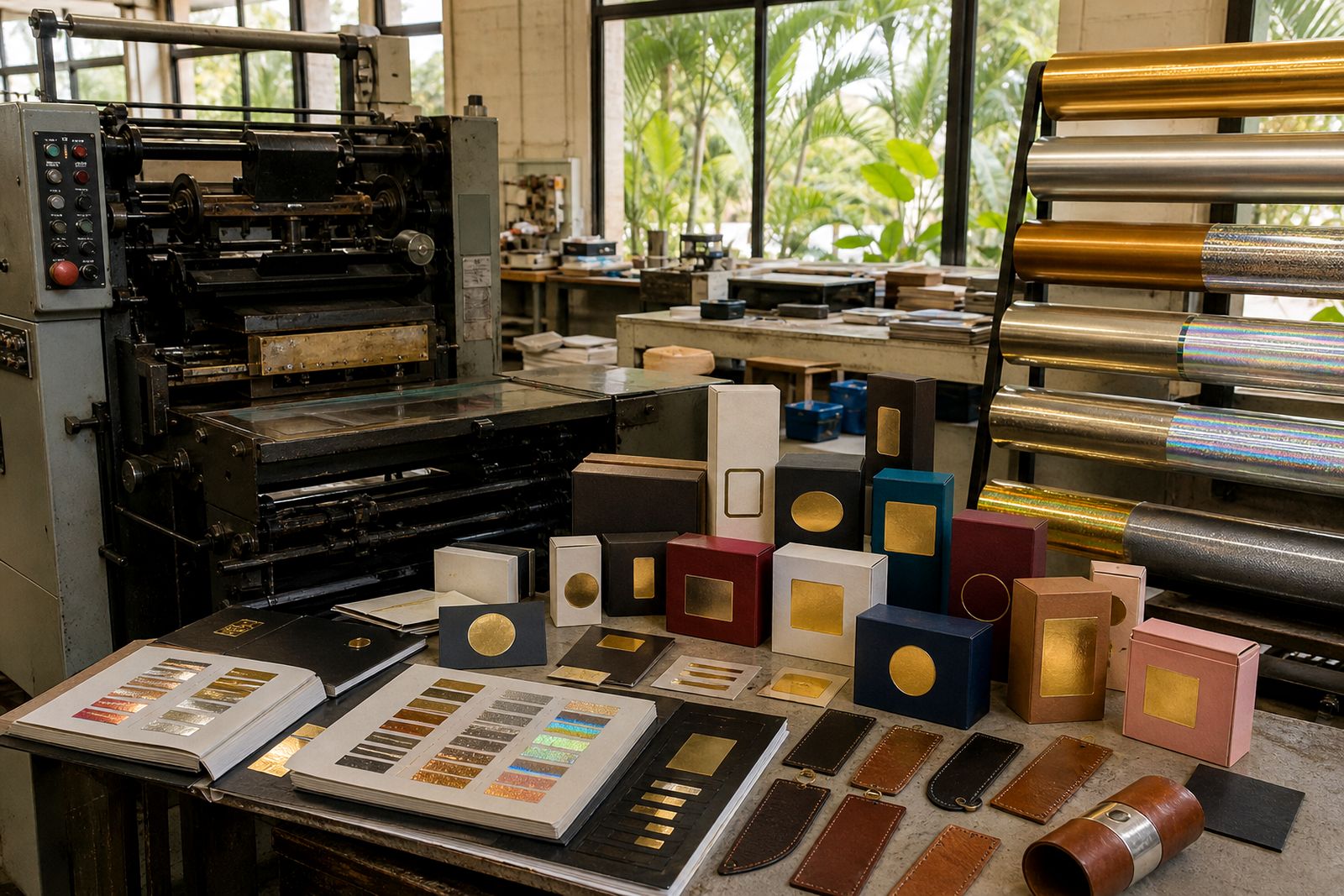
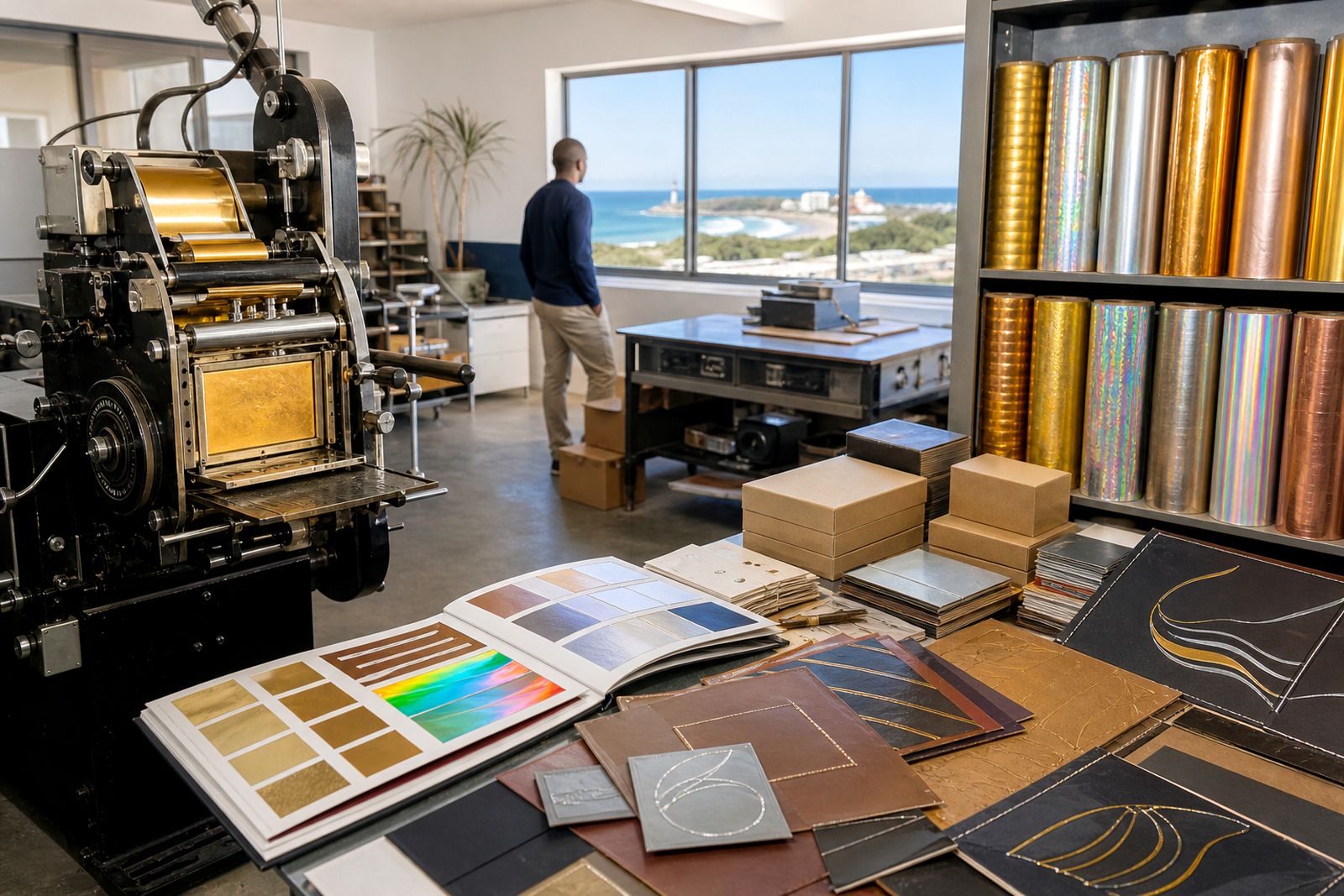
At the counter, you can compare metallic foils in gold, silver, copper, bronze, mirror and satin finishes, as well as pigment foils in black, white and process colours. Holographic and diffraction foils are also useful where the design needs movement, pattern or a stronger visual break.
For work that needs another level of protection or identification, security foils can be discussed alongside the job requirements. For leather, plastics, textiles and soft-touch laminate, specialty foils can be matched to the way the material releases and accepts the image.
Swatch books and sample pulls make it easier to judge tone, reflectivity and clarity before production. For a broader view of available categories, see products or the showrooms hub.
How the Cape Town counter visit works
The visit is practical and job-led. You bring the sample, explain the finish you want, and then compare swatches and foil test pulls against the actual stock. The aim is to narrow the choice before make-ready starts.
Discussion normally covers the press type, whether the job will run on a platen, cylinder or roll-to-roll press, and whether the artwork needs solid coverage, fine type or a cleaner release on textured stock. If you are unsure where to begin, start with the stock, the die and the intended finish, then work forward from there.
For different regions, you can also view the Johannesburg counter, Pretoria counter, Durban counter, Gqeberha counter or Bloemfontein counter.
Press setup guidance for Cape Town
Practical advice is part of the counter visit. Typical starting temperature ranges are discussed as test points, together with dwell, pressure, release profile and die condition. These settings depend on the substrate, the image detail and the press you are running.
If the job is on coated board or soft-touch laminate, the release behaviour can differ from plain paper or uncoated board. For labels and cartons, the main focus is often adhesion, crisp edges and consistency across the run. For plastics and textiles, the surface response needs to be checked more carefully before production.
| Area | What is checked |
|---|---|
| Foil choice | Finish, colour and suitability for the stock |
| Die | Magnesium, copper or brass, depending on the job |
| Press | Platen, cylinder or roll-to-roll setup |
| Make-ready | Impression, registration and release behaviour |
Before you place the order
Once the sample has been reviewed and the foil choice is narrowed down, the next step is to confirm the roll width and finishing details. Foils are slit to roll width to suit the job, which helps with press setup and reduces waste on the line.
If you are comparing finishes for a larger run, ask for additional sample pulls and note which areas need stronger reflectivity, softer tone or better release on fine detail. The counter team can also help you decide whether the job is better suited to metallic, pigment, holographic, diffraction, security or specialty foil.
Use the contact form to book a visit or ask for a quote. For more background on the company and trade support, see about or journal.
What our Hot Stamping Foil customers say
Verified Google reviews
Also worth a look


Ask about a foil for your job
Send a note through our contact form with the substrate, the press you run (platen, cylinder or roll-to-roll), the finish you are after and the run length, and we will come back with a foil grade, a sample and a quote.
Open the contact form