

Durban counter
Bring your sample stock or printed artwork and compare foil options with practical press-side guidance. Book ahead through the contact form.
What to bring to Durban
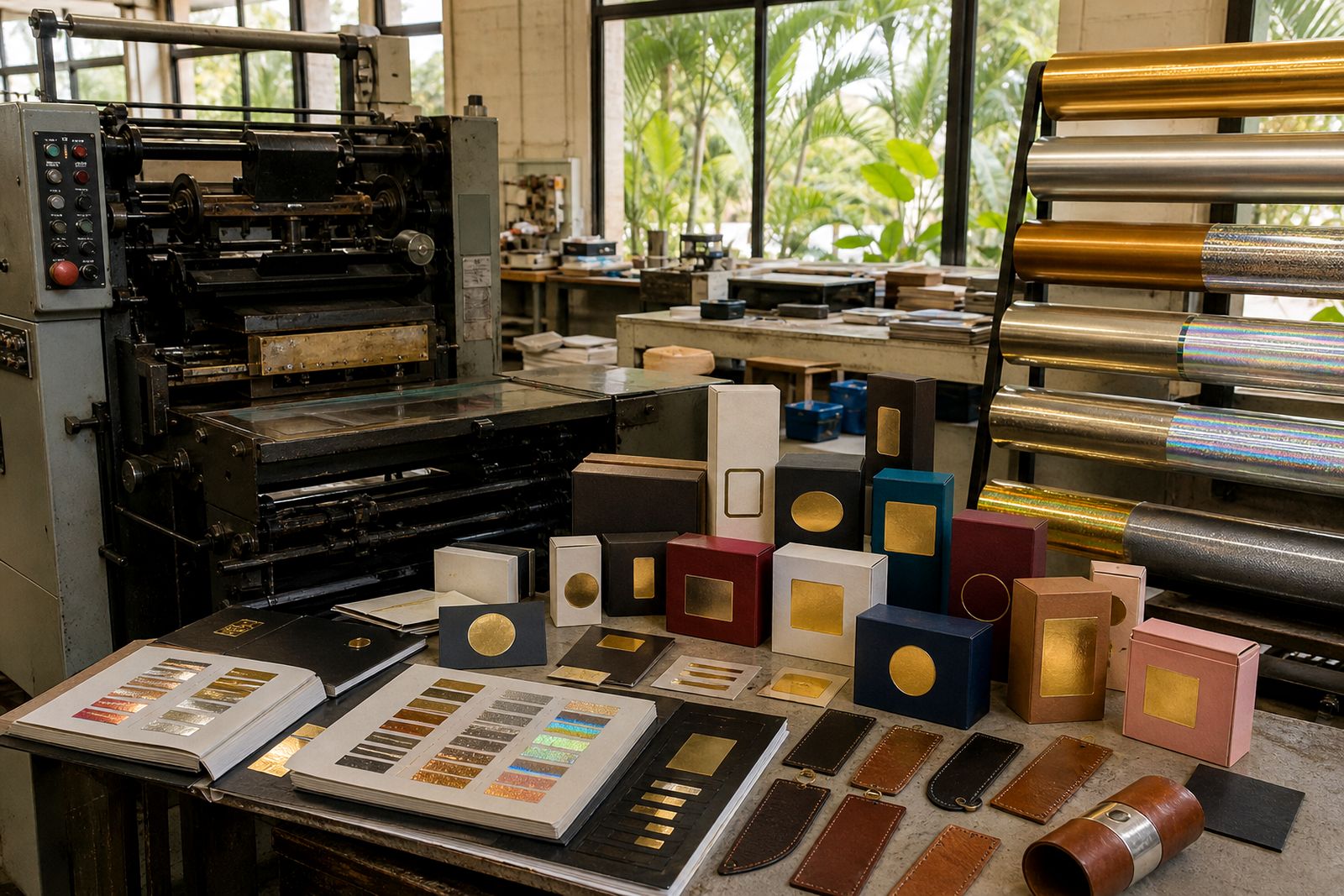
A good visit starts with the material you plan to run. Bring a printed sample, an unprinted board, film, label stock, textile offcut or leather piece, depending on the job you need to match.
If you are working on coated board, soft-touch laminate, plastics or textiles, bring the actual substrate rather than a description. That makes it easier to judge adhesion, release and the look of the foil on the real surface.
- Printed sample if you are matching an existing job
- Stock sample if you want to test a new material
- Artwork or die line if you are planning new tooling
- Press details if you already know the press type and setup
For a visit, book through the contact form so the right swatches and test pulls can be ready.
What you will see in Durban
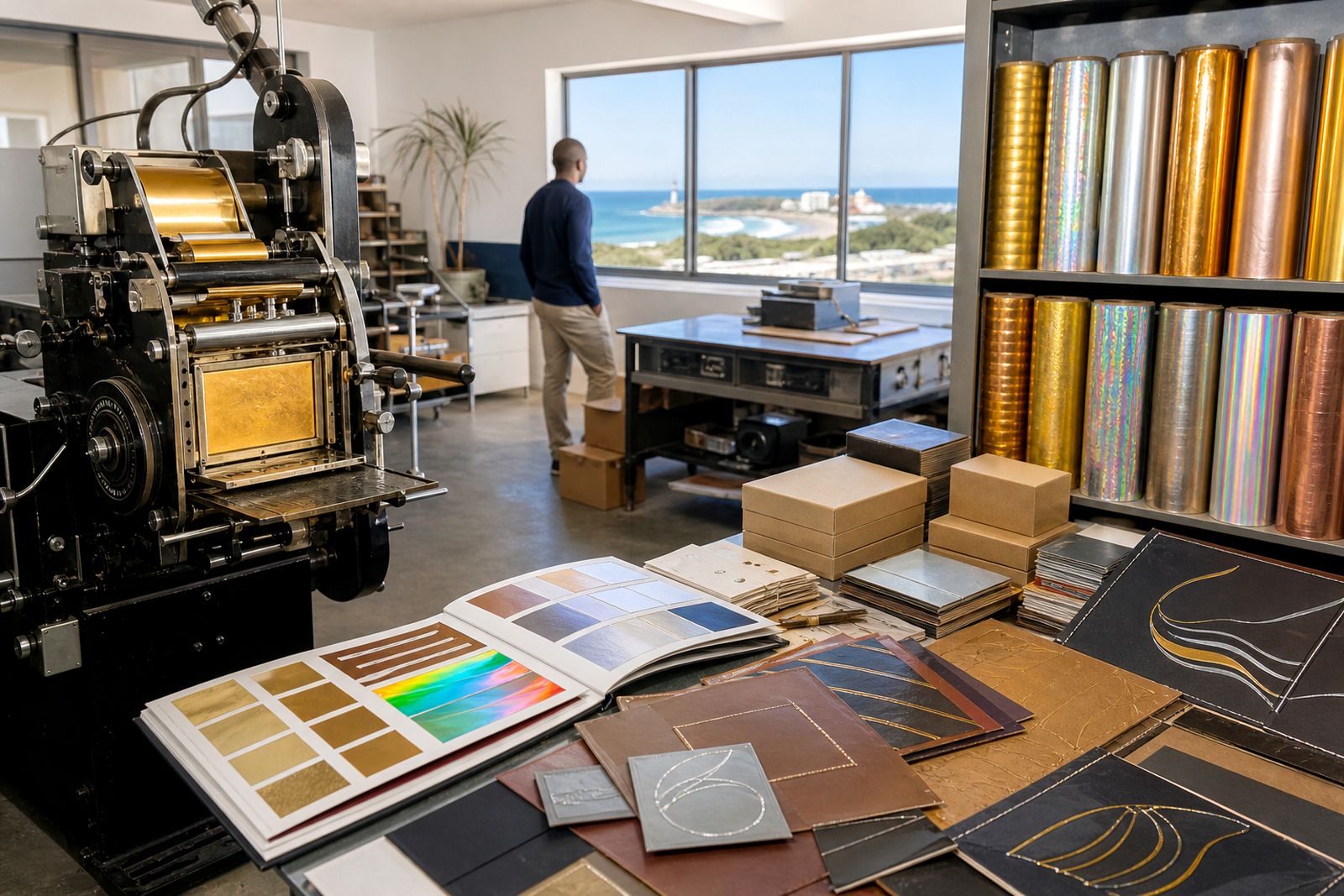
Expect to work through foil families by use, finish and release. You can compare metallic gold, silver, copper, bronze, mirror and satin finishes, plus pigment foils in black, white and process colours.
The counter also helps with holographic and diffraction foils, security foils and specialty foils for leather, plastics, textiles and soft-touch laminate. If you need a narrower roll format, the team can discuss slit-to-width supply for your press and job width.
The aim is not to choose by colour name alone. Foil finish, opacity, release and surface detail all affect the final result on labels, cartons, book covers and leather goods.
| Foil type | Useful for |
|---|---|
| Metallic and satin foils | Decorative branding, panels and highlights |
| Pigment foils | Solid colour marks, text and flat branding |
| Holographic and diffraction foils | Security cues and visual effects |
| Specialty foils | Leather, plastics, textiles and soft-touch surfaces |
How Durban sample pulls are checked
Swatch books are only the first step. The useful part is comparing them against a real sample pull under conditions close to your own press setup.
When a job needs testing, the discussion usually covers temperature windows, dwell, pressure, release profile and make-ready. These are checked as starting points for your material and press, then refined on press.
If your job uses magnesium, copper or brass dies, bring that detail too. Die type, artwork depth and press style can change how a foil releases and how cleanly it holds fine detail.
For plated, coated or textured surfaces, a small change in dwell or pressure can alter the finish. That is why the visit focuses on proofing, not guesswork.
Press setup advice for Durban
Support at the counter is practical and tied to real production. The team can talk through platen, cylinder and roll-to-roll presses, and how each one handles heat transfer, pressure and pull-off.
Typical starting points are discussed only as test ranges, because every substrate behaves differently. That includes coated board, laminated stock, films, labels and textile or leather materials.
- Checking temperature windows before full run
- Adjusting dwell for cleaner release
- Balancing pressure for fine detail and solid blocks
- Reviewing make-ready to reduce early waste
If you need to compare advice across applications, you can also look at applications and finishes before the visit.
Plan your Durban visit
A visit is most useful when it is focused. Tell the team what you are trying to achieve, what material you are running and whether you need a decorative, technical or security finish.
Use the contact form to book time at the Durban counter, then bring the sample stock and any printed references. That way the discussion can move straight to matching, testing and narrowing the foil choices.
If Durban is not the most convenient counter for your team, you can also use the other showroom pages to plan a closer visit: Johannesburg, Pretoria, Cape Town, Gqeberha and Bloemfontein. For a broader overview, see showrooms and counters.
What our Hot Stamping Foil customers say
Verified Google reviews
Also worth a look
Ask about a foil for your job
Send a note through our contact form with the substrate, the press you run (platen, cylinder or roll-to-roll), the finish you are after and the run length, and we will come back with a foil grade, a sample and a quote.
Open the contact form