

Education and training
Need clear foil samples and setup notes for classroom demonstrations? Use this guide to choose the right foil, substrate and press method for training.
What to cover in class
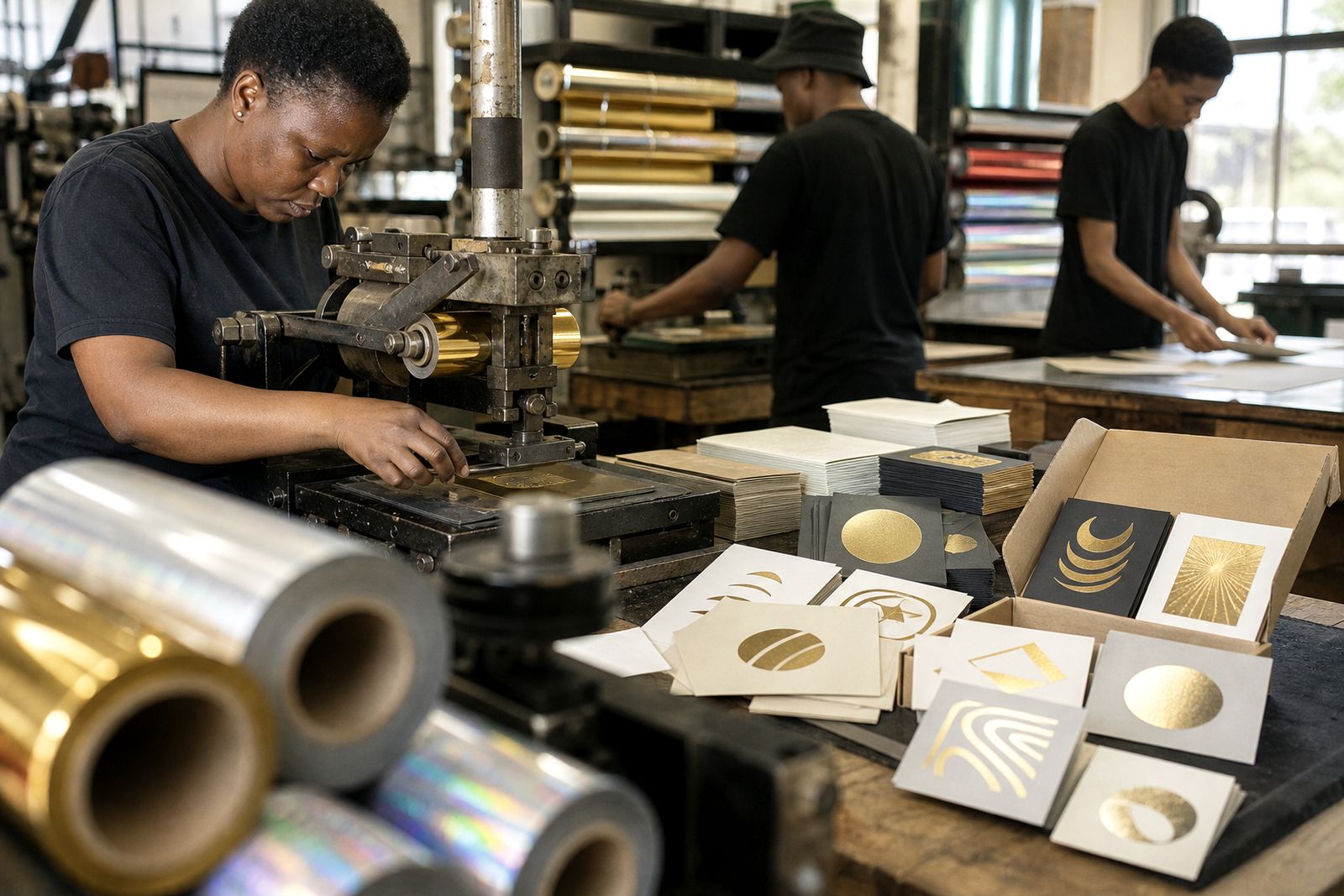
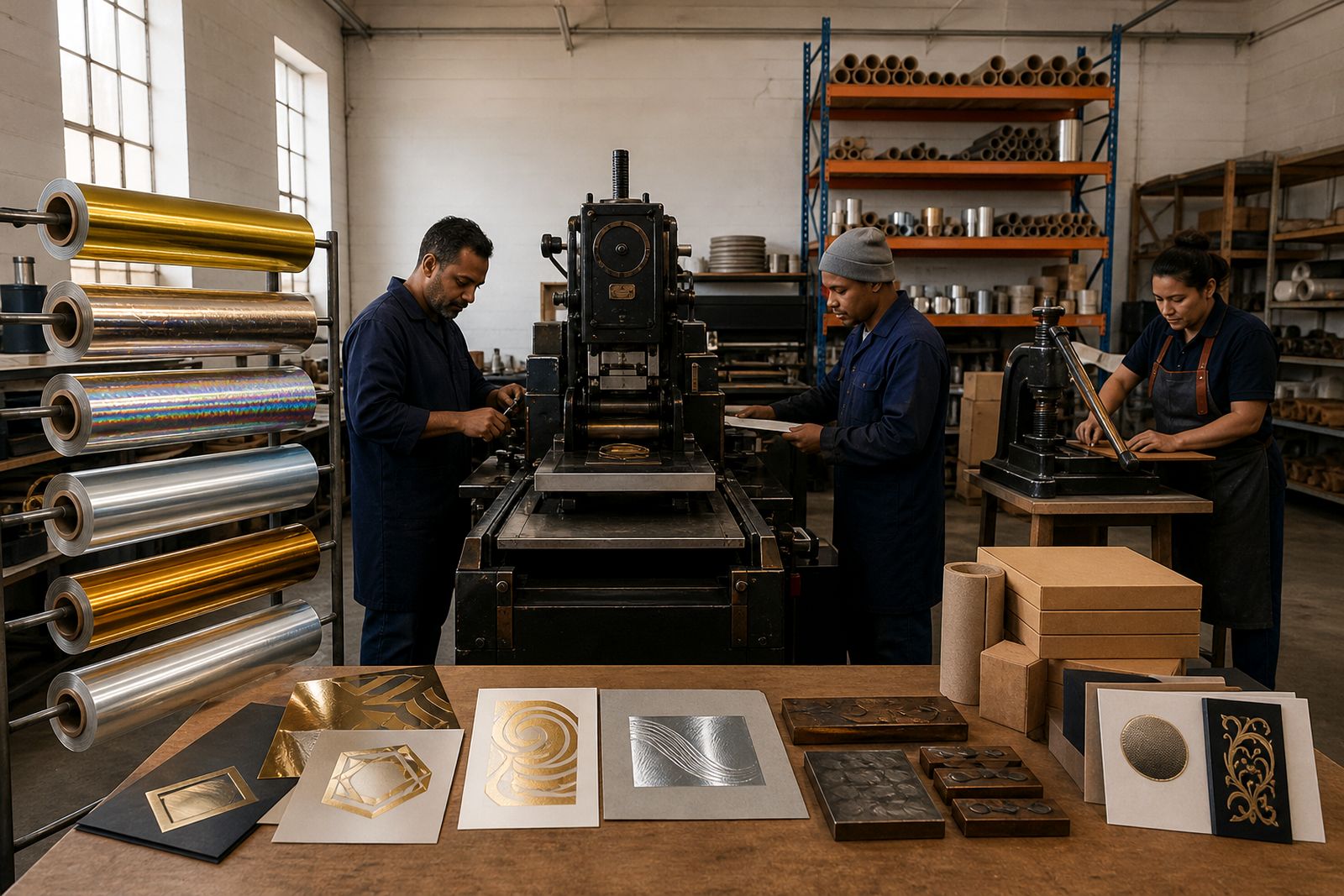
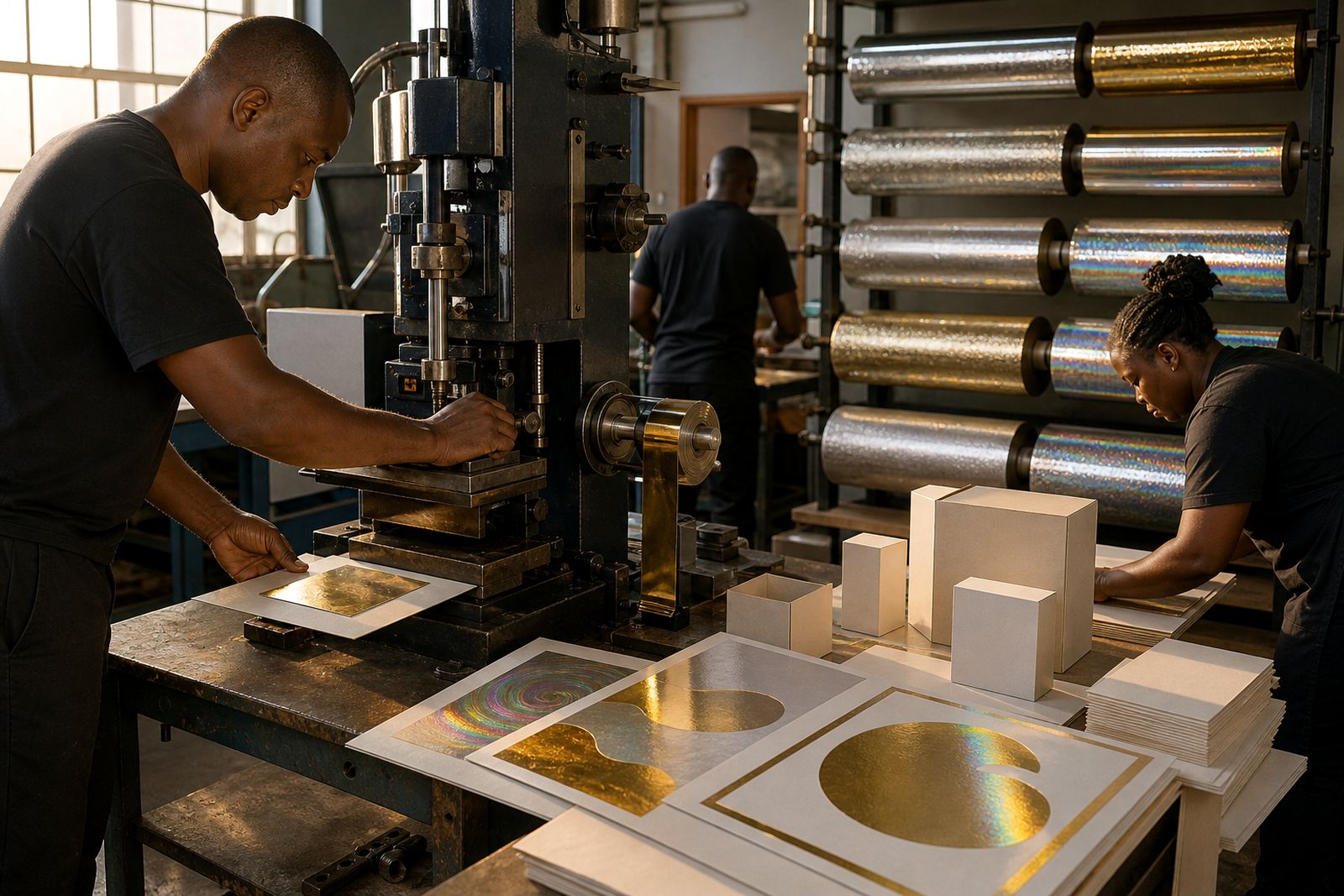
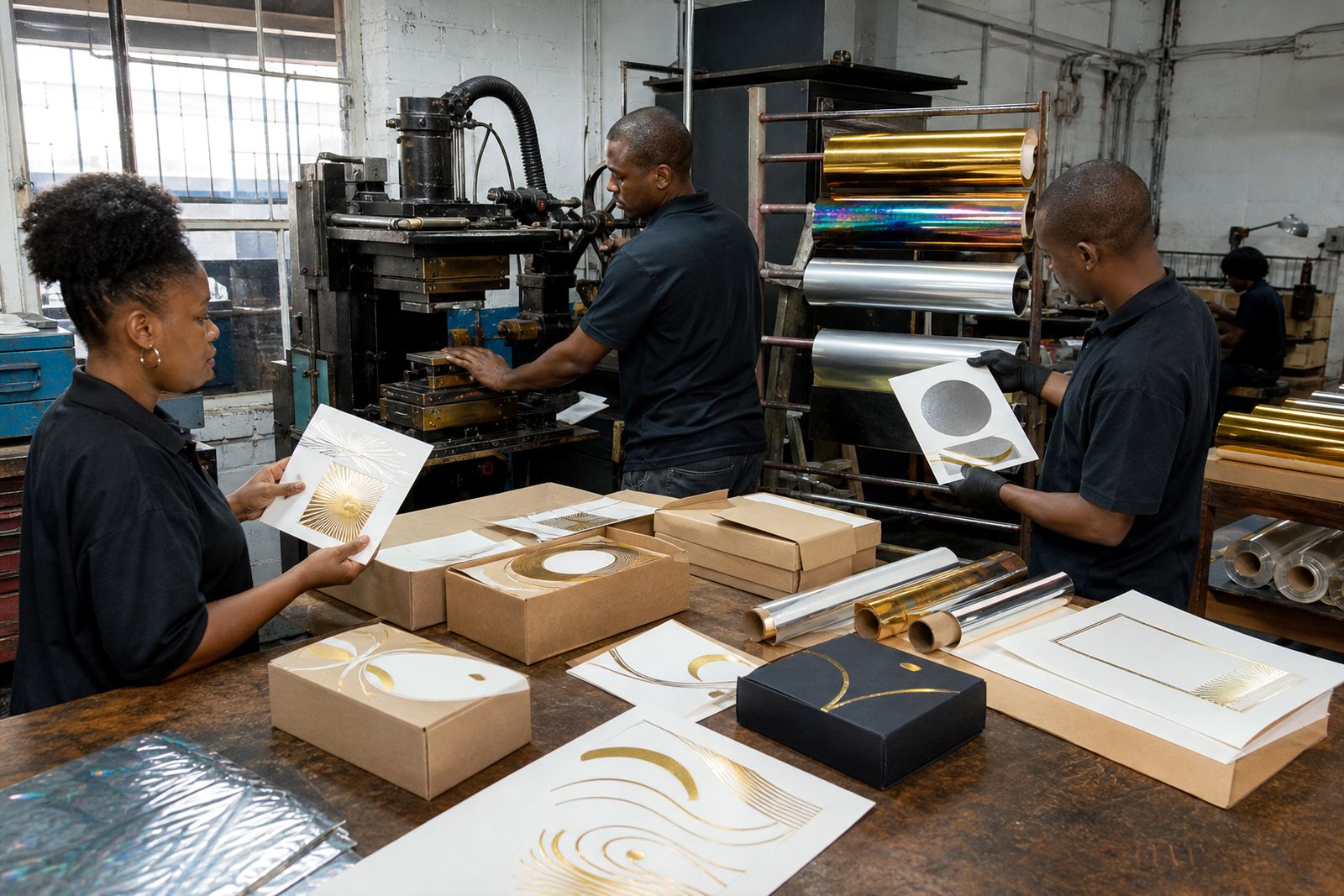
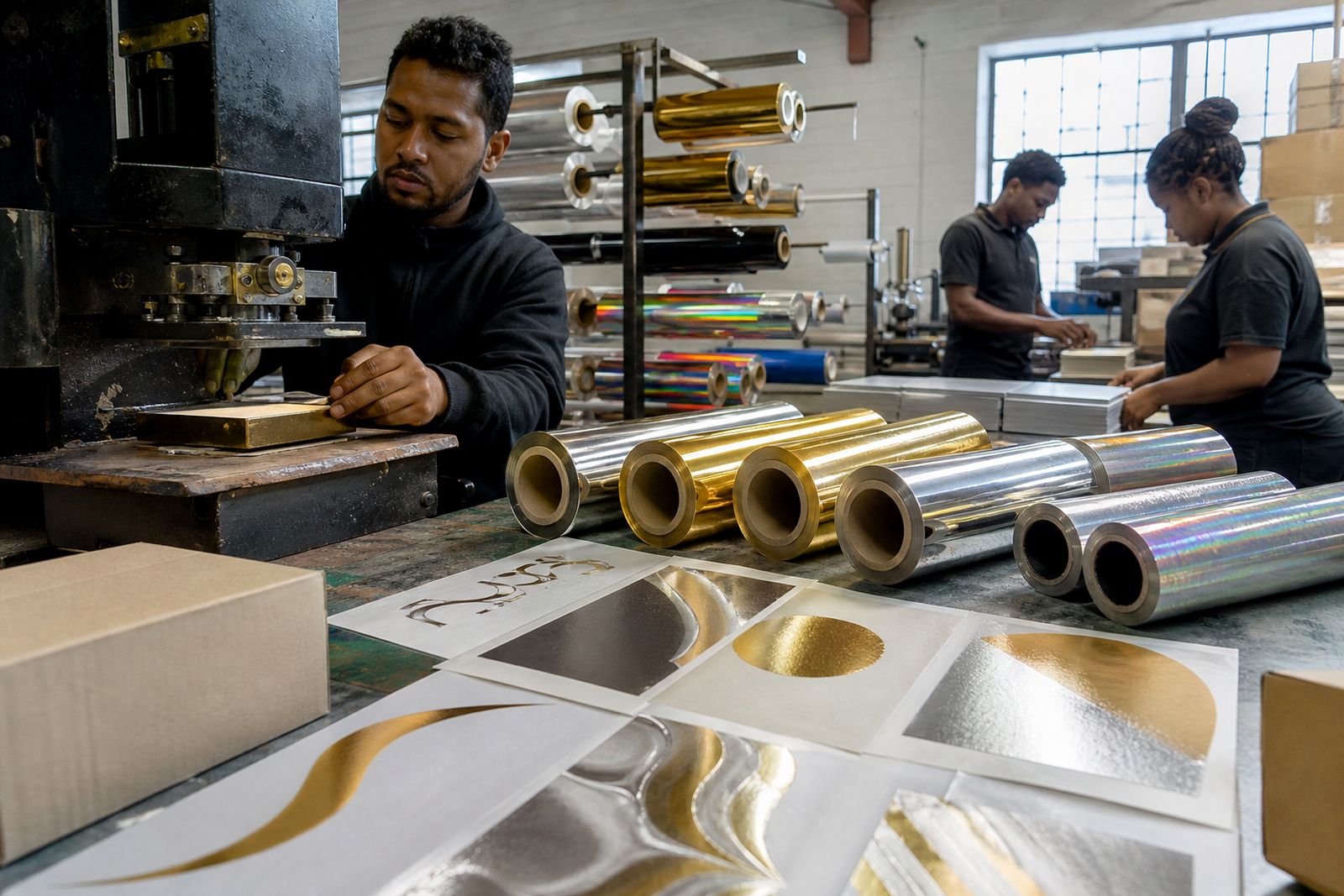
When teaching hot stamping, it helps to show how foil choice, substrate and tooling work together. Use metallic foils for gold, silver, copper, bronze, mirror and satin effects, plus pigment, holographic, diffraction and security foils where the lesson calls for colour, pattern or protection.
For finish demonstrations, include common teaching examples such as cartons, labels, book covers, coated board, soft-touch laminate and leather goods. For other substrates, ask for foil guidance before the class so the setup matches the material being shown.
- Metallic, pigment, holographic, diffraction and security foils
- Foils for leather, plastics, textiles and soft-touch laminate
- Typical classroom pieces such as labels, cartons and book covers
- Sample swatches to compare finishes side by side
How sample kits help
Sample kits make it easier to plan a lesson before the press is set up. They let you compare colour, opacity, shine, pattern and release behaviour on the intended stock, so learners can see what changes when the substrate or temperature changes.
Ask for swatch books or sample pieces that suit the materials you teach with. If you are preparing notes for a class, include the foil family, substrate, press type and any finish target you want to show.
| Useful item | Why it helps |
|---|---|
| Swatch book | Shows the available foils in one place |
| Sample pieces | Lets learners compare finishes on real stock |
| Press notes | Helps link the sample to a practical setup |
Press setup notes
Good training notes should cover temperature window, dwell, pressure, release profile and die choice. Start with a test range that suits the foil and substrate, then adjust until the impression is clean and the foil releases fully.
Use the same notes to show the difference between platen, cylinder and roll-to-roll presses. For teaching, it is useful to explain how make-ready, register and press speed affect the final result on coated board, laminate and other difficult surfaces.
- Typical starting temperatures to test, not fixed settings
- Dwell and pressure changes for cleaner transfer
- Release profiles for smooth foil laydown
- Make-ready for platen, cylinder and roll-to-roll presses
Dies and materials
Training sessions often need examples of how dies behave on different jobs. Magnesium, copper and brass dies can each be used to show different levels of detail, longevity and heat transfer, depending on the lesson and the press.
It also helps to show how foil behaves on coated board, soft-touch laminate, plastics and leather. If the class is focused on packaging or finishing, ask for advice on adhesion and release before the lesson so the sample matches the job.
- Magnesium, copper and brass dies for demonstration work
- Foil on coated board, cartons and labels
- Foil on leather, plastics and textiles
- Setup support for adhesion and clean release
Ordering for training
For classes, order the foil families and sample sizes that suit the lesson plan, then ask for setup notes to go with them. Foils can be slit to roll width for the press format being used, and practical advice can be provided for the setup you are teaching.
If you need to prepare a student handout or demonstration run, use the contact form to request samples, swatches or guidance on the right foil for the substrate and press. You can also explore related pages for trade printers, packaging converters, label houses and leather workshops.
- Ask for samples before committing to a full run
- Match the foil to the press and substrate being taught
- Use the contact form for sample requests and quotes
- Refer back to the solutions hub for other use cases
What our Hot Stamping Foil customers say
Verified Google reviews
Also worth a look
Ask about a foil for your job
Send a note through our contact form with the substrate, the press you run (platen, cylinder or roll-to-roll), the finish you are after and the run length, and we will come back with a foil grade, a sample and a quote.
Open the contact form