

Pigment Solid press notes
Use these notes to keep Pigment Solid printing close to the swatch on press. They cover make-ready, substrate checks and the faults to watch for.
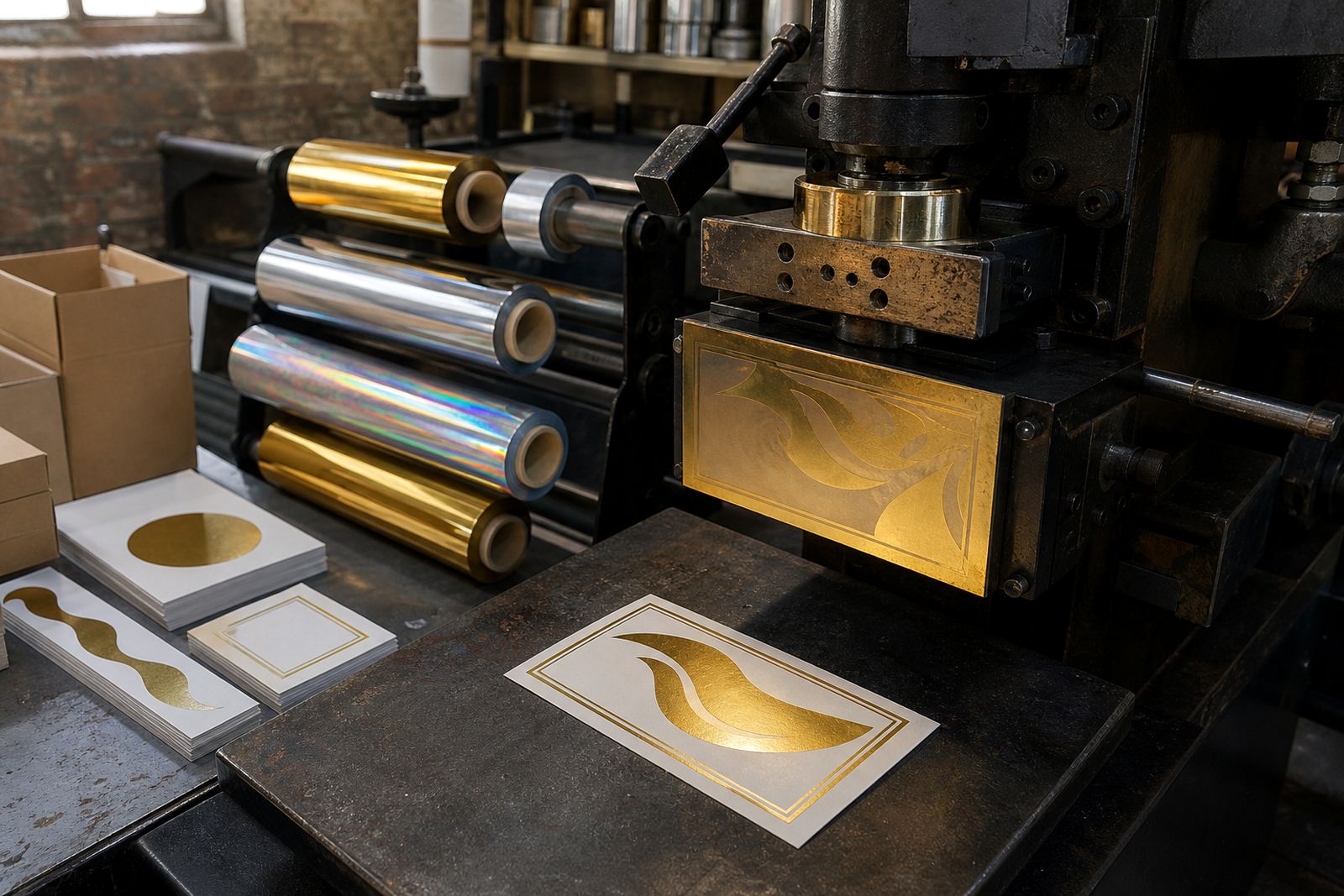
what pigment solid is for
Pigment Solid is a solid colour foil for clean, opaque laydown where the design needs a flat colour block rather than a metallic finish. It is a good fit for brand colours on dark boards, black paper and PVC cards, and can also be used on other suitable label, carton and cover stocks after testing.
For substrate guidance, see Pigment Solid substrates. If you need the product build and handling details, go to the Pigment Solid specifications.
As a starting point, test in the 120 to 140°C range and work from there according to stock, artwork and press speed. The aim is even transfer, clean edges and a solid face without overworking the foil.
check the press setup
Good make-ready starts with the right press conditions before the first pull. Confirm that the die face is clean, the chase is seated properly and the substrate is flat enough for the image area. Pigment foils are sensitive to heat balance, dwell and pressure, so small changes on press can show immediately in the finish.
- Start with a sensible temperature window and increase only if transfer is incomplete.
- Set dwell so the foil has time to release without scorching the stock.
- Use only the pressure needed for full contact across the die face.
- Watch release cleanly from the foil carrier, especially on fine type and solid areas.
If the job is being run on a platen, cylinder or roll-to-roll press, keep the setup consistent across the sheet or web. For ordering and supply notes, visit Order Pigment Solid.
choose the right die
Die choice affects heat transfer, detail and how the foil releases. Magnesium suits shorter runs and general make-ready when the image is simple and the stock is behaving predictably. Copper is useful when you need better heat flow or more refined detail. Brass is often chosen for longer life and harder working conditions.
Whichever die material you use, the face must be clean, level and matched to the detail in the artwork. Too much pressure can force fill-in and edge spread. Too little pressure can leave pale areas, pinholes or weak adhesion. If the image includes large solids, plan the die and make-ready to keep heat even across the full area.
solve common faults
Pigment Solid faults usually point back to make-ready rather than the foil itself. The most common issues are fill-in, flaking, poor adhesion and feathering. Check the likely cause first, then adjust one variable at a time so you can see what changed.
| Fault | Check first | Typical fix |
|---|---|---|
| Fill-in | Heat, dwell, pressure | Reduce pressure, improve die control and test a narrower temperature window |
| Flaking | Adhesion and substrate surface | Increase dwell slightly, check stock surface and confirm the release is clean |
| Poor adhesion | Heat transfer and press setup | Test higher heat within range, confirm packing and recheck make-ready |
| Feathering | Pressure and edge control | Ease pressure and check die alignment and stock flatness |
When the stock is coated or soft-touch laminated, test carefully before the main run. For more on substrate behaviour, see Pigment Solid substrates.
rolls and supply notes
Pigment Solid is supplied as slit rolls to the required roll width, ready for production use. Keep rolls stored clean and dry, away from dust and heat, and handle the edges carefully so the foil web stays true on press.
Before the job starts, check the roll width, unwind direction and press fit-up. If you are moving between platen, cylinder and roll-to-roll work, keep the same basic checks in place for temperature, dwell, pressure and release profile. That helps maintain the same look across short runs and repeat work.
For a fresh set of notes on this foil family, go back to Pigment Solid, or use the contact form at Contact if you need advice on the job setup.
What our Hot Stamping Foil customers say
Verified Google reviews
Also worth a look
Ask about a foil for your job
Send a note through our contact form with the substrate, the press you run (platen, cylinder or roll-to-roll), the finish you are after and the run length, and we will come back with a foil grade, a sample and a quote.
Open the contact form