

Pigment Solid substrates
Use this guide to check where Pigment Solid is likely to print cleanly, and where make-ready tests matter most. Start with the substrate, then confirm heat, pressure and release on press.
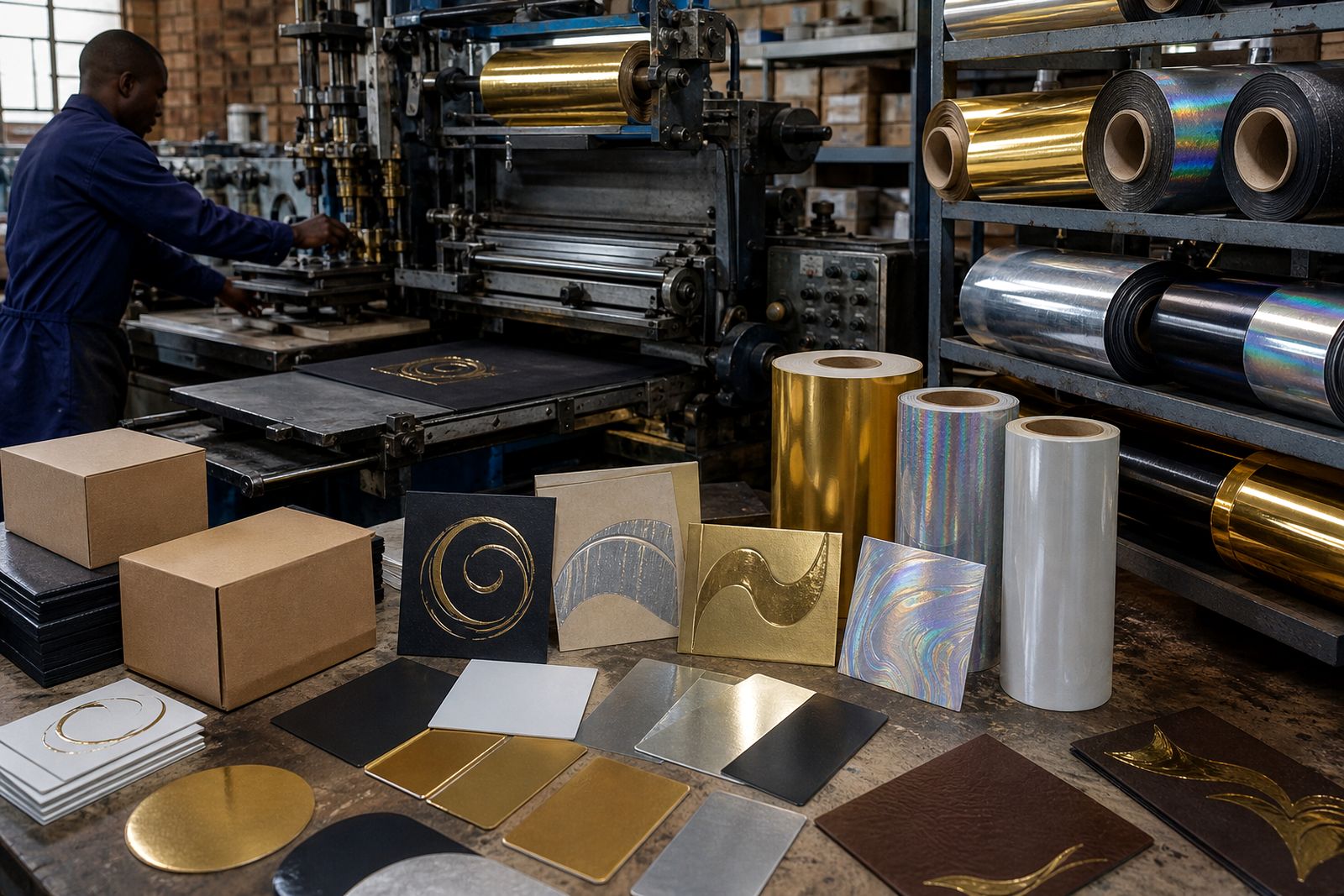
best starting substrates
Pigment Solid is made for solid, opaque colour laydown on surfaces that can hold a crisp edge and a clean release. As a starting point, it suits dark boards, black paper and PVC cards, where the colour block can sit clearly against the background.
On coated board, uncoated board and carton stock, begin with a small press test before committing to a full run. Smooth, even surfaces are usually easier to read than porous or heavily textured stock, but every board grade should be checked on press.
- Dark board and black paper for strong contrast
- PVC cards and similar rigid plastic stock
- Coated board when the surface is even and well prepared
- Uncoated board where the fibre structure is not too open
substrates to test first
Some surfaces can work well, but they need closer make-ready because the foil must release cleanly and sit flat. Soft-touch laminate, gloss laminate and UV varnish can all change how the foil releases, so test before running long quantities.
Labels, plastics, leather and textiles also need careful trialing, especially when the substrate has flexibility, texture or surface treatment. If the stock is being converted after coating or varnishing, confirm that the finish is fully cured and that the print area is consistent.
| Substrate | What to check |
|---|---|
| Soft-touch laminate | Release, surface recovery and edge definition |
| Gloss laminate | Slip, impression balance and clean transfer |
| UV varnish | Adhesion, cure condition and pressure setting |
| Labels and plastics | Heat response and dimensional stability |
| Leather and textiles | Texture fill, dwell and surface movement |
press setup to check
Start with the known starting range of 120 to 140 degrees C and then test in small steps for the actual substrate, press and die combination. Temperature alone will not tell the full story. Dwell, pressure and release profile all affect how the foil anchors and how cleanly it lifts away from the carrier.
For platen, cylinder and roll-to-roll presses, keep the test area small and consistent. Check that the die face is even, the back pressure is suitable, and the impression is not crushing the stock. If the foil is not laying down cleanly, review the temperature window first, then the dwell and pressure.
- Confirm the actual stock finish, not just the board description
- Test the temperature window on a short run
- Adjust dwell before increasing pressure too far
- Watch for incomplete release, overburn or edge spread
dies and make-ready
Pigment Solid can be run with magnesium, copper and brass dies, provided the die, stock and press are matched correctly. Fine detail, solid panels and large blocks may each need a different approach to relief, depth and heat transfer.
Make-ready should allow for even contact across the image area. On uneven boards, textured papers or laminated stocks, check that the die is seated properly and that the impression is consistent across the sheet or web. If the release looks patchy, the problem is often in setup rather than in the substrate alone.
For press-side notes on window setting and setup checks, see Pigment Solid press notes and the product details in the Pigment Solid Specifications.
how it is supplied
The foil is slit to roll width for the job at hand, so it can be matched to the press and application width without unnecessary waste. If you are planning repeat work, ask for swatch books or samples first, then test the same substrate, die and press conditions you intend to use on the run.
For ordering, supply the substrate type, press format and intended area of coverage so the right roll width and test approach can be advised. If you need help choosing the starting point, use the contact form or go to Order Pigment Solid.
When you are comparing finishes across the range, the main product overview at Pigment Solid is the best place to start.
What our Hot Stamping Foil customers say
Verified Google reviews
Also worth a look
Ask about a foil for your job
Send a note through our contact form with the substrate, the press you run (platen, cylinder or roll-to-roll), the finish you are after and the run length, and we will come back with a foil grade, a sample and a quote.
Open the contact form