

Security Micro press notes
Practical press notes for keeping Security Micro close to the swatch on press. Use these checks for certificates, ID cards and duty seals.
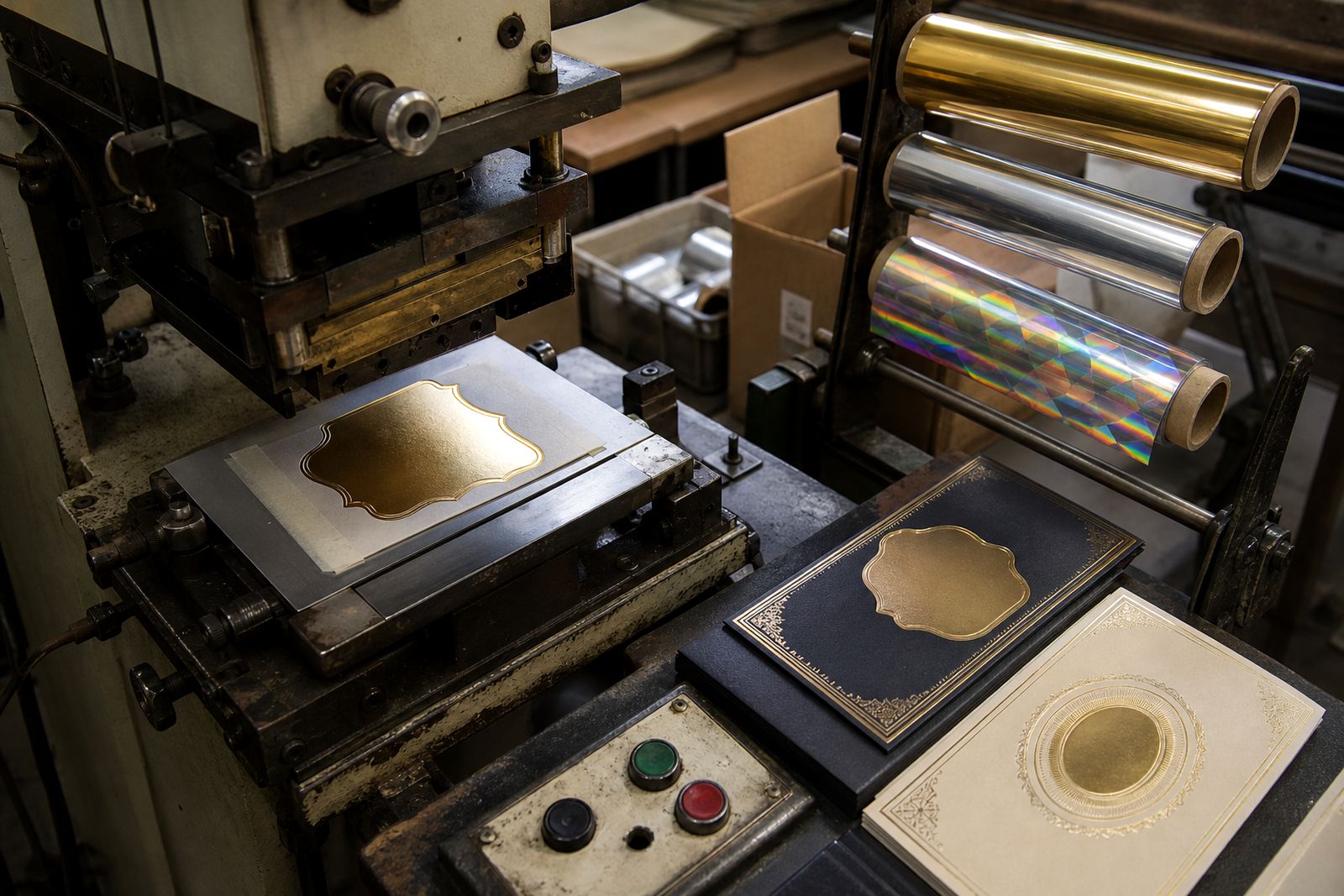
Where it fits
Security Micro is used where fine detail, covert marking and controlled supply matter. It suits certificates, ID cards and duty seals, and is normally pressed onto substrates that can hold a crisp, clean image without losing the micro detail.
Common applications include coated board, selected label stocks, plastics and other smooth surfaces that are already suited to foil. For soft-touch laminate and other difficult finishes, test the surface first and confirm adhesion before committing to a full run. If you need help choosing a substrate route, see Security Micro Substrates.
For broader product details, start at Security Micro.
Set up for make-ready
Start with a clean press, a level chase and a die that matches the image area closely. Security Micro depends on fine control, so make-ready should aim for even heat, even pressure and a flat transfer surface.
- Check the temperature window on your own press with a short test strip first.
- Adjust dwell so the foil releases cleanly without over-pressing the image.
- Set pressure evenly across the die face and watch for packing that changes the impression depth.
- Confirm release profile before going to production, especially on coated or textured stock.
Keep the first pull for inspection. Look at edge sharpness, fine text and any signs of over-release before you increase speed.
Choose the right die
Die choice affects how Security Micro transfers and how much detail stays intact. Magnesium, copper and brass can all be used, but each behaves differently on fine work, so the choice should match the press, run length and the level of detail needed.
Magnesium is often chosen for shorter runs and proofing. Copper and brass are preferred where more wear resistance or finer control is needed. The main point is consistency: the die face must be clean, level and sharp enough to hold the micro image without crushing it.
If the image is losing detail, check the die face, the chase packing and the pressure balance before changing foil.
Read the faults
When Security Micro does not match the swatch, the fault is usually in heat, dwell, pressure, substrate or die condition. Start with the press setting before changing the foil roll.
| Fault | What to check | Typical fix |
|---|---|---|
| Fill-in | Too much heat or pressure, or a die that is too heavy | Lower heat in small steps, reduce packing and test again |
| Flaking | Poor release or a surface that is not receiving the foil | Increase dwell slightly, check release profile and confirm substrate suitability |
| Poor adhesion | Dirty stock, wrong temperature window or weak pressure | Clean the press area, reset heat and confirm even pressure |
| Feathering | Over-release at the edges or uneven impression | Check die flatness, pressure balance and dwell |
Test one change at a time so you can see which setting corrected the fault.
Order and supply
Security Micro is supplied in roll form, slit to the width needed for the job. Keep the roll sealed until you are ready to use it, then handle it cleanly to avoid marks on the active layer.
For repeat work, keep notes on the temperature window, dwell, pressure and release profile that gave the cleanest result on your press. That record will save setup time on the next run. If you need a swatch book, samples or press-side advice, use the contact form.
To move from setup notes to ordering, see Order Security Micro.
Keep the run stable
Once the job is running, check the first sheets against the swatch and then keep a close eye on the press. Security Micro is a controlled product, so small changes in heat, speed or packing can show quickly on the finished image.
- Recheck the first few pulls after any press stop.
- Watch for temperature drift across longer runs.
- Keep die faces clean and free of residue.
- Store the remaining roll carefully so the next setup starts cleanly.
For a deeper look at construction details, see Security Micro Specifications.
What our Hot Stamping Foil customers say
Verified Google reviews
Also worth a look
Ask about a foil for your job
Send a note through our contact form with the substrate, the press you run (platen, cylinder or roll-to-roll), the finish you are after and the run length, and we will come back with a foil grade, a sample and a quote.
Open the contact form