

Security Micro substrates
Check where Security Micro tends to transfer cleanly and where a test is needed first. Use these notes to plan make-ready before a longer run.
What this foil is for
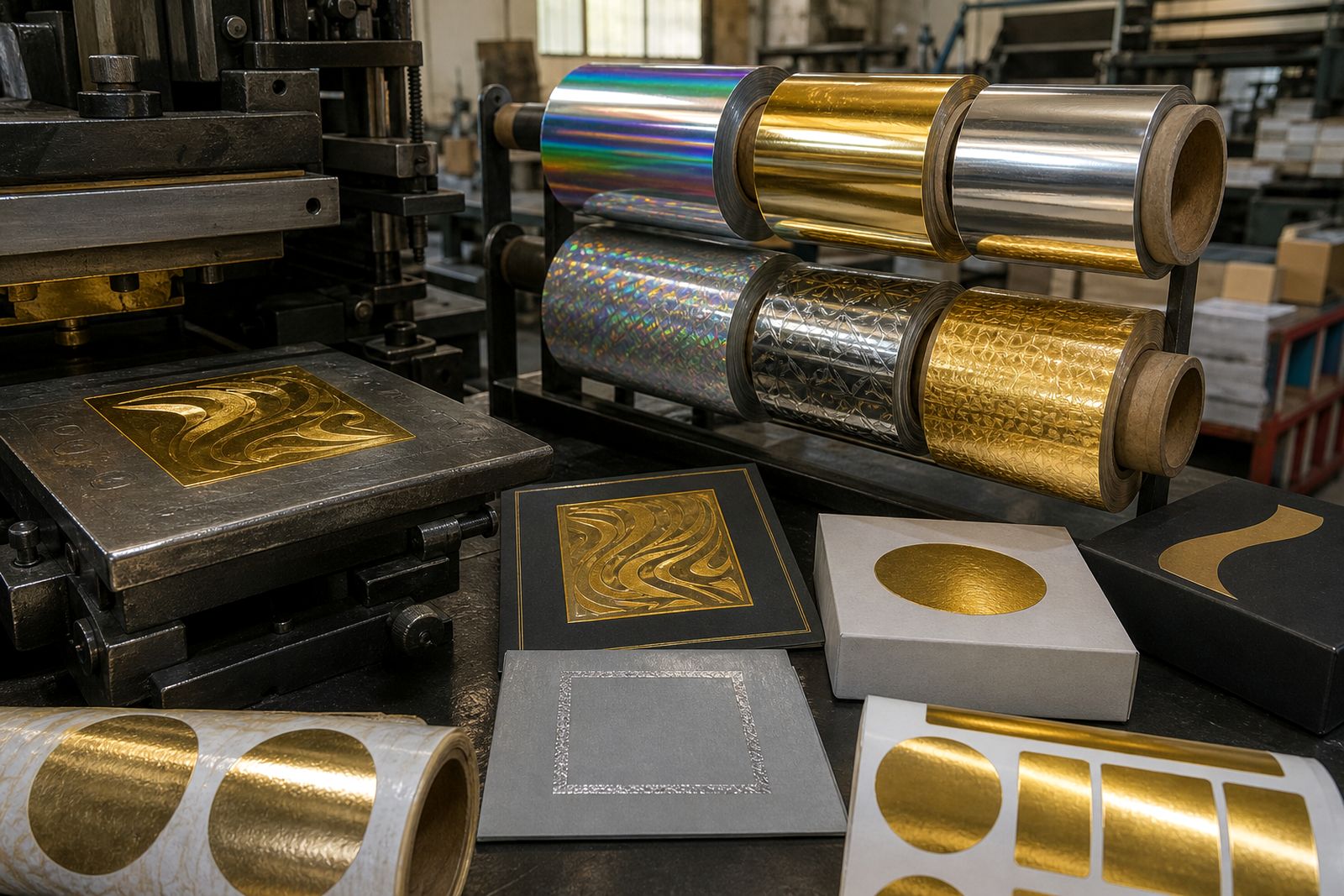
Security Micro is used for fine, covert detail where clean transfer and sharp definition matter. It suits microtext, security marks and other controlled features on certificates, ID cards, duty seals and similar work where the finish must hold detail without spreading.
For the right application, start by matching the foil family to the substrate and press type. If you need to compare related guidance, see the Security Micro specifications and Security Micro press notes.
Substrates to test first
Start with coated board, then move to uncoated board, soft-touch laminate, gloss laminate and UV varnish if those are part of the job. Labels, plastics, leather and textiles may also be suitable, but they need a proper test because surface chemistry and texture affect release and definition.
- Coated board for the first transfer check and image edge clarity
- Uncoated board for hold, fill and release behaviour
- Laminate and varnish for slip, adhesion and surface sensitivity
- Labels and plastics for adhesion and release consistency
- Leather and textiles only after a practical substrate test
If you are planning a new job, confirm the substrate with the Order Security Micro section before production.
Press types and setup
Security Micro can be run on platen, cylinder and roll-to-roll presses, but the make-ready needs to suit the press style. Platen work often needs careful flatness and packing. Cylinder work needs even contact. Roll-to-roll work needs steady tension, clean winding and consistent web control.
Before you commit to a full run, check the die face, substrate feed, foil route and register. For fine security detail, a small change in contact pressure or release can change the result more than expected.
Make-ready checks
Use a controlled test sheet or sample roll to confirm the temperature window, dwell, pressure and release profile before production. Start with the lowest practical heat that gives transfer, then adjust dwell and pressure until the detail closes cleanly without smudging or over-transfer.
| Check | What to look for |
|---|---|
| Temperature window | Start with a practical test range and confirm clean transfer without softening the substrate. |
| Dwell | Enough contact time to transfer the fine detail without spreading or picking. |
| Pressure | Even contact across the image area, especially on fine elements and small type. |
| Release | Clean lift from the non-image areas and no unwanted residue on the die or sheet. |
If the first pull is uneven, adjust one variable at a time. That makes it easier to see whether the issue is heat, dwell, pressure or release.
Supply and support
Security Micro is supplied in roll form slit to the roll width required for the job, with swatch books and samples available for planning and comparison. That makes it easier to match the foil to the substrate before the press is locked in.
For practical help with substrate choice, make-ready or press direction, use the contact form. You can also review the main product overview at Security Micro if you need the wider product context.
What our Hot Stamping Foil customers say
Verified Google reviews
Also worth a look
Ask about a foil for your job
Send a note through our contact form with the substrate, the press you run (platen, cylinder or roll-to-roll), the finish you are after and the run length, and we will come back with a foil grade, a sample and a quote.
Open the contact form