

Bronze Cord press notes
Use these press notes to help Bronze Cord print closer to the swatch on press. Start with practical make-ready checks, then adjust for your substrate and press.
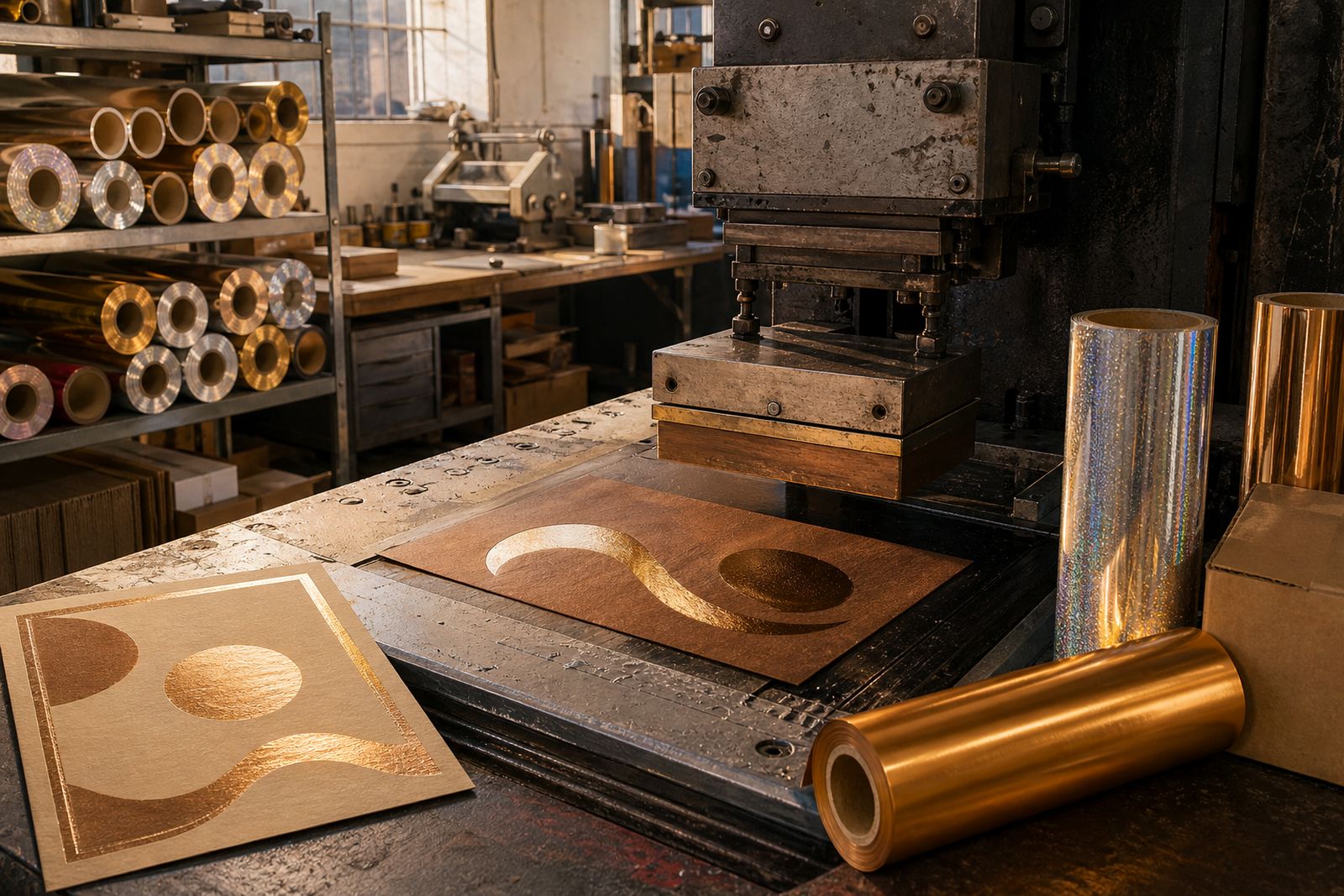
Start with a clean make-ready
Bronze Cord is a bronze metallic foil for a warm, antique look on leather, kraft board and wine cartons. It is supplied as slit rolls for press use, with swatch books and samples available so you can compare the finish before production.
Before you run, check that the die is clean, the image is even, and the stock is flat enough for consistent contact. On platen, cylinder and roll-to-roll presses, small make-ready changes can make a clear difference to coverage and edge definition.
- Typical starting point: 130 to 145°C
- Release: soft release
- Look: antique bronze depth
- Suitable substrates: leather, kraft board, wine cartons
Set heat and dwell carefully
Use the starting temperature range as a test point, then adjust one variable at a time. If the foil looks pale or patchy, first check whether the image is getting enough dwell and contact before pushing the heat too far. Too much heat can flatten detail or change the release behaviour.
Bronze Cord is intended to sit well on common packaging and leather work where a controlled transfer is needed. Keep trial notes close and note what changed on each run so you can return to a working setting later.
| Check | What to look for |
|---|---|
| Heat | Stay within a practical starting window and test in small steps |
| Dwell | Enough time for the foil to transfer fully without overworking the stock |
| Pressure | Even contact across the image, especially on larger solids |
| Release | Clean lift from the carrier with no drag or smudge |
Choose the right die
Die choice matters with bronze finishes because it affects image sharpness, heat transfer and the way fine detail holds. Magnesium, copper and brass dies can all be used, but they behave differently on press and need different handling during make-ready.
- Magnesium: useful for shorter runs and straightforward images
- Copper: suited where better heat handling or finer detail is needed
- Brass: chosen for more demanding wear or repeat use
If the image is not filling properly, do not assume the foil is the problem. Check the die face, packing, pressure balance and the substrate finish first.
Fix common faults
When bronze foil misbehaves, the fault is often in the interaction between heat, pressure, dwell and surface. Start with the simplest checks before changing the whole setup.
- Fill-in: reduce excess pressure, check die detail and confirm the image is not overpacked
- Flaking: confirm the stock surface is suitable and check whether release is too tight or the image is under-pressed
- Poor adhesion: test a small change in heat or dwell and confirm the substrate is clean and dry
- Feathering: review pressure balance, packing and edge condition on the die
For coated board and soft-touch laminate, extra care with contact and release is often needed. If you need a second opinion, use the contact form and include the substrate, press type and what you are seeing on press.
Order and support
Bronze Cord is available as slit roll stock for production use, with practical support for set-up and make-ready. If you need a matching reference, use the main product overview and related notes below before placing an order.
For a quote or to ask about a test roll, use the contact form. If you are comparing finishes, swatch books and samples can help you check colour, coverage and release before a full run.
What our Hot Stamping Foil customers say
Verified Google reviews
Also worth a look
Ask about a foil for your job
Send a note through our contact form with the substrate, the press you run (platen, cylinder or roll-to-roll), the finish you are after and the run length, and we will come back with a foil grade, a sample and a quote.
Open the contact form