

Bronze Cord substrates
Use Bronze Cord on stocks that suit a soft release and antique depth. Start with tests on the actual substrate before you commit to a long run.
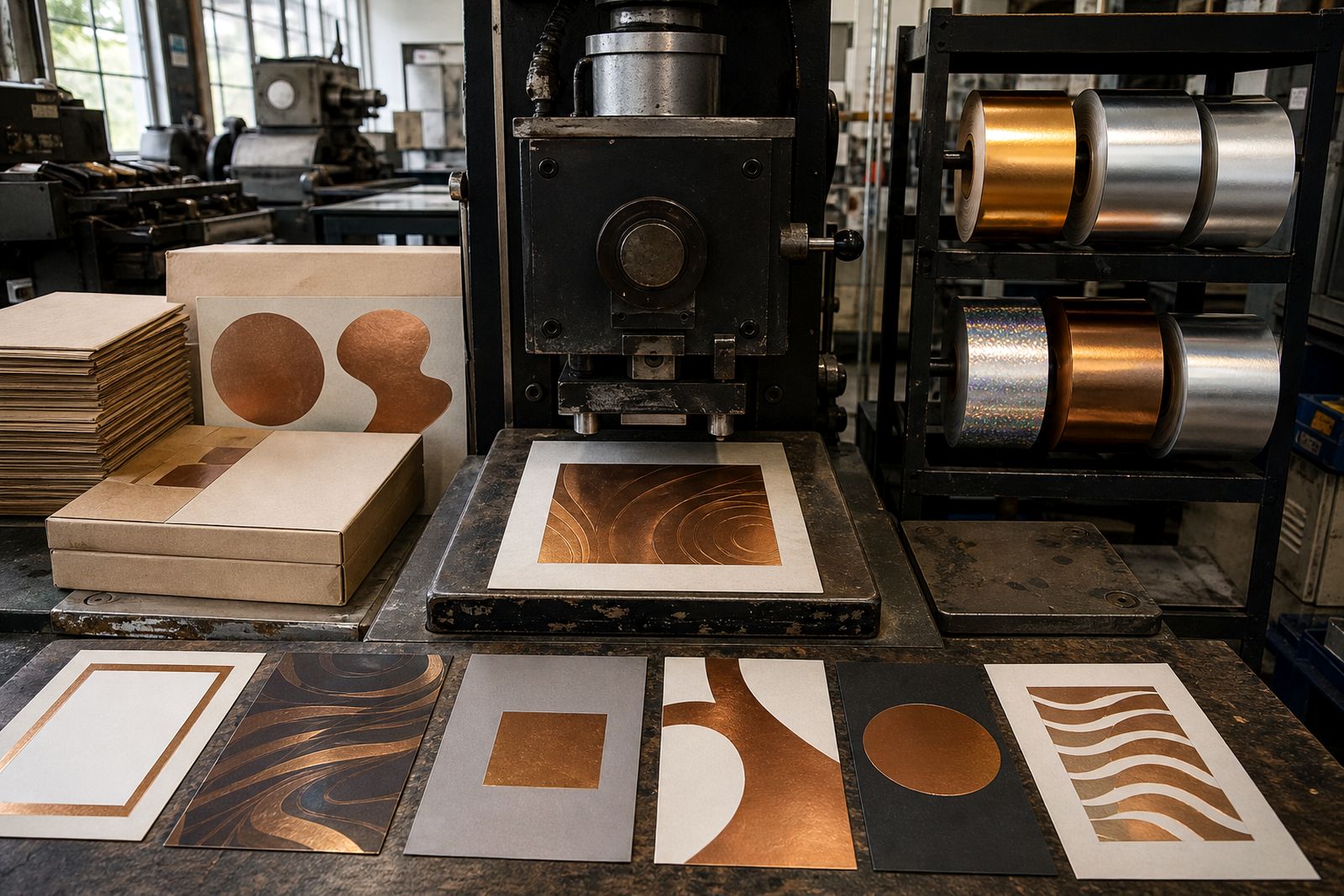
Where it transfers cleanly
Bronze Cord is a good starting point for substrates that can hold a clean metallic image without fighting the release. It is commonly tested on leather, kraft board and wine cartons, and can also be tried on coated board and selected label stocks where the surface is even and stable.
For trade work, the first check is always the surface. Smooth coated board, well-primed cartons and properly prepared leather usually give clearer transfer than rough, open or heavily textured stock. If the sheet has an uneven coating, a weak adhesive layer or variable calendering, test small areas first and compare the detail, edge sharpness and fill.
For related setup notes, see Bronze Cord specifications and Bronze Cord press notes.
Surfaces that need care
Uncoated board, soft-touch laminate, gloss laminate and UV varnish can all need closer attention because each surface changes how the foil releases and anchors. The same applies to plastics and textiles, where surface energy, texture and heat response can vary from one material to the next.
If the stock is flexible, heavily coated or treated for scuff resistance, test for clean release at the edges as well as the solid areas. Look at the fine detail first, then the fill, then any areas where the image crosses creases, seams, folds or board grain. A surface that seems suitable in a short pull may behave differently after make-ready stabilises, so repeat the test after the press is settled.
For a full set of usage notes, compare with the press notes before ordering the final roll width.
Press setup to check
Use the known starting point of 130 to 145°C as a test range only, then adjust to suit the substrate, die and press speed. Bronze Cord is listed with a soft release, so make-ready should focus on complete impression rather than excess heat.
Check these points before a long run:
- Temperature window across the heated area, not only at the controller reading
- Dwell long enough for the foil to release cleanly without overbaking the surface
- Pressure even across the image, especially on large solids and fine lines
- Release profile on the chosen stock, including edges and reverse type
- Die condition on magnesium, copper or brass tooling
Platen, cylinder and roll-to-roll presses can all be used, but each needs its own test strip and setup review. Keep the first run short, inspect the pull, then tune one variable at a time.
How to test first
Start with a small panel that matches the final substrate, coating and finish. Run a few short pulls before production, then compare transfer on solids, hairlines, type and fine details. If the image is patchy, do not assume more heat is the answer. Recheck pressure, dwell and surface prep first.
When testing on leather, plastic, laminated board or labels, record the stock side, surface treatment and press conditions used. That gives a practical reference for repeat work on the same material. If the job includes a mixed pack or more than one substrate, test each surface separately.
Need help interpreting the pull? Use the contact form for press-side advice before the main run.
Supply and related pages
Bronze Cord is supplied slit to roll width for trade use, so it can be matched to the job width and the press setup. If you need swatch books or samples, ask through the order and contact pages before planning the run.
| Useful page | What it helps with |
|---|---|
| Specifications | Starting guidance, finish and family notes |
| Press notes | Setup checks for temperature, dwell, pressure and release |
| Order Bronze Cord | Roll width and supply enquiries |
| Contact form | Ask for a quote or request technical support |
For other foil families and finish options, see products or applications.
What our Hot Stamping Foil customers say
Verified Google reviews
Also worth a look
Ask about a foil for your job
Send a note through our contact form with the substrate, the press you run (platen, cylinder or roll-to-roll), the finish you are after and the run length, and we will come back with a foil grade, a sample and a quote.
Open the contact form