

Chrome Mirror press notes
Set up Chrome Mirror with the right press notes before the first pull. Use these checks to match the swatch on suitable presses and substrates.
what it is for
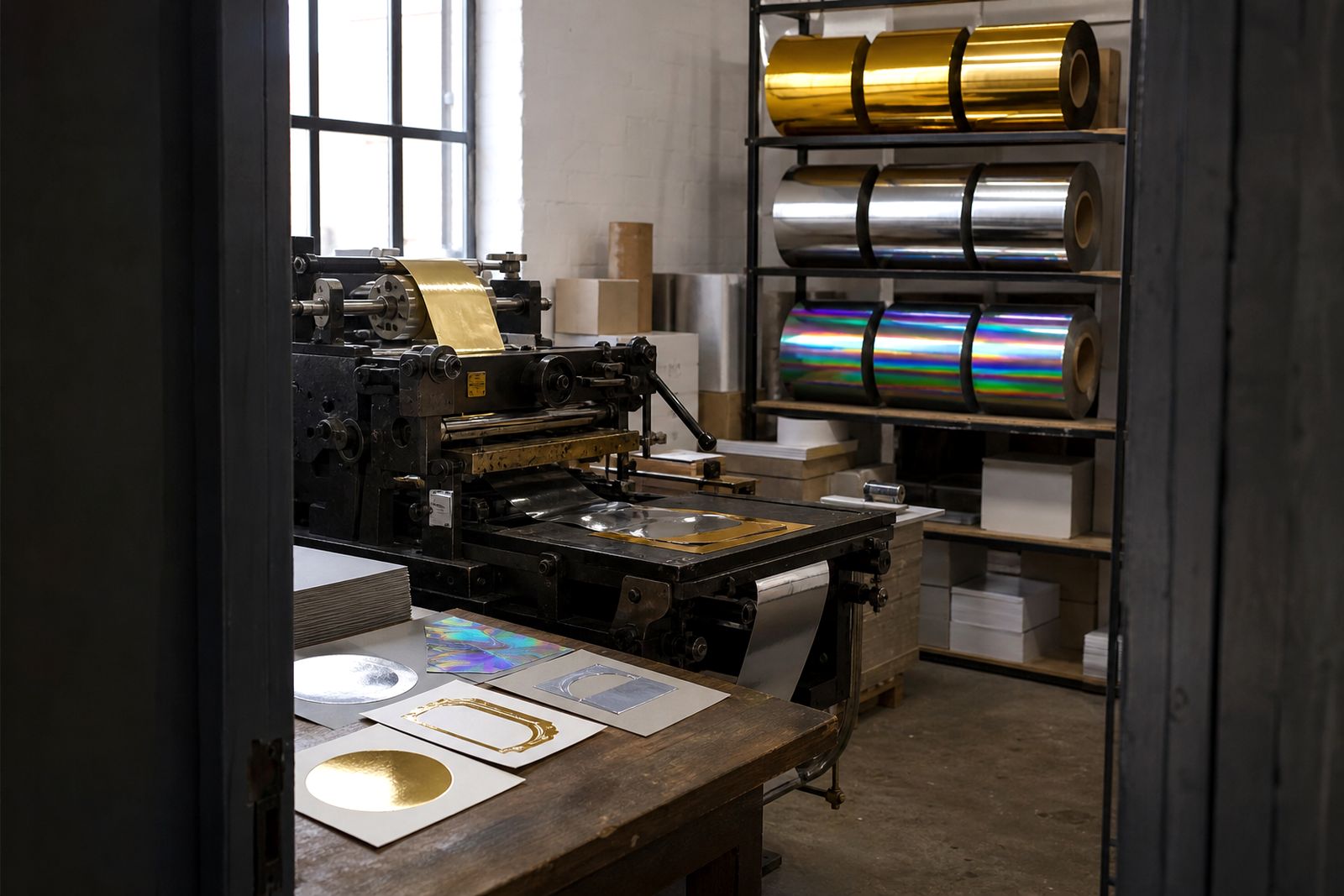
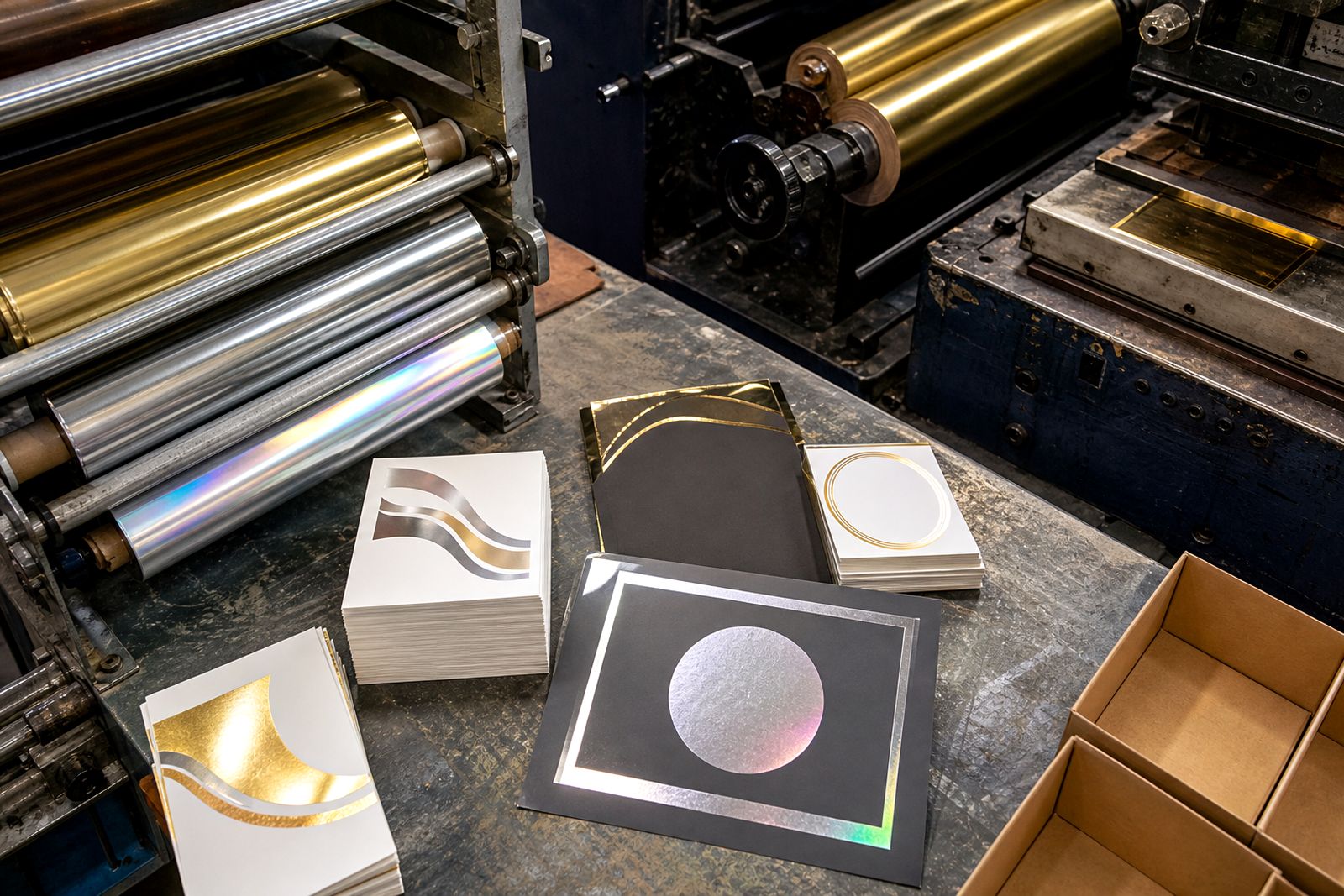
Chrome Mirror is a high-shine foil used when you want a bright reflective finish rather than a flat metallic tone. It suits cosmetics cartons, ABS plaques and gift sleeves where the effect must read cleanly on the press sheet and in hand.
For finished work that needs a mirror look on coated board, plastics or other compatible stocks, start by matching the foil, substrate and press type before changing anything else. If you need the product detail sheet, see Chrome Mirror Specifications.
start with the press
Begin at the known starting range of 135 to 150°C and test within that window rather than moving straight to higher heat. Chrome Mirror is normally run with firm pressure and a clean, even impression.
Use the press that matches the job: platen for flat work, cylinder for repeat production and roll-to-roll where the web format suits the application. Adjust dwell first, then heat, then pressure, and keep each change small so you can see which setting improved the release.
| Press point | What to check |
|---|---|
| Temperature | Stay within the typical starting range and confirm on press with a short test pull. |
| Dwell | Increase only enough to complete transfer without dulling the finish. |
| Pressure | Keep the impression firm and even across the image area. |
| Release | Check that the foil releases cleanly from the carrier with no drag or patchy break. |
choose the right die
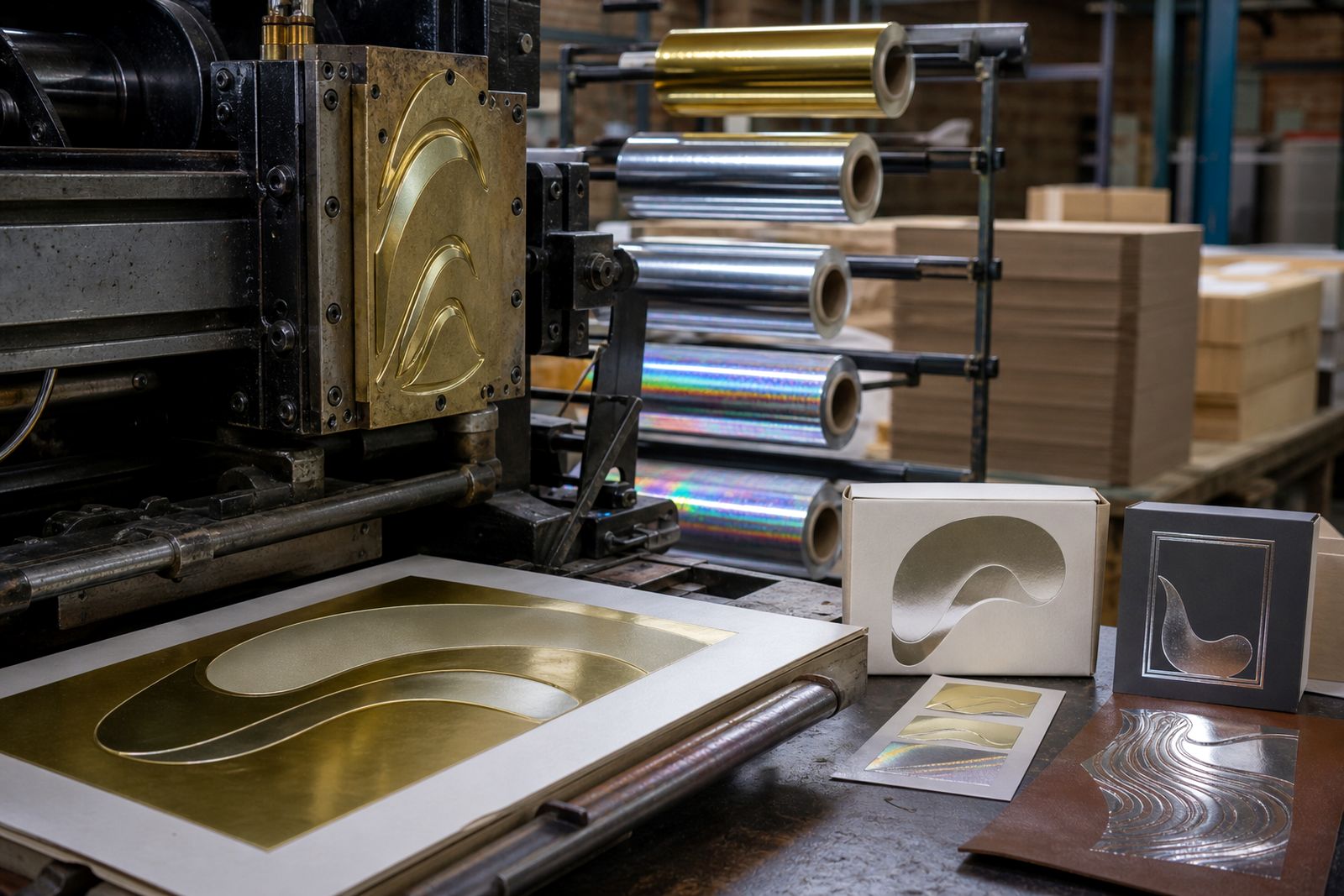
Die choice affects how clean the mirror finish carries through fine detail. Magnesium, copper and brass can all be used, but the job detail should guide the choice.
- Magnesium for simpler artwork and quicker turnaround on suitable runs.
- Copper for finer detail and more even heat transfer on demanding work.
- Brass where longer wear and sharper edge definition are needed.
Also check packing and mounting. Uneven packing can cause areas of weak pickup, while a poorly mounted die can show as a dull patch or a broken edge in the mirror effect.
fix common faults
When the finish does not match the swatch, start with the fault you can see and work backwards through the make-ready. Most issues on this foil family come down to release, heat transfer or pressure balance.
- Fill-in often points to too much heat, too much pressure, or a die that is closing up fine detail.
- Flaking can mean the foil is not fully anchored to the substrate or the release is too aggressive.
- Poor adhesion usually calls for a check on substrate coating, temperature window and dwell.
- Feathering can come from over-pressure, soft packing or an edge that is not carrying even heat.
If the stock is coated board, soft-touch laminate or a plastic surface, confirm that the substrate is suitable before chasing the press settings. When in doubt, test a small area and change one variable at a time.
roll supply and next steps
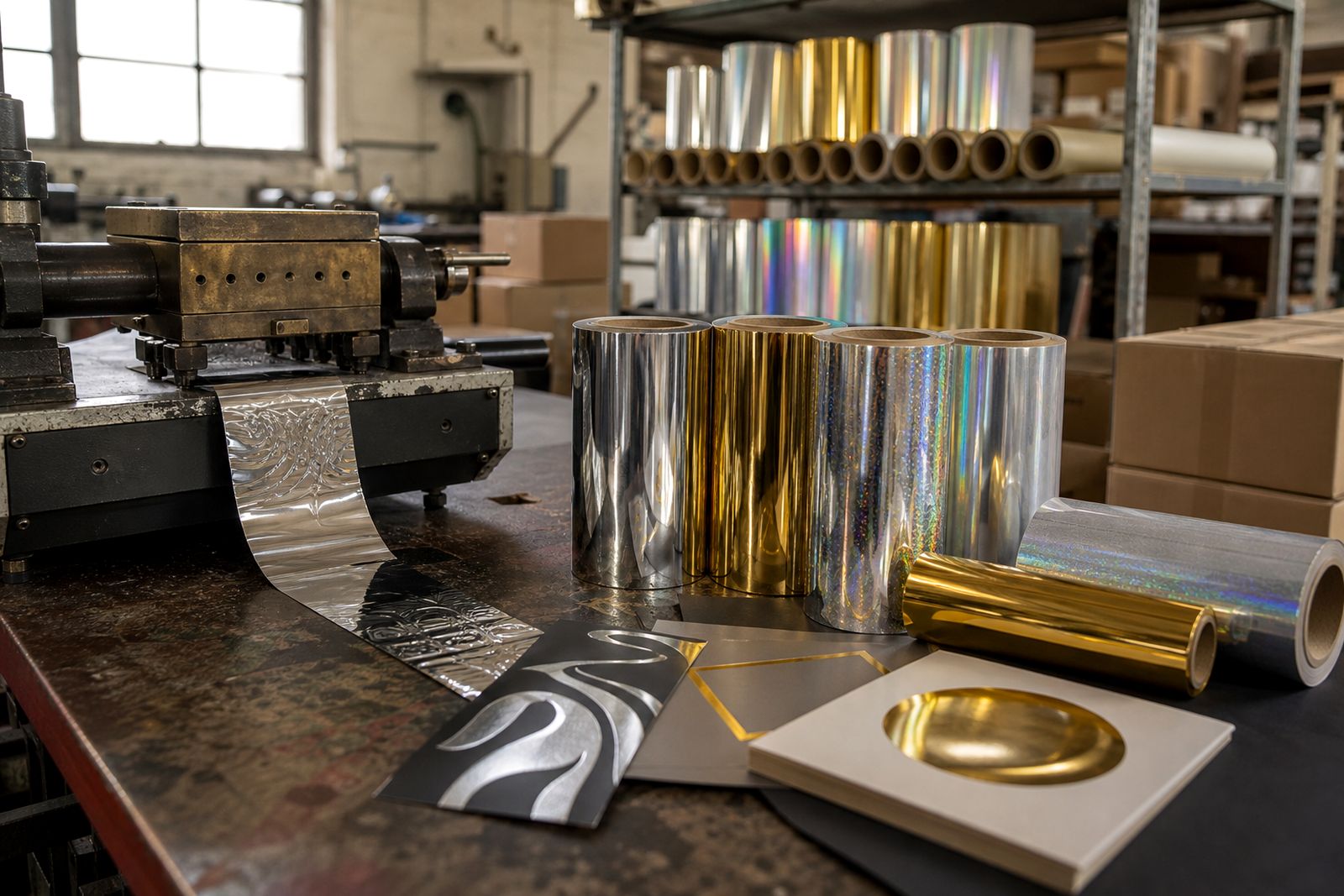
Chrome Mirror is supplied slit to roll width for production use, with swatch books and samples available for matching before the run. That makes it easier to check the shine against the artwork, choose the right width for the press and set up with less waste.
For more on compatible stocks, open Chrome Mirror Substrates. To place an order, use Order Chrome Mirror. If you need press-side advice on a specific job, send the details through the contact form.
What our Hot Stamping Foil customers say
Verified Google reviews
Also worth a look
Ask about a foil for your job
Send a note through our contact form with the substrate, the press you run (platen, cylinder or roll-to-roll), the finish you are after and the run length, and we will come back with a foil grade, a sample and a quote.
Open the contact form