

Order Diffraction Beam
Order Diffraction Beam with the right substrate, press and roll details from the start. Ask for swatches first, then confirm the job in writing through the contact form.
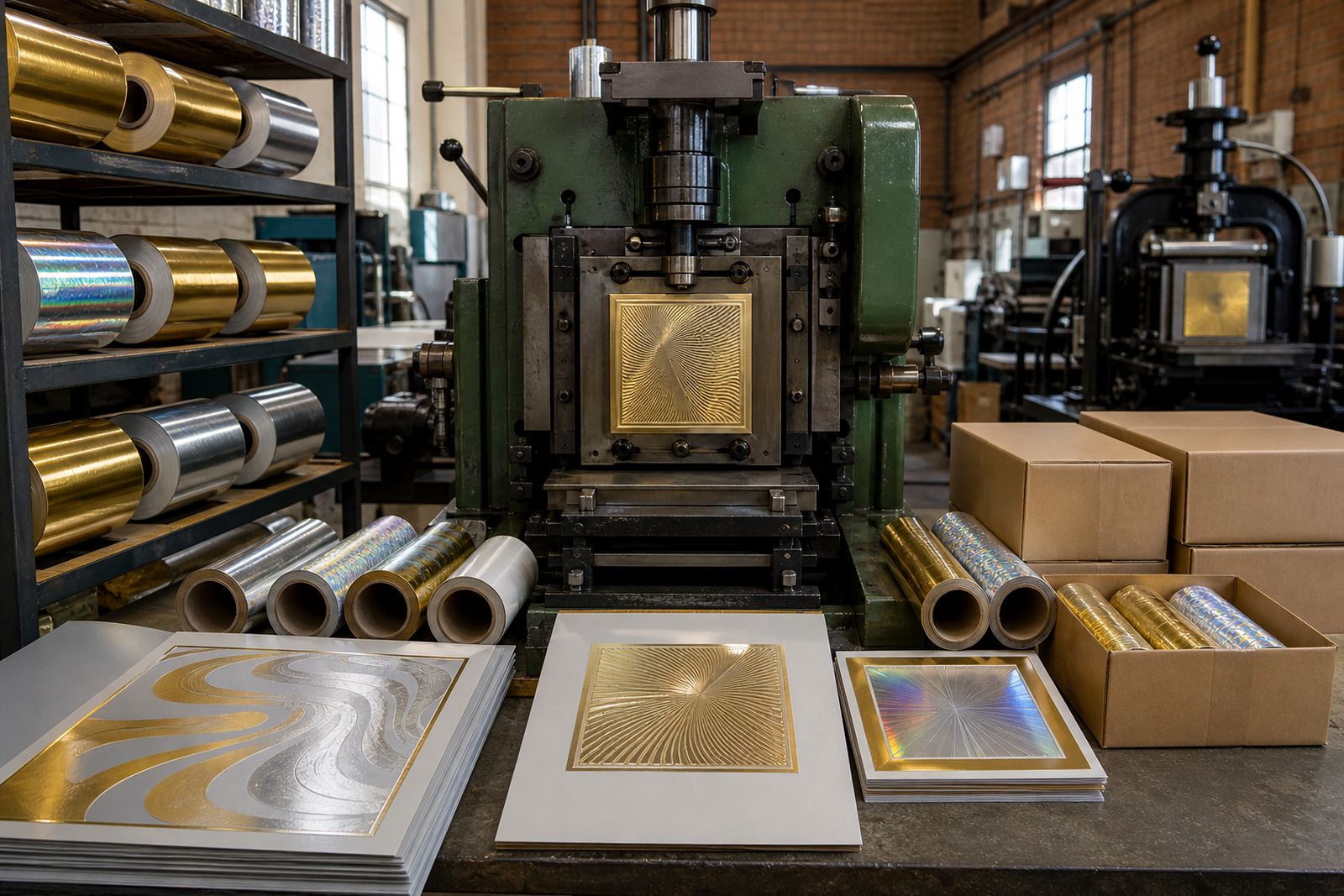
What to include
For a clean quotation, send the foil supplier the substrate, press type, roll width, roll length, quantity and the town where the job will run. Add the finish you need and the application, such as beverage labels, pharma seals or serial strips.
It also helps to note whether the job is for a coated board, soft-touch laminate, label stock, carton work or another surface in the diffraction beam family. The more exact the enquiry, the easier it is to match the foil, die and make-ready to the run.
- Substrate and surface finish
- Press type, for example platen, cylinder or roll-to-roll
- Roll width and required length
- Quantity and job location
- Sample, swatch or press test request
Check the setup
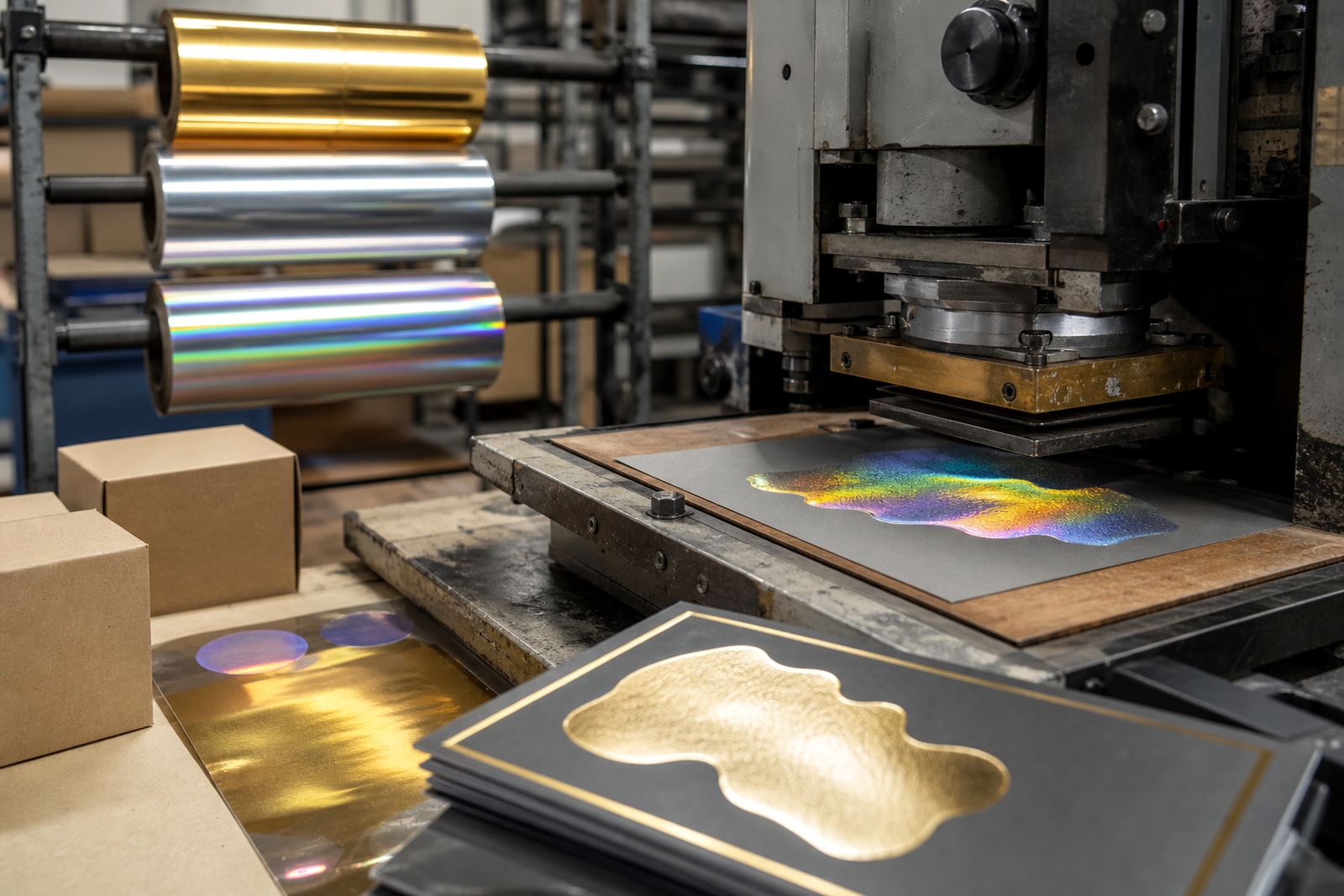
Diffraction Beam is used where a narrow, registrable beam effect is needed on labels, seals and similar work. Before approval, check the make-ready against the likely temperature window, dwell, pressure and release profile for the substrate and press.
For first runs, ask for press-side advice on temperature starting points, die behaviour and release. A small change in pressure or dwell can affect image clarity, edge definition and how the pattern locks on the sheet or web.
| What to check | Why it matters |
|---|---|
| Temperature window | Helps the foil release cleanly without over-pressing the image |
| Dwell | Supports transfer on faster or slower cycles |
| Pressure | Influences fill, detail and pattern lock |
| Release profile | Affects clarity on coated board and film surfaces |
Ask for samples first
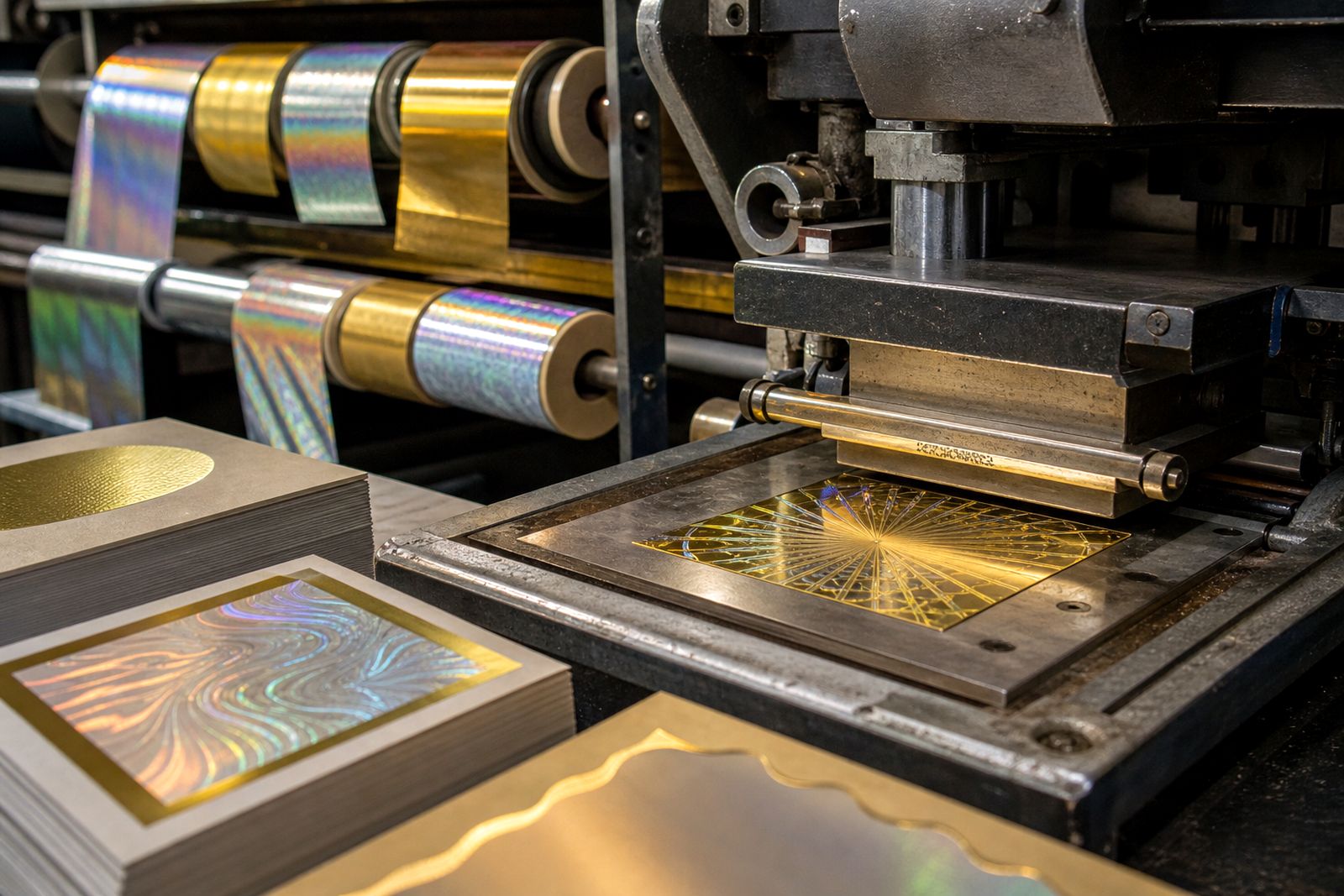
Before placing the full order, ask for swatches or samples so the finish can be checked against the artwork, substrate and press conditions. This is especially useful when comparing the beam effect on different papers, boards or film stocks.
Sample checking is also sensible where the job must register tightly to a printed image or serial number. If you are testing a new board, laminate or label face stock, use the sample stage to confirm how the foil reads under production lighting and how the image sits on the substrate.
For more on the finish itself, see the specifications and the substrates.
How rolls are supplied
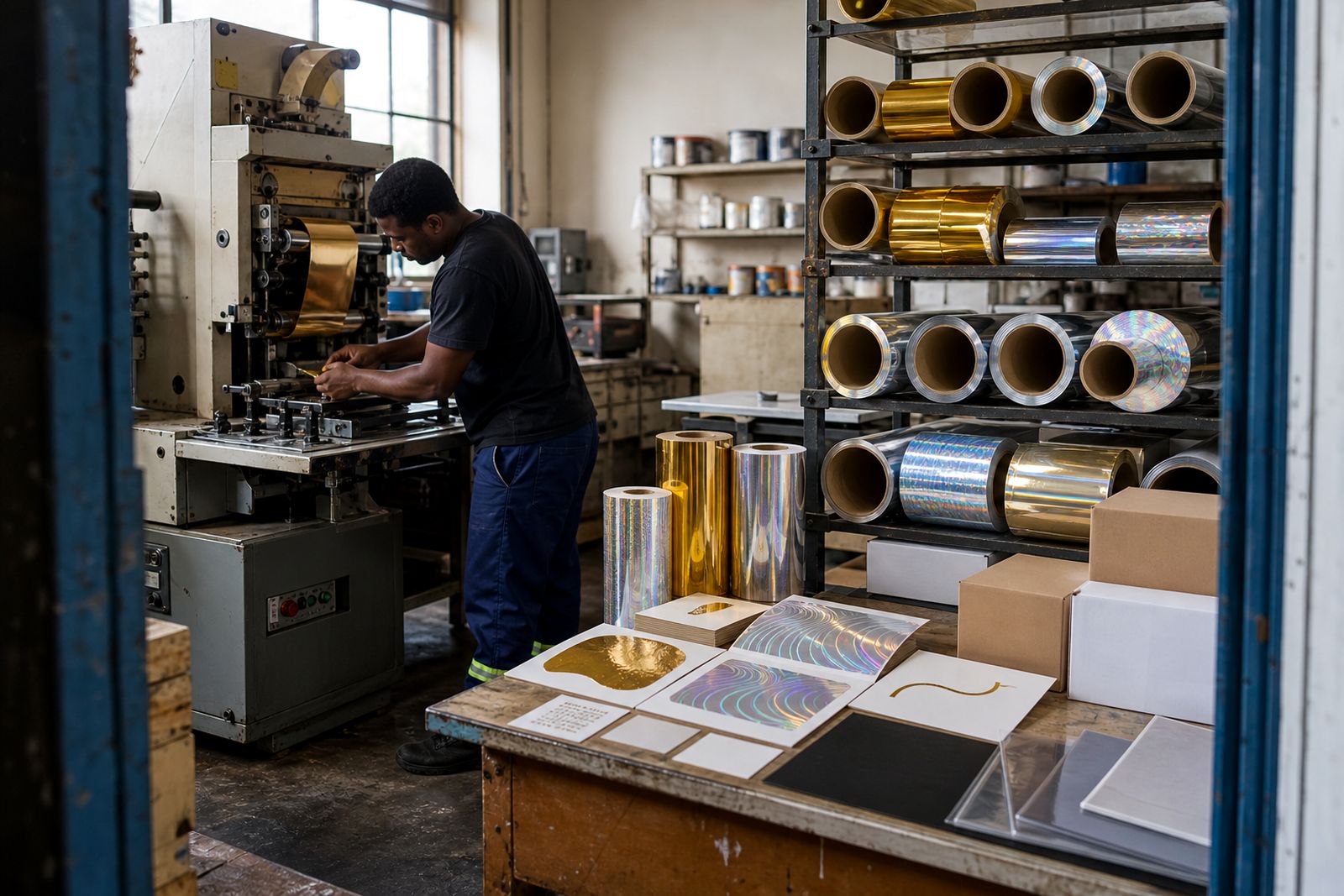
Foil is slit to the roll width needed for the job, so the order can match the press and the web width in use. Narrow rolls are useful for serial strips, seals and other limited-area applications where waste needs to be kept down.
Supply can be arranged for collection or courier, depending on the order and where it needs to go. Keep the transport choice in the enquiry so the quote can be confirmed properly in writing.
- Slit to width for the press
- Packed for collection or courier
- Confirmed against the written order before dispatch
Confirm the order
Once the substrate, press, width and sample choice are agreed, the order is confirmed in writing through the contact form. No prices are published here, and no lead-time promises are made on the page.
If you need guidance before sending the enquiry, use the press notes and then contact Stampingfoil with the job details. For related foil options, you can also return to the Diffraction Beam section or browse products.
Include the town, the intended press, the substrate and whether you need samples first. That gives the quoting team enough detail to confirm the specification and prepare the correct roll format for the order.
What our Hot Stamping Foil customers say
Verified Google reviews
Also worth a look
Ask about a foil for your job
Send a note through our contact form with the substrate, the press you run (platen, cylinder or roll-to-roll), the finish you are after and the run length, and we will come back with a foil grade, a sample and a quote.
Open the contact form