

Diffraction Beam substrates
See where Diffraction Beam tends to transfer cleanly, and where a test is wise first. Use these notes to match the foil to the substrate, press and make-ready.
Where it tends to run well
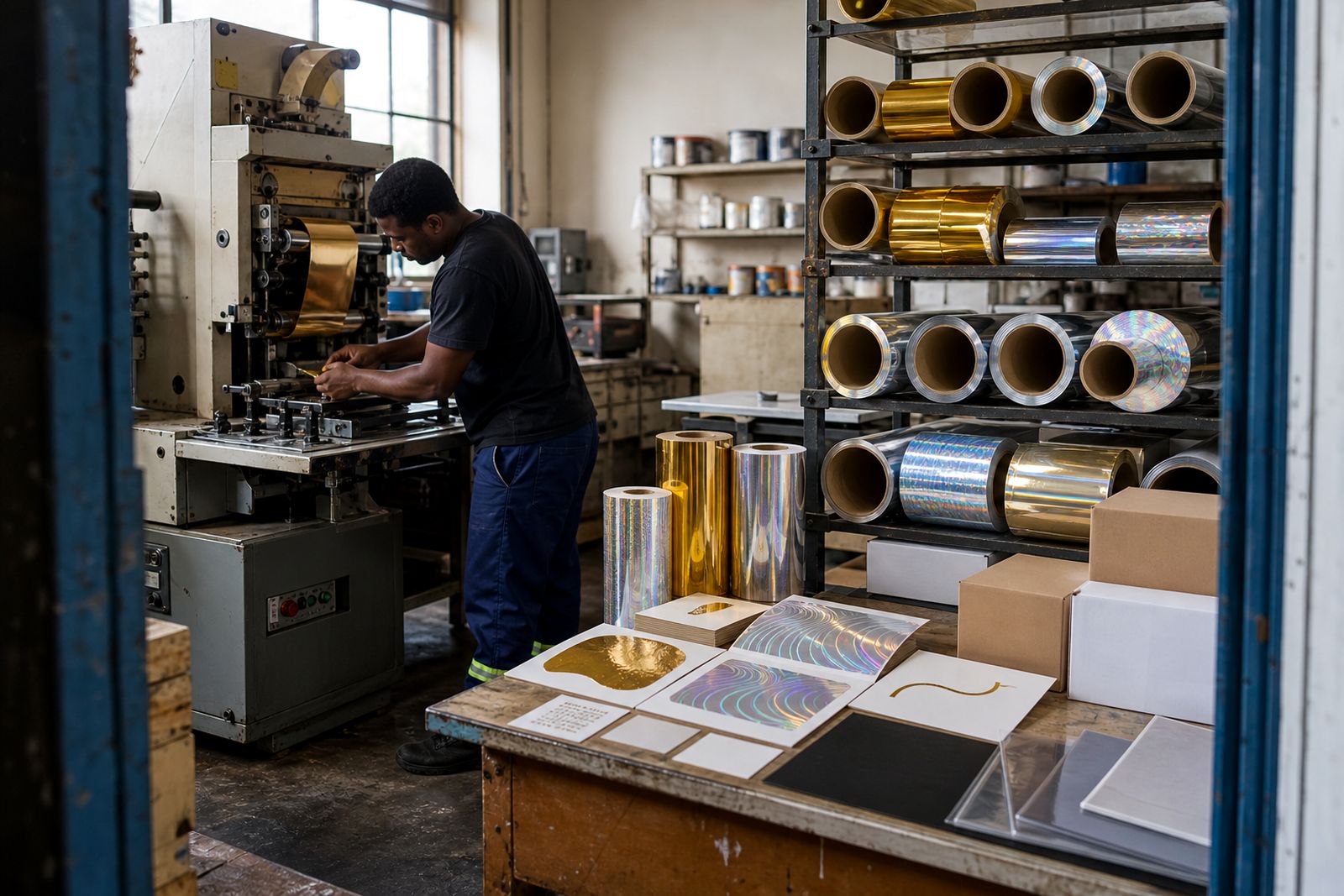
Diffraction Beam suits packaging and label work where the image needs a tight, crisp transfer and a controlled finish. It is commonly tested first on coated board, gloss laminate, soft-touch laminate and well-prepared labels.
On these surfaces, the main question is not whether the foil can print, but how the release behaves against the stock and the die. If the substrate is smooth and the artwork is cleanly made, the foil family is usually worth testing early in the job planning stage.
- Coated board for cartons and sleeves
- Gloss laminate and soft-touch laminate
- Labels, seals and narrow strip work
- Plastics where the surface is suitable for hot stamping
For related press setup notes, see Diffraction Beam press notes.
Where to test first
Uncoated board, rough papers and heavily textured stocks need more care because the foil has less even contact to work with. If the substrate has open fibres, uneven lay or variable coating, run a short test before committing to a long run.
Leather and textiles may also need separate trials, because surface texture, flex and finish can change the release profile. For these materials, start with small samples and check how the foil sits after curing, folding or handling.
- Uncoated board and rough paper stocks
- Textured or tactile finishes
- Leather and textile applications
- Any substrate with mixed coating or variable surface energy
When in doubt, ask for samples or swatch books through the contact form at Contact.
Make ready checks
Good make-ready matters more than force. Start by checking the temperature window, dwell, pressure and release profile together, then adjust one variable at a time. A foil that is too cold may not release fully, while excess heat or pressure can blur fine pattern detail.
Use the die condition and substrate flatness as part of the setup check. Clean impression, even contact and steady registration are important for diffraction work, especially where the pattern must stay tight across small graphics or repeated elements.
- Temperature window for the stock and press type
- Dwell time and consistent dwell across the sheet or web
- Pressure matched to the substrate and die
- Release profile on the chosen laminate or coating
- Die condition, platen level and make-ready pack
Press types to consider
This foil family can be checked on platen, cylinder and roll-to-roll presses, depending on the job format. Narrow rolls are useful for continuous work, label production and serial strip applications, where controlled feeding matters.
Platen presses suit sheet-fed trial work and many carton jobs. Cylinder presses can suit repeat production where the form and substrate are stable. Roll-to-roll setups are relevant when the job needs narrow web handling and consistent register over longer runs.
| Press type | Typical use |
|---|---|
| Platen | Sheet-fed make-ready, carton samples and small runs |
| Cylinder | Stable repeat work where even pressure is needed |
| Roll-to-roll | Narrow rolls, labels and serial strip production |
How it is supplied
Diffraction Beam is supplied slit to roll width, so it can be matched to the press width and job format with less waste at setup. That makes it easier to fit into label, packaging and strip work where the web width is already defined.
Swatch books and samples are available for checking the look and transfer before you commit to production. If you need help deciding the right width, substrate test order or press starting point, use the product pages linked below.
For supply and matching advice on the broader foil range, Stampingfoil can assist through the contact form at Contact.
]}]}] }##endphp### Response format correction: valid JSON only. Here's the corrected JSON object:{What our Hot Stamping Foil customers say
Verified Google reviews
Also worth a look
Ask about a foil for your job
Send a note through our contact form with the substrate, the press you run (platen, cylinder or roll-to-roll), the finish you are after and the run length, and we will come back with a foil grade, a sample and a quote.
Open the contact form