

Inkline Process press notes
Use these notes to set up Inkline Process foil cleanly on press and keep the finish close to the approved swatch. Check heat, dwell, pressure and release before you run.
What it suits
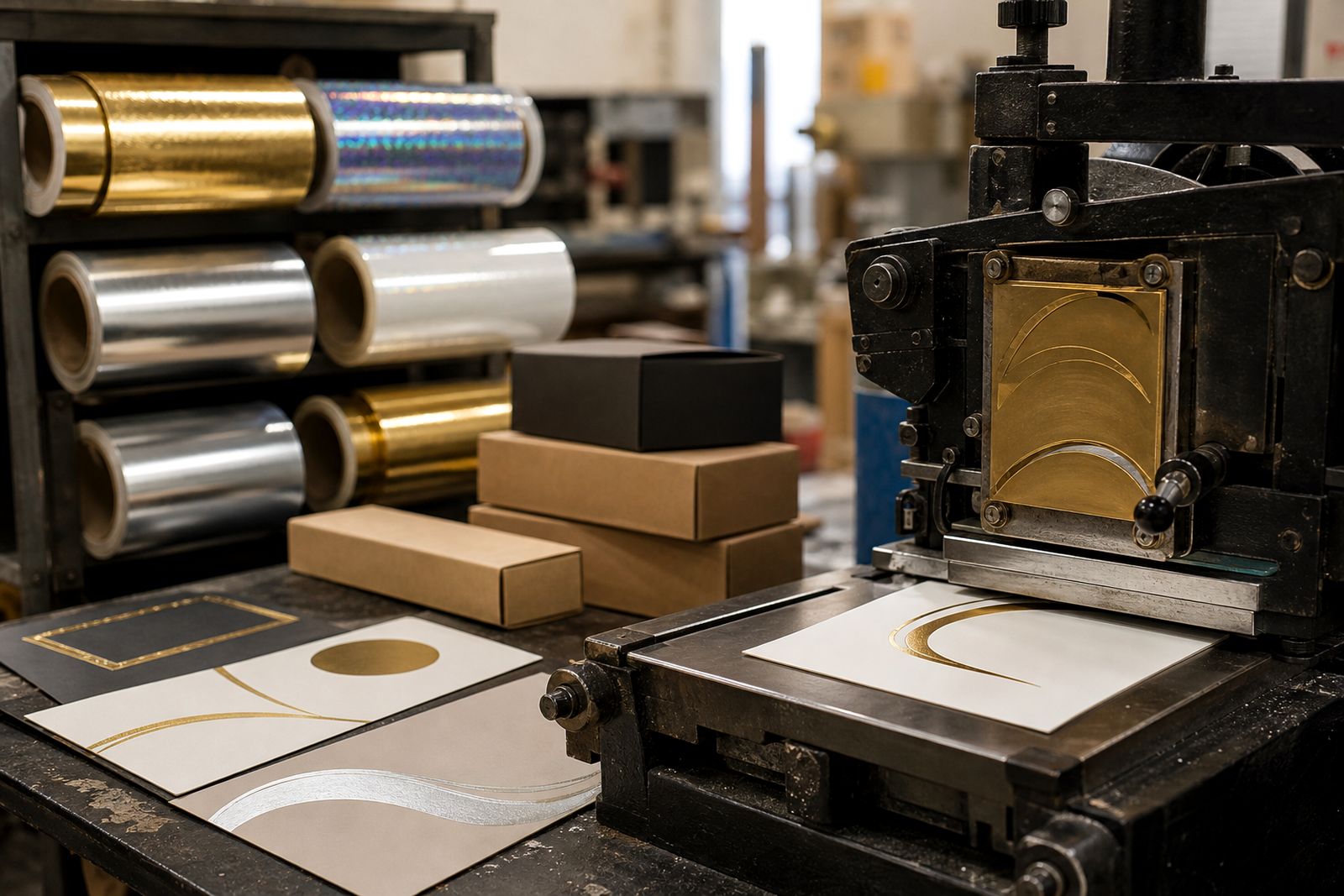
Inkline Process is a hot stamping foil family for clean decorative and brand work on labels, cartons, book covers and related print jobs. It suits trade finishing where the stamped area must hold a clear, consistent look across repeat runs.
The range is commonly used on coated board, soft-touch laminate and other smooth substrates that take a crisp foil release. It can also be used on plastics, textiles and leather applications where the right foil, die and press setup are matched to the substrate.
For substrate notes and press matching, see Inkline Process substrates.
Set up the press
Make-ready starts with a sensible test area and a clean, flat die impression. Check the temperature window on your stock, then adjust dwell, pressure and release until the foil transfers evenly without over-stamping.
- Start with the supplier swatch or sample as your visual target.
- Test a narrow strip before committing to the full run.
- Watch the release: if the image looks dull, patchy or incomplete, adjust heat or dwell before increasing pressure.
- Keep packing even across the image area so the die lands uniformly.
For ordering and supply format notes, see order Inkline Process.
Choose the right die
Die choice matters as much as foil choice. Magnesium dies are commonly used for shorter runs and quick make-ready, while copper and brass dies are preferred when the job needs finer detail, longer wear or more stable heat behaviour.
Match the die to the image detail, substrate and press type. A die that runs well on one press may need a different depth, packing or heat setting on another. Platen, cylinder and roll-to-roll presses all need their own setup checks.
| Die type | Use it for |
|---|---|
| Magnesium | Short runs, faster turnaround and general make-ready tests |
| Copper | Finer detail and steadier performance on longer runs |
| Brass | More durable tooling and controlled heat transfer |
Watch common faults
Most press faults come from setup, not from the foil alone. If you see fill-in, first check whether the die is too hot, the dwell is too long, or the pressure is too high. If you see flaking, look at release, substrate cleanliness and whether the image area is overworked.
- Poor adhesion: reduce contamination, check substrate surface energy and revisit heat and dwell.
- Feathering: ease back pressure, check packing and confirm the die is seating cleanly.
- Fill-in: lower heat or dwell and verify the artwork is giving the die enough clearance.
- Flaking: check release behaviour and avoid forcing a second hit over a weak first transfer.
For a clean starting point on stock choice, see Inkline Process specifications.
How rolls are supplied
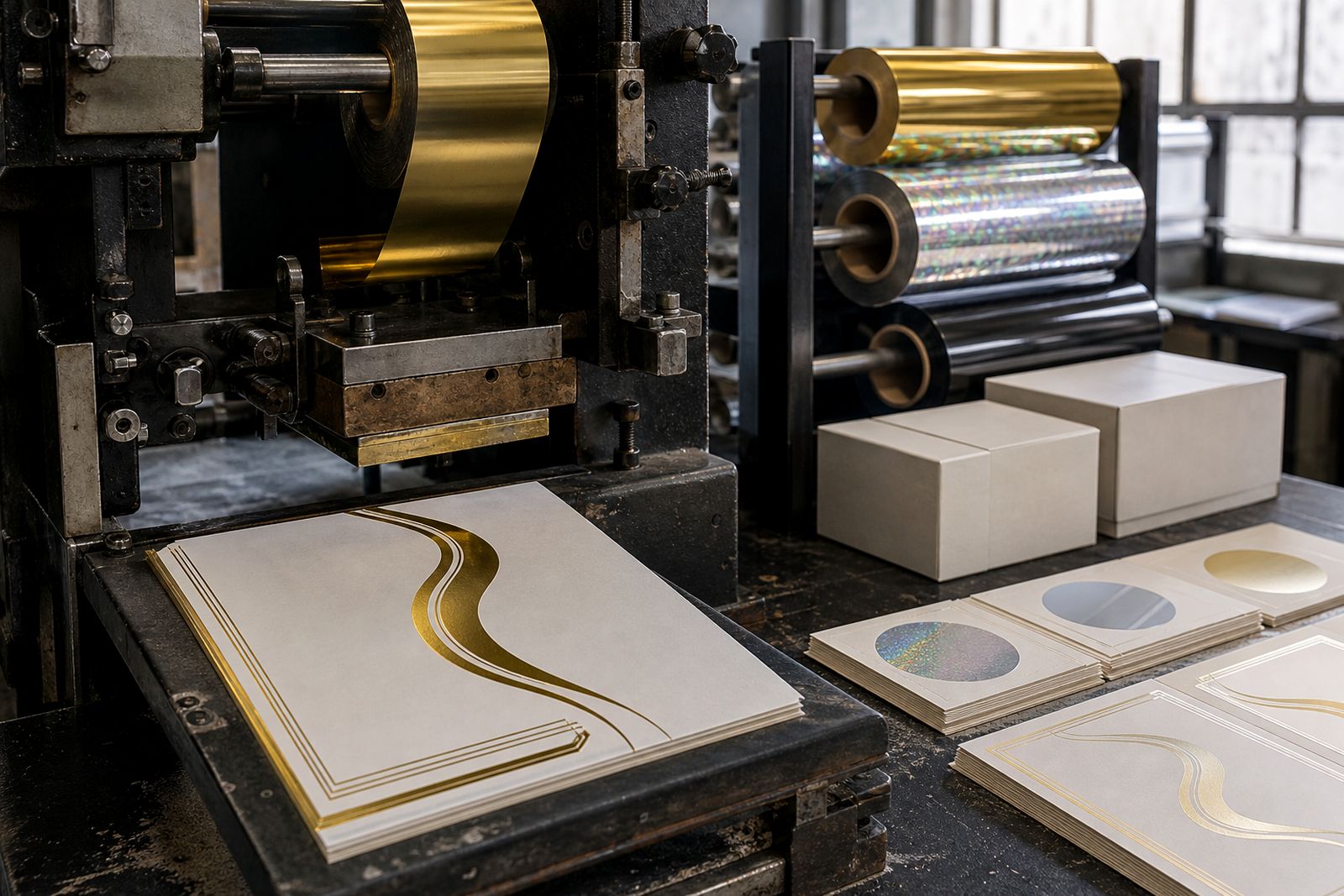
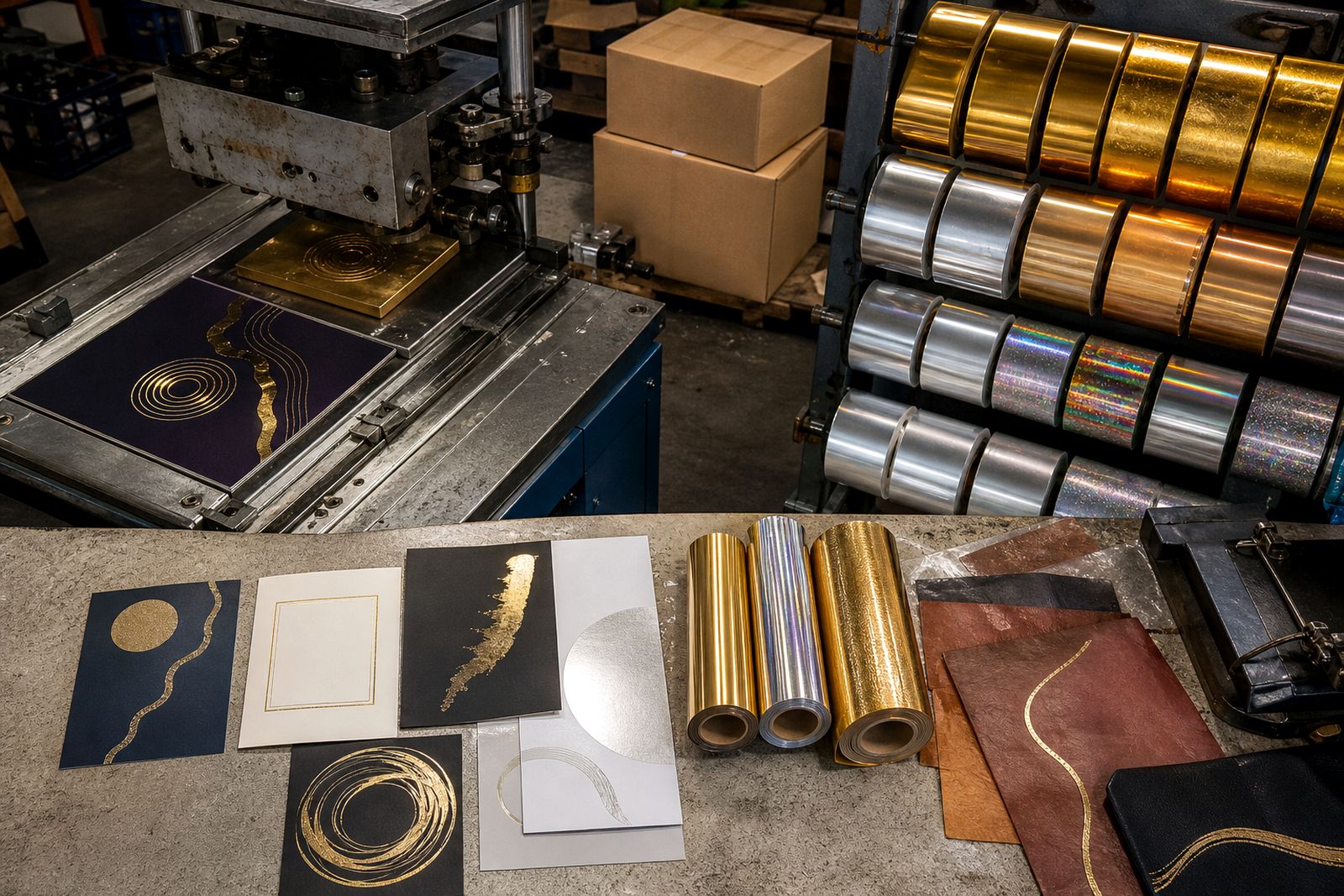
Stampingfoil supplies foil slit to roll width so it can be matched to the job width and the press setup. This helps reduce waste and makes make-ready easier on narrow work, long repeat runs and multi-up layouts.
For swatch books, samples and press-side advice on the right starting settings, use the contact form. If you are planning a full finishing run, the parent range page at Inkline Process is a good place to start.
What our Hot Stamping Foil customers say
Verified Google reviews
Also worth a look
Ask about a foil for your job
Send a note through our contact form with the substrate, the press you run (platen, cylinder or roll-to-roll), the finish you are after and the run length, and we will come back with a foil grade, a sample and a quote.
Open the contact form