

Inkline Process substrates
Check where Inkline Process tends to transfer cleanly, and where a press test is needed first. Use the notes below to match stock, press and make-ready before a long run.
What this foil suits
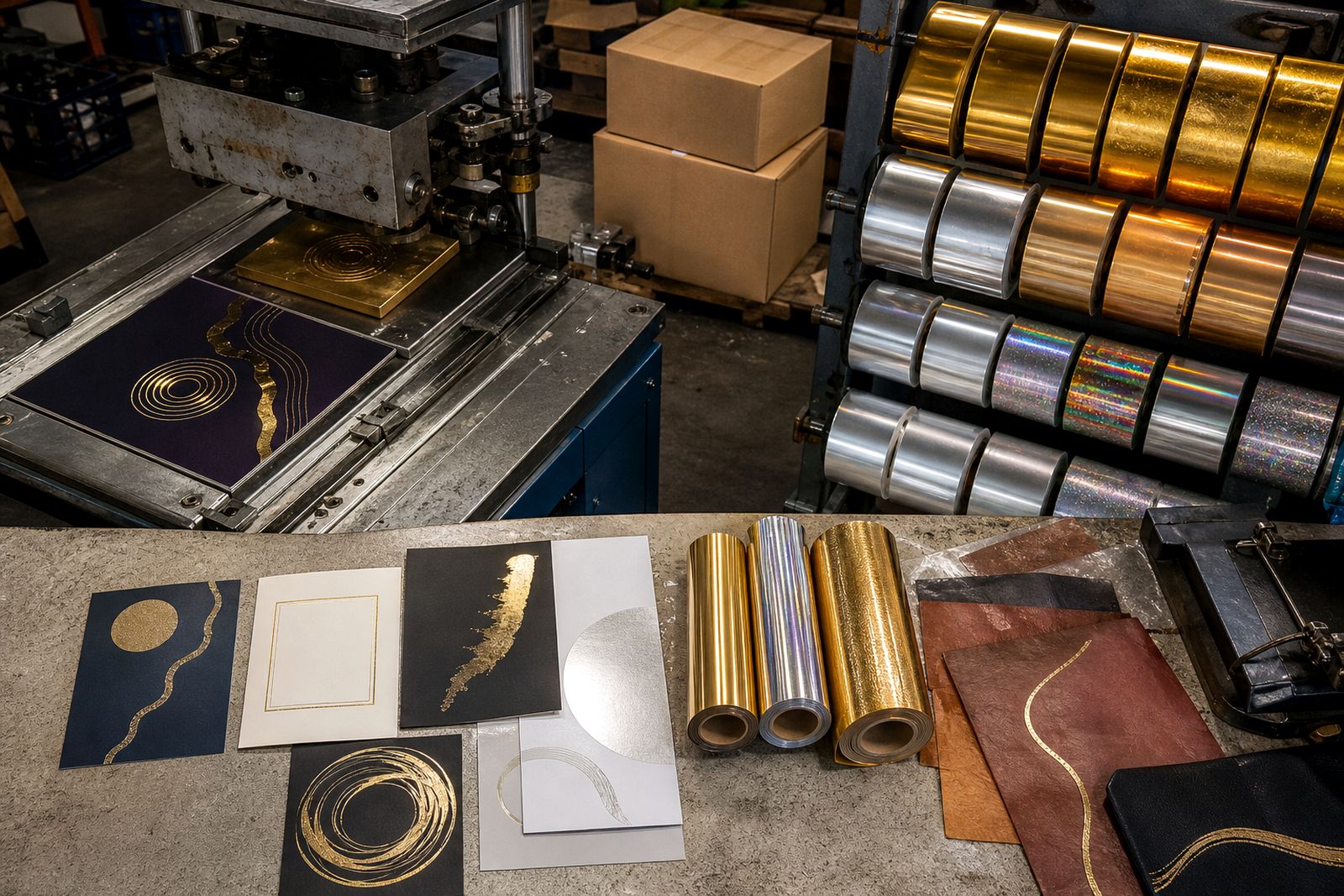
Inkline Process suits work that needs a clean metallic or pigment finish on stock that can handle controlled heat and pressure. It is commonly checked on coated and uncoated board, labels, soft-touch and gloss laminate, UV varnish, and selected plastics, leather or textiles where the base material and press setup support foil release.
For brand kits, seasonal SKUs and retail labels, start by matching the foil family to the substrate surface. Smooth, well prepared stocks usually give the most even transfer. Textured, absorbent or low-energy surfaces need more care and may need a tighter press trial before production.
See the foil family overview in Inkline Process and the make-ready notes in press notes.
Substrates to test first
Some substrates should always be tested before a full run, even where the job looks straightforward. That includes heavily textured board, uncoated stocks with open fibre, soft-touch laminate, UV coated surfaces, and plastics or leather where surface treatment, flexibility or heat response can vary from one batch to another.
- Coated board for cartons, covers and card packaging
- Uncoated board where the surface is not too porous
- Soft-touch laminate and gloss laminate
- UV varnish and other printed finishes
- Labels where small type and fine detail need clean release
- Plastics, leather and textiles where the substrate is suitable for foil work
If the first strike shows patchy release, filled detail or over-pressing, stop and adjust before continuing. A small make-ready test is usually better than correcting a long run. For related ordering and supply details, go to order Inkline Process.
Press setup notes
Make-ready should begin with the press type, the die, and the substrate surface in mind. Inkline Process can be checked on platen, cylinder and roll-to-roll presses, but the settings must be tuned to the job rather than copied across from one stock to another.
Use these checks during setup:
| Check | What to look for |
|---|---|
| Temperature window | Start with a typical range for the foil family and test upward or downward until transfer is clean. |
| Dwell | Too short can leave broken image areas. Too long can overheat the stock or soften detail. |
| Pressure | Enough to drive full contact across the image, without crushing texture or swelling fine type. |
| Release | The foil should let go cleanly from the non image areas and stay where the die has contact. |
If you need the technical background for spec matching, check Specifications.
Dies and detail
Good results depend as much on the die as on the foil. Magnesium, copper and brass dies each behave differently, especially on fine text, solids, halftones and small repeats. Choose the die material and artwork depth with the substrate in mind, then test the edge definition and release profile before approving the run.
On coated board and smooth laminate, fine detail is usually easier to hold. On softer or more textured surfaces, raised areas and shallow detail may need more careful pressure control. For security work or small repeat patterns, check the image under press conditions rather than relying on a visual sample alone.
If you need working notes from the press side, use Press notes.
How rolls are supplied
Inkline Process is supplied slit to roll width so it can be matched to the press, the die and the job layout. That helps reduce waste on narrow work, label runs and longer production where the roll format needs to suit the machine and the image repeat.
Ask for swatch books or samples when you are checking a new substrate, a new finish or a different press setup. This is the safest way to compare transfer on coated board, laminate, labels or specialty stocks before placing material into production. If you are unsure which roll width or finish to use, send the job details through the contact form and ask for a quote.
For a wider view of available foil families, go back to Products.
What our Hot Stamping Foil customers say
Verified Google reviews
Also worth a look
Ask about a foil for your job
Send a note through our contact form with the substrate, the press you run (platen, cylinder or roll-to-roll), the finish you are after and the run length, and we will come back with a foil grade, a sample and a quote.
Open the contact form