

LeatherMark press notes
Use these press notes to set up LeatherMark for a cleaner stamp on leather goods. Start with the right die, then test heat, dwell and pressure against the substrate.
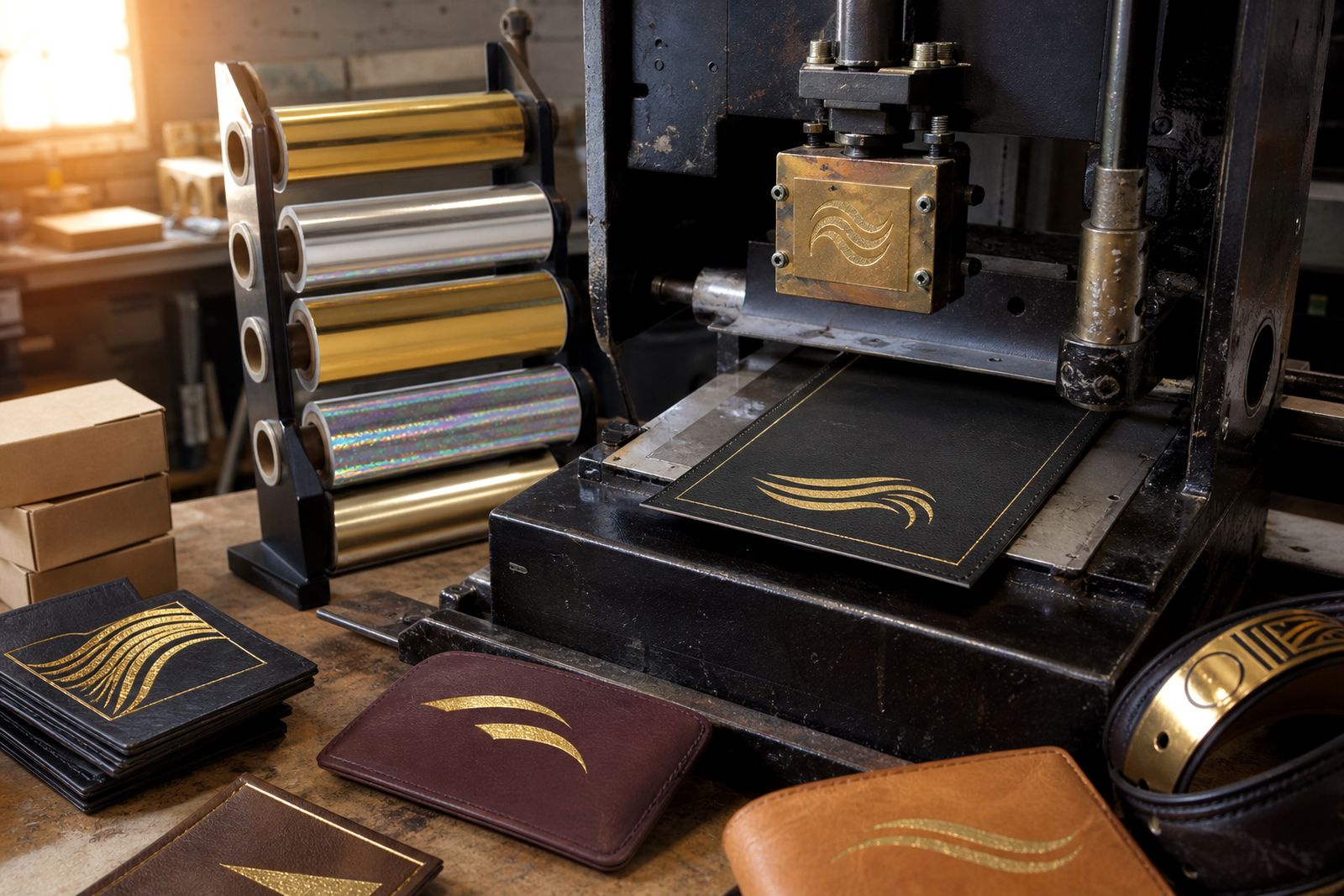
What LeatherMark is for
LeatherMark is a foil family for leather goods where the stamped image needs a neat edge and a consistent look. It suits wallets, belts and footwear, and is intended for use on leather and other compatible soft surfaces where the press setup is controlled carefully.
The foil is supplied for trade use on platen, cylinder and roll to roll equipment. If you are matching a job to the right finish or checking whether the substrate is suitable, start with LeatherMark specifications and LeatherMark substrates.
Set the press first
Begin with a practical make ready check before the run starts. On leather, small changes in heat, dwell and pressure can alter transfer quality, so test in a narrow area before moving to full production.
- Use a lower heat window and test from there rather than starting too hot.
- Keep dwell long enough for transfer, but avoid holding so long that the image spreads.
- Set pressure to suit the surface grain and the die depth.
- Check release at the edge of the image, then adjust packing if needed.
If the first pull is not clean, change one setting at a time so you can see which adjustment helps. Press-side advice is available through the contact form.
Choose the right die
Die choice matters with leather because the image has to bite cleanly without crushing the surface. Magnesium, copper and brass dies can all be used, but each behaves differently on heat retention, detail and run length.
| Die type | Typical use |
|---|---|
| Magnesium | General make ready and shorter production runs where a quick setup is useful |
| Copper | Finer detail and more controlled transfer where heat consistency matters |
| Brass | Heavier duty work where longer running and stable impressions are needed |
Match the die to the artwork, the grain and the press. A well set die reduces feathering and helps keep the edge clean.
Troubleshooting on press
Most faults on leather come from a mismatch between foil, substrate and setup rather than from one setting alone. Check the image after each adjustment and look at the full stamp, not only the centre.
- Fill in can point to too much heat, too much pressure or dwell that is too long.
- Flaking usually means the foil has not transferred fully or the surface needs a different release profile.
- Poor adhesion may need more time in the temperature window, or a different die and packing combination.
- Feathering often comes from excess pressure, soft packing or a die that is not matching the detail.
For a quicker comparison between finishes, keep a sample next to the job sheet and compare it under the same press conditions.
Supply and ordering
LeatherMark foil is slit to roll width for trade use and can be supplied with swatch books and samples to help with make ready and repeat jobs. Rolls are supplied for press work, so you can test the same finish on the same equipment before committing to production.
If you need to confirm the right roll width, finish or substrate match, use the ordering notes or the contact form. You can also review related pages for setup and selection: order LeatherMark and LeatherMark specifications.
Why these notes matter
Leather stamping rewards careful setup. The same foil can look different if the press, die and packing are changed without checking the full set of conditions, so the best result comes from steady testing and small adjustments.
When you need a foil supplier who can talk through temperature windows, dwell, pressure and release in plain terms, use the contact form for press-side support. If you are planning a broader job mix, you can also browse products for other foil families and finishing options.
What our Hot Stamping Foil customers say
Verified Google reviews
Also worth a look
Ask about a foil for your job
Send a note through our contact form with the substrate, the press you run (platen, cylinder or roll-to-roll), the finish you are after and the run length, and we will come back with a foil grade, a sample and a quote.
Open the contact form