

PlasticBond specifications
Use these starting points to set up PlasticBond on common SA substrates. Then test on your own stock and refine for your press, die and release profile.
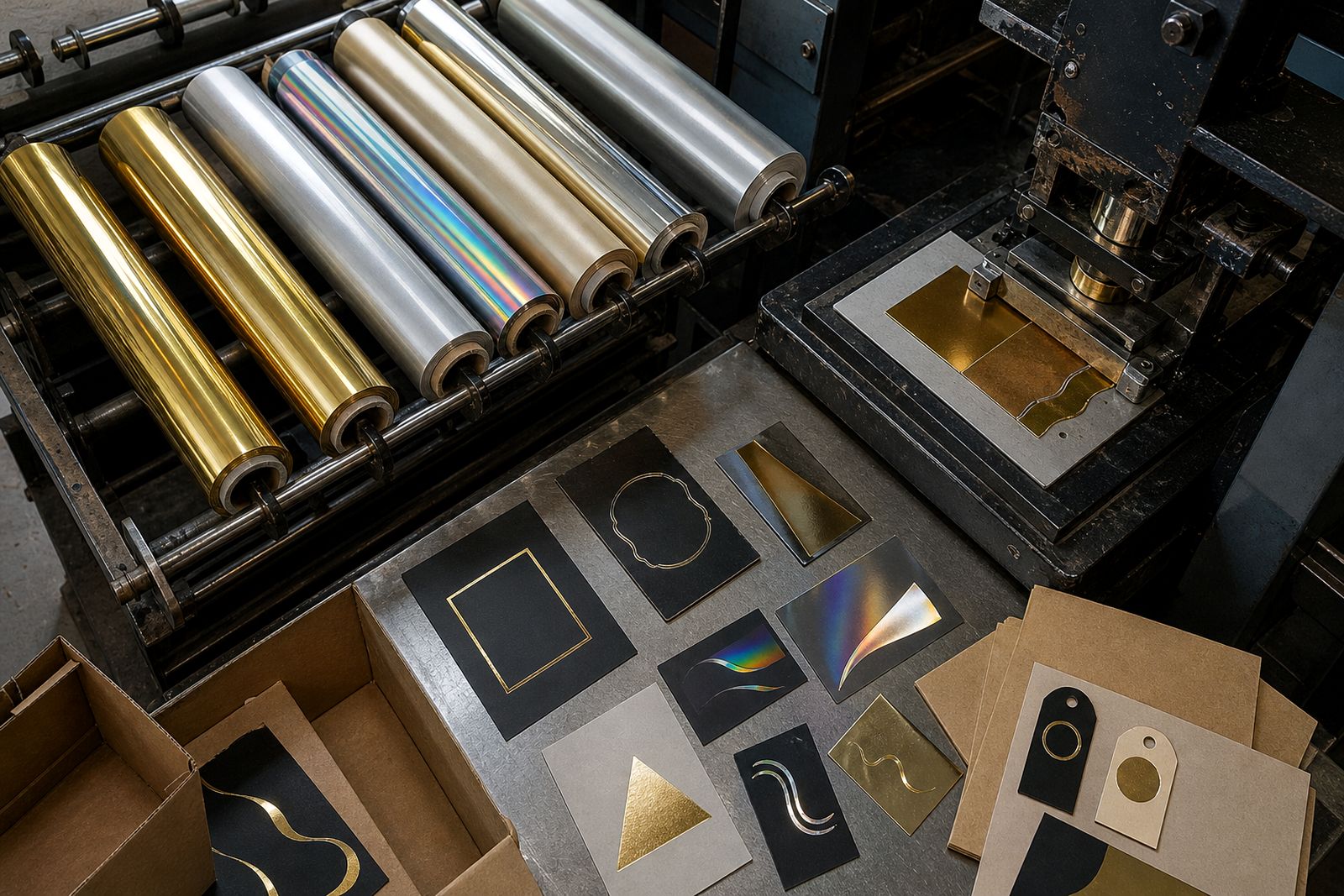
What PlasticBond is for
PlasticBond is a high tack foil family for work that needs firm adhesion on challenging surfaces. It suits closures, tubes and appliance badges, where consistent transfer and clean detail matter.
It is also a useful starting point for coated plastics and other difficult-to-hold substrates, especially where corona treatment, surface energy and make-ready all affect the result. For related applications on non porous stocks, see PlasticBond Substrates.
- Substrate fit closures, tubes and appliance badges
- Surface behaviour high tack with a corona friendly approach
- Press types platen, cylinder and roll to roll, depending on your setup
Starting points to test
Use the table below as a practical starting point only. Final settings will move with your stock, artwork, die, press condition and the finish you want to achieve.
| Setting | Starting point |
|---|---|
| Temperature window | Test within the normal hot stamping range for your press and stock, then fine tune in small steps. |
| Dwell | Start short and increase only if transfer is incomplete or detail is not clearing. |
| Pressure | Apply enough pressure for a clean release without crushing the substrate or over polishing the image. |
| Release profile | Test for a clean release that matches your die and the stock surface, then adjust until edges are crisp. |
For make-ready notes on die selection, pressure balance and press setup, go to the PlasticBond press notes.
How to set up the press
Start with the press condition, then work through heat, dwell and pressure in that order. On plastic and coated surfaces, a small change can make a clear difference to transfer and edge sharpness.
- Temperature window keep within a test range that allows the foil to release cleanly without distortion
- Dwell hold only long enough for full transfer
- Pressure balance even contact across the image area
- Release check whether the foil clears the die face cleanly and leaves a sharp edge
If your stock includes soft-touch laminate or a treated plastic surface, test across the actual production material, not a substitute. Small variations in coating and treatment can change adhesion and release.
How rolls are supplied
PlasticBond is slit to the roll width you need for your job. That helps reduce waste and makes it easier to run the foil on your chosen press format.
Rolls can be prepared for different production setups, including platen, cylinder and roll to roll presses. If you need a specific slit width for a new line or an existing job, ask through the contact form.
Where needed, swatch books and samples can help you compare shade, transfer and surface response before you commit to a run.
How to test on your stock
Test on the exact stock you plan to run, including the same coating, treatment and finish. Record the settings that give the cleanest result, then repeat the test after any change to substrate, die or press condition.
- Check the bond on your actual production substrate
- Inspect the image for clean edges, coverage and release
- Compare results on different areas of the sheet or web
- Adjust temperature, dwell and pressure in small steps
If you want help choosing a starting point for your material, or need foil slit to width for production, use the contact form to ask for a quote and request press side advice.
]}What our Hot Stamping Foil customers say
Verified Google reviews
Also worth a look
Ask about a foil for your job
Send a note through our contact form with the substrate, the press you run (platen, cylinder or roll-to-roll), the finish you are after and the run length, and we will come back with a foil grade, a sample and a quote.
Open the contact form