

Prism Holo substrates
See where Prism Holo tends to transfer cleanly, and where a test is needed first. Use these notes to prepare the substrate, the die and the press before a long run.
Where it suits
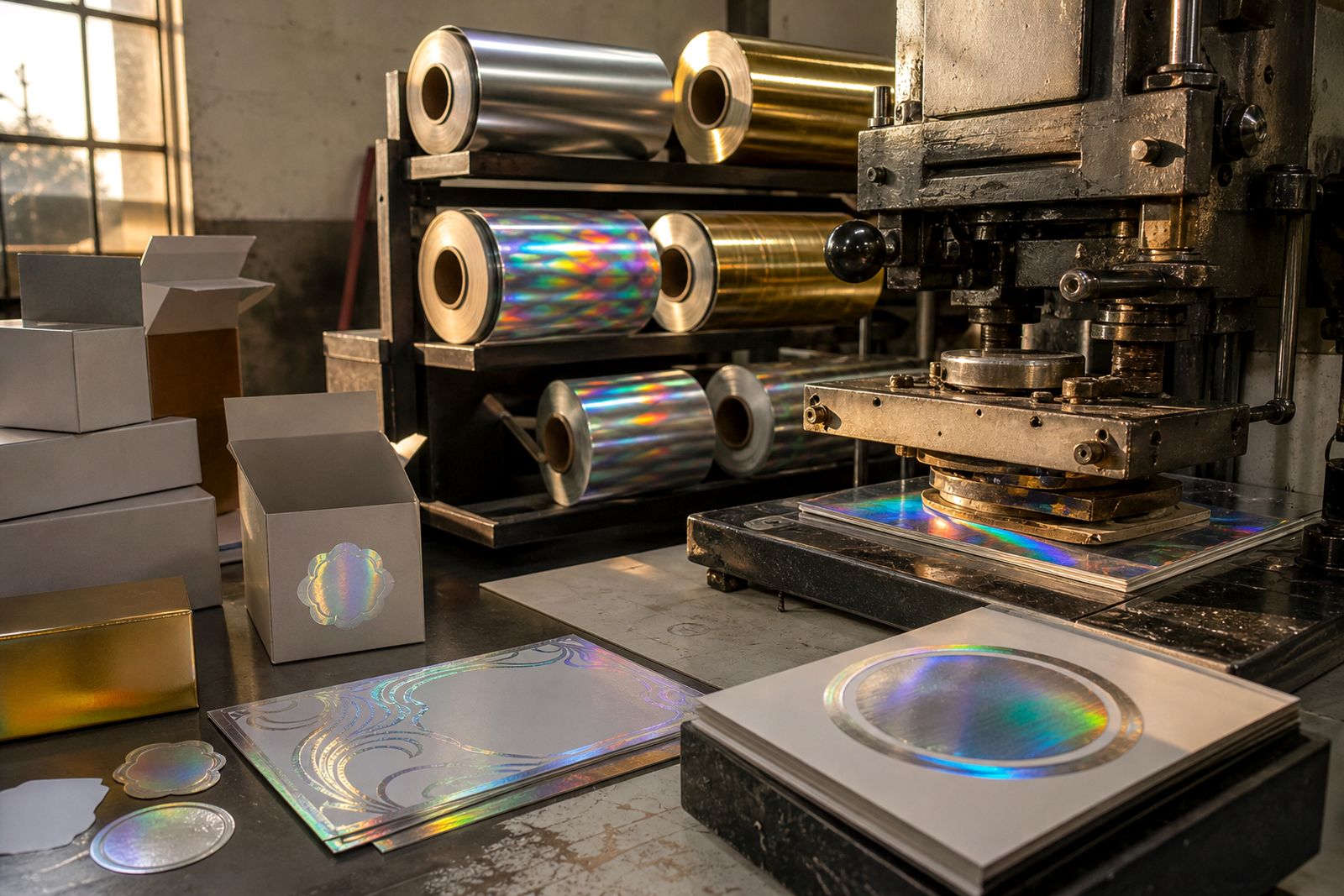
Prism Holo suits work where a diffraction look is wanted on packaging, labels and specialty print work. It is commonly tested on coated board, uncoated board, gloss laminate, soft-touch laminate and UV varnish, as well as on labels, plastics, leather and textiles where the surface and process allow.
For security cues and short decorative runs, it can also be considered for tamper visible and branded finishing. If you are planning a new application, begin with a small test area rather than a full run.
Substrates to test first
Surfaces vary a lot in release, texture and coating chemistry, so make-ready should start with the most likely trouble points. Test first on:
- Uncoated board, which may need tighter control on pressure and dwell
- Soft-touch laminate, where release can be less predictable
- UV varnish, especially if the coating is uneven or heavily built up
- Plastics, leather and textiles, where surface tension and structure can affect transfer
If the job is a carton, book cover or label, confirm the exact board, coating and print sequence before setting the die. For related handling notes, see Prism Holo press notes.
Press setup
Use the starting range given for Prism Holo and adjust it to the substrate and press type. Typical starting tests begin at 125 to 140°C, then are checked against the actual release on press. Do not assume one setting will suit every board, laminate or plastic.
Set up the press with the foil direction, die condition and impression area in mind. The right result depends on the balance between temperature window, dwell, pressure and release profile. On platen, cylinder and roll to roll equipment, these factors must be tested together, not one at a time.
What to check on make-ready
| Check | What to look for |
|---|---|
| Temperature window | Start within the stated test range and watch for clean release without overcooking the image. |
| Dwell | Allow enough contact time for the foil to transfer, especially on coated or textured stocks. |
| Pressure | Check that impression is even across the die, with no weak edges or crushed detail. |
| Release profile | Look for full lift from the carrier where the image should print, and no unwanted pick on the non-image areas. |
Make-ready should also confirm die condition, blanket or cylinder setup, sheet feed and registration. A magnesium, copper or brass die can behave differently, so test each tool on the intended stock before running full quantities.
Supply and next steps
Prism Holo is supplied as slit rolls to the width needed for the job, which helps match the press and reduce waste on setup. If you need a narrower roll for a particular press or format, specify it when ordering.
For sample packs, swatch books and advice on the right substrate to test first, go to Prism Holo Specifications or Order Prism Holo. If you want to check a job before ordering, use the contact form and ask for substrate guidance.
For more foil families and finishing options, see Products.
What our Hot Stamping Foil customers say
Verified Google reviews
Also worth a look
Ask about a foil for your job
Send a note through our contact form with the substrate, the press you run (platen, cylinder or roll-to-roll), the finish you are after and the run length, and we will come back with a foil grade, a sample and a quote.
Open the contact form