

TextileSheen press notes
Use these notes to keep TextileSheen looking close to the swatch. Check the press setup, the substrate and the release before you run.
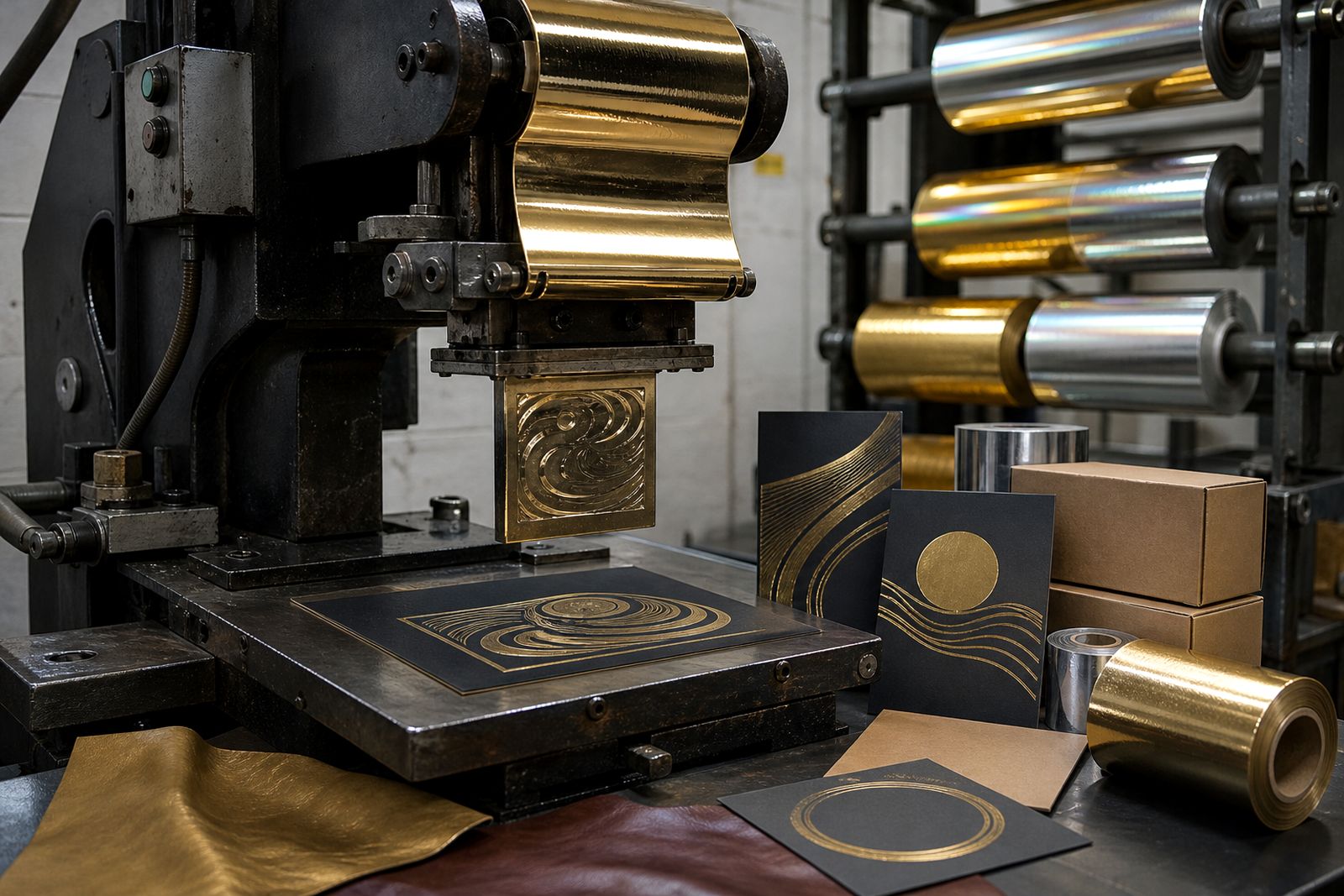
What TextileSheen is for
TextileSheen is a foil family for textile decoration where a clean, controlled finish matters on labels, caps and soft goods. It is used where the carrier, release and surface finish need to work together on fabric and fabric-like materials.
For a fuller product overview, see the TextileSheen range. If you are matching a specific application, start with the substrate guide before you set the press.
The foil is normally supplied as slit rolls to the width needed for your line or press. Keep the roll edges clean and the wind consistent so the web tracks properly and the impression stays even across the repeat.
Set up the press
Start with a small press-side test and build from there. A practical make-ready check should cover temperature window, dwell time, pressure and release behaviour before full production starts.
- Use a starting temperature range only as a test point, then adjust for the substrate and press speed.
- Set dwell long enough for the foil to transfer cleanly without overcooking the surface.
- Apply enough pressure for full image contact, but avoid crushing the fabric or carrier.
- Watch the release: a clean pull from the carrier is the sign to hold your settings steady.
If you need press-side guidance, ask for advice through the contact form.
Choose the die and packing
Die choice affects the finish on textiles. Magnesium, copper and brass dies can all be used, but each behaves differently in heat retention, detail and wear.
| Die type | Typical use on textile work |
|---|---|
| Magnesium | Good for shorter runs and general make-ready checks where you want quick heat response. |
| Copper | Useful where finer detail and steadier heat are needed across repeated impressions. |
| Brass | Chosen when more durability is needed for longer runs or more demanding artwork. |
Pack the chase or cylinder so the image lands flat and even. Uneven packing often shows up first as patchy transfer or a dull edge on the design.
Watch for common faults
Most faults on TextileSheen come back to setup, substrate or press balance. Look closely at the first pulls and correct one variable at a time.
- Fill-in can point to too much heat, too much pressure or artwork that is too fine for the textile surface.
- Flaking often means the foil has not bonded properly, or the release is too aggressive for the substrate.
- Poor adhesion usually needs a check on temperature, dwell and pressure together, not one setting alone.
- Feathering can happen when the edge is not clean, the die is uneven or the material moves during impression.
For matching roll widths, swatches and sample checks, use the specifications as a reference.
Keep the run consistent
Once the setup is close, keep it steady. Small changes in web tension, press speed, substrate finish or ambient conditions can change the look of the foil from one run to the next.
Test on the exact textile or soft goods material you will run in production, not only on a substitute. If the finish needs to sit on textured, coated or soft-touch surfaces, confirm the release and adhesion before going live.
When you are ready to order slit rolls or request press-side help, go to Order TextileSheen or send the details through the contact form.
What our Hot Stamping Foil customers say
Verified Google reviews
Also worth a look
Ask about a foil for your job
Send a note through our contact form with the substrate, the press you run (platen, cylinder or roll-to-roll), the finish you are after and the run length, and we will come back with a foil grade, a sample and a quote.
Open the contact form