

WoodGrain substrates
Use this guide to check where WoodGrain is likely to give a clean result and where a test run is needed first. It covers press setup, release, and substrate fit.
What WoodGrain is for
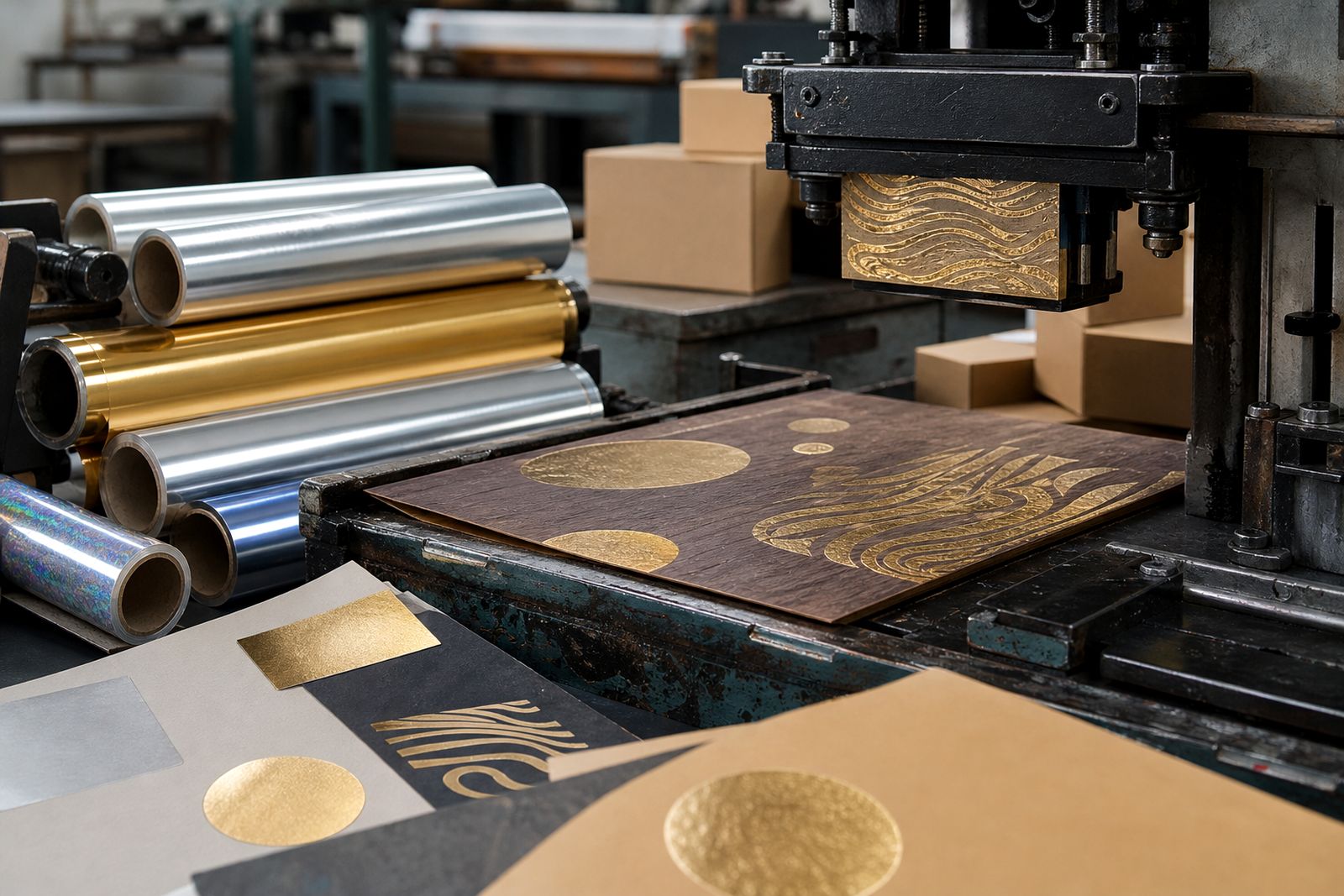
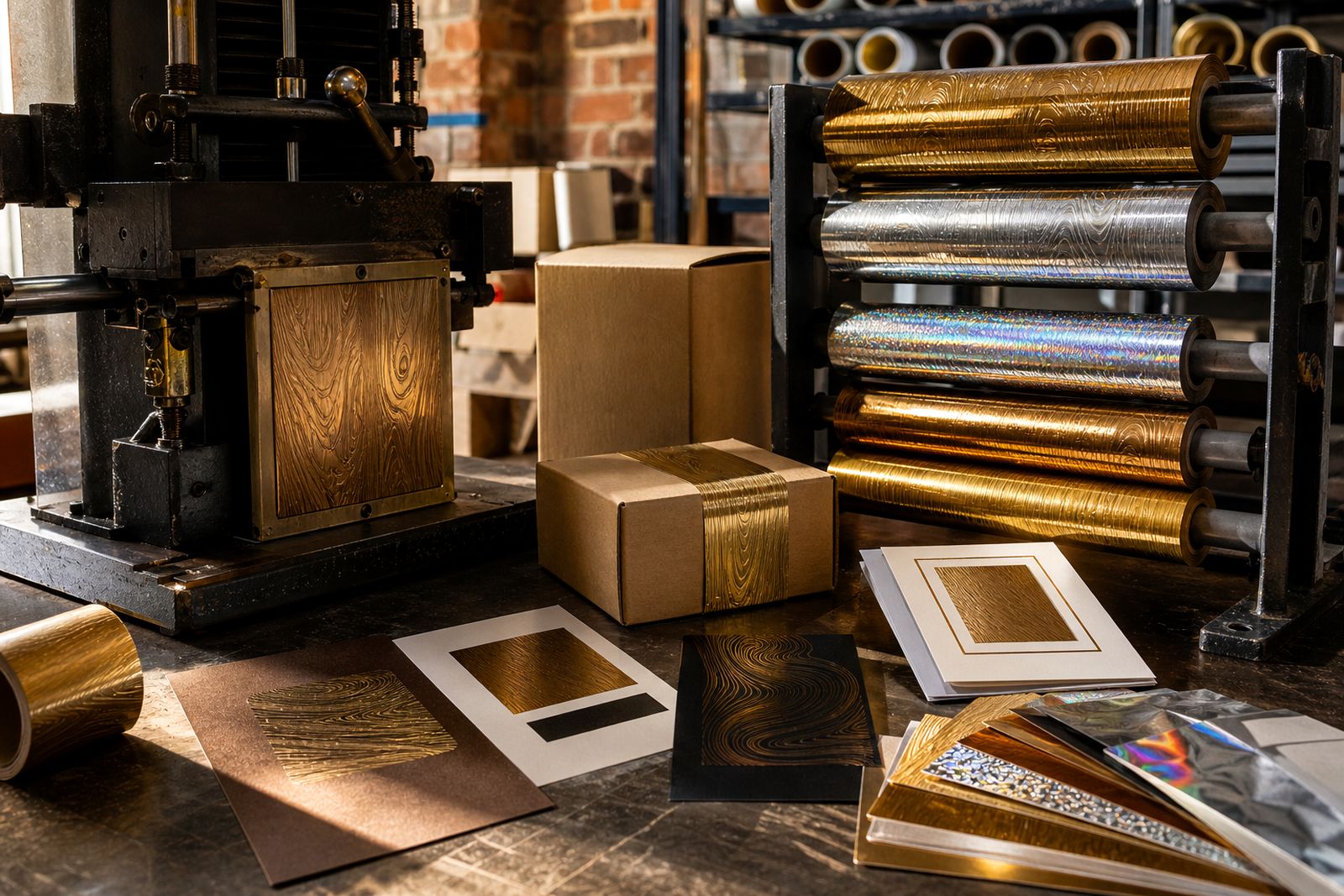
WoodGrain is a hot stamping foil family for adding a woodgrain finish to print and display work on suitable substrates. It is used where a decorative grain effect is wanted on plaques, awards, display props and similar short-run items.
The first job is to match the foil to the surface and the press. A clean transfer depends on the substrate, the die, the heat profile and how the foil releases. If you are working with an unfamiliar surface, start with a small test before a long run.
For the main product details and related notes, see WoodGrain Specifications and WoodGrain press notes.
Substrates to test first
WoodGrain can suit coated and uncoated board, soft-touch laminate, gloss laminate and UV varnish, but these surfaces can behave differently in press. Labels and cartons may also need careful testing, depending on coating, ink coverage and the finish being stamped.
Test first when the surface has a low-energy finish, an uneven coating, or any treatment that may affect release. On board, check whether the coating sits tight and whether the surface can take the pressure without marking. On laminated work, test for adhesion at the edges and around fine detail.
- Coated board and uncoated board
- Soft-touch laminate and gloss laminate
- UV varnish
- Labels and cartons
Other materials
Where relevant, WoodGrain may be trialled on plastics, leather or textiles, but these materials usually need more careful make-ready. They can respond differently to temperature, pressure and dwell, so a press test is essential before committing to a full order.
For leather and textile work, check the surface finish, grain texture and any backing or treatment that may affect transfer. On plastics, confirm whether the material can handle the heat window without distortion. For mixed work, test each substrate separately rather than assuming the same settings will hold across the run.
If your job involves specialist materials, the parent category may help you compare options: WoodGrain.
Press setup checks
Good make-ready starts with the right temperature window, dwell, pressure and release profile for the job. Use starting ranges only, then adjust by test sheets or test pieces until the foil breaks cleanly and transfers where it should.
Check the die type and the press style before you run. Magnesium, copper and brass dies each behave differently, and platen, cylinder and roll-to-roll presses need different setup discipline. Spot dies often need tighter control than larger solid areas because fine detail shows release issues quickly.
| Check | What to look for |
|---|---|
| Temperature window | Start with a test range suitable to the substrate and foil release |
| Dwell | Enough time for the image to transfer without overcooking the surface |
| Pressure | Even contact across the image area, including edges and fine detail |
| Release profile | Clean release from the non-image areas with no unwanted pullback |
| Die and press type | Match the die material and press style to the job size and detail |
Supply and ordering
WoodGrain foil is supplied slit to roll width for the press and job size you need. That makes it easier to load for short runs and to keep the foil width close to the artwork or die area.
If you need swatch books, samples or press-side advice before ordering, use the contact form at Contact. You can also move on to ordering once the substrate and press tests are signed off: Order WoodGrain.
When you enquire, mention the substrate, press type, die material and whether the job is on board, laminate, label stock, plastic, leather or textile. That helps match the foil roll and the starting setup for your test.
What our Hot Stamping Foil customers say
Verified Google reviews
Also worth a look
Ask about a foil for your job
Send a note through our contact form with the substrate, the press you run (platen, cylinder or roll-to-roll), the finish you are after and the run length, and we will come back with a foil grade, a sample and a quote.
Open the contact form