

Antique gold
A warmer gold for premium finishes on board, labels and leather. Use it where a softer antique tone is preferred over a bright yellow gold.
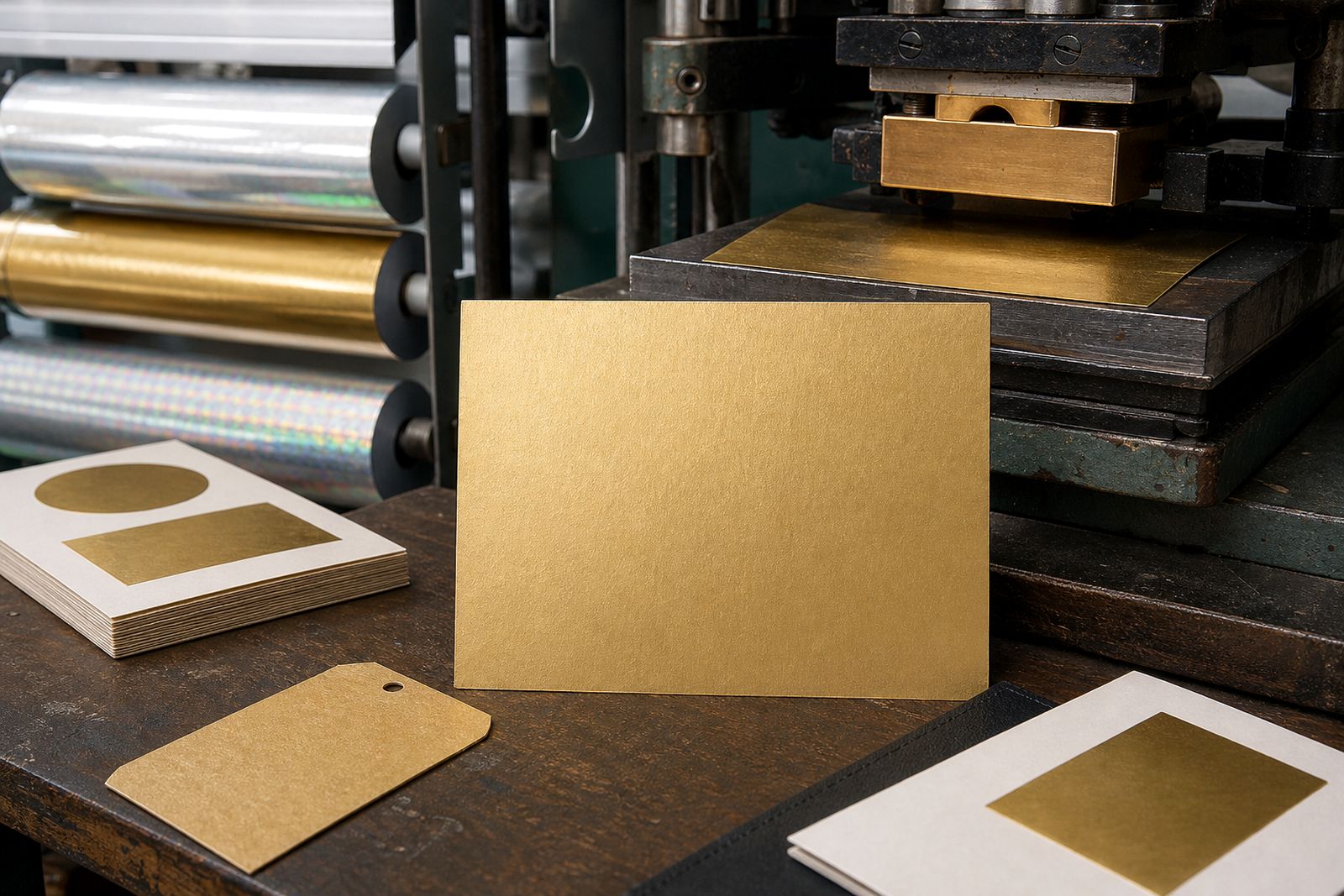
Antique gold finish and effect
Antique gold gives a softer metallic gold appearance with warmer undertones. It suits heritage-style branding, classic packaging, book covers and leather items where a rich but less reflective gold is wanted.
On coated board it can read as a muted, elegant gold rather than a sharp mirror finish. On darker stock it can sit closer to a deep warm metal tone. If you want a brighter face, compare it with Bright gold; for a cooler metallic feel, look at satin silver or Mirror silver.
It is a good choice when the job needs a refined gold effect without looking flashy.
Where it suits
This finish is commonly tested on cartons, book covers, labels, soft-touch laminate, and leather goods. It can also be used on selected plastics and other speciality substrates when the surface and release are right.
- Coated board for premium cartons and sleeves
- Paper labels and tag stock
- Book covers and presentation packs
- Leather goods and leather-look pieces
- Soft-touch laminate where the surface has been prepared correctly
If the job calls for a warmer metal look on a more decorative substrate, ask for samples and test with the actual stock before production. For related warm finishes, see Copper bronze and Soft-Touch Gold.
Press setup
Start with a normal foil make-ready and test the finish on press, not only on a proof. Typical starting ranges are a moderate heat setting with enough dwell to transfer the full image cleanly, then adjust from there. The exact window depends on the stock, die, press speed and image area.
For most jobs, the main checks are clean release, even coverage and no over-crushing of the image. Too much heat or pressure can flatten the softer gold tone and make the finish look dull. Too little can leave patchy transfer or weak edges.
| Press point | What to check |
|---|---|
| Temperature | Start in a normal testing range and adjust in small steps |
| Dwell | Long enough for full release without scorching the stock |
| Pressure | Firm and even across the image area |
| Release | Clean transfer with no picking or haze |
Dies and machinery
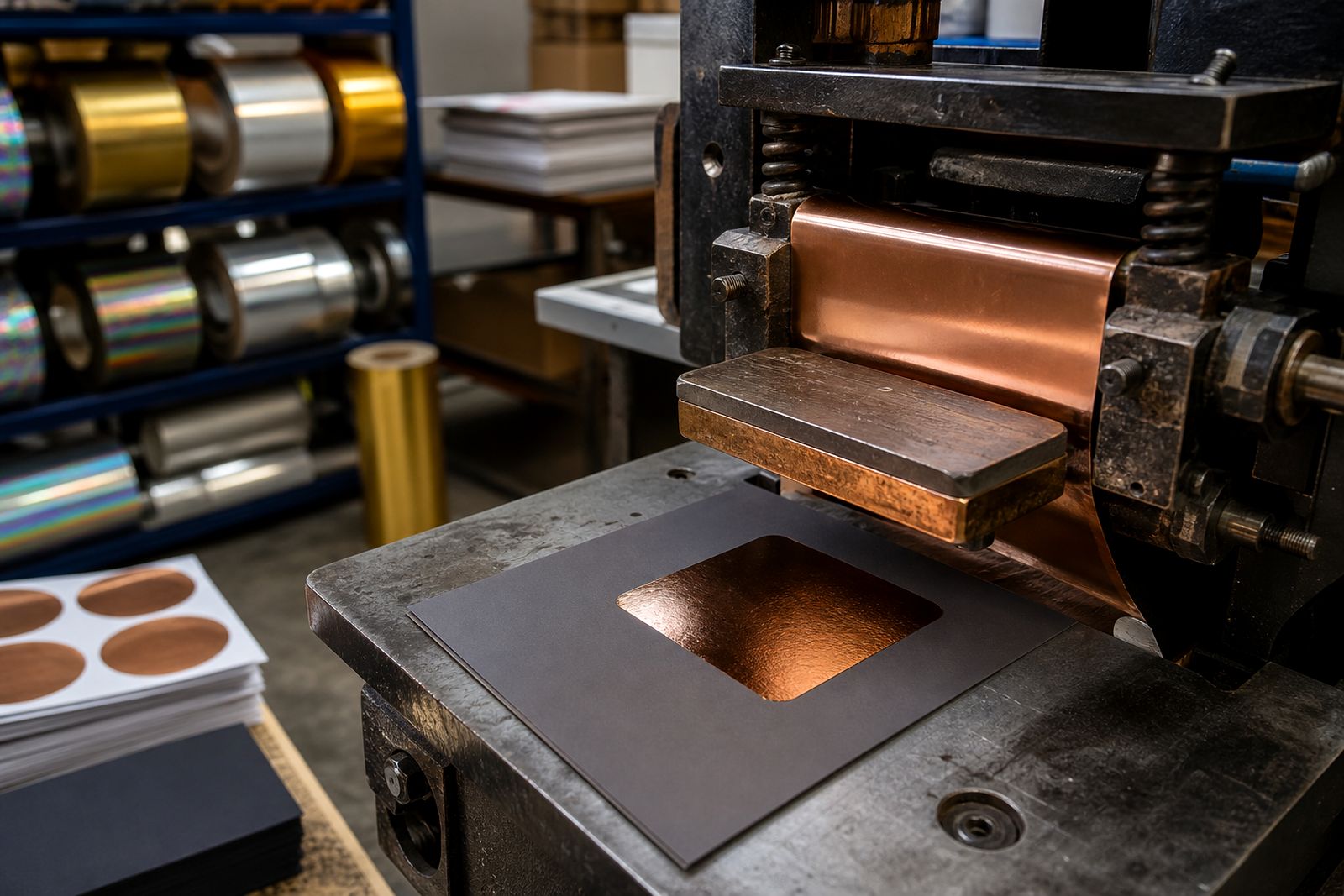
Antique gold can be run on platen, cylinder and roll-to-roll presses when the foil and substrate are matched correctly. Magnesium, copper and brass dies each behave differently, so test the image, line weight and coverage before signing off the job.
Fine type, borders and small details need careful die engraving and make-ready. Bigger solids may need more attention to pressure balance and stock flatness. If the image sits on a textured or coated surface, check the release profile early and watch for weak corners or uneven shine.
For machine and setup guidance across foil work, you can also browse products or read more on journal.
Sampling and ordering
Ask for swatch books or samples when you need to compare antique gold with other gold and metal finishes. Testing the actual stock is the safest way to confirm tone, transfer and adhesion before a production run.
Stampingfoil supplies foil slit to roll width and can advise on temperature windows, dwell, pressure, release profiles, dies and make-ready. If you need help matching this finish to a specific stock or press, use the contact form.
For broader finish choices, return to the finishes library or compare with Process red and Process blue where a colour accent is preferred.
What our Hot Stamping Foil customers say
Verified Google reviews
Also worth a look
Ask about a foil for your job
Send a note through our contact form with the substrate, the press you run (platen, cylinder or roll-to-roll), the finish you are after and the run length, and we will come back with a foil grade, a sample and a quote.
Open the contact form