

Soft-touch gold
A gold finish for soft-touch laminate needs the right release, pressure and clean make-ready. This guide covers the foil grades, stock fit and press checks that matter.
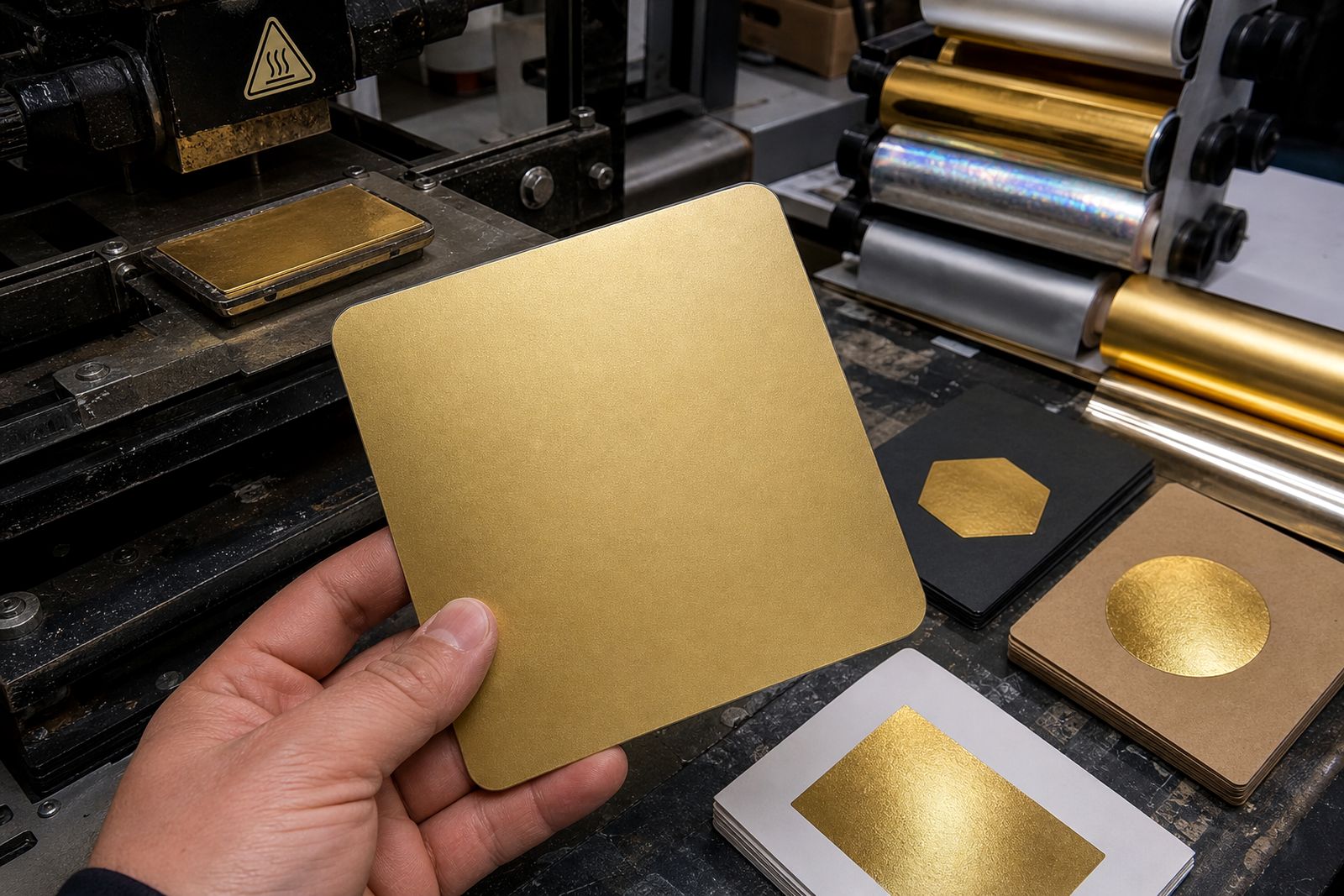
Soft-touch gold on press
Soft-touch laminate can change how a gold foil releases, so the look on the job is shaped as much by the stock as by the foil. The aim is a clean gold image with even coverage, sharp edges and no patchy pull on flat areas or fine detail.
For this finish, start with foil grades that are friendly on low-energy or tactile coatings and test the image on the actual laminate, not only on plain board. A press-side check on temperature, dwell, pressure and release is the safest way to build a workable window. On many jobs, a slightly slower, cleaner release profile gives better definition than pushing heat too hard.
If you are setting up a new job, keep the first test simple. Run solid areas, small text and a fine line if the artwork has it, then compare the foil edge and fill. For help choosing a starting grade, see Bright gold, Antique gold and the full finishes library.
Foil grades to try for soft-touch gold
Not every gold foil behaves the same on soft-touch surfaces. The right choice depends on whether you want a brighter gold, a warmer antique tone or a more controlled satin effect. Foil chemistry and release can change how the finish sits on the laminate, so it is worth matching the grade to the artwork and the press.
- Bright gold for a cleaner, more reflective gold impression
- Antique gold for a deeper, warmer gold look
- Gold grades for soft-touch laminate when you need a foil that releases more cleanly on coated tactile stocks
Where the job needs a different foil family, you can compare metallic choices such as Mirror silver, Satin silver and Copper bronze. For white, black and setup work, there are also pigment options like Matte black pigment and Opaque white.
Stocks and uses for soft-touch gold
This finish is mainly used where gold has to sit neatly on soft-touch laminate rather than on a plain gloss or uncoated board. It is suitable for labels, cartons, book covers and other packs where the tactile coating is part of the design. The job should be checked on the exact stock build, because the laminate, board and artwork all affect release.
Soft-touch surfaces can be sensitive to make-ready and die condition. If the laminate is uneven, contaminated or too heavily compressed, the foil can lose detail or show incomplete transfer. For that reason, make-ready should be set carefully and the die face should be clean and well matched to the image.
| Check | Why it matters |
|---|---|
| Laminate type | Soft-touch coatings can change release and adhesion |
| Artwork detail | Small text and fine lines need a cleaner transfer |
| Substrate build | Board, film and coating layers affect heat response |
| Finish target | Brighter or warmer gold may need a different foil grade |
For related finishing ideas on other stocks, see applications and solutions.
Press checks for soft-touch gold
Good results usually come from careful adjustment rather than one setting for every job. Start with a sensible temperature window for the foil grade and laminate, then test dwell and pressure in small steps. If the foil looks dull, the release may be too cold or too fast. If it smears or bites too hard, the setup may be too hot or too aggressive.
On platen, cylinder and roll-to-roll presses, the same finish can need different make-ready and pressure balance. Magnesium, copper and brass dies each behave differently, so the die material should be considered when setting the job. A smooth, even impression across the form is more important than pushing extra heat into the stock.
- Check foil release on solids and fine detail
- Watch for edge lift, pinholes and patchiness
- Test both short and longer dwell if the first strike is weak
- Confirm that the laminate tolerates the chosen pressure
If you need practical advice before the run, ask through the contact form.
Support and samples for soft-touch gold
For finish selection, swatch books and sample material help make the first test more predictable. When a job is moving from concept to press, press-side advice on foil choice, temperature windows, dwell and pressure can save time during make-ready. This is especially useful when the artwork combines large solids, small text or a tight border.
Foils can be slit to roll width for different line setups, and the same advice applies whether the job is for flat cartons or shaped items. If the gold is only one part of the finish plan, compare it with process red, process blue, rainbow holo and linear diffraction for other looks.
For a quoted recommendation or a sample request, use the contact form. For more finishing categories, go back to the finishes library or explore products.
What our Hot Stamping Foil customers say
Verified Google reviews
Also worth a look
Ask about a foil for your job
Send a note through our contact form with the substrate, the press you run (platen, cylinder or roll-to-roll), the finish you are after and the run length, and we will come back with a foil grade, a sample and a quote.
Open the contact form