

Linear diffraction
Linear diffraction gives a directional beam effect with clear moving lines across the design. It suits controlled accents where the press setup must stay consistent.
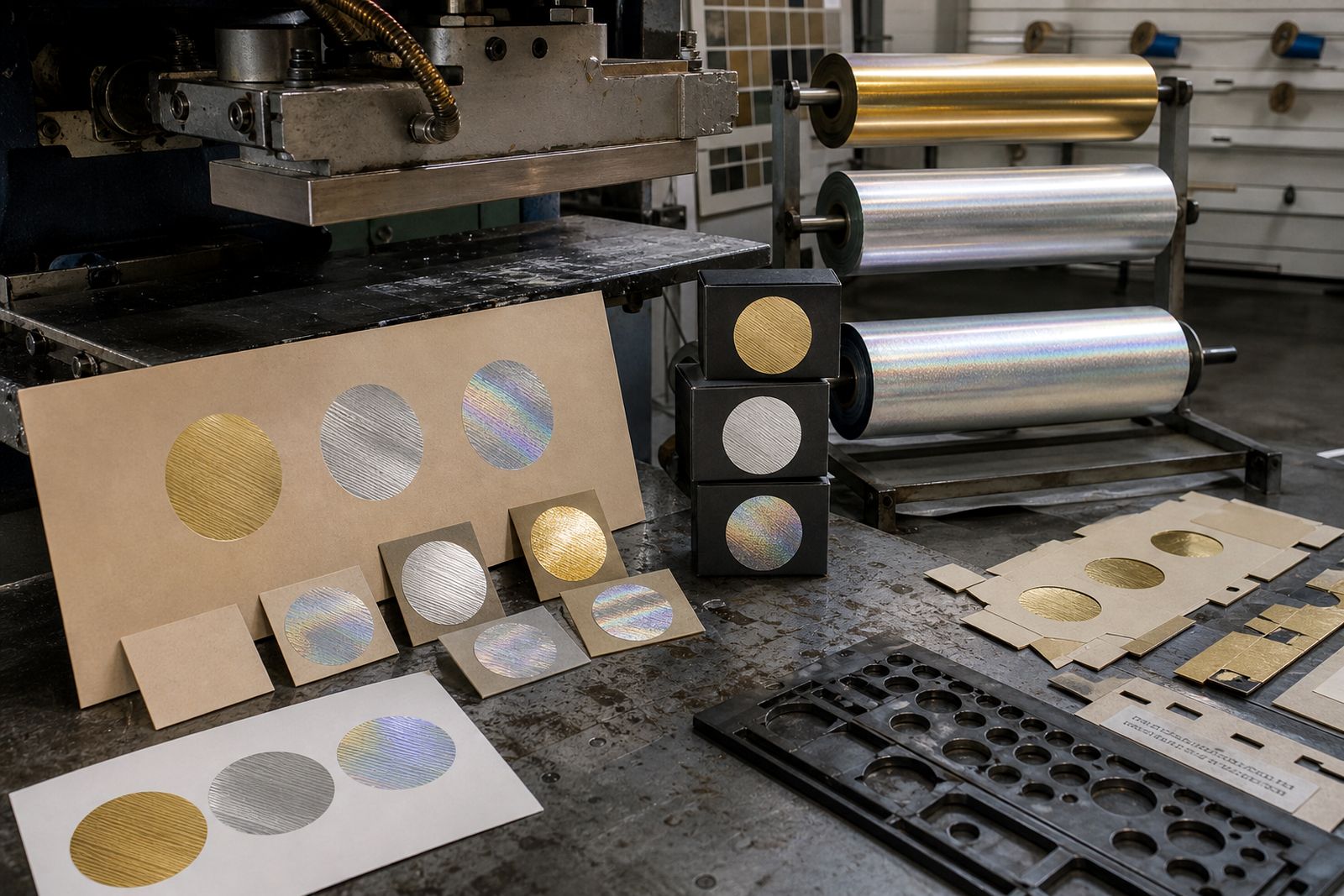
What it looks like
Linear diffraction creates a tight directional pattern that reads as moving lines, beams or bands when the sheet turns in the light. The effect is cleaner and more ordered than a broad rainbow foil, so it works well when the artwork needs a strong reflective feature without taking over the whole design.
On press, the finish is usually used as an accent rather than a full flood. It can be placed in borders, frames, brand marks, security elements and panel details where the line direction adds movement. For a different metallic look, compare it with Mirror silver, Satin silver or Rainbow holo.
Because the pattern is directional, artwork orientation matters. Keep the beam direction in mind when setting up repeat lengths, label direction and panel layout so the effect lands where it should on the finished job.
Where linear diffraction suits
This finish is commonly chosen for labels, cartons, book covers and presentation items where the reflective pattern needs to be neat and controlled. It can also be used on soft-touch laminate and coated board, provided the surface release is checked on press before the main run.
For jobs that need a warmer metallic feel, consider Bright gold, Antique gold or Copper bronze. For darker artwork or high contrast detail, Matte black pigment or Opaque white may be more suitable alongside the diffraction area.
- Labels with fine border work
- Cartons with brand panels
- Book covers and sleeves
- Soft-touch laminate applications
- Short-run security accents
Press setup for linear diffraction
Linear diffraction needs clean make-ready and steady pressure. Start with a small test area and confirm where the foil releases most evenly across the die face, especially on fine lines and narrow shapes. Typical starting temperatures for testing should be taken as a guide only, since board, laminate and press type all change the setting.
Use the right die material for the job, whether magnesium, copper or brass, and make sure the image area has even support. On platen, cylinder and roll-to-roll presses, check dwell, pressure and release profile together rather than adjusting one setting at random. A short test strip is often enough to see whether the direction of the beam is holding cleanly.
| Check | Why it matters |
|---|---|
| Die sharpness | Helps the line pattern release cleanly |
| Pressure balance | Prevents patchy foil pickup |
| Dwell time | Controls release on fine detail |
| Substrate surface | Changes adhesion on board, laminate and film |
Stocks and foils for linear diffraction
This finish is available from Stampingfoil in slit roll widths to suit the press and the job. If you need related options for the same artwork family, the foil range also includes metallics, pigments, holographic patterns, security foils and specialty foils for leather, plastics, textiles and soft-touch laminate.
For combined jobs, linear diffraction can be paired visually with Soft-Touch Gold or kept separate from a simpler metallic panel such as Mirror silver. The choice depends on whether the aim is clean directional movement or a more reflective solid block.
Swatch books and samples are available to help compare the finish against the actual stock before production. This is especially useful when the job includes coated board, textured substrate or a laminate surface that changes the way the foil releases.
Next steps for linear diffraction
If you are setting up a new job, bring the artwork, stock sample and press details together before you run. That makes it easier to match the finish to the right die, press and release profile. Press-side advice is available on temperature windows, dwell, pressure, foil direction and make-ready.
Use the contact form to ask for a quote or request samples. You can also move back to the finishes library to compare linear diffraction with other decorative and security options before final approval.
- Confirm stock, laminate and press type
- Check artwork orientation and foil direction
- Test a small area before the full run
- Request swatches or samples for sign-off
Related linear diffraction finishes
These related finishes can help when the job needs a different look, a warmer tone or a simpler reflective field. The right choice depends on the artwork, the substrate and how much movement you want in the final image.
| Finish | Use it for |
|---|---|
| Rainbow Holo | Broader colour shift and holographic motion |
| Mirror silver | High reflection with a plain metallic look |
| Satin silver | Lower shine metallic detail |
| Bright gold | Clear gold metallic accents |
| Copper bronze | Warm copper and bronze tones |
For technical help on a current job, or to match this finish to a specific board or laminate, use the contact form and include the press type, stock and artwork notes.
What our Hot Stamping Foil customers say
Verified Google reviews
Also worth a look
Ask about a foil for your job
Send a note through our contact form with the substrate, the press you run (platen, cylinder or roll-to-roll), the finish you are after and the run length, and we will come back with a foil grade, a sample and a quote.
Open the contact form