

Opaque white
Opaque white pigment for clean, solid coverage on dark boards and coated stocks. Use it where you need a clear white stamped area, not a printed tint.
Where it works
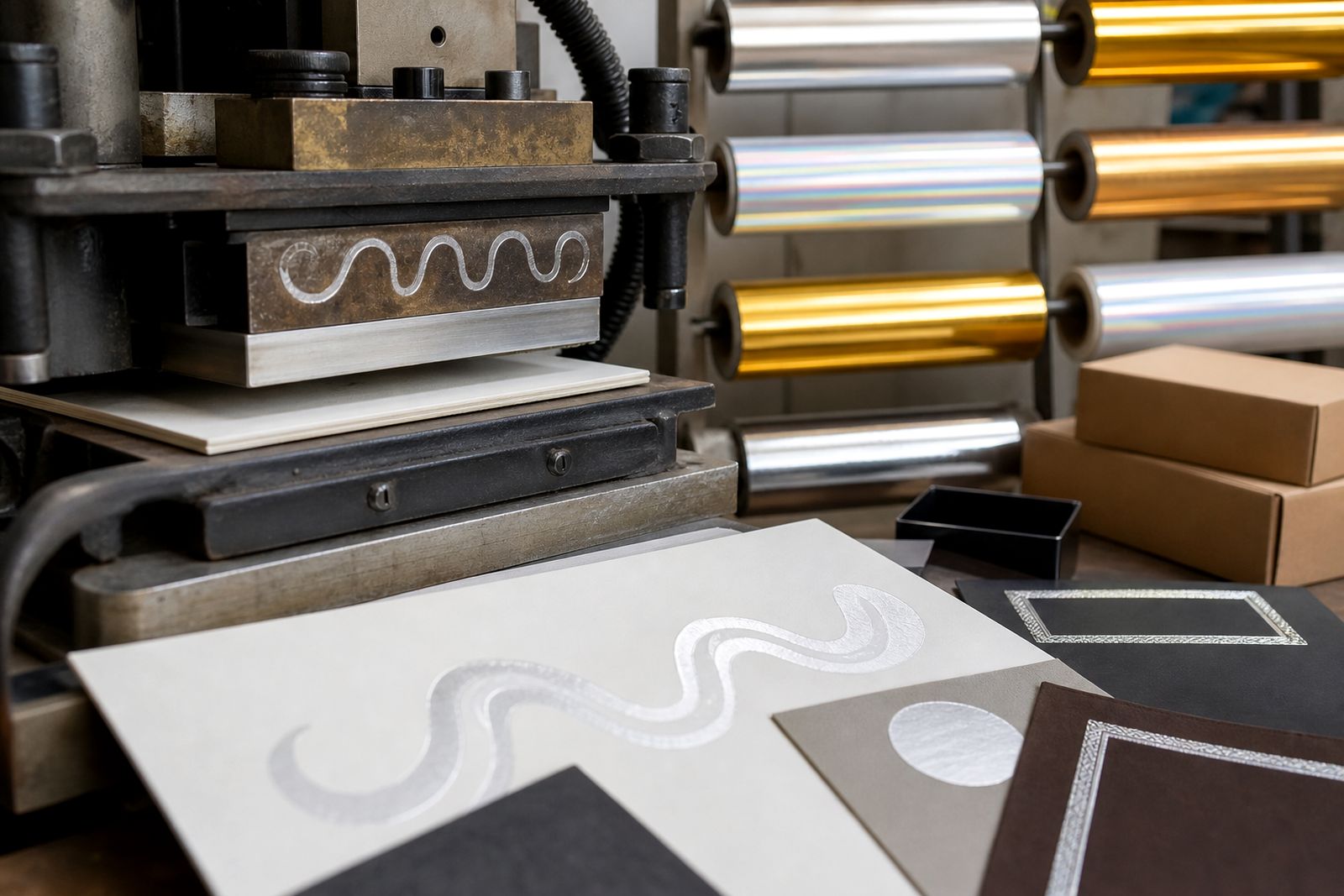
Opaque white is a pigment finish made to stand out on dark boards, coloured stocks and darker printed backgrounds. It is used when the stamped area must read as a strong white shape rather than a light, see-through mark.
It suits cartons, labels, book covers and other packaging where white detail needs to sit cleanly on the surface. On smoother coated stocks, it can give a neater edge and more even coverage than on rough or open sheets.
For darker projects, compare it with other pigment finishes like Matte black pigment and process colours such as Process blue or Process red if you are building a coloured system.
Stock and surface checks for opaque white
White pigment needs careful surface matching. On coated board, the finish usually has a better chance of reading as a clean white block. On textured or absorbent surfaces, check whether the board leaves open grain, uneven transfer or broken edges.
If the substrate carries a soft-touch laminate, ask for a sample first. That surface can be very different from standard board, and the right setting is usually found by testing the finish against the actual laminate, die and press.
For packaging work, make sure the artwork leaves enough room for solid coverage and for any fine detail that must hold. Very small reverse shapes may need a simpler design or a changed die line.
Press setup notes for opaque white
Start with test values and adjust from there. Typical starting points are often in the lower to mid temperature range for pigment foils, with dwell and pressure set to suit the stock, the die and the press type.
Release matters as much as heat. If the foil releases too early, coverage can look thin; if it holds too long, edges may drag or pick up. Check the release profile against the job before going live.
On platen, cylinder and roll-to-roll presses, keep make-ready consistent and test the same board or laminate you will run. Magnesium, copper and brass dies can all behave differently, so repeat checks after any change in tooling.
How to spec opaque white
| Check | What to confirm |
|---|---|
| Substrate | Coated board, dark board, label stock or soft-touch laminate |
| Press type | Platen, cylinder or roll-to-roll |
| Tooling | Magnesium, copper or brass die |
| Finish target | Solid white coverage, edge clarity and reverse detail |
| Test items | Temperature window, dwell, pressure and release |
If you need a narrower roll width, foil can be slit to suit the job. Ask for swatch books or samples, then check the result on the actual stock before the run.
Ordering help for opaque white
For a job-specific recommendation, send the stock name, press type, die material and whether the board is coated, dark or laminated. That helps narrow the right settings and avoid trial-and-error on press.
If you need a side-by-side comparison with other finishes, look through Finishes or ask for a sample through the contact form. Press-side advice is available for temperature windows, dwell, pressure, release profiles and make-ready.
For related packaging work, you may also want to review Mirror silver, Satin silver and Soft-Touch Gold when comparing how different finishes sit on the same board.
What our Hot Stamping Foil customers say
Verified Google reviews
Also worth a look
Ask about a foil for your job
Send a note through our contact form with the substrate, the press you run (platen, cylinder or roll-to-roll), the finish you are after and the run length, and we will come back with a foil grade, a sample and a quote.
Open the contact form