

Satin silver
A softer silver for controlled shine on covers, labels and packaging. Useful where mirror foil is too bright and a more restrained metallic read is needed.
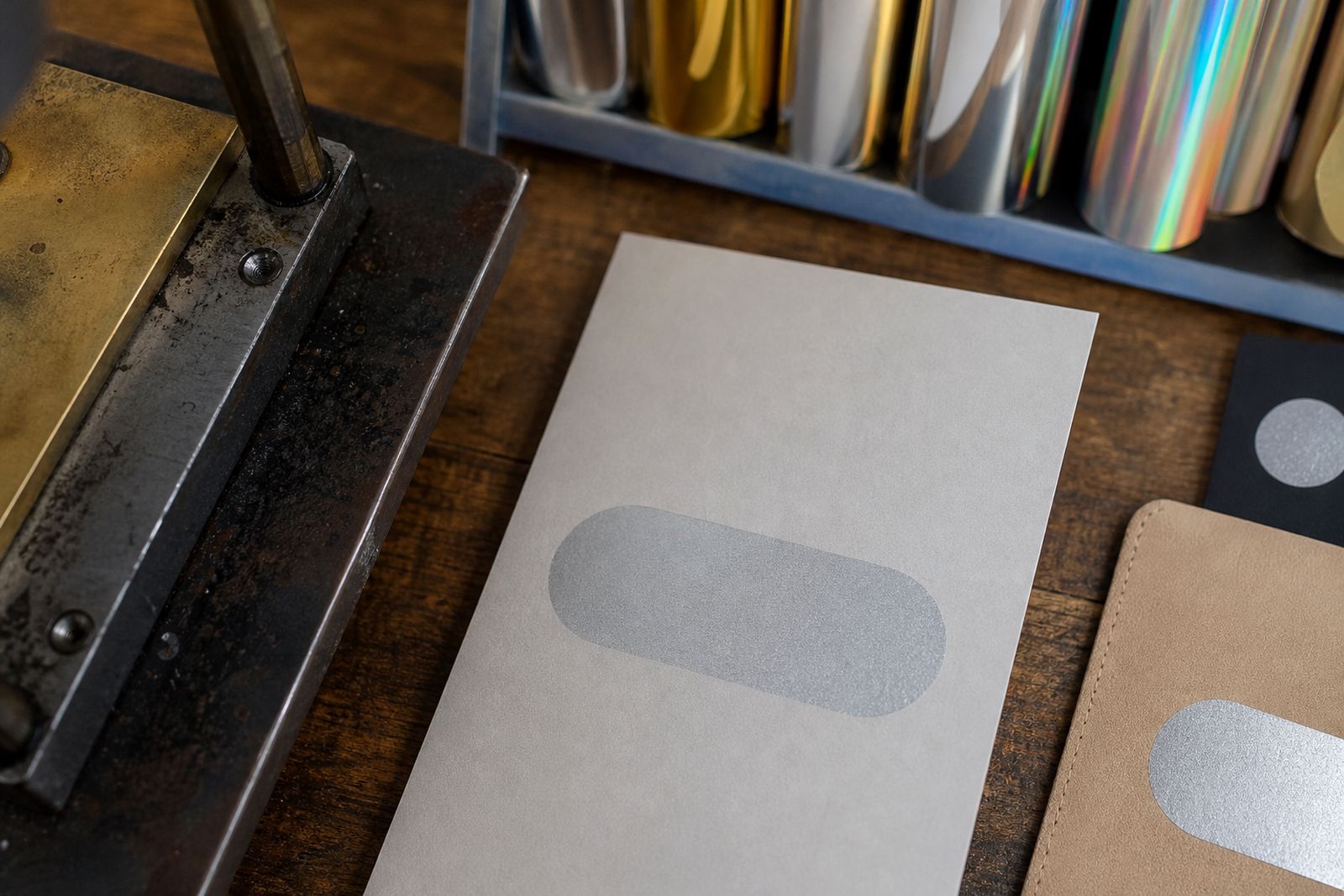
What it looks like
Satin silver gives a silver finish with less glare than mirror foil and a smoother read than a high sparkle metallic. It sits between bright shine and a flat tone, so the image keeps its metallic character without throwing hard reflections under studio lights or shop lighting.
Use it when the design calls for a cleaner silver presence on editorial covers, premium labels, cartons and presentation pieces. For a brighter, more reflective silver, compare it with Mirror silver. For a stronger gold family tone, look at bright gold.
Where it suits
This finish works well on coated board, soft-touch laminate, book covers, paper wraps and some plastics that take foil cleanly. It is also worth testing on textured stocks where a softer sheen helps the foil read more evenly across the surface.
- Editorial and coffee-table covers
- Luxury labels and cartons
- Soft-touch laminate panels
- Presentation sleeves and inserts
- Leather goods where a subtler silver is wanted
For leather work, ask for a sample against your own substrate. If your job also needs a warmer metal note, compare with Copper bronze.
Press checks for satin silver
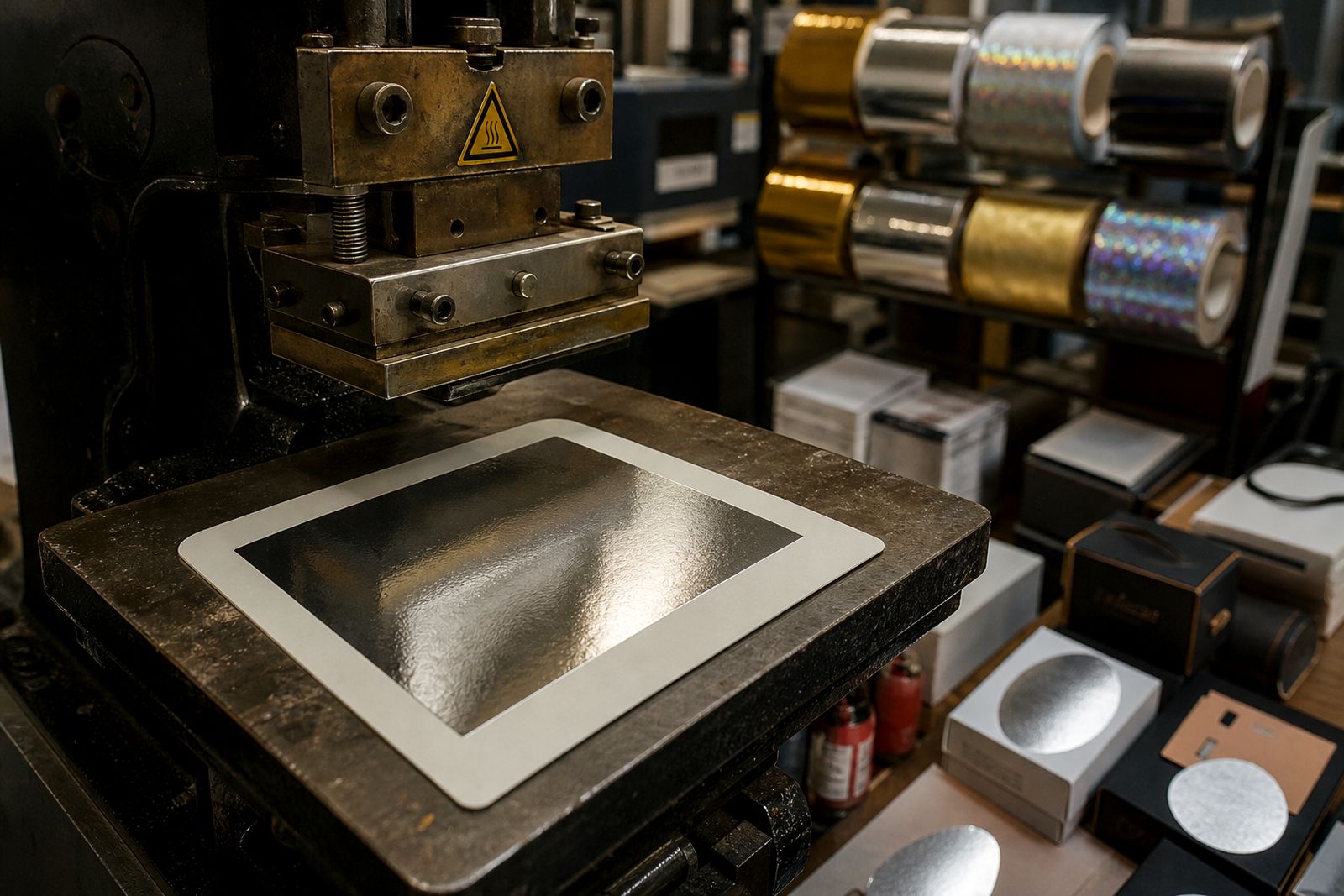
Start with a small test and check the full image, fine type and solid areas before running the job. On platen, cylinder or roll-to-roll presses, the main checks are temperature window, dwell, pressure and release profile.
Typical starting tests for satin-style metallic foils are often in the lower to mid range of your normal foil settings, then adjusted to the stock and die. Do not set the press by temperature alone. Make-ready, impression and the way the foil releases from the carrier all matter.
| Check | What to look for |
|---|---|
| Temperature | Use a test range and adjust to the stock, die and press speed. |
| Dwell | Enough time for a clean transfer without overcooking the finish. |
| Pressure | Even coverage on solids and type with no harsh squeeze-out. |
| Release | Clean pull from the carrier, especially on fine lines and small text. |
Dies and setup for satin silver
Satin silver can be run with magnesium, copper or brass dies, depending on the detail, run length and press setup. Fine type, logos and slim rules need careful die preparation so the finish stays sharp and consistent across the sheet or web.
If the stock has coating, texture or a soft-touch surface, make sure the artwork and die suit the substrate before you commit to a full run. A clean trial on the actual board or film is the safest way to confirm adhesion and edge definition.
When the job is going to multiple uses, keep a note of the die, foil roll width and press settings that worked. That makes repeat work easier to set up and helps keep the satin look consistent.
Supplies and support for satin silver
Stampingfoil supplies satin and other metallic, pigment, holographic, diffraction, security and speciality foils slit to roll width, with swatch books and samples for testing. If you are matching a cover concept or approving a packaging finish, ask for guidance before the press run starts.
For a related finish, compare satin silver with Linear diffraction when the design needs movement, or with Opaque white where the silver is only one part of the build. For broader finish options, go back to the finishes library or send your job details through the contact form to ask for a quote.
What our Hot Stamping Foil customers say
Verified Google reviews
Also worth a look
Ask about a foil for your job
Send a note through our contact form with the substrate, the press you run (platen, cylinder or roll-to-roll), the finish you are after and the run length, and we will come back with a foil grade, a sample and a quote.
Open the contact form