

Matte Velvet press notes
Use these notes to set up Matte Velvet for clean, low-glare stamping on the right stock. Start with careful make-ready and test on press.
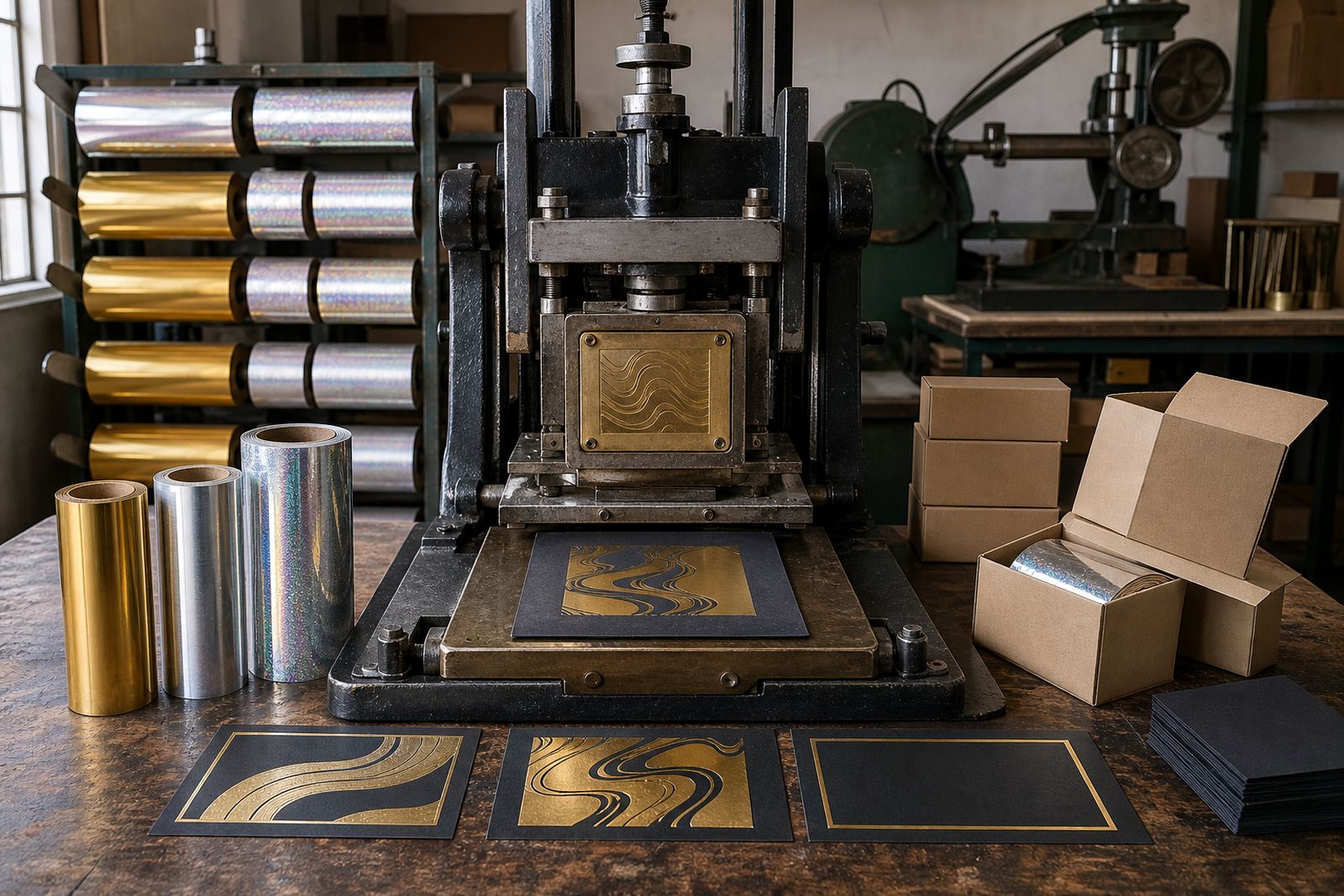
what this foil is for
Matte Velvet is a hot stamping foil made for a soft, low-glare finish with a velvet hand. It is suited to work where the stamped area should feel refined rather than highly reflective, including uncoated stock, journals and luxury sleeves.
For practical planning, treat it as a finish that rewards careful setup. It is often chosen where the foil needs to sit neatly on the sheet without looking harsh, while still giving a distinct stamped effect. If you are matching a sample, start by comparing the foil under the same light you will use on press.
For the core product details, see Matte Velvet specifications and the broader foil range at Products.
check the substrate
Substrate choice matters as much as the foil. Matte Velvet is commonly used on uncoated stock, and can also be tested on selected coated or treated surfaces where the finish is expected to release cleanly.
- Check that the sheet surface is even and free from heavy dust or loose fibre.
- On textured or absorbent stocks, test for full coverage and a clean release.
- On soft-touch laminate, check adhesion carefully and allow for extra make-ready time.
- If the job involves journals, sleeves or similar folded work, confirm the foil area is clear of cracking points.
For more substrate guidance, visit Matte Velvet substrates.
set the press window
As a starting point, use a temperature window of 115 to 130°C and adjust from there in small steps. The exact setting depends on press type, stock, artwork coverage, die depth and the amount of pressure needed to release the foil cleanly.
Keep dwell tight enough to avoid over-softening the image, but long enough to allow full transfer. Too much heat or dwell can cause fill-in or a duller look than expected. Too little can leave weak coverage, patchy release or poor adhesion.
On platen, cylinder and roll-to-roll presses, make one change at a time and pull test sheets before settling on the run setting.
choose the right die
Die choice affects detail, release and the final edge quality. For Matte Velvet, magnesium, copper and brass can all be suitable depending on the artwork and press conditions.
- Magnesium can suit quicker setups and lighter work.
- Copper is often chosen where more detail or more even heat transfer is needed.
- Brass can be useful for fine detail, repeat use and firmer wear.
Match the die to the line weight, area coverage and expected run length. If edges are feathering or the image is not pulling cleanly, check whether the die, packing or temperature window is the first thing to adjust.
fix common faults
When the finish does not match the swatch, work through the usual causes in order: substrate, make-ready, die and then foil release. Most faults on this family are linked to pressure balance, heat, dwell or packing rather than the foil alone.
| Fault | What to check | Typical fix |
|---|---|---|
| Fill-in | Too much heat, dwell or pressure | Reduce one setting at a time and test again |
| Flaking | Poor release or weak surface contact | Increase contact evenly and check die face and packing |
| Poor adhesion | Stock surface, heat window and dwell | Test a warmer setting or a longer dwell within the range |
| Feathering | Edge definition and pressure balance | Check alignment, die depth and press packing |
For roll supply, swatch books and samples, or to ask for a quote through the contact form, go to Contact. You can also review Order Matte Velvet.
What our Hot Stamping Foil customers say
Verified Google reviews
Also worth a look
Ask about a foil for your job
Send a note through our contact form with the substrate, the press you run (platen, cylinder or roll-to-roll), the finish you are after and the run length, and we will come back with a foil grade, a sample and a quote.
Open the contact form