

Appliance badge set
A clean badge run on ABS needs the right foil, a stable die and careful press setup. The aim is crisp edges, solid coverage and reliable adhesion.
Job brief
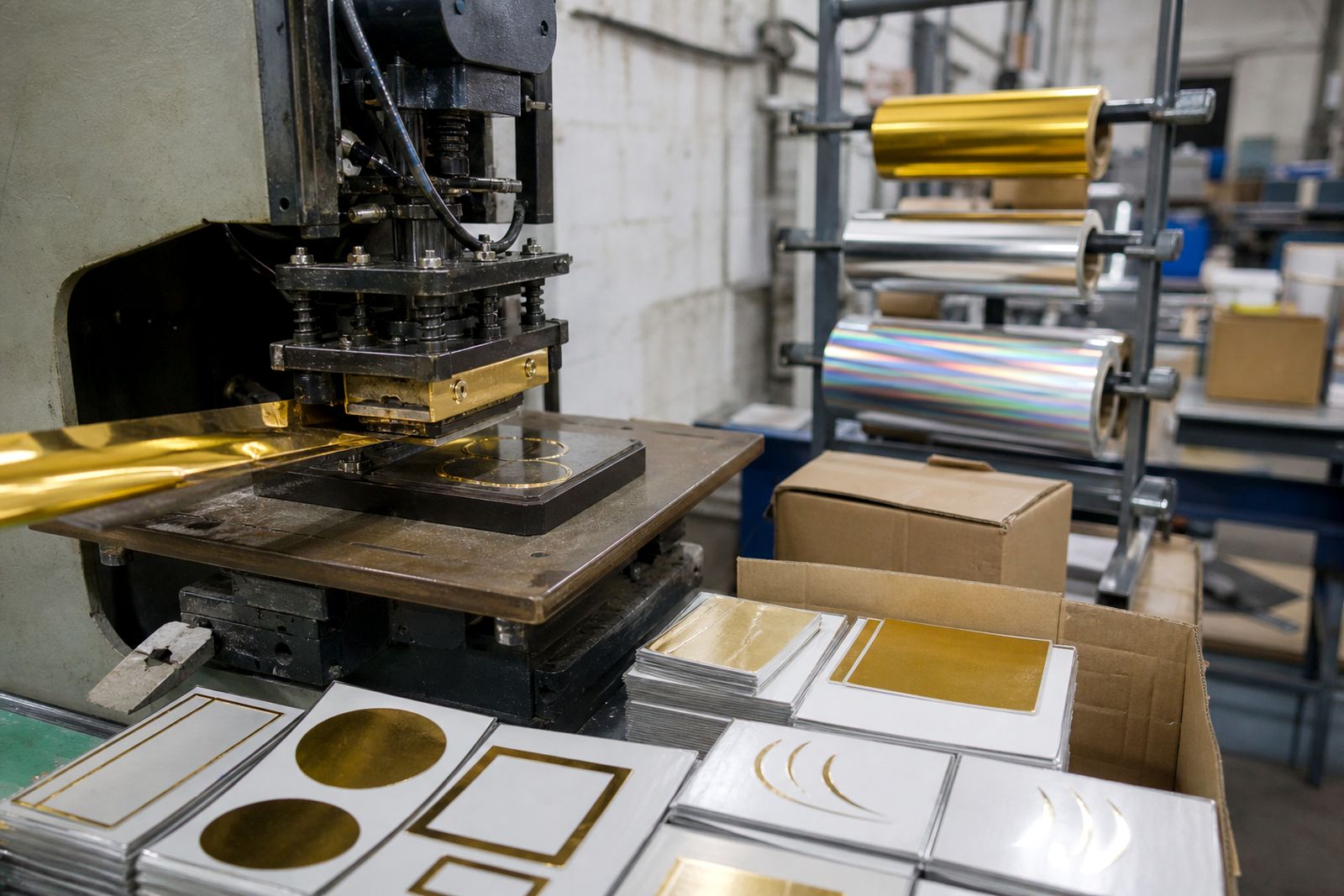
The badge set was planned as a small but exact foil finishing job for rigid ABS panels. The main requirement was a clean, durable mark with sharp definition on a smooth plastic surface, using a finish that would read clearly on appliance branding.
For work like this, the key decisions are the foil family, the die material and the way the press is set up. On plastic substrates, the starting point is always substrate preparation, then a quick test of temperature, dwell and pressure before the full run begins. For broader guidance on where foil is used, see applications or browse project notes.
Foil choice
ABS panels usually call for a foil that can transfer cleanly without flooding detail. Metallic foils are often chosen when the badge needs a bright, reflective look, while pigment foils are used where a solid colour block is preferred. For this kind of panel work, the choice is made around appearance, legibility and how the foil will release from the surface.
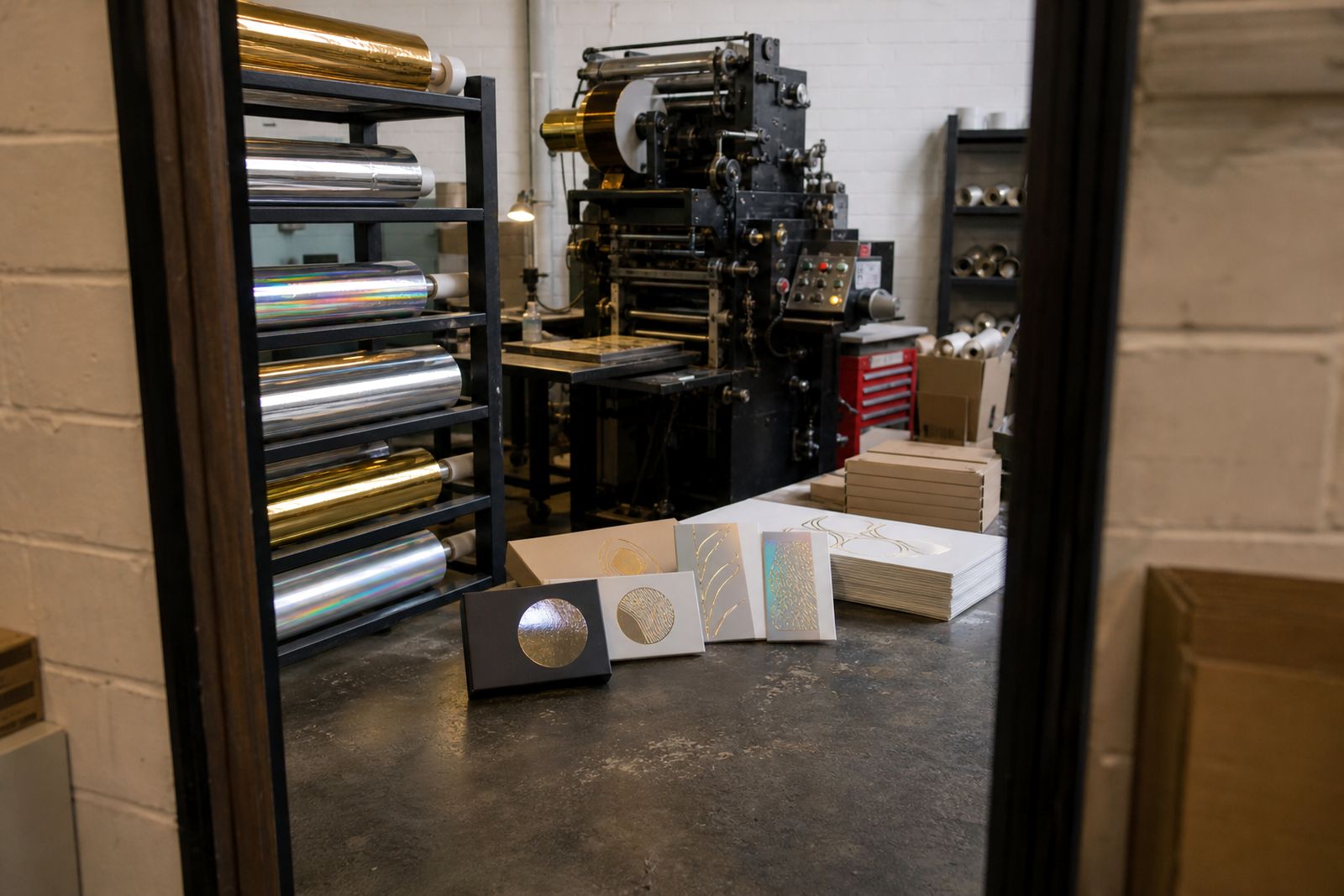
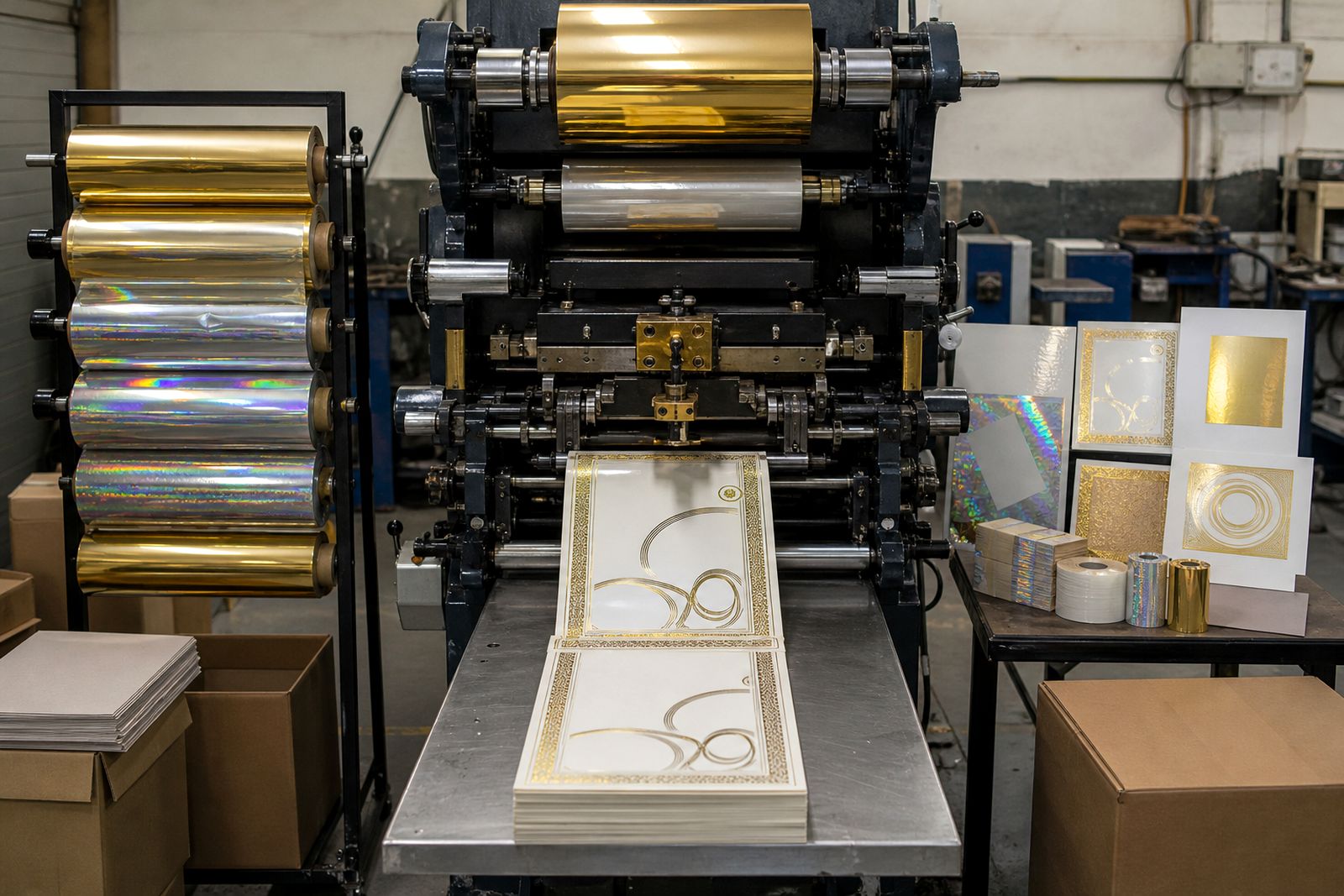
When the design calls for a decorative edge or a specialist mark, holographic, diffraction or specialty foils can also be tested. Stampingfoil supplies metallic gold, silver, copper, bronze, mirror and satin foils, plus pigment, holographic, diffraction and security foils. In practice, the swatch book helps narrow the finish before press-side testing begins.
Die and make-ready
The badge artwork was suited to a firm, well made die with clean relief and accurate line work. Magnesium, copper and brass dies each have their place depending on run length, detail and press setup. For ABS, a die that carries the image evenly across the full mark is important, especially where small text or fine borders need to stay crisp.
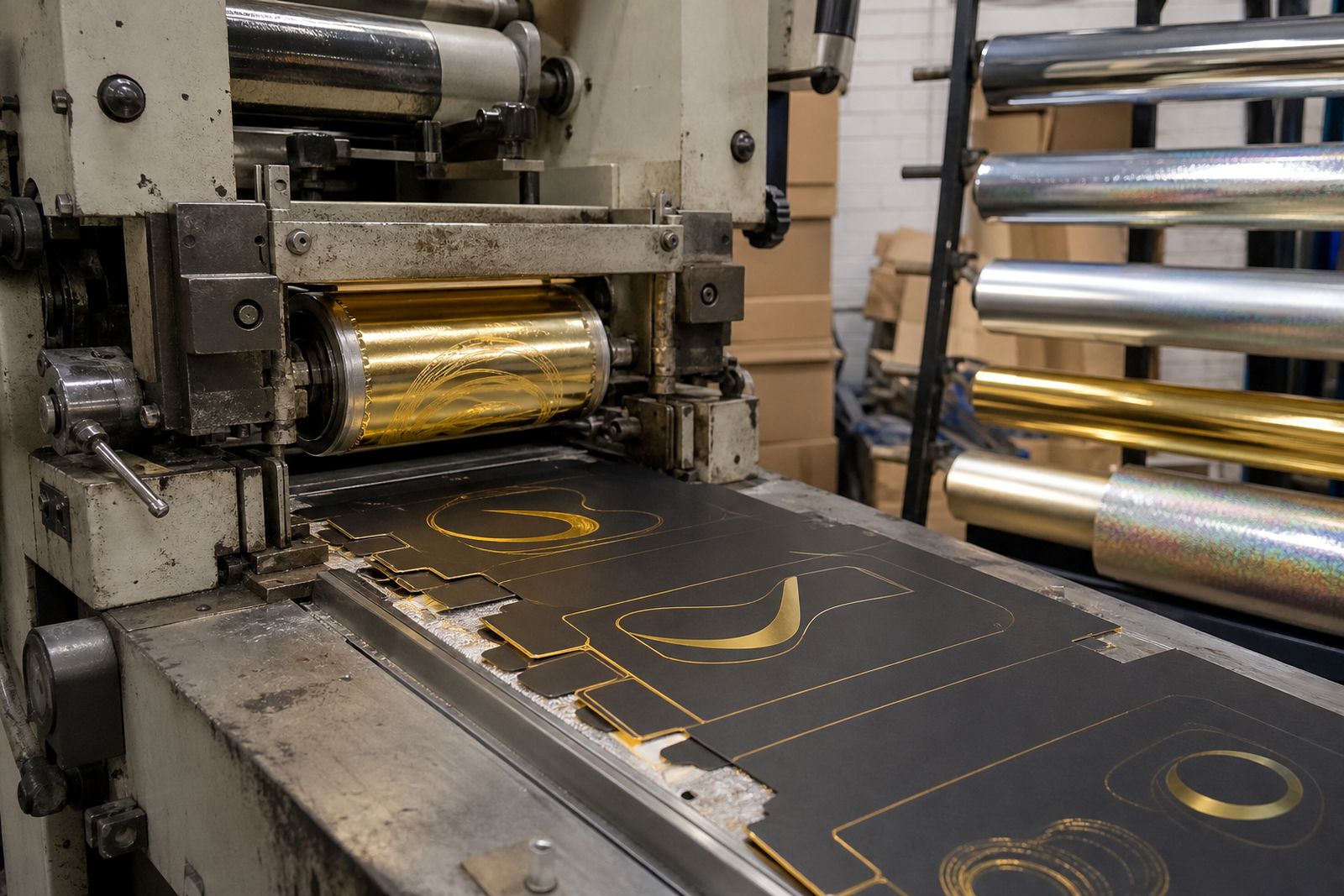
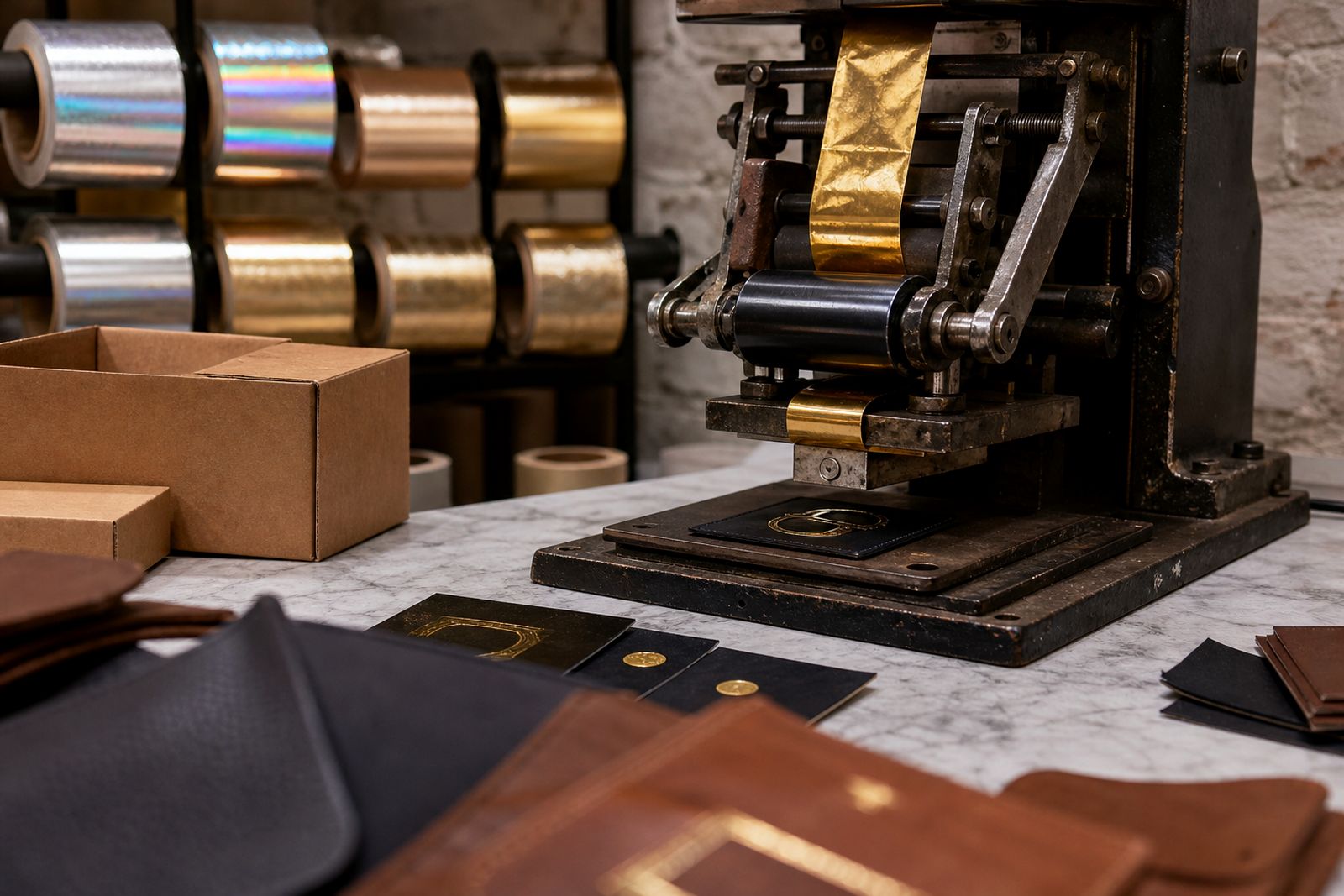
Make-ready focuses on pressure balance, flatness and registration. The press should be checked for even contact, clean mounting and stable feed. On platen, cylinder or roll-to-roll equipment, the same principle applies: get the die seated properly, then fine tune the impression until the foil transfers only where it should.
On press
For a plastic badge job, the first trial pulls are used to settle the release profile. Typical starting ranges are tested rather than assumed, because temperature windows vary with foil type, substrate finish and press speed. The goal is a clean release without smearing, picking or weak edges.
Press-side advice usually covers dwell, pressure and foil feed, then a quick review of the first impressions under good light. If the image needs more bite, the setup is adjusted in small steps. If the foil looks too heavy or the edge softens, the settings are backed off and tested again. That approach keeps the run controlled and predictable.
| Setup point | What is checked |
|---|---|
| Temperature | Starting range for the foil and ABS surface |
| Dwell | Long enough for clean transfer without overworking the panel |
| Pressure | Even contact across the full badge area |
| Release | Clean lift from detail, with no haze or lift-off issues |
Samples and follow up
For repeat badge work, a sample strip and swatch reference make the next run faster to set up. They help confirm the right foil family, the right width and the practical press window for the same substrate. If the badge design later moves onto cartons, labels or other plastic parts, the same testing method still applies.
Use the contact form to ask for a quote or request advice on foil selection, slit widths or die setup. You can also compare related finishing jobs such as Corporate Presentation Folders, Pharma Tamper Seals or Retail Gift Sleeves.
What our Hot Stamping Foil customers say
Verified Google reviews
Also worth a look
Ask about a foil for your job
Send a note through our contact form with the substrate, the press you run (platen, cylinder or roll-to-roll), the finish you are after and the run length, and we will come back with a foil grade, a sample and a quote.
Open the contact form