

Retail gift sleeves
Seasonal sleeves need solid colour, clean coverage and steady release on press. This project example shows the foil and set-up choices that help gift sleeves run well on coated board.
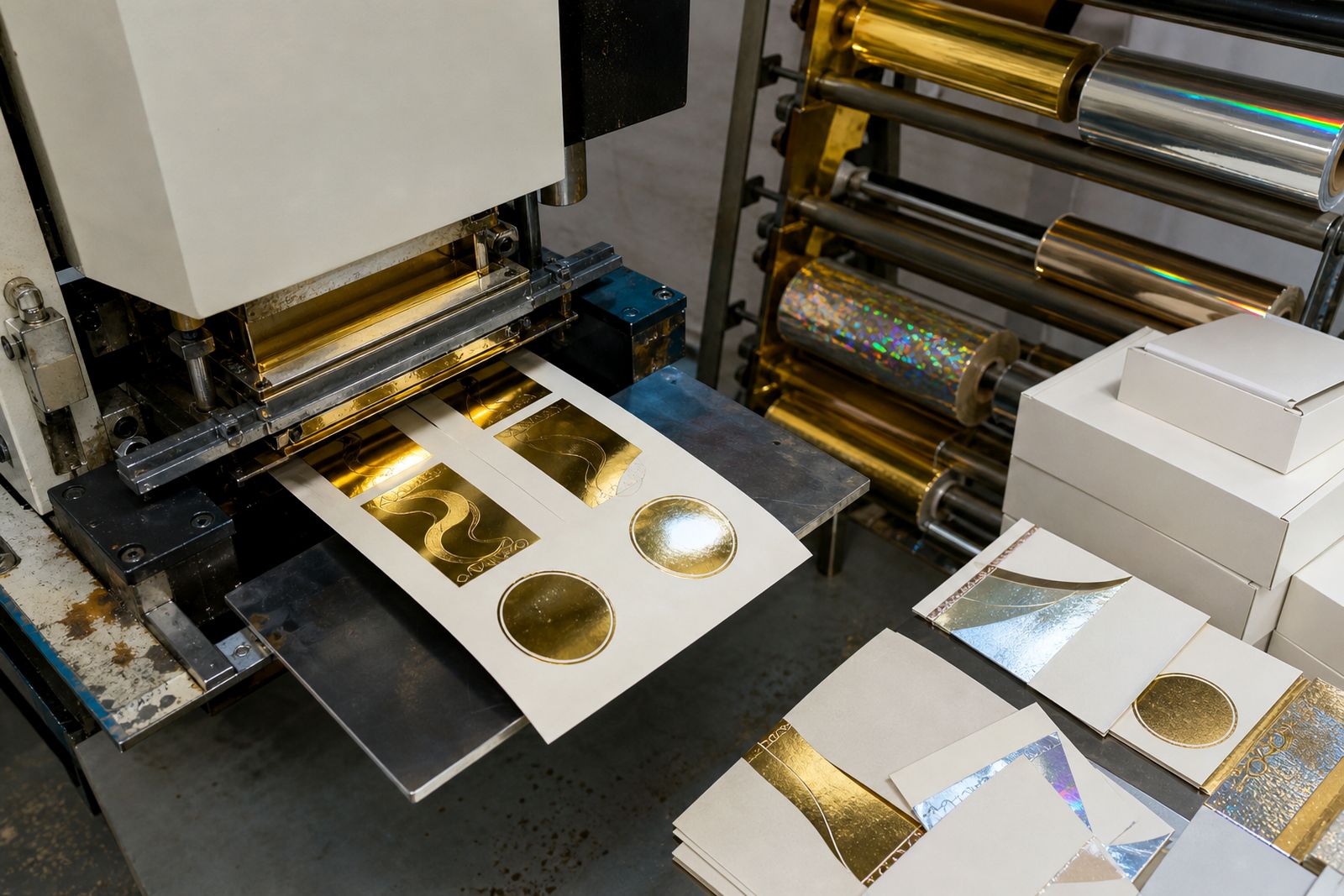
Job overview
Retail gift sleeves are often used for seasonal packs where the finish must hold colour across the full panel and stay neat on folds and glued areas. In this kind of job, pigment solid foils are chosen for strong colour blocks rather than sparkle or metallic effect.
The usual brief is clear: cover the sleeve cleanly, keep the colour even on the main face, and avoid over-stamping where the stock creases or the artwork sits close to a cut line. For similar work, see Cosmetics launch suite and Corporate Presentation Folders.
- Solid seasonal colour on printed or coated board
- Neat edges around folds, flaps and windows
- Simple repeat artwork that stays consistent across a run
Foil choice
For retail sleeves, pigment foils in black, white or process colours are usually the first place to start when the design needs a flat, even colour field. If the brief calls for a warmer branded accent, metallic gold or copper may be used instead, but the finish has to suit the artwork and stock.
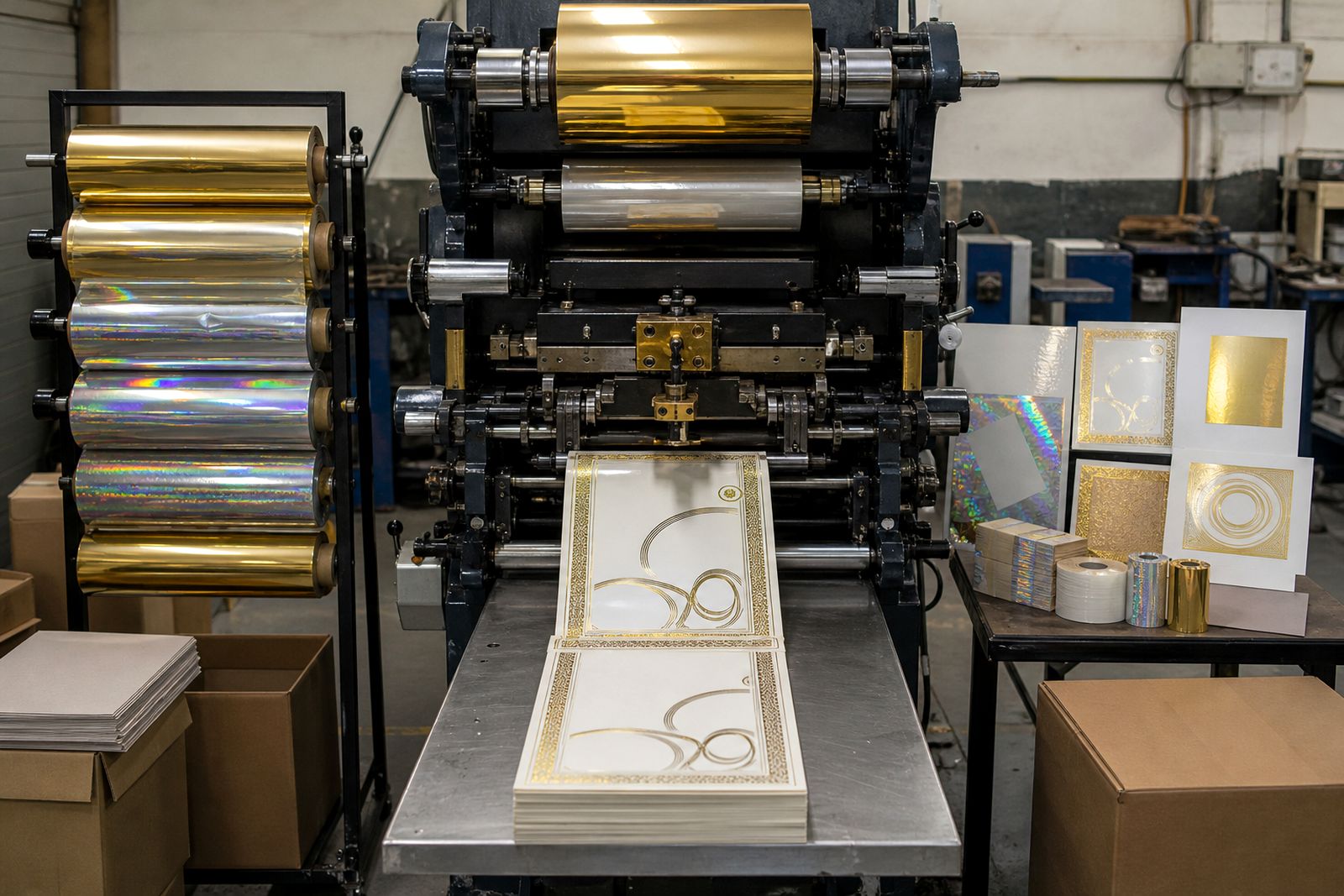
Foils are supplied slit to roll width, so the roll can be matched to the press and the layout. Where the sleeve uses coated board or a soft-touch laminate, testing is needed to confirm adhesion and release before the main run. Swatch books and samples help the printer choose the right shade quickly, especially when a seasonal range must stay consistent from one pack to the next.
| Foil type | Typical use on sleeves |
|---|---|
| Pigment solid | Seasonal blocks, logo panels, flat colour areas |
| Metallic | Accent marks and premium details |
| Holographic or diffraction | Special inserts and limited seasonal effects |
Press setup
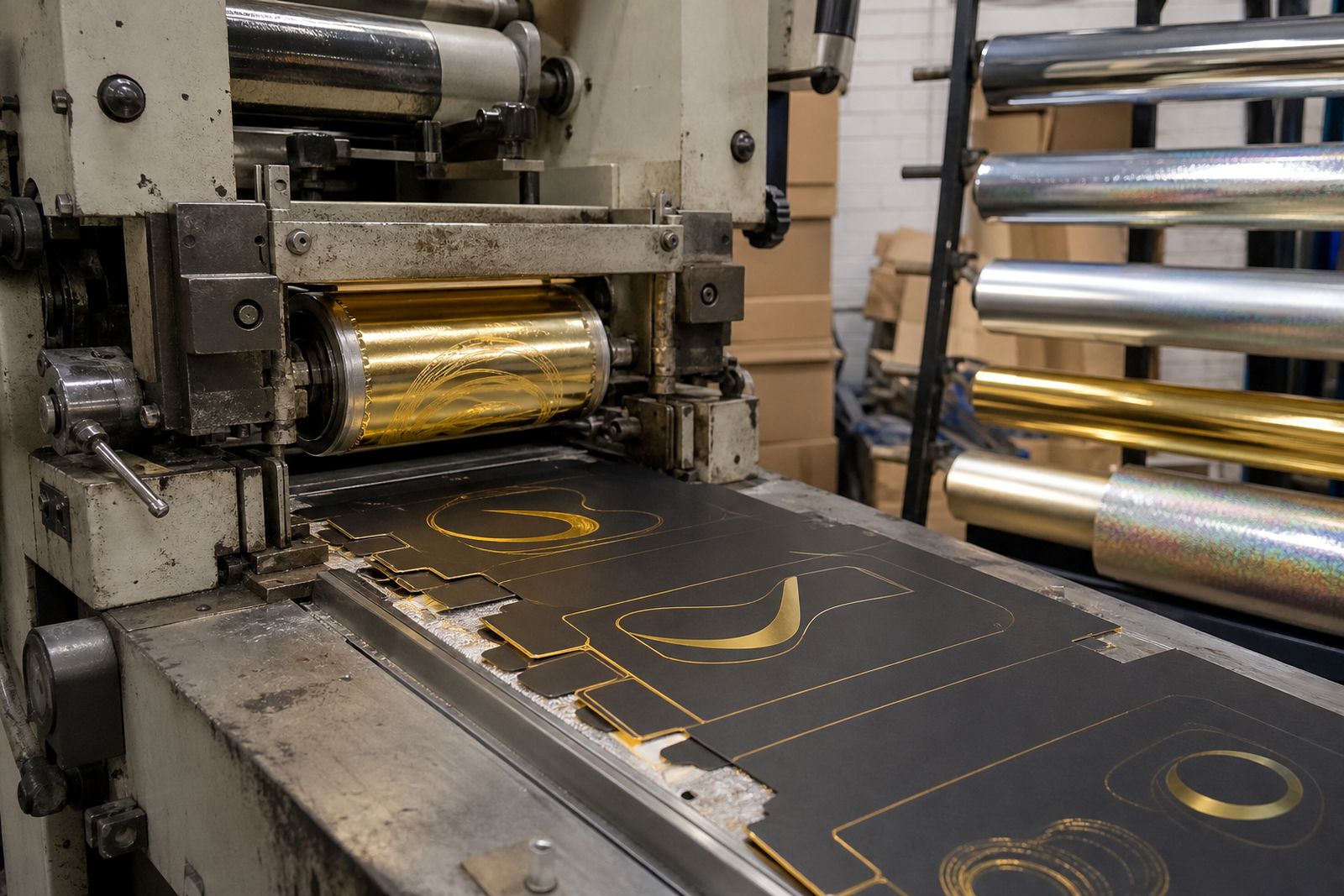
Small retail sleeves can run on platen, cylinder or roll-to-roll presses, depending on the converter and the shape of the artwork. The first set-up checks usually focus on temperature window, dwell, pressure and release profile, because these settings decide whether the foil transfers cleanly or breaks at the edges.
As a starting point, printers normally test within the foil supplier's recommended range and adjust to the board, the die and the press speed. On coated board, a slightly different setting may be needed from one sleeve stock to the next. Make-ready should confirm register, foil lay and pull-off before the full run starts.
- Check foil release on the actual sleeve stock
- Test the die against the artwork area, not only a flat sample
- Confirm pressure across the full image width
- Watch for scuffing on folded panels during delivery
Dies and detail
The die choice depends on the shape of the sleeve and the amount of coverage needed. Magnesium, copper and brass dies each have their place, with the final choice guided by run length, detail level and the press being used. Fine text, border work and small seasonal motifs need careful die depth and a clean face to avoid fill-in or picking.
If the sleeve uses narrow panels or repeated motifs, the artwork should allow space for trim and fold lines. That makes the run easier to hold on register and reduces waste at make-ready. For jobs with tighter decorative details, a sample strike is useful before committing the full foil roll.
When a sleeve combines colour panels with a second effect, such as a metallic mark or a security detail, the sequence matters. A test sheet should confirm whether one strike must come before the other, or whether the finish needs separate passes.
Supply and support
Stampingfoil supports retail sleeve work with foil samples, swatch books and press-side advice for practical set-up. That includes checking the stock, the die, the press type and the release behaviour before the main run begins. If the sleeve also forms part of a wider pack range, the same colour and finish can be kept in line across related items.
For converters working on seasonal packs, the useful next step is to request samples and ask for a quote through the contact form. Related project examples include Wine estate carton, Spirit Neck Labels and Museum Event Tickets.
More about foil supply and finish options is available at the product range, the applications overview and the finishes guide.
What our Hot Stamping Foil customers say
Verified Google reviews
Also worth a look
Ask about a foil for your job
Send a note through our contact form with the substrate, the press you run (platen, cylinder or roll-to-roll), the finish you are after and the run length, and we will come back with a foil grade, a sample and a quote.
Open the contact form