

Cosmetics launch suite
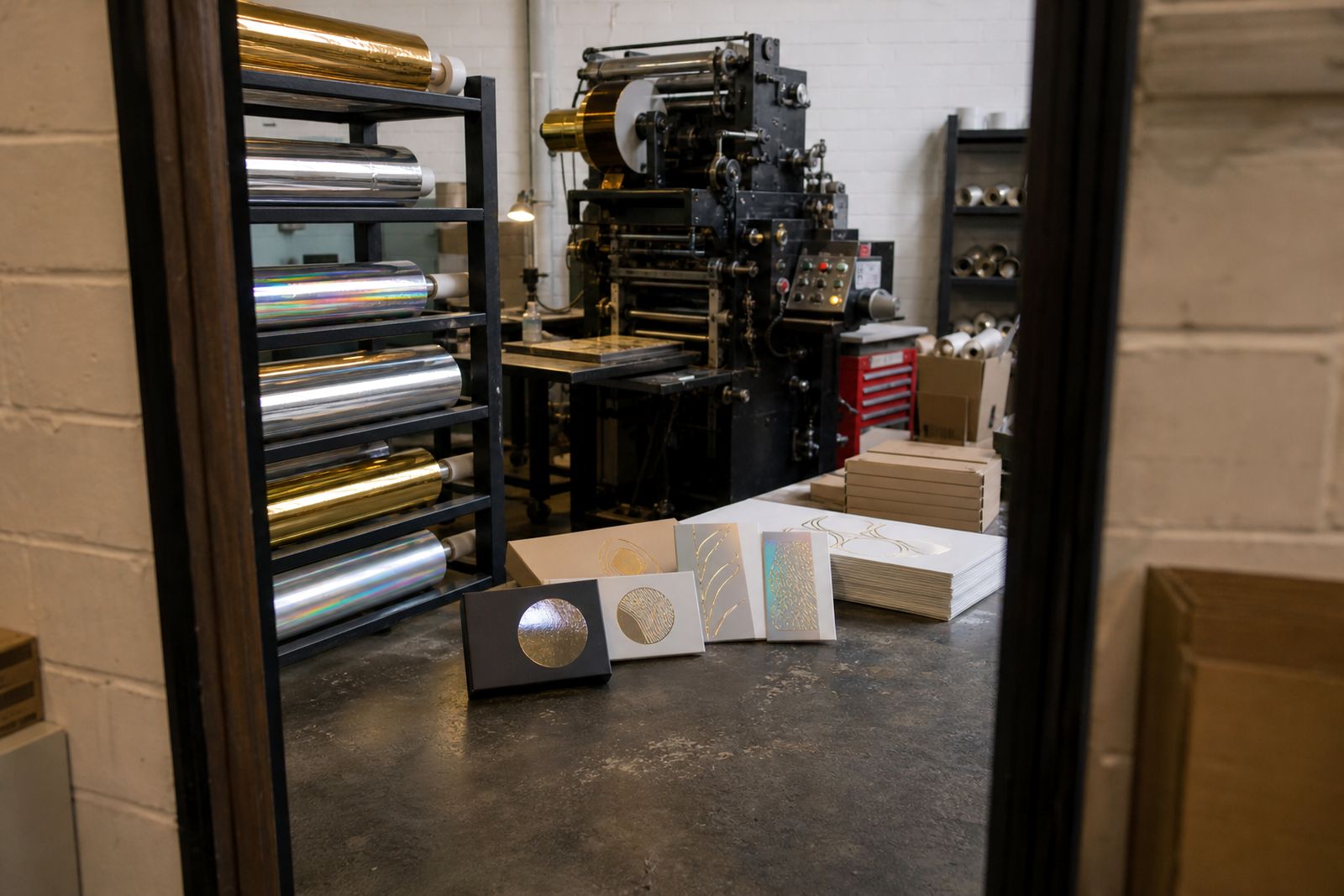
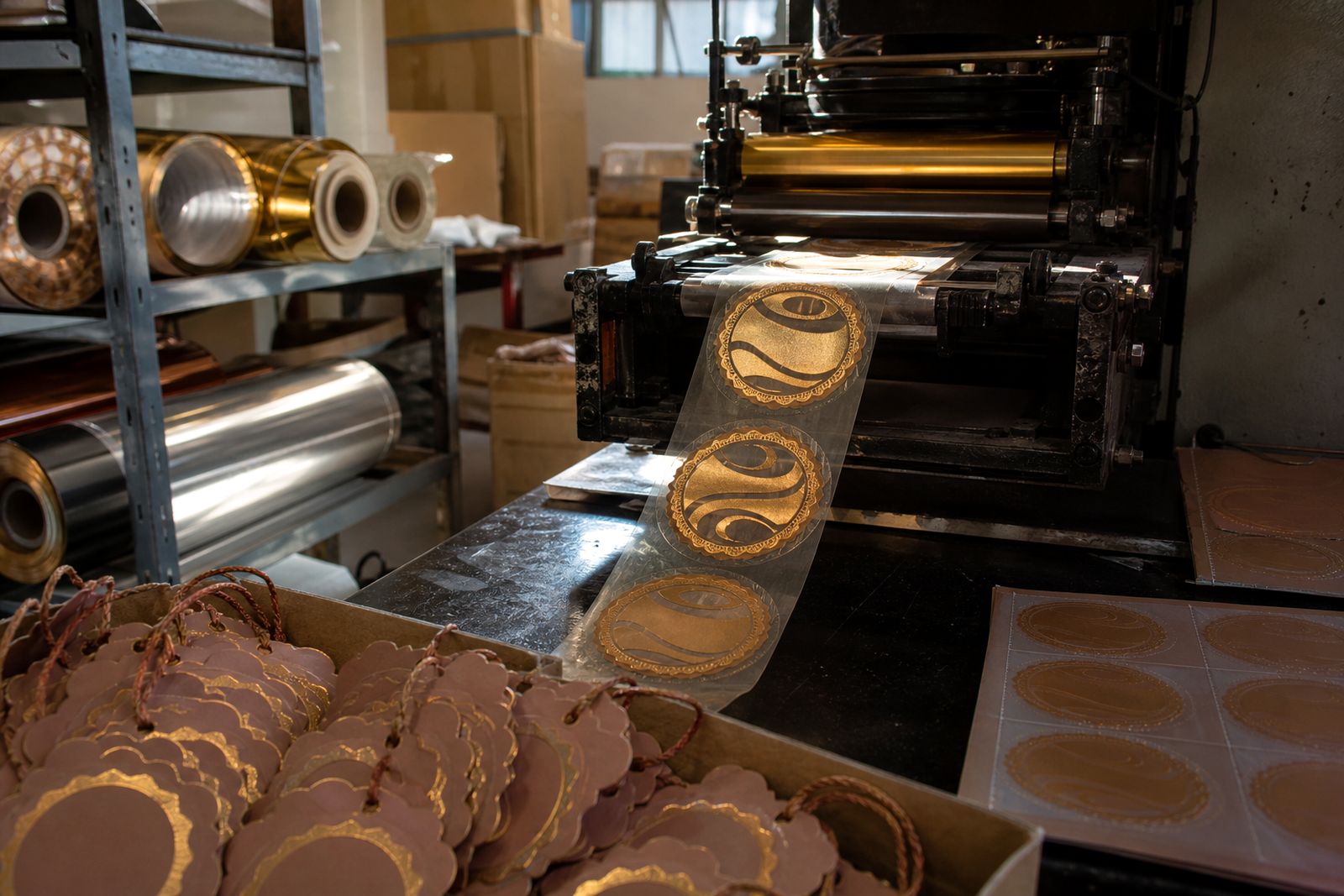
A cosmetics launch needs clean reflection and controlled sparkle. This example shows how mirror and holographic seals were set up for press.
Project brief
The job called for presentation seals on a beauty launch pack, with a bright chrome mirror look on one area and a prism holographic effect on the other. The aim was clear shelf impact while keeping the finish neat on coated board and label stock.
The artwork needed two foil looks that could sit together without fighting each other. That meant choosing foils with strong release, clean edge definition and a press setup that could hold detail on small seal shapes.
Foil choice
For the mirror area, a metallic silver mirror foil was used to give a hard reflective finish. For the second seal, a prism holographic foil added movement and colour shift under light. Both were slit to the required roll width for the finishing line.
When a beauty pack needs contrast, the foil choice should support the artwork rather than cover it. Metallic foils, holographic foils and satin effects each behave differently on coated board, soft-touch laminate and label materials.
- Mirror foil for high reflection
- Prism holo for colour movement
- Slit rolls to suit the press width
Die and make-ready
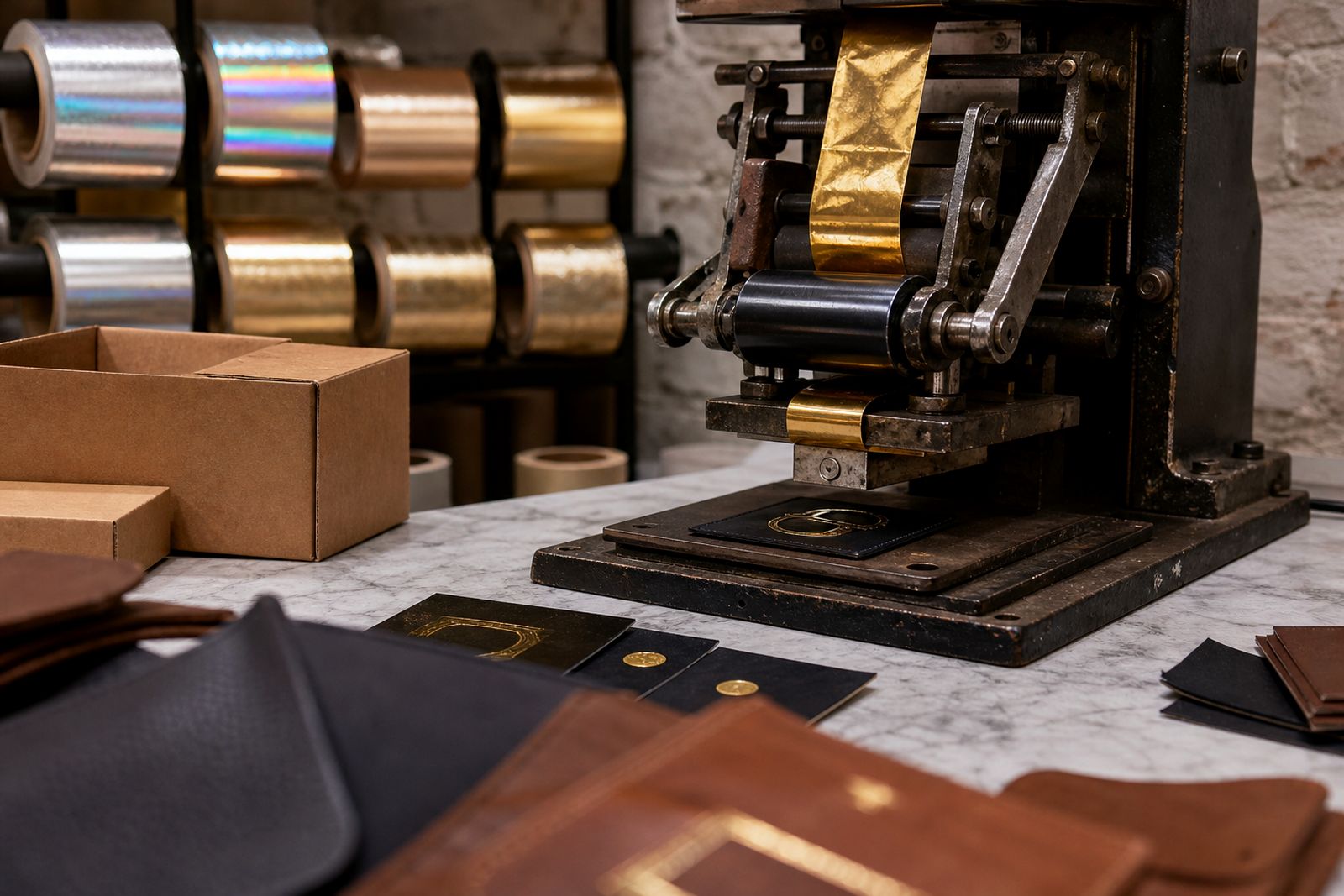
The seals were prepared with a brass die for clean detail and even heat transfer on the small forms. On finer jobs, magnesium or copper dies can also be used depending on the press and the life needed from the tool.
Make-ready focused on even impression, stable registration and clean release. Press-side checks covered foil route, die temperature, dwell, pressure and release profile so the image broke cleanly without feathering or scuffing.
Typical starting test ranges are set on press and adjusted to stock, foil and artwork. For this kind of work, the first trials usually start low and are built up until the transfer is even across the full seal.
Press run
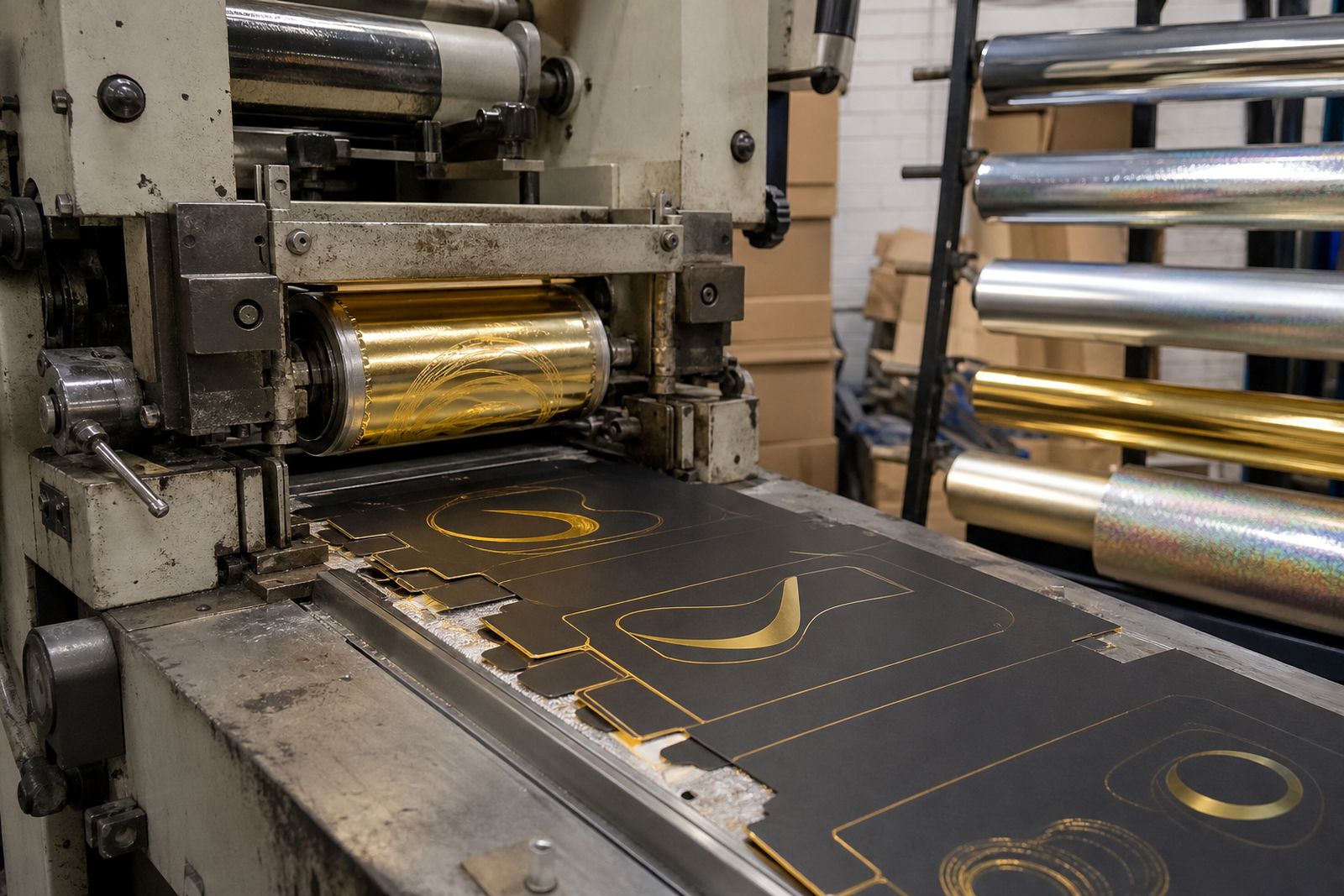
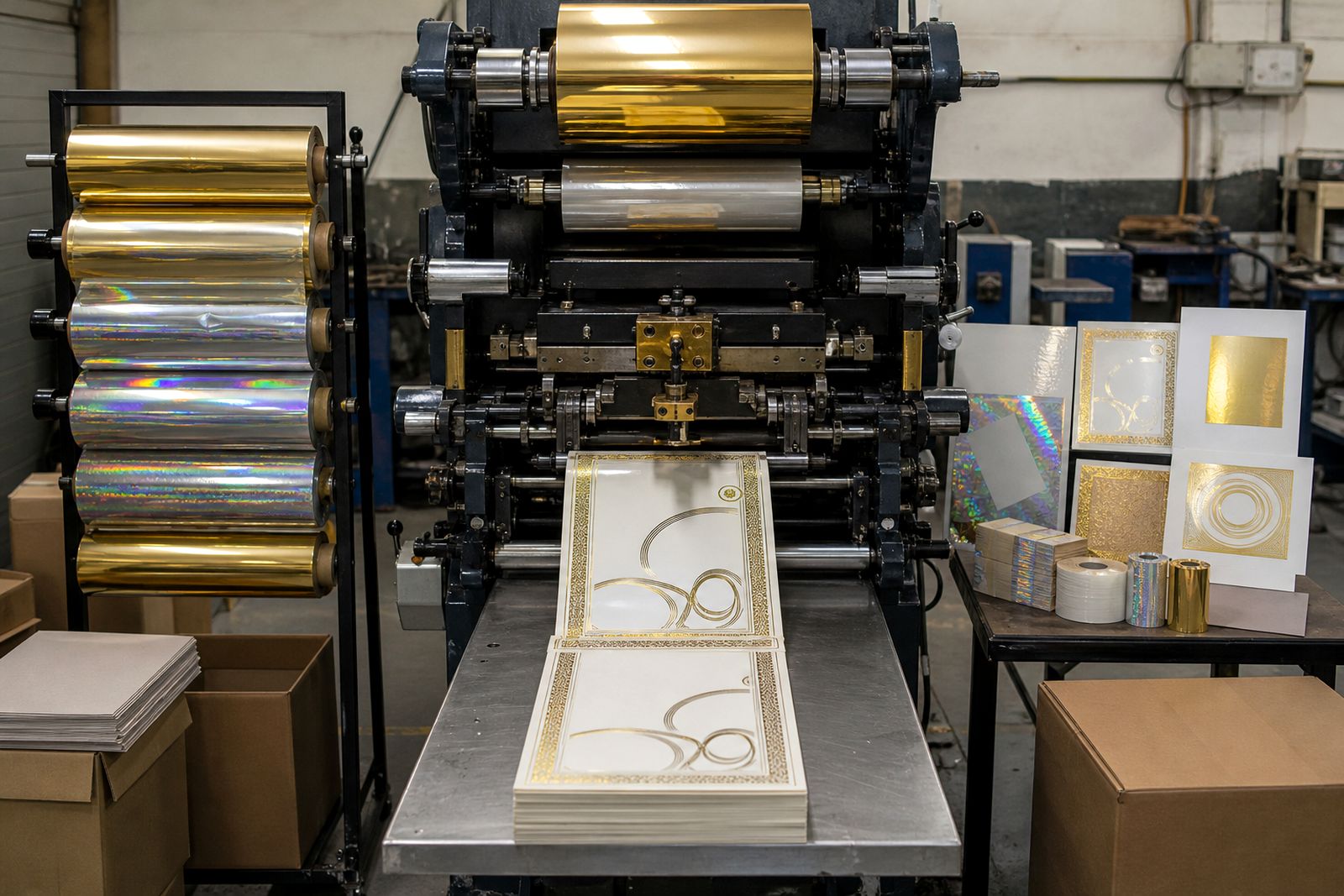
The job was run as a practical test for carton and label finishing, with close attention to the stock surface and the foil release window. On coated board, the main aim was to keep the mirror effect solid and the holographic pattern readable after conversion and handling.
For platen, cylinder and roll-to-roll presses, the same basics apply: stable web or sheet feed, correct impression, and foil release matched to the speed of the line. If the press is moving too fast for the chosen window, the image can lose definition.
| Press point | What to check |
|---|---|
| Temperature | Start with a test range suited to the stock and foil |
| Dwell | Keep it long enough for full transfer, then reduce only if release stays clean |
| Pressure | Use enough impression for full image fill without crushing fine detail |
| Release | Watch for clean lift from the carrier with no patchiness |
Support and next steps
Jobs like this often benefit from a swatch book and a short sample run before full production. That helps confirm whether the finish should stay mirror clean, move toward holographic sparkle, or shift to a more restrained metallic or pigment look.
For packaging, labels, book covers, leather goods and specialty finishing, practical foil advice matters as much as the material itself. If you need help selecting a foil for a similar beauty launch, use the contact form for a quote and press guidance, or browse related examples like Retail Gift Sleeves and Pharma Tamper Seals.
More foil options are shown across products, applications and project notes.
What our Hot Stamping Foil customers say
Verified Google reviews
Also worth a look
Ask about a foil for your job
Send a note through our contact form with the substrate, the press you run (platen, cylinder or roll-to-roll), the finish you are after and the run length, and we will come back with a foil grade, a sample and a quote.
Open the contact form