

Leather atelier marks
Wallets and card sleeves need clean detail, steady adhesion and a neat finish on small panels. This project note covers the foil, die and press setup used for leatherwork.
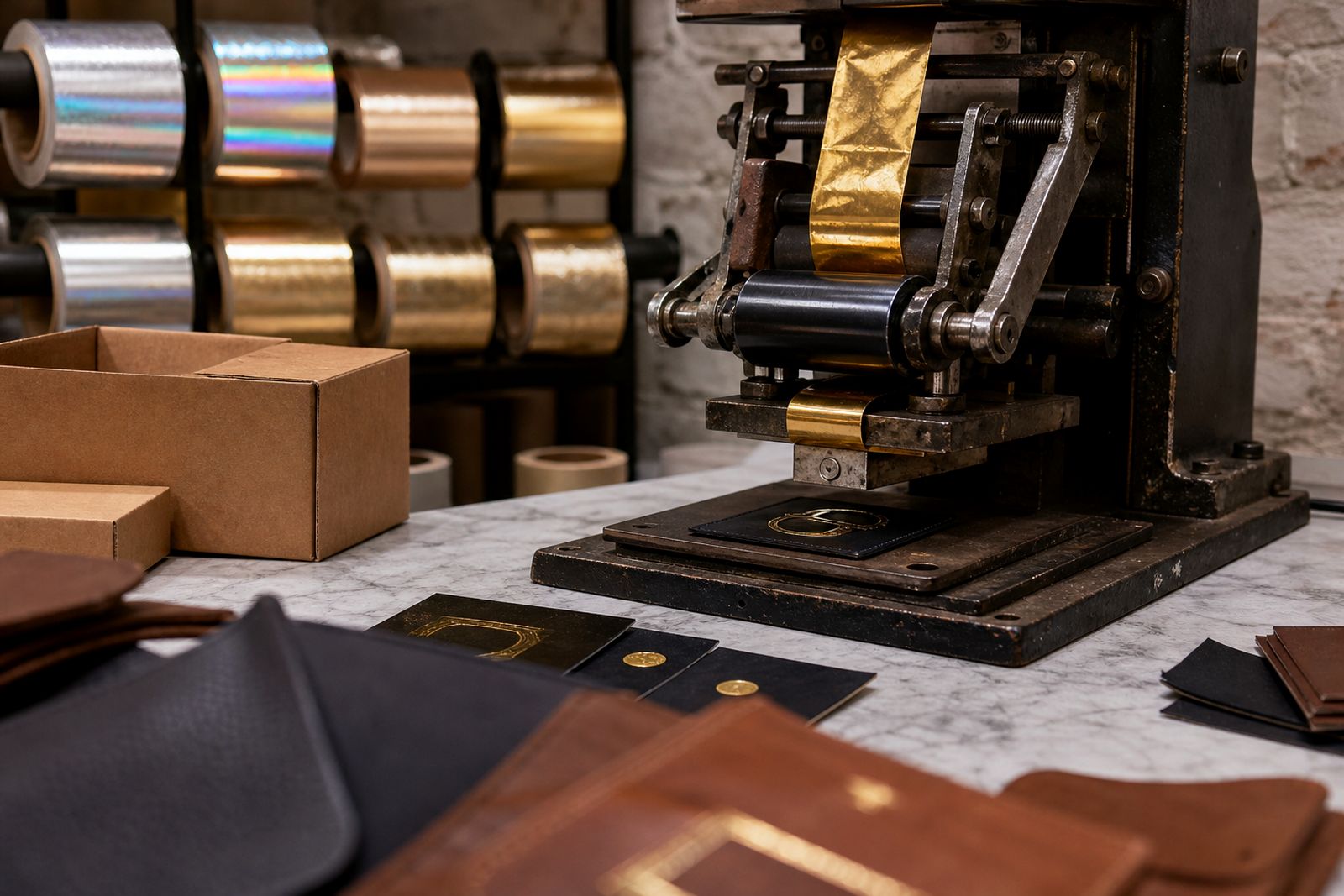
Job brief
The brief was to apply a clear branded mark to leather wallets and card sleeves without crowding the product or lifting the grain. The finish had to stay crisp on small areas, with enough contrast to read on darker leather surfaces.
For this kind of work, the main checks are foil release, surface texture and how the leather responds under heat and pressure. A simple mark can fail if the foil is too hard, the press is too hot, or the dwell is too long.
Leather projects often need a different approach from board or film. Soft-touch surfaces, natural grain and dyed finishes all change the way the foil transfers. Applications and finishes sections can help when comparing options for similar substrates.
Foil choice
A foil for leather needs clean release and a finish that holds fine detail without overfilling the grain. Metallic gold, silver or copper can work well when a reflective look is wanted, while pigment foils are useful where a flat black, white or process colour mark is preferred.
For premium leather goods, specialty foils can also be considered where the surface has a coated layer or a soft-touch feel. The right choice depends on the leather, the artwork and whether the mark must be subtle or highly visible.
- Metallic foils for a bright reflective mark
- Pigment foils for solid, non-metallic colour
- Specialty foils for leather and other difficult surfaces
- Holographic or diffraction foils where an effect finish is needed
Samples and swatch books are useful before a full run, especially when matching a brand standard across wallets and card sleeves.
Die and artwork
The mark was set up for a clean impression on a small leather panel, so the die needed sharp edges and enough relief to avoid smearing. For jobs like this, magnesium, copper or brass dies may be used depending on the detail, run length and press setup.
Fine lettering, logos and small borders need careful make-ready. If the art is too tight, the foil can break at the edges or fill in the counters. If the die is too flat, the mark may not release evenly across the grain.
A simple artwork checklist helps:
- Keep linework bold enough for leather grain
- Allow space around fine detail
- Check the die depth against the press type
- Test the mark before committing to the full run
For related product work, see Publisher cloth covers and Corporate Presentation Folders.
Press setup
The job was run with a careful test sequence to find the right balance of temperature, pressure and dwell. Leather can vary from panel to panel, so the first aim is to find a stable starting window rather than forcing the foil to transfer in one pass.
Typical starting points for testing are a moderate heat range, short to medium dwell and enough pressure to bring the die into even contact without crushing the surface. The exact settings depend on the leather finish, the foil type and whether the press is platen, cylinder or roll-to-roll.
Press-side checks usually include release profile, foil tension and a clean make-ready. If the foil is not releasing well, the first adjustments are often temperature and dwell rather than pressure alone.
What to check next
After the first test, inspect the mark under normal light and at an angle. On leather goods, good results should show even colour, sharp detail and no obvious scorching, gloss marks or edge distortion.
If the same mark is going onto other products such as plastics, textiles or soft-touch laminate, the setup may need to be changed again. Different surfaces behave differently, even when the artwork stays the same.
For foil supply, slit widths, samples or practical advice on leather finishing, use the contact form. You can also browse other project notes such as Wine estate carton, Retail Gift Sleeves and Bank certificate run.
What our Hot Stamping Foil customers say
Verified Google reviews
Also worth a look
Ask about a foil for your job
Send a note through our contact form with the substrate, the press you run (platen, cylinder or roll-to-roll), the finish you are after and the run length, and we will come back with a foil grade, a sample and a quote.
Open the contact form