

Publisher cloth covers
Antique gold titles on cloth-bound books need clean release, crisp detail and careful make-ready. Here is a practical guide to the foil and press setup used on publisher cloth covers.
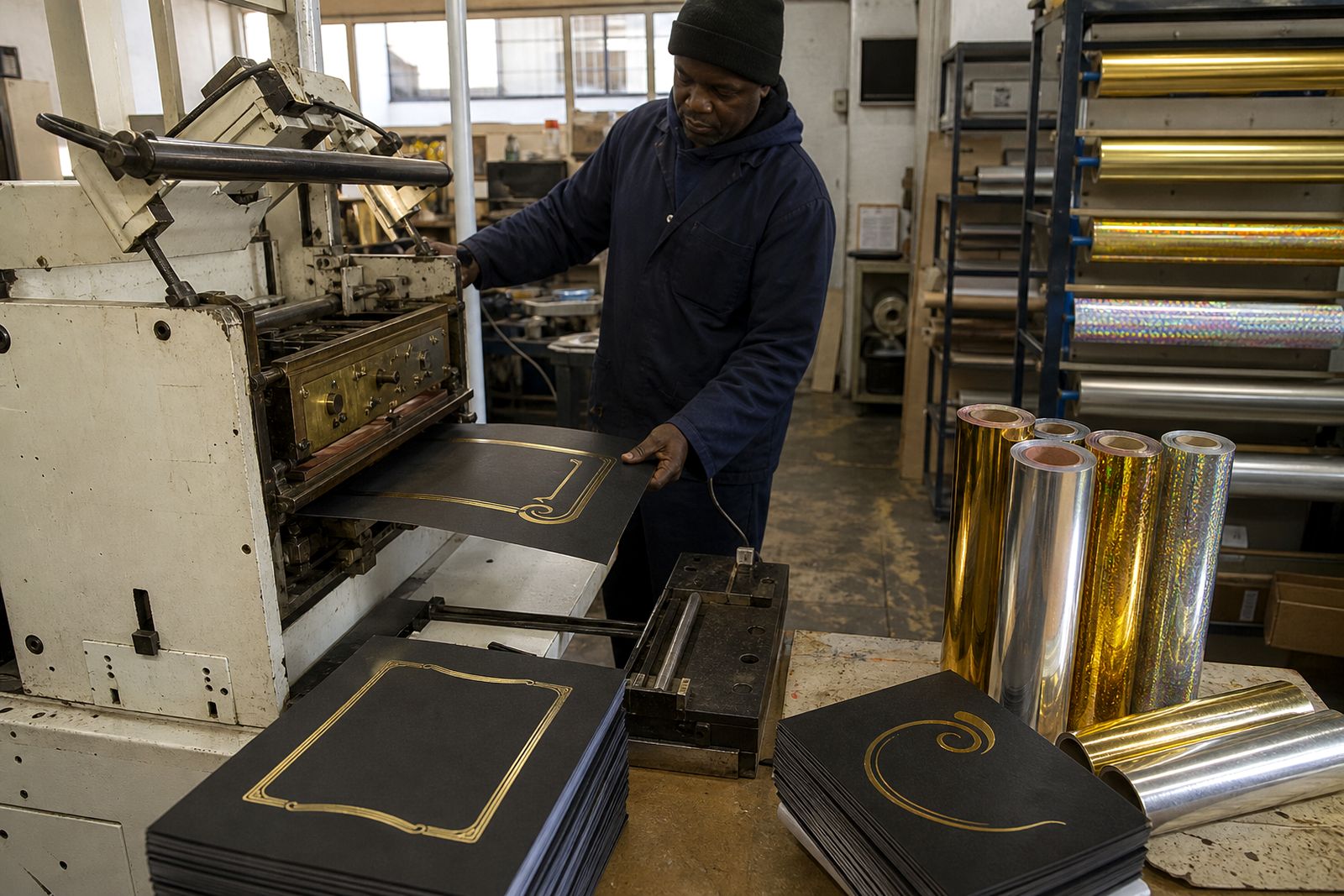
Foil choice for cloth covers
For cloth-bound editions, the usual starting point is a metallic foil that reads clearly against woven or coated cloth. Antique gold is often chosen for a classic title block, while metallic gold, silver, copper or bronze can be selected for different cover colours and shelf impact.
When the cover needs more contrast, a pigment foil in black or white can be useful for rules, subtitles or blind-looking detail with visible colour. On fabric wraps, the key is to match the foil to the cloth texture so the title stays sharp instead of sinking into the weave.
- Metallic foils for main titles and author names
- Pigment foils for solid, opaque coverage
- Specialty foils where the cloth finish needs extra adhesion help
What the job needed
This kind of job usually asks for a title treatment that looks refined on a textured cover and holds up through binding, handling and packing. The foil area is often small, but the detail matters, especially on cloth where fine serifs and thin rules can fill in if the setup is too hot or too heavy.
For cloth-bound books, the block art needs to suit the material and the press. Simple, open letterforms are easier to keep clean. If the design includes a border, emblem or spine mark, it helps to keep the elements spaced so the foil can release evenly across the full area.
For related project formats, see Corporate Presentation Folders and Wedding invite suite.
Die and block setup
For publisher cloth covers, magnesium, copper or brass dies can all be used depending on the artwork, run length and required depth of detail. A cleaner block with modest relief is often preferred for cloth, because deep impression can distort the weave and leave the title looking uneven.
Make-ready should support even pressure across the full title area. On platen, cylinder or roll-to-roll equipment, the block face, packing and substrate need to be checked together so the pressure lands where the foil will release, not where the cloth bunches or compresses.
| Setup point | Practical aim |
|---|---|
| Die choice | Match detail level to cloth texture and run style |
| Make-ready | Keep pressure even across the title block |
| Artwork | Allow enough spacing for clean release |
Press settings to test
For hot stamping on cloth, the starting point is always a test strip before the full run. Typical testing begins with a moderate heat range and careful adjustment of dwell and pressure until the foil releases cleanly without crushing the cloth surface.
Release profile matters as much as heat. If the foil pulls too early or too late, the title can look patchy, rough or overly shiny in spots. A good setup finds the point where the foil transfers fully, the edges stay crisp and the cloth texture remains readable.
- Start with a controlled temperature window and small test pulls
- Adjust dwell time before increasing pressure
- Check title edges, fine rules and solid fills under normal light
Supply and support
Foil for cloth-bound publishing work is usually supplied slit to the roll width needed for the press, with swatch books and samples available so the finish can be checked before production. Advice on temperature windows, dwell, pressure and release profile helps the printer set up for the actual cover stock rather than guessing from the artwork alone.
If the book cover also includes other finishes, the same foil range can support mixed work across cartons, labels and specialty applications such as Leather atelier marks or Pharma Tamper Seals. For a quote or setup question, use the contact form.
For more project examples, browse Project notes or the applications section.
What our Hot Stamping Foil customers say
Verified Google reviews
Also worth a look
Ask about a foil for your job
Send a note through our contact form with the substrate, the press you run (platen, cylinder or roll-to-roll), the finish you are after and the run length, and we will come back with a foil grade, a sample and a quote.
Open the contact form