

Wedding invite suite
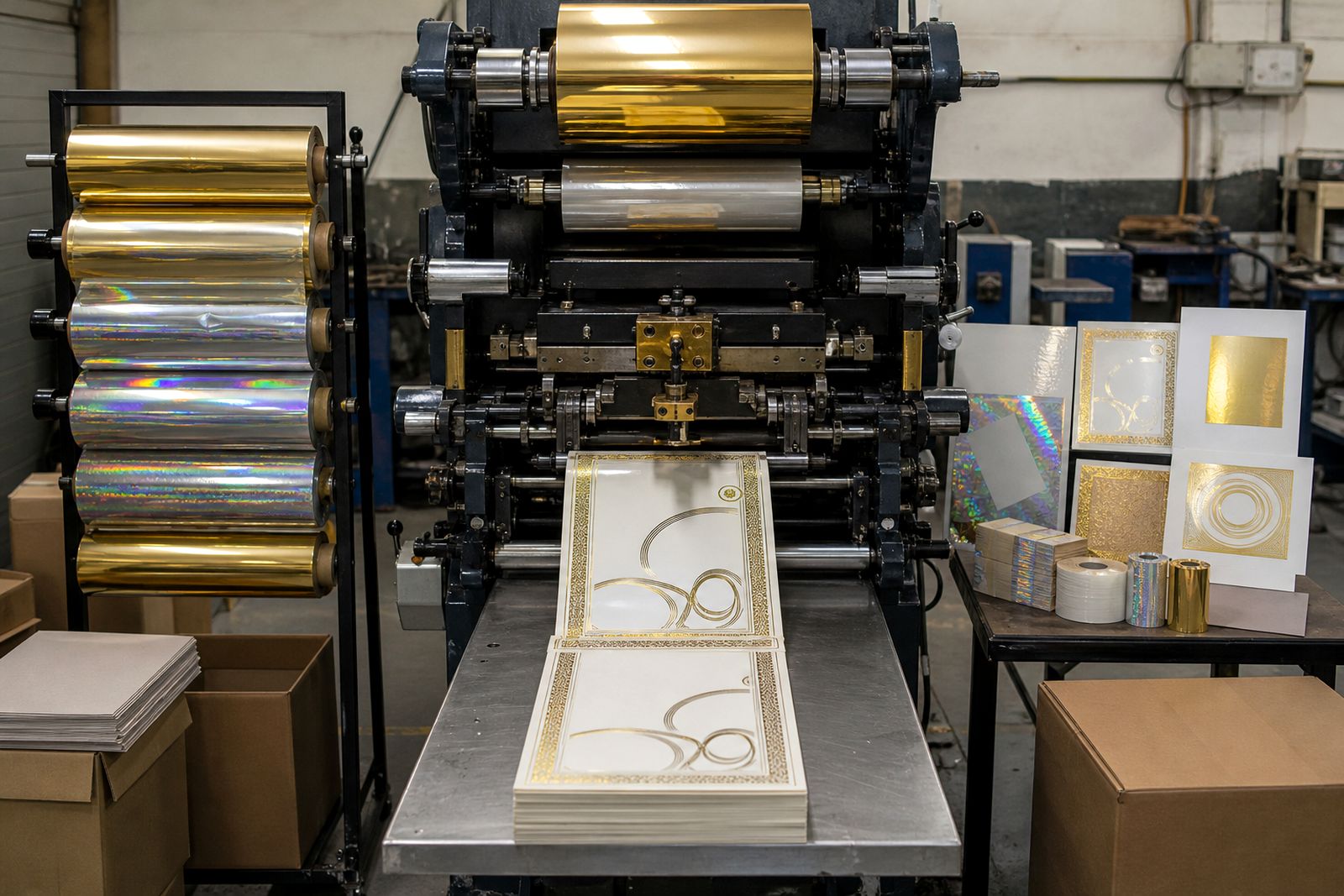
A wedding invite run needs clean contrast, sharp detail and a foil that holds on fine type. This example shows how bright gold and matte velvet accents can be handled on press.
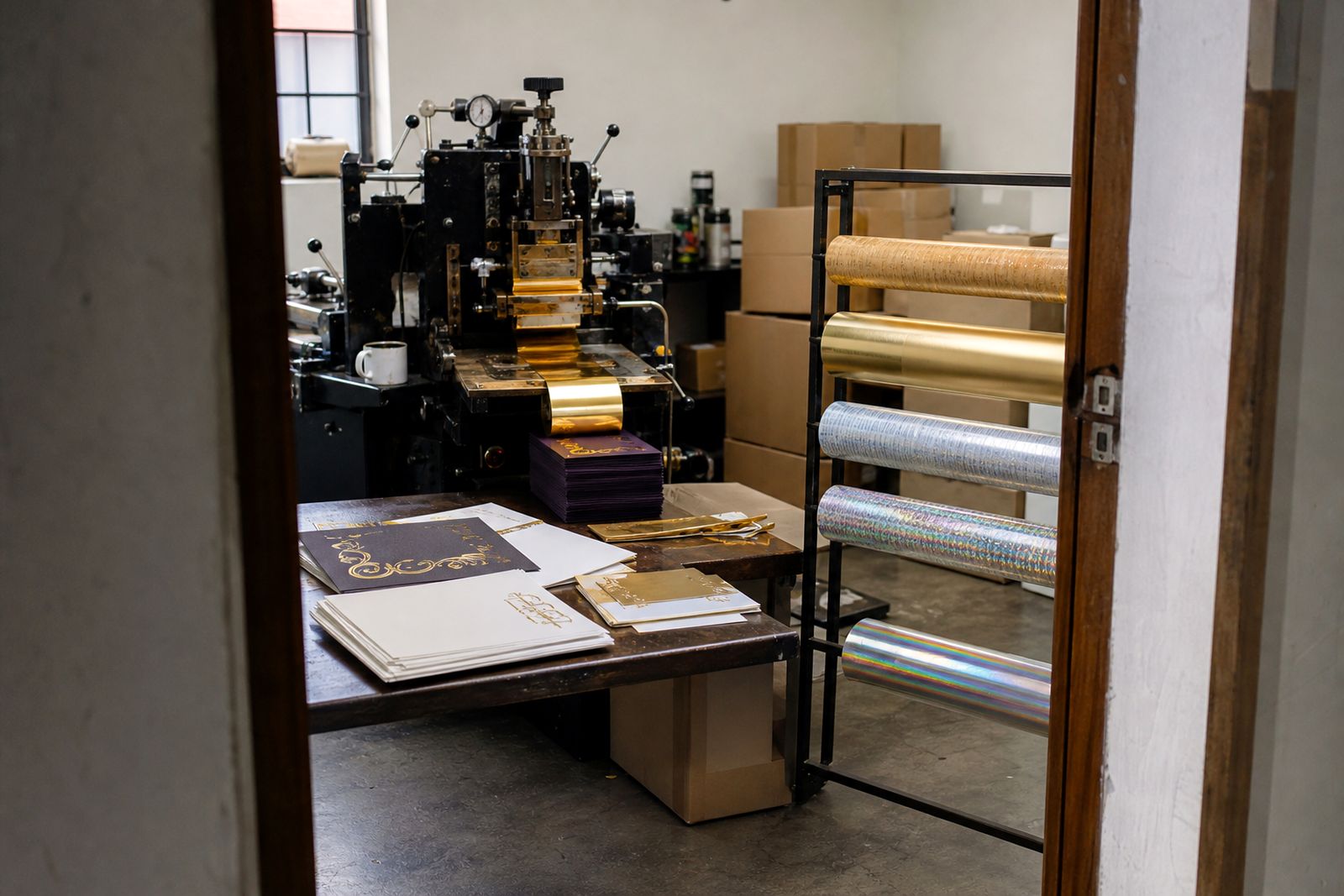
Brief and stock
The brief for this suite was simple in appearance and exact in production: a formal invitation with bright gold detail against a dark, soft-touch feel. The look needed crisp foil edges on small type, a clean finish on flat solids, and enough contrast to carry through the invitation, RSVP card and envelope detail.
For work like this, the starting point is always the stock and finish. Soft-touch laminate can change how a foil releases, so the test sheet should be checked before the full run. On coated board or laminated stock, the make-ready needs careful attention so the impression is even and the non-foil areas stay clean.
For similar examples, see Cosmetics launch suite and Corporate Presentation Folders.
Foil choice
Bright gold was chosen for the main text and border work, with a matte velvet accent in the secondary area. The gold gives the formal wedding look people expect, while the matte effect keeps the layout from becoming too reflective. When the design includes both shine and restraint, the foil selection matters as much as the artwork.
Metallic foils in gold and satin finishes are often used for invitation work, while pigment foils suit solid areas where a flat, opaque colour is needed. In this case the contrast was created by using a metallic foil on the focal elements and a matte-looking treatment on the supporting elements, so the printed pieces still felt layered and tactile.
Useful related examples include Wine estate carton and Museum Event Tickets.
Die and artwork
The artwork was set up for a fine, formal finish with tight spacing and narrow strokes. That means the die choice is important. For clean foil transfer on invitation work, a well-cut brass or copper die is usually preferred where detail needs to stay sharp. Magnesium can suit simpler areas, but for fine lettering and borders the tooling has to hold the line consistently.
The die face, artwork depth and foil area all need to work together. Small reverses, hairlines and corner points can break down if the die is not prepared properly. A good make-ready will balance pressure across the form, especially where the invitation has both solid panels and fine decorative lines.
| Check | What to look for |
|---|---|
| Detail | Fine type, borders and corners that need a clean edge |
| Tooling | Brass or copper for tighter detail, magnesium for simpler areas |
| Artwork depth | Enough room for foil release without crushing the image |
Press setup
For invite work, the press setup is usually tested with a few controlled pulls before production. Typical starting temperatures depend on the stock, foil and press type, so the best approach is to begin in the normal test range for the chosen foil and adjust from there. Dwell, pressure and release profile need to be matched to the board and the finish underneath.
On platen presses, the challenge is often even pressure across small detail. On cylinder and roll-to-roll presses, the key is maintaining consistent release over longer runs. A proper press-side check should confirm that the foil transfers fully, the background stays clean, and there is no picking or patchy release at the edges.
For press guidance on other finishing jobs, see Publisher cloth covers and Products.
Result and next steps
The finished suite relied on contrast rather than complexity. Bright gold carried the main message, while the matte velvet accents softened the overall look and suited the formal tone of the invitation set. The result was a clear example of how foil choice, stock and tooling need to be planned together from the start.
For wedding stationery, the same approach can be adapted to cards, sleeves, inserts and envelope seals. Foil can also be slit to width for narrow conversion work, and swatch books or samples can help before artwork is signed off. If you are planning a similar run, ask for a quote through the contact form.
More examples can be found under Project notes and Applications.
What our Hot Stamping Foil customers say
Verified Google reviews
Also worth a look
Ask about a foil for your job
Send a note through our contact form with the substrate, the press you run (platen, cylinder or roll-to-roll), the finish you are after and the run length, and we will come back with a foil grade, a sample and a quote.
Open the contact form