

Packaging and boxes
Use hot stamping foil to add crisp metallic, pigment or holographic detail to cartons, rigid boxes and sleeves. Start with the right board, laminate and die.
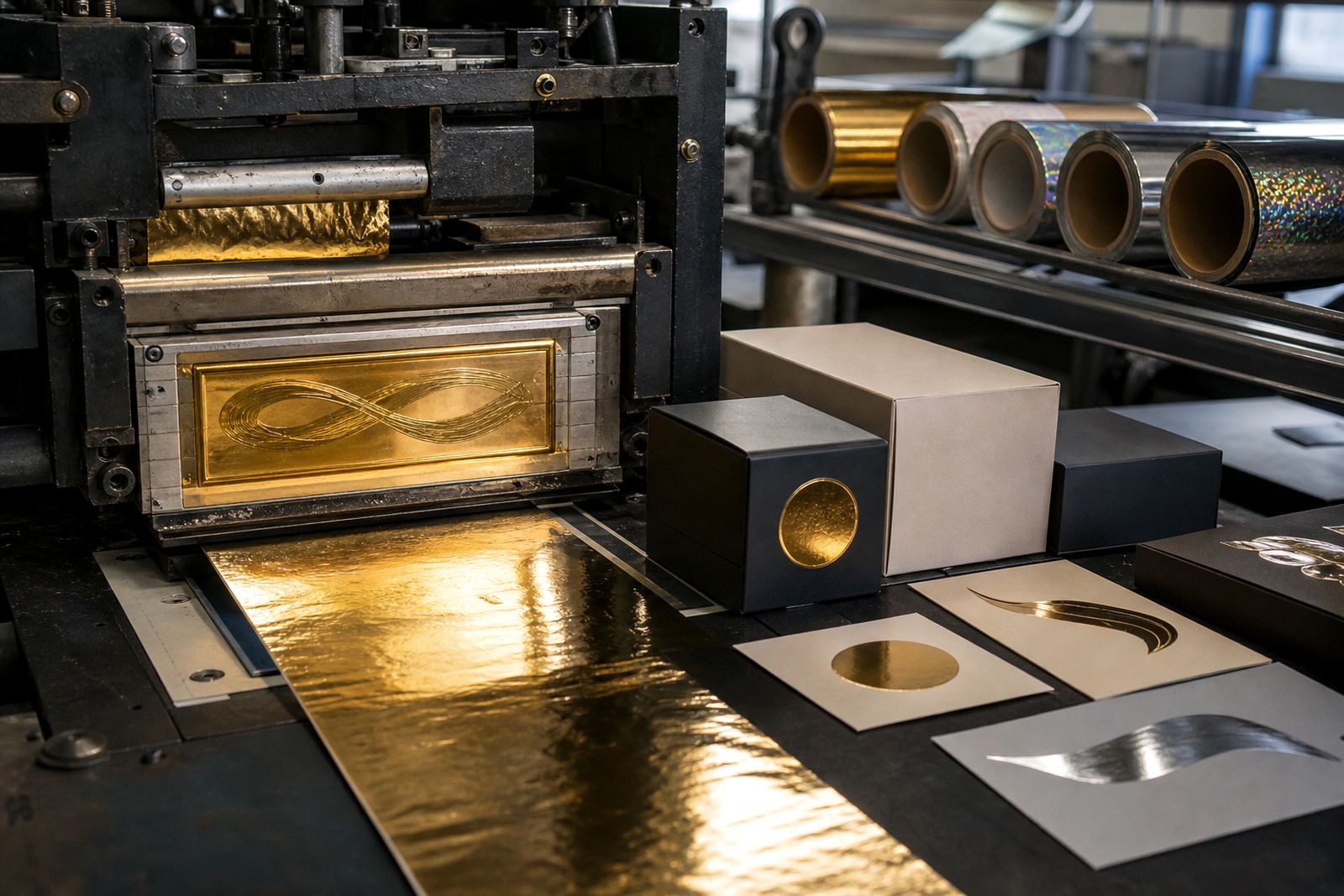
Where foil works on packaging
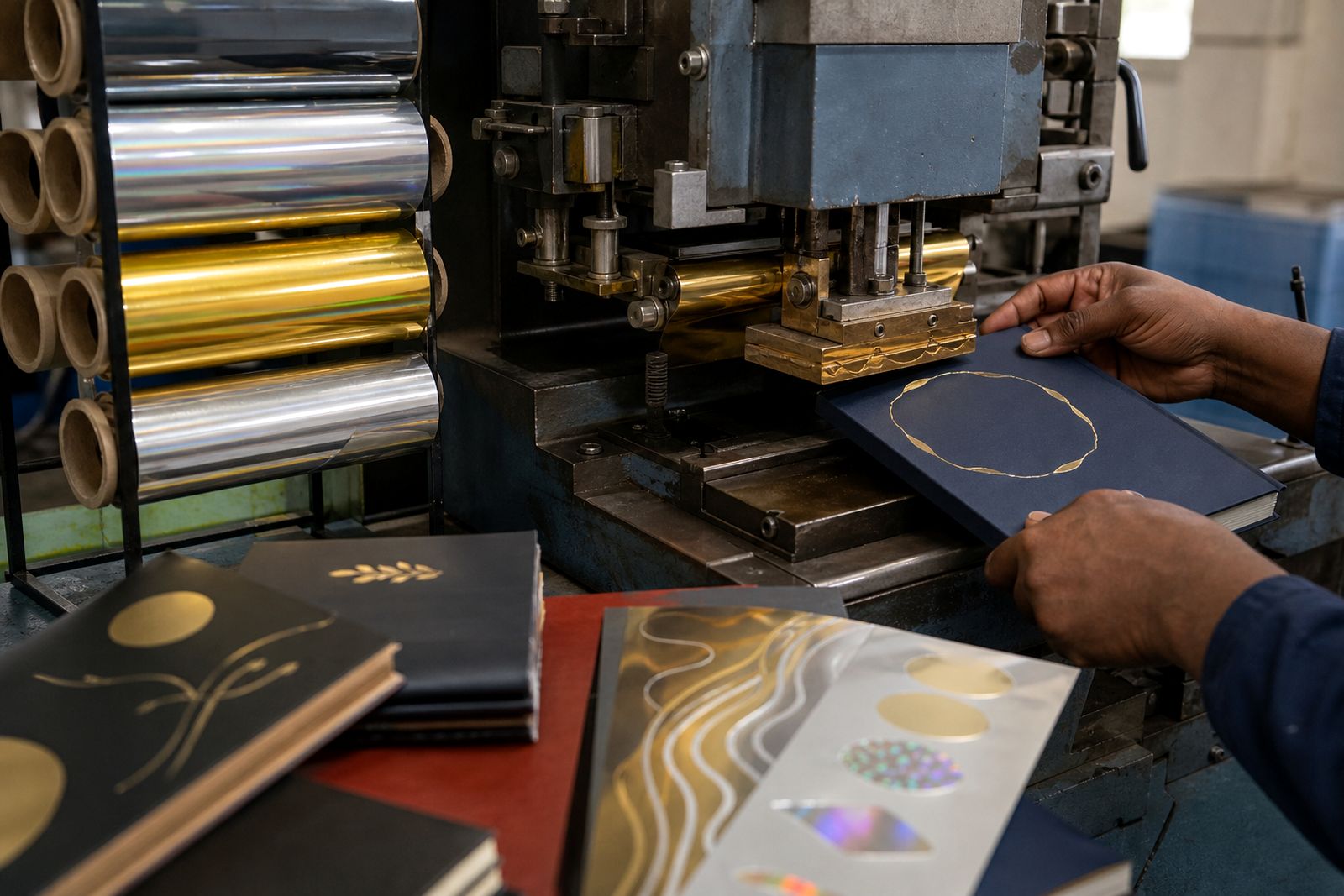
Foil is commonly used on folding cartons, rigid boxes and gift sleeves where the brand needs a clean, premium hit on the shelf. It can sit as a logo, border, pattern, panel accent or full wrap detail, depending on the artwork and the press setup.
For packaging, the first check is always the board or substrate. Coated board usually gives the cleanest transfer, while textured stocks, heavy ink coverage and some laminates need more testing before production. Soft-touch laminate can work well with the right foil and pressure, but it must be checked at press side rather than assumed.
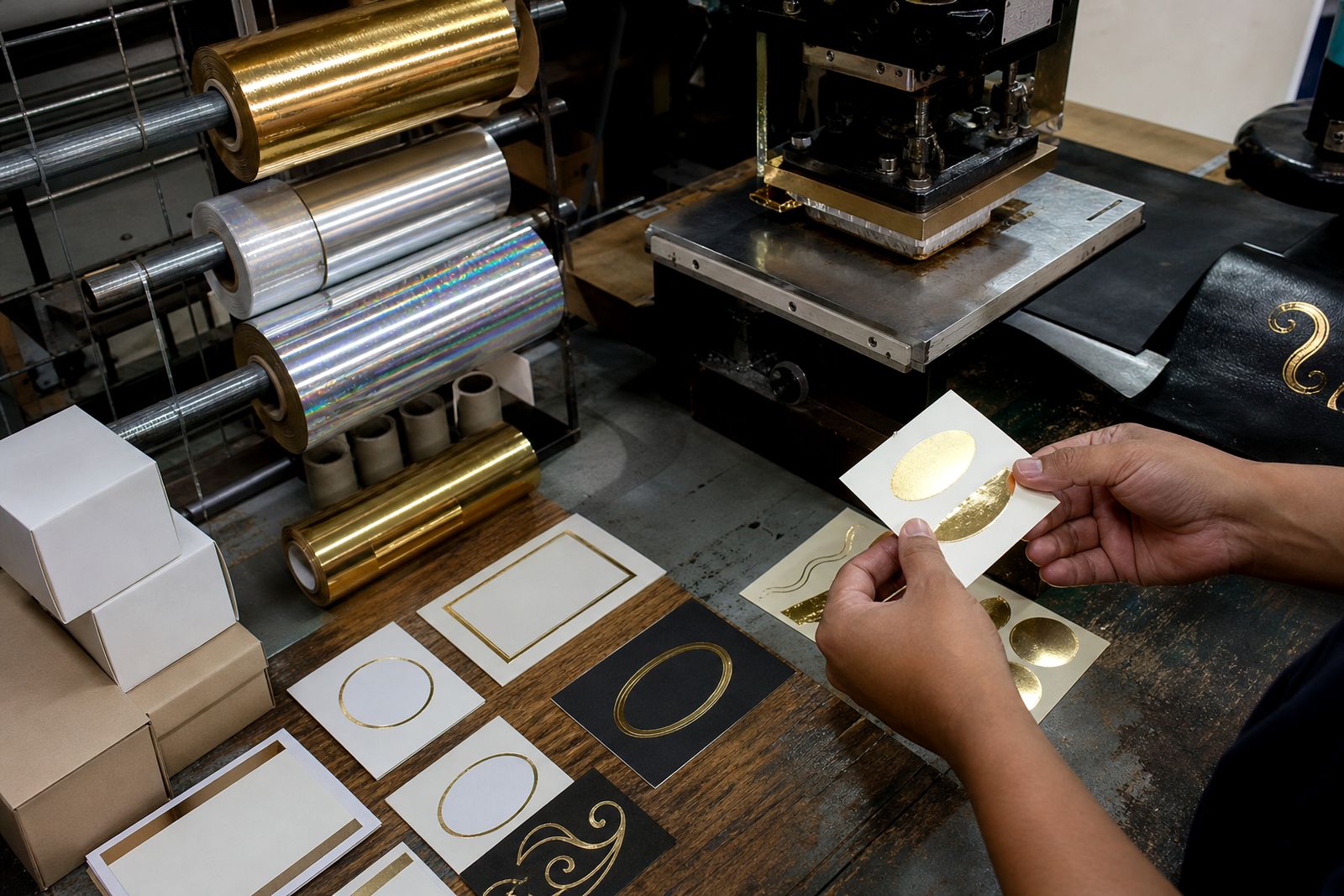
For common packaging work, choose from metallic foils such as gold, silver, copper or bronze when you want a reflective finish. Use pigment foils for solid colour blocks, or holographic and diffraction foils for attention on gift sleeves, presentation cartons and promotional packs.
Choosing the right foil
Matching the foil to the job matters as much as the artwork. A fine line logo on a carton face may need a different release profile to a broad panel or a large block of type. Narrow detail often asks for a cleaner release, while heavy coverage may need a more forgiving foil grade and steadier make-ready.
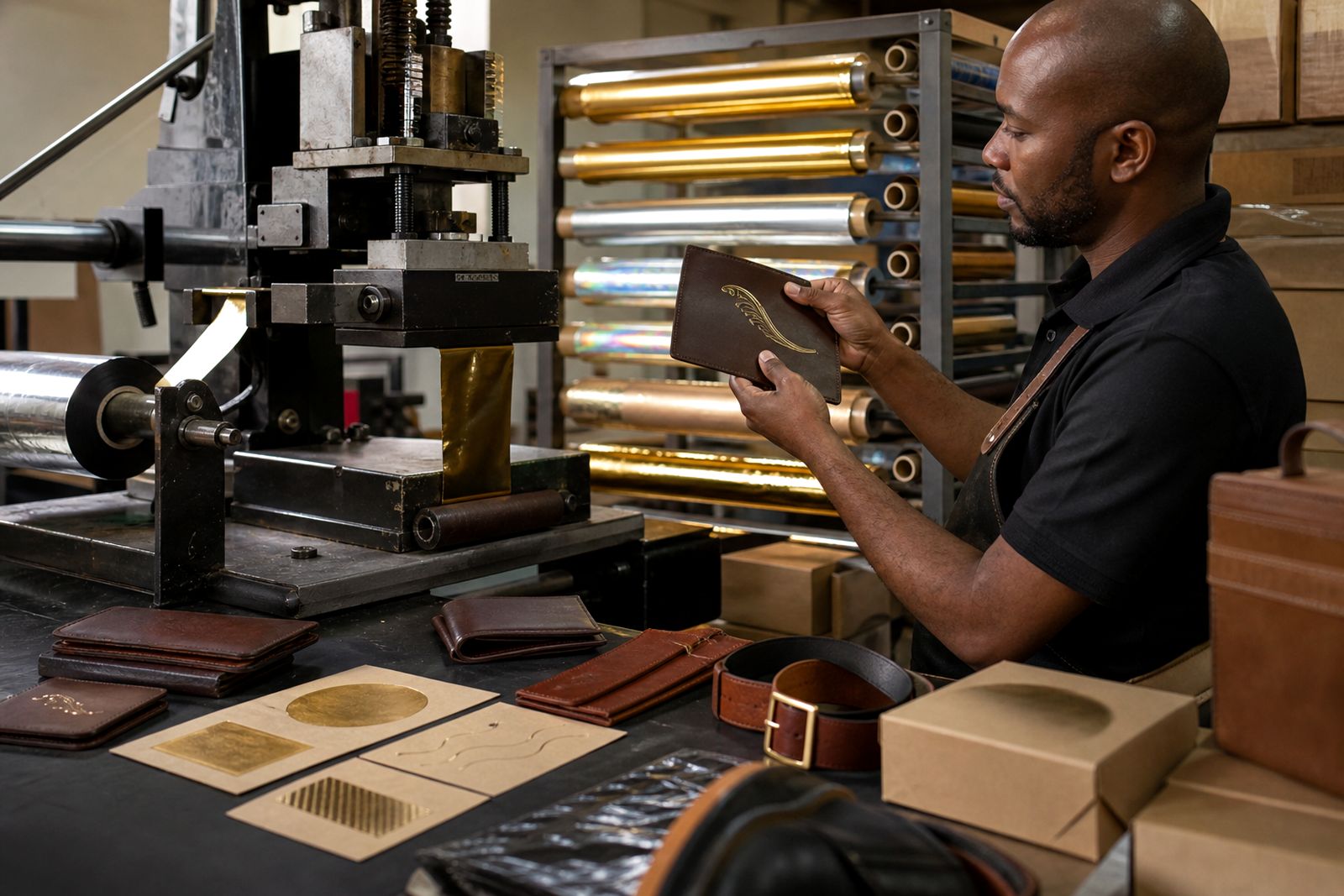
For packaging that needs a luxury look, metallic gold, silver, copper, bronze, mirror and satin finishes are common choices. If the brief calls for colour rather than reflectivity, pigment foils in black, white and process colours can be used. When the pack must stand out or carry a special effect, holographic, diffraction and specialty foils are often worth testing.
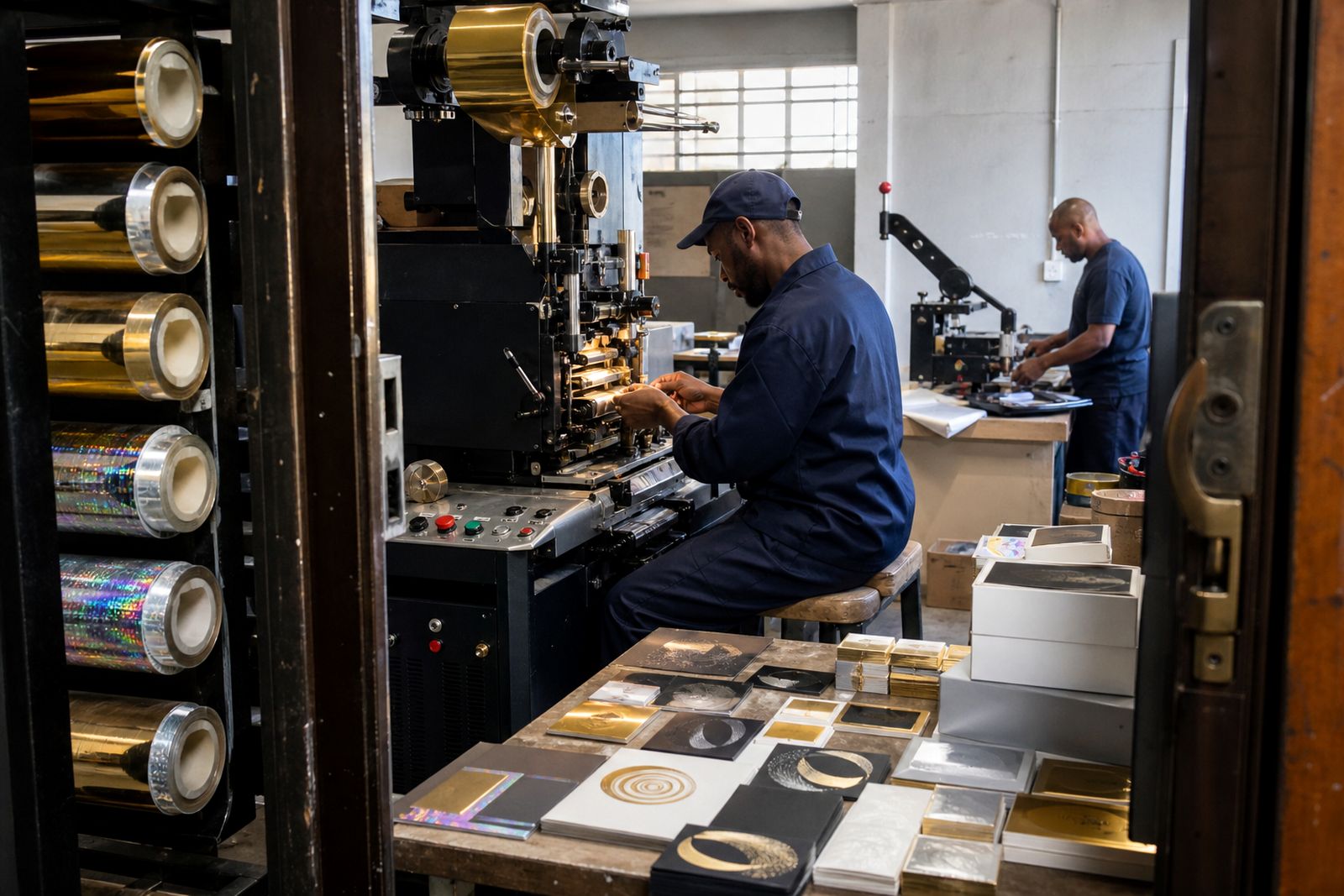
Foils are supplied slit to roll width, which helps match the press and the job width. Ask for swatch books or samples before locking in the finish, especially when the artwork is sensitive to shade, shine or opacity.
Die and press setup
Good results on packaging start with the right die and the right press conditions. Magnesium, copper and brass dies are all used in hot stamping, and the choice depends on the detail, run length and heat stability needed for the job. Fine type, sharp edges and solid blocks do not always want the same die material.
On platen, cylinder and roll-to-roll presses, the practical checks are temperature, dwell, pressure and release. Typical starting ranges should be tested on the actual stock, then adjusted until the foil releases cleanly and the image is sharp. If the job is going onto board with coatings or laminate, the press-side advice should be based on the real substrate, not a generic setting.
Make-ready matters. Poor packing, uneven pressure or a die that is not seated properly can cause weak transfer, edge loss or picking. For packaging cartons and sleeves, small changes in setup often make a large difference to the final appearance.
Check the substrate first
Before going to production, check how the board, print and finish behave together. Coated board, uncoated board and laminated board all respond differently, and the same foil may not perform the same way on each one. On printed cartons, heavy ink coverage can change how heat and pressure move through the sheet.
Soft-touch laminate can need extra care because the surface finish may influence release and adhesion. Gloss laminates, matt laminates and textured stocks may also need separate testing. If the pack includes folds, creases or cut lines close to the foil area, the die layout should be reviewed so the finish does not crack or distort in handling.
| Check | Why it matters |
|---|---|
| Coating or laminate type | Changes foil release and adhesion |
| Ink coverage | Can affect heat transfer |
| Artwork detail | Drives die choice and setup |
| Fold and trim positions | Helps avoid cracking or lift |
Common faults and fixes
Most packaging foil faults come from setup, substrate or die condition rather than the foil alone. Light strike can look dull or patchy, and usually points to low heat, low pressure or short dwell. Overheated jobs can blur edges, widen fine detail or cause the foil to release where it should not.
Poor adhesion may show up on coated board or soft-touch laminate if the surface has not been tested properly. If the image is lifting, check the laminate, the die, the packing and the release profile before changing everything at once. If the foil is breaking up on small text or fine lines, the artwork may be too detailed for the current setup and should be simplified or reworked.
For problem jobs, keep a sample board, note the press settings and compare each change one at a time. That makes it easier to see whether the issue is coming from the stock, the die or the press conditions.
Get the job ready
For packaging and box work, the best approach is to test early and keep the finish aligned with the substrate and press. A swatch book, a small sample run and direct advice on temperature windows, dwell, pressure and release can save time later in production.
If you are planning foil on cartons, rigid boxes or sleeves, start with the artwork, the board and the finishing route. Then choose the foil family and die type that suit the job. For help with samples, slit widths or press-side guidance, use the contact form.
For related applications, you may also want to review Labels & Stickers, Books & Diaries and Cosmetics Cartons.
What our Hot Stamping Foil customers say
Verified Google reviews
Also worth a look
Ask about a foil for your job
Send a note through our contact form with the substrate, the press you run (platen, cylinder or roll-to-roll), the finish you are after and the run length, and we will come back with a foil grade, a sample and a quote.
Open the contact form