

Business cards
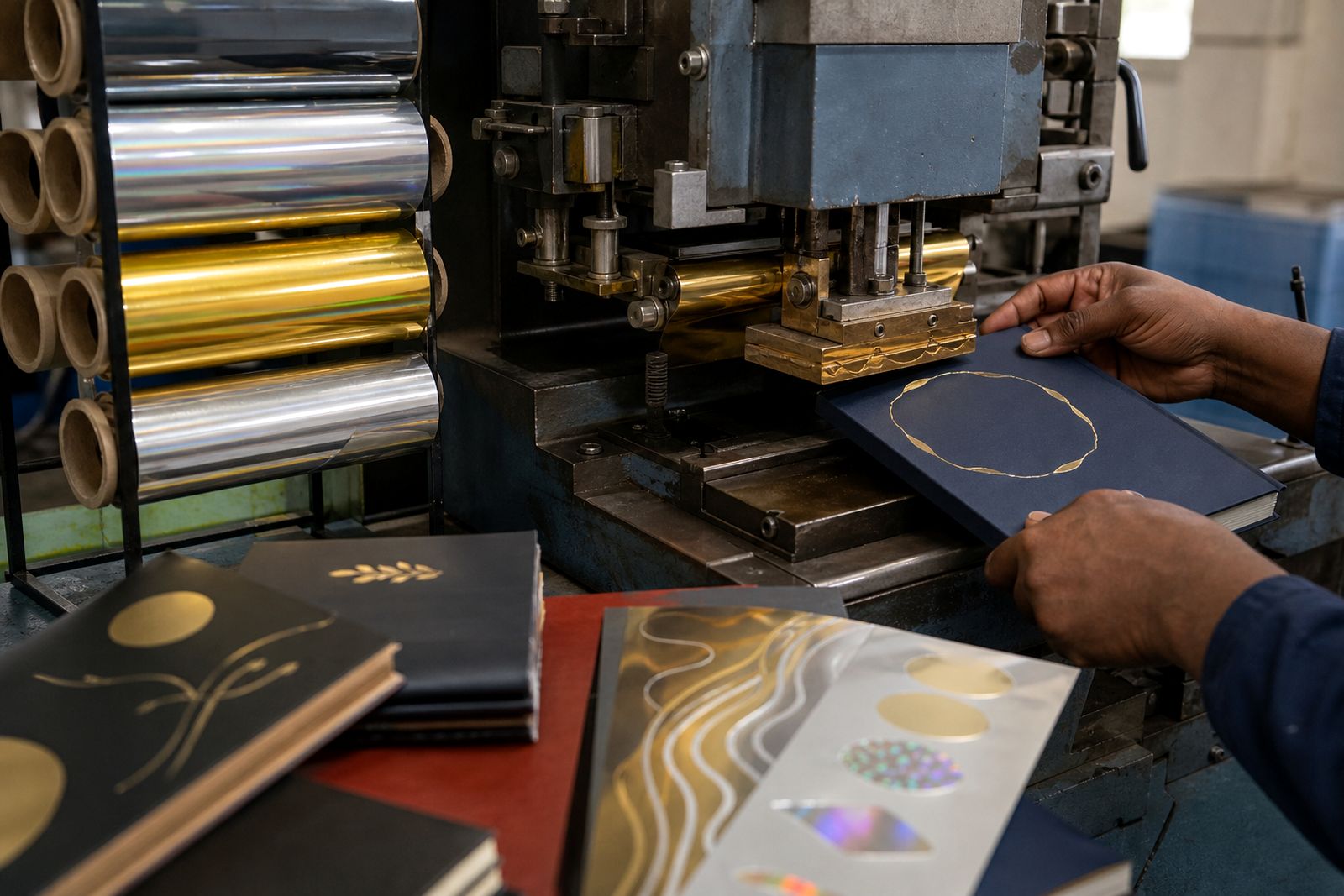
Use foil to add crisp brand detail, contrast and touch on heavy business cards. The right foil, die and press settings make all the difference.
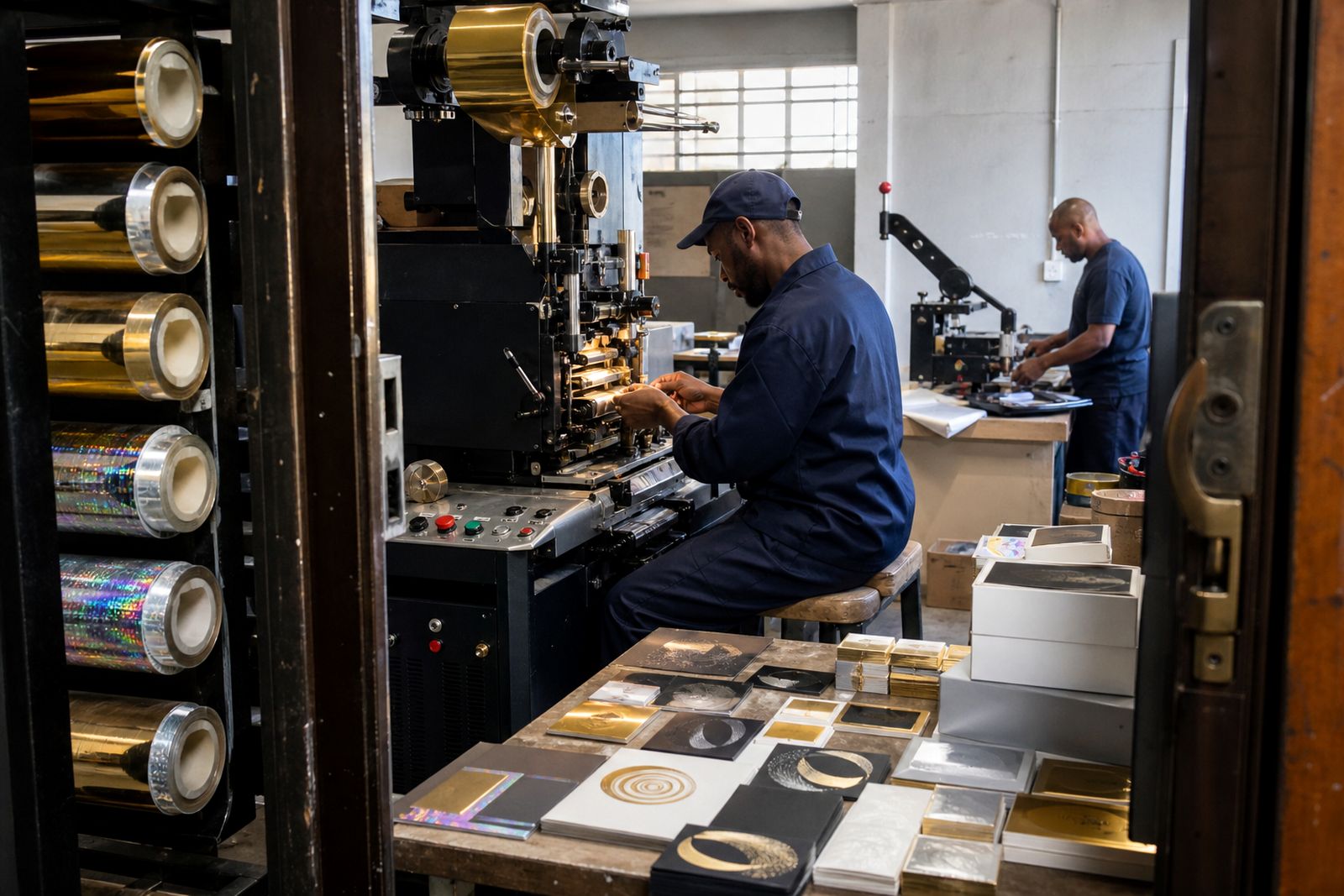
Foil choices for cards
Business cards often need either a sharp brand mark or a full decorative finish. For that, the most common choices are metallic foils in gold, silver, copper, bronze, mirror and satin, plus pigment foils in black, white and process colours.
When the design calls for more detail, holographic and diffraction foils can add motion and texture. For premium cards, security effects and specialty foils may also be used where the artwork or brand finish calls for it.
- Use metallic foil for logos, borders and crisp type.
- Use pigment foil for flat colour and high contrast.
- Use holographic or diffraction foil for patterned detail.
- Use specialty foils where the card stock or finish needs a specific result.
Press and die setup
Foil on business cards depends on good make-ready. Platen, cylinder and roll-to-roll presses all need the right combination of heat, dwell, pressure and release profile for the stock, artwork and foil type.
Dies are usually chosen for the detail level of the design. Magnesium dies suit lighter work, while copper and brass dies are often preferred for finer detail, deeper wear or more demanding production.
| Setup item | What to check |
|---|---|
| Temperature | Use a typical starting range and test on the actual stock. |
| Dwell | Keep it long enough for transfer, but not so long that the foil spreads. |
| Pressure | Match the plate, die and board thickness. |
| Release | Check that the foil releases cleanly from the image area. |
Card stock and coating
Heavy card stocks can behave very differently, especially when the surface is coated, textured or laminated. A smooth coated board usually gives cleaner detail than a rough or open sheet, but it still needs testing.
Soft-touch laminate can be tricky. Some foils transfer well, while others need tighter setup and careful die choice. If the card has a laminate, a coated top layer or an ink-heavy print, always test before production.
- Check whether the stock is coated, uncoated or laminated.
- Test on the final printed sheet, not only on plain board.
- Watch for surface pickup, weak release or smudging around fine type.
Common faults
Most problems on business cards come from setup, not from the foil alone. Light transfer can point to low heat, low pressure or poor dwell. Over-transfer can happen when the settings are too hot or the release profile is too aggressive.
Poor detail may come from the die, the artwork or the board surface. If the foil edges look rough, check the cut file, die finish and press registration. If the foil breaks up on small type, the design may need a stronger line weight or a different foil.
- Weak image: increase heat, pressure or dwell in small steps.
- Ragged edges: inspect the die and make-ready.
- Scumming or haloing: check pressure and artwork detail.
- Poor adhesion on laminate: test another foil or adjust setup.
Ordering and support
For business card work, the usual starting point is to match the foil to the stock, then confirm the die and press settings with a small test. Foil rolls can be slit to the required width, which helps reduce waste and keeps handling neat on press.
Swatch books, samples and press-side advice are available for practical testing. If you are working on cards, asks can be handled through the contact form, or you can explore related applications such as corporate stationery, certificates and awards and packaging and boxes.
- Ask for a foil sample against your printed stock.
- Confirm whether the job needs metallic, pigment or holographic foil.
- Check whether the press is platen, cylinder or roll-to-roll.
- Test the final result before going live on the full run.
What our Hot Stamping Foil customers say
Verified Google reviews
Also worth a look
Ask about a foil for your job
Send a note through our contact form with the substrate, the press you run (platen, cylinder or roll-to-roll), the finish you are after and the run length, and we will come back with a foil grade, a sample and a quote.
Open the contact form