

Certificates and awards
Use foil finishing to give certificates, diplomas and plaques a sharper, more secure look. The right foil, die and press setup helps prevent dull pulls, pinholes and poor release.
Foil choices
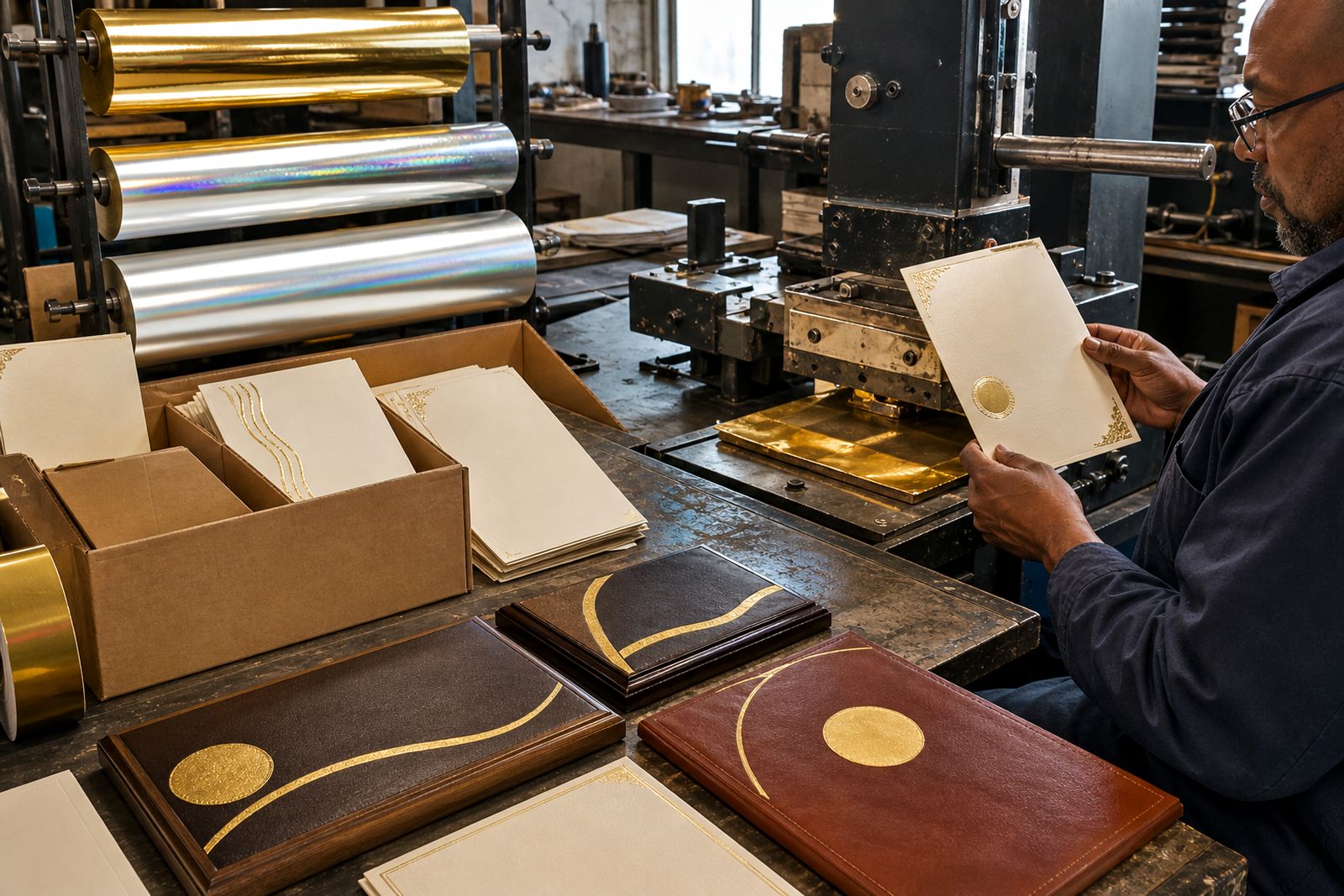
Certificates and award pieces often need a neat metallic finish with clear detail and clean edges. Gold and silver are common choices, while copper, bronze, mirror and satin effects can give a more formal or premium appearance on plaques and presentation items.
For jobs that need extra protection against copying or tampering, consider security finishes or holographic and diffraction foils. Pigment foils in black, white and process colours are useful when the design calls for strong contrast rather than metallic shine.
- Metallic foils for borders, seals and name panels
- Holographic and diffraction foils for authentication details
- Pigment foils for flat colour elements and bold lettering
- Specialty foils for leather, plastics, textiles and soft-touch laminate
If you need a sample against your artwork or substrate, ask for swatch books or press samples before you commit to the final run.
Dies and press setup
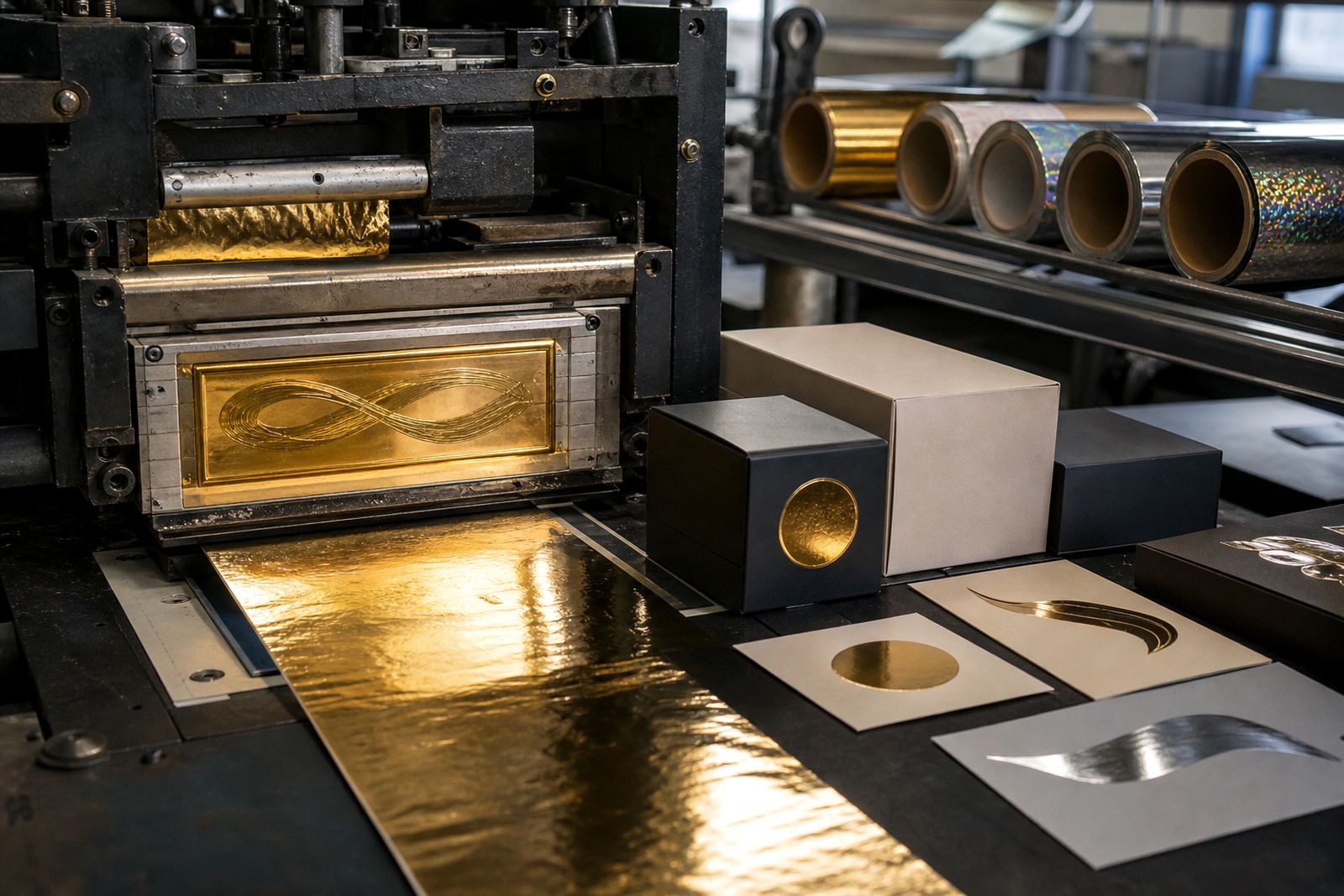
The die choice should suit the artwork and the press style. Magnesium dies are often used for shorter runs and straightforward work, while brass or copper dies are better when detail, wear resistance or longer production is needed.
On certificate and award work, fine lines, borders and small type need careful make-ready. Clean alignment, even pressure and a steady dwell time matter more than pushing heat too high. For starting trials, many foils are tested around a typical temperature window of about 90 to 130 degrees Celsius, then adjusted to suit the board, laminate and press.
| Press type | What to check |
|---|---|
| Platen | Flatness, pressure balance and even dwell across the sheet |
| Cylinder | Registration, web tension and release on detailed work |
| Roll to roll | Heat control, nip pressure and stable foil tracking |
Substrate checks for certificates
Board quality makes a big difference on certificates, folders and plaques. Coated board can give a crisp image, but coating finish, ink coverage and board porosity all affect release. Soft-touch laminate needs extra checking because some foils need a more careful setup to anchor properly.
If the job includes mounted plaques, synthetic inserts or specialty presentation pieces, test the foil on the actual finished substrate where possible. A foil that runs well on plain board may behave differently on varnished, laminated or textured material.
- Check whether the surface is coated, laminated or uncoated
- Look for any anti-scuff or soft-touch layer that may change release
- Confirm whether the artwork sits on solid coverage or open stock
- Test the foil on the finished substrate before a full run
For related finishing work on presentation packs and folders, see book covers and corporate stationery.
Common faults to check
Most foil faults on certificate work come from the setup rather than the foil alone. Too little heat can cause weak transfer or patchy coverage. Too much heat can give over-release, blurry edges or a rough finish. Pressure that is uneven across the form can leave missing areas at the corners or around fine detail.
Other common issues include the wrong release profile for the substrate, poor die condition, incorrect make-ready and surface contamination from dust, powder or handling. On laminated work, especially soft-touch laminate, test for scuffing and hold-out before the main run.
- Poor adhesion: check temperature, dwell and pressure first
- Pinholes or missing areas: inspect the die and make-ready
- Ragged edges: reduce pressure imbalance and confirm foil tension
- Dull finish: review substrate, release profile and press speed
For advice on a specific board or finish, use the contact form and send the artwork, substrate details and press type.
Ordering support
When a certificate or award job is being planned, it helps to specify the substrate, the press and the finish at the start. That makes it easier to choose between metallic, pigment, holographic or security foils, and to decide whether the job needs a standard roll width or foil slit to a narrower width.
Stickers, labels and other presentation pieces may call for a different setup, so it is worth matching the foil to the application rather than using one general option for everything. If you also run associated jobs such as labels, cartons or display inserts, you can compare notes with the pages for labels and stickers, packaging and boxes and security finishes.
Swatch books, sample requests and press-side guidance are available for practical trial work. If you need help with temperature windows, dwell, pressure or die selection, ask through the contact form.
What our Hot Stamping Foil customers say
Verified Google reviews
Also worth a look

Ask about a foil for your job
Send a note through our contact form with the substrate, the press you run (platen, cylinder or roll-to-roll), the finish you are after and the run length, and we will come back with a foil grade, a sample and a quote.
Open the contact form