

Security finishes
Use security foils where appearance and tamper evidence matter. Start with the right foil, die and substrate check before you run the press.
Foil choices for security work
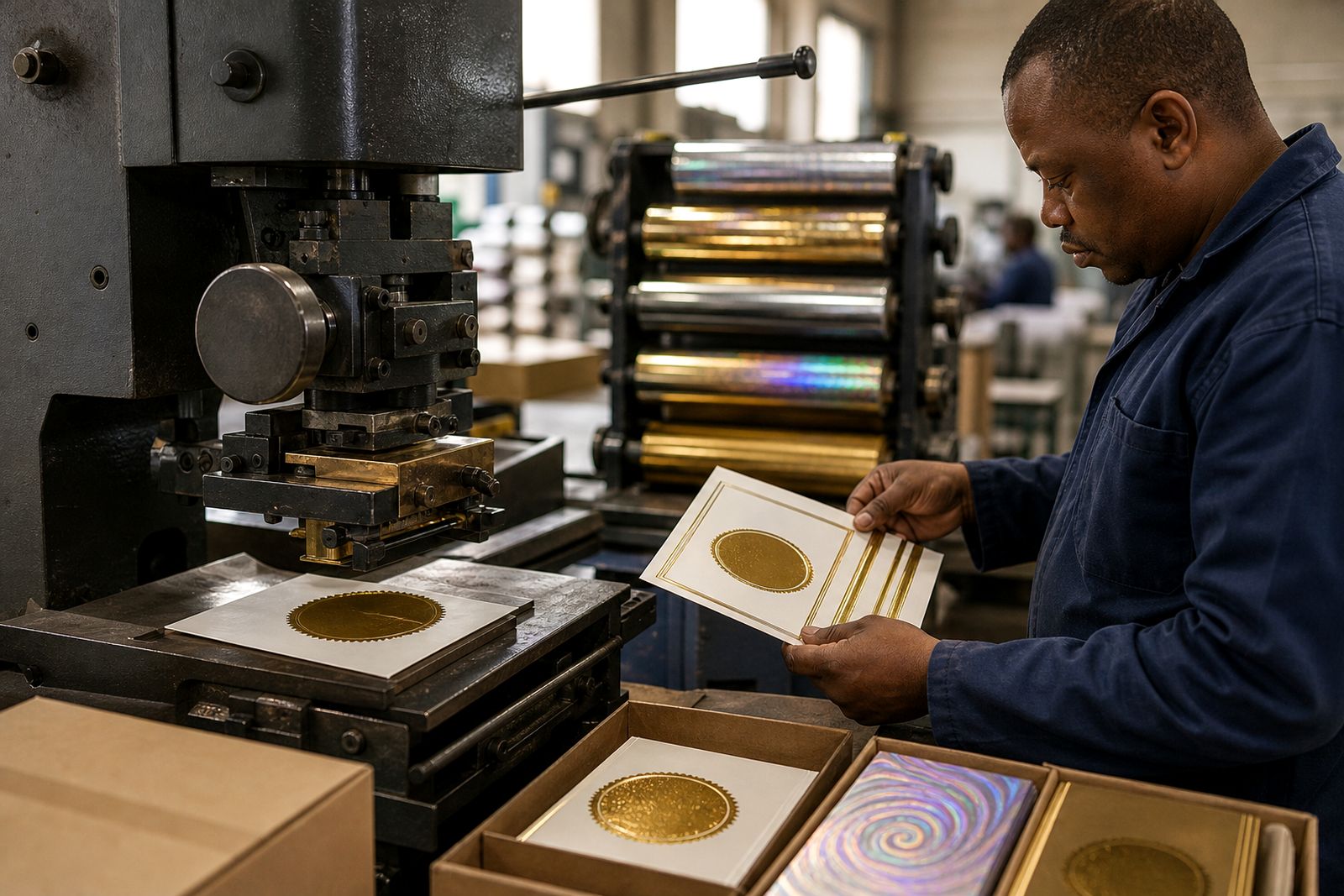
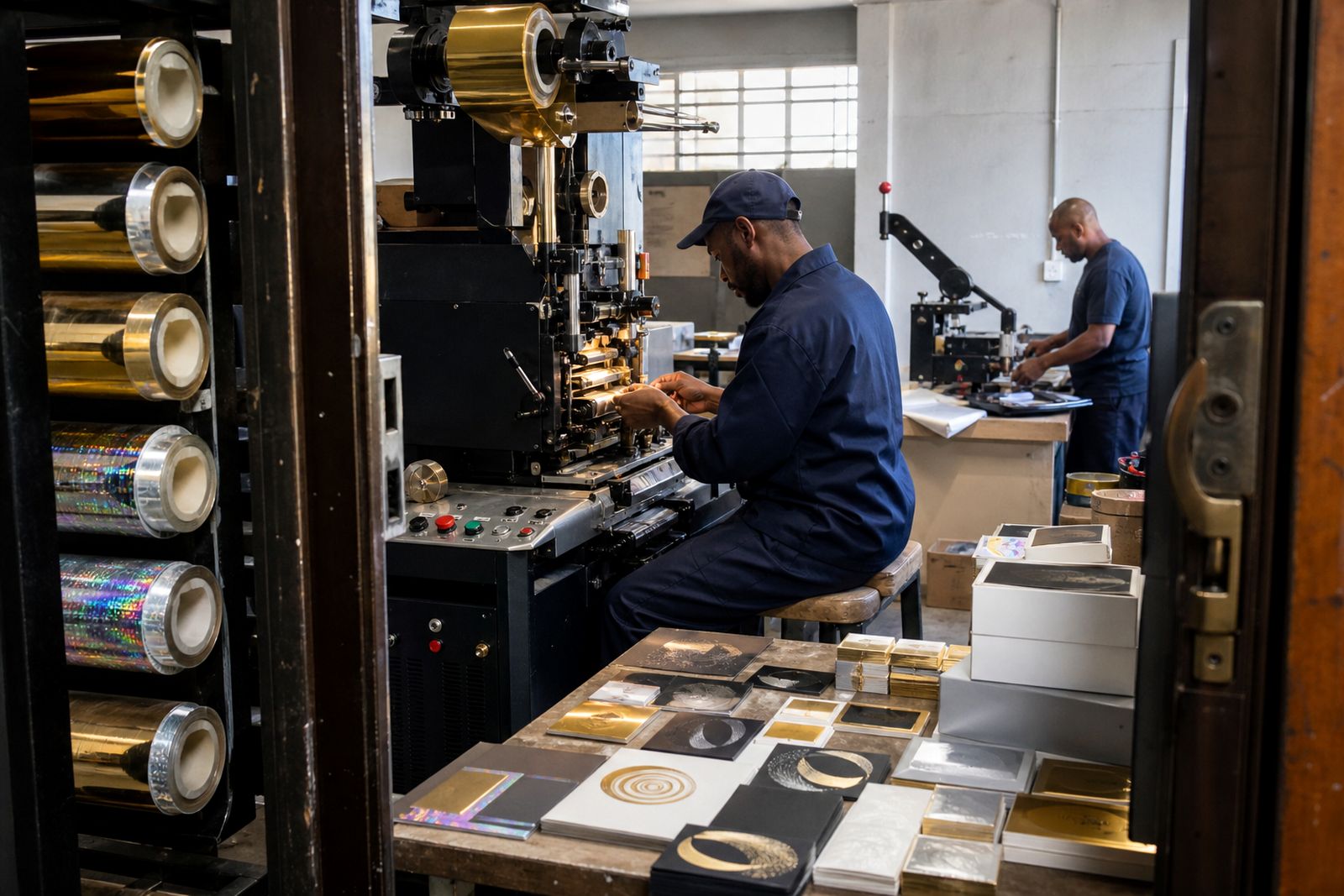
Security applications often need more than a bright metallic look. Holographic and diffraction foils can add visible movement, while pigment foils suit solid colour areas and clear, readable markings. For seals, labels and documents, the right finish depends on how the piece will be handled, viewed and inspected.
Common choices include:
- Holographic and diffraction foils for optical movement and pattern recognition
- Metallic foils in gold, silver, copper, bronze, mirror and satin for premium security accents
- Pigment foils in black, white and process colours for text and flat areas
- Security foils where a specific anti-tamper or authentication effect is needed
If you are comparing options for seals, see labels and stickers and certificates and awards for related finishing needs.
Match foil to the substrate
Security finishing works only when the substrate and coating can hold the detail. Always check whether the stock is coated, uncoated, textured or protected with soft-touch laminate. A smooth, stable surface gives better edge definition and cleaner release.
For coated board and laminated work, make sure the surface is not too slick for the chosen foil. For plastics and textured materials, test a small area first, because heat response and surface energy can change the result. On document and label work, small changes in coating or laminate can affect adhesion, sharpness and wear.
| Substrate or finish | What to check |
|---|---|
| Coated board | Release and edge sharpness |
| Soft-touch laminate | Adhesion and press temperature window |
| Plastics | Surface energy and dwell |
| Textiles | Heat tolerance and pressure |
For foil on cartons and covers, you can also compare packaging and boxes and books and diaries.
Dies and artwork details
Microtext, fine lines and small security elements depend on good die making and careful artwork setup. Magnesium, copper and brass dies each have their own use, so the choice should match the run length, detail level and press type.
As a guide, use the die and layout that suit the level of detail you need:
- Magnesium dies for shorter runs and quick turn work
- Copper dies for fine detail and stronger wear performance
- Brass dies for more demanding detail and longer running work
Keep the artwork clear, especially where microtext, borders and registration marks are involved. Small elements should be checked before make-ready so the die, foil and substrate all agree on detail and spacing.
Press setup and make-ready
Security foiling needs controlled heat, pressure and dwell. Typical starting ranges should only be used as trial points, because the right setting changes with foil type, substrate, die and press style. A small press test is the safest way to find the working window.
Press-side checks normally include:
- Temperature window for clean release without overcooking the stock
- Dwell to allow the foil to transfer fully
- Pressure to carry detail into fine lines and microtext
- Release profile so the image leaves the carrier cleanly
Whether you are using a platen, cylinder or roll-to-roll press, set-up should also allow for correct make-ready. Uneven packing, poor pressure balance or rushed adjustment can cause patchy transfer, weak edges or broken detail.
Common faults to check
Most security foil faults come from the combination of substrate, die and press settings rather than from one factor alone. Look for these issues during proofing and early running:
- Poor release when the foil does not leave the carrier cleanly
- Patchy adhesion where coated board or laminate needs a different setting
- Blurred detail from too much heat, pressure or dwell
- Weak microtext from an unsuitable die or loose make-ready
- Scuffing where handling or surface choice affects the finish
When a job needs samples, swatch books or advice on the press window, ask through the contact form. Stampingfoil can help match the foil to the application and suggest practical checks before the full run.
What our Hot Stamping Foil customers say
Verified Google reviews
Also worth a look
Ask about a foil for your job
Send a note through our contact form with the substrate, the press you run (platen, cylinder or roll-to-roll), the finish you are after and the run length, and we will come back with a foil grade, a sample and a quote.
Open the contact form