

Books and diaries
Metallic titles, borders and ornaments need the right foil, die and press setup. For book covers, the small details on board, cloth and laminate make all the difference.
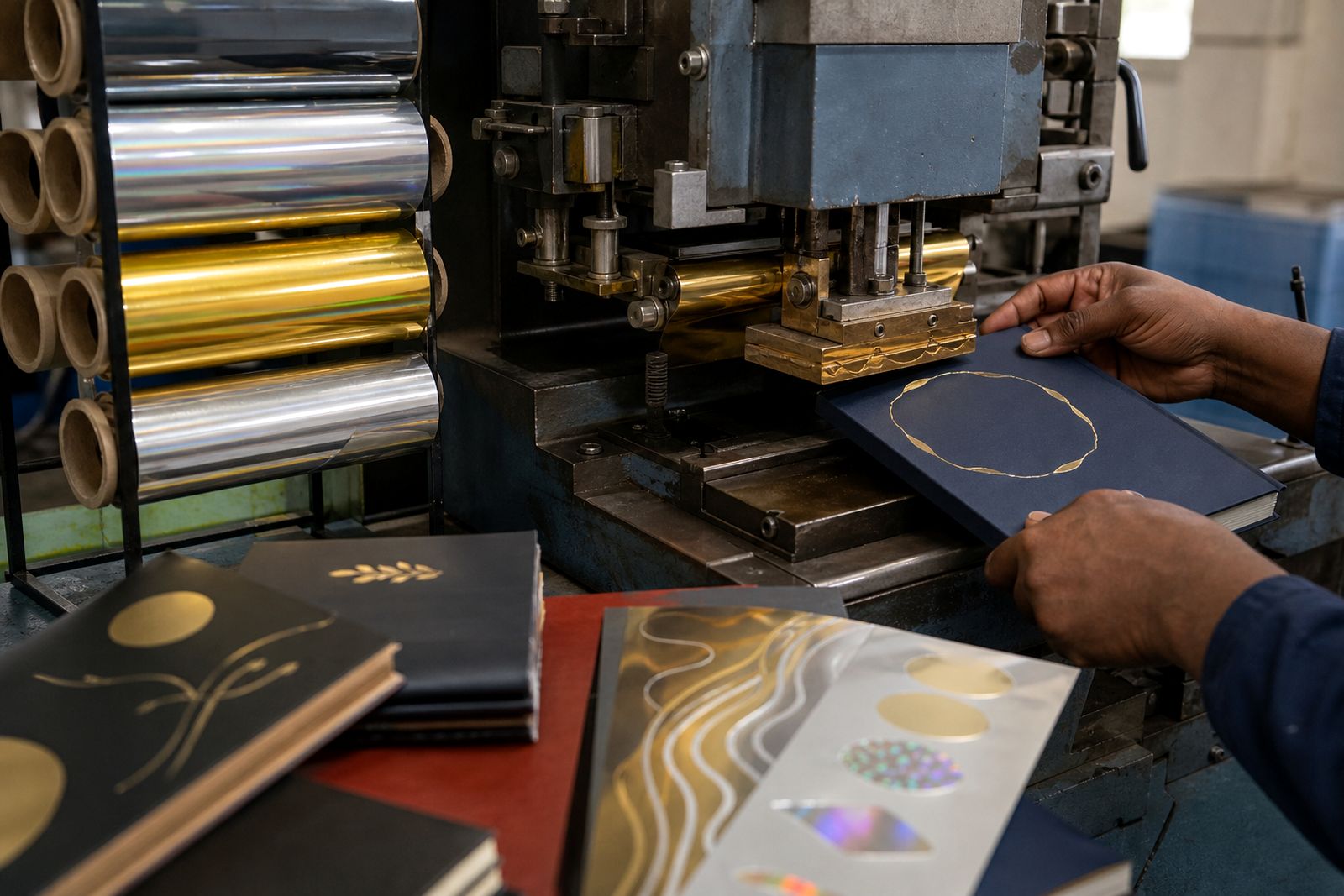
Foil choices for covers
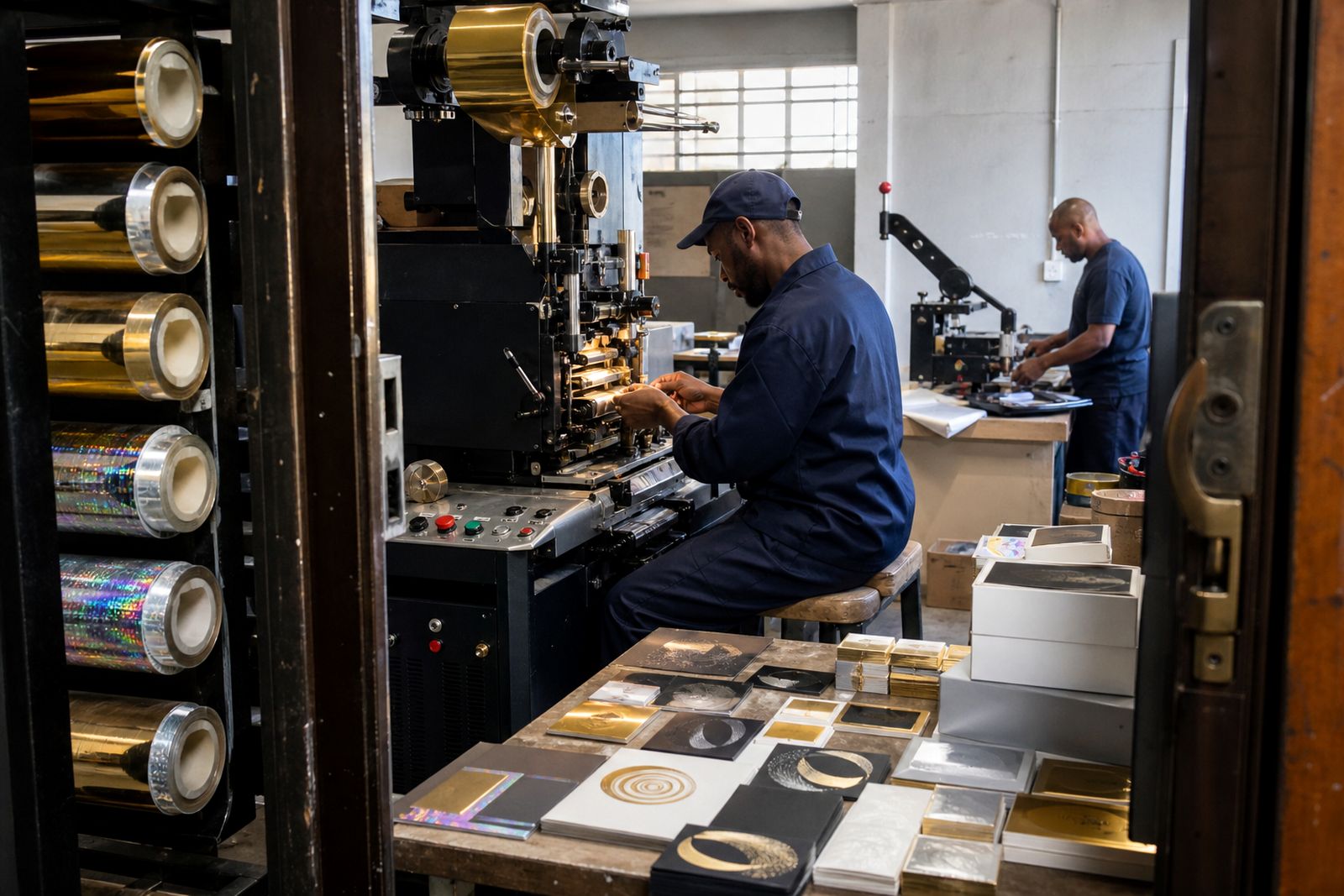
Book covers often call for a clean metallic title, a frame, or a small decorative mark. For that, the usual starting points are metallic foils in gold, silver, copper, bronze, mirror or satin. If the design needs a flatter look, pigment foils in black, white or process colours are often used instead.
For premium covers, holographic and diffraction foils can be used for accents, while security foils are available where a controlled finish is needed. Where the cover includes cloth, soft touch laminate or other difficult surfaces, specialty foils may be the better starting point.
- Metallic foils for titles, rules and ornaments
- Pigment foils for strong solid colour marks
- Holographic and diffraction foils for special effects
- Specialty foils for cloth, laminate and mixed substrates
Substrates and make-ready
Cloth and paper covers behave differently, so the substrate must be checked before the job runs. Paper and board covers may need different heat and pressure settings from cloth, and soft-touch laminate can change the release and adhesion behaviour.
Before make-ready, check whether the cover is coated, uncoated, laminated or cloth wrapped. A clean, even surface helps the foil release properly. If the cover has texture, embossing or a sensitive coating, test the job on the actual stock rather than relying on a previous setting.
| Cover type | What to check |
|---|---|
| Paper or board | Coating, smoothness and how sharply the detail needs to read |
| Cloth | Fibre texture, absorbency and whether the mark needs extra dwell |
| Soft-touch laminate | Release behaviour, surface energy and whether the foil bonds cleanly |
Dies and press setup
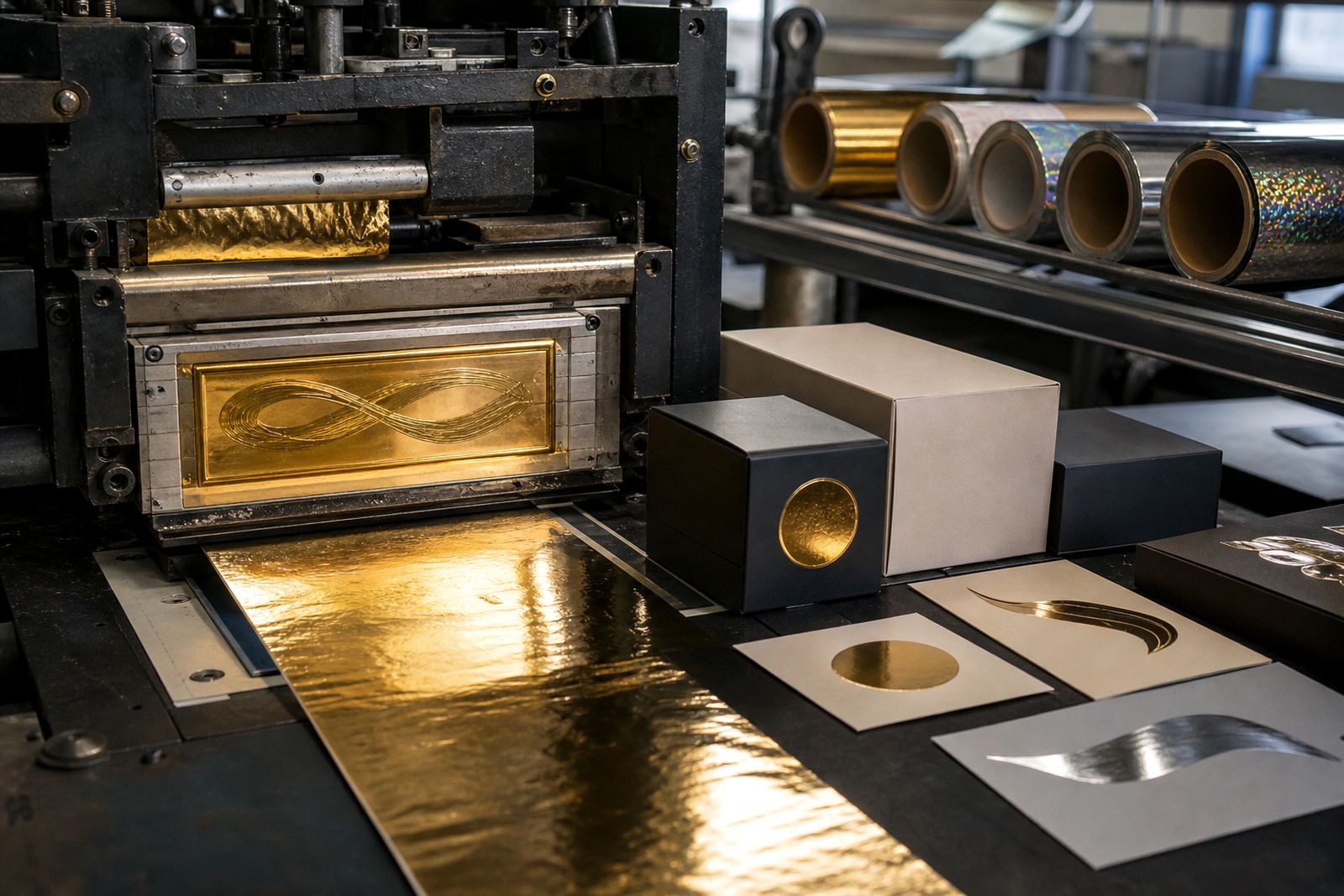
For covers, the die choice matters as much as the foil. Magnesium, copper and brass dies each have their place depending on the detail, run length and heat transfer needed. Fine lettering and small ornaments need sharp, clean edges on the die face so the foil can release without filling in.
Platen, cylinder and roll-to-roll presses all need their own make-ready. The practical starting point is to test the temperature window, dwell and pressure on a few sheets or covers before moving into the run. If the impression is weak, the die may need more dwell or pressure. If the foil looks grainy or overburnt, the setup may be too hot or too heavy.
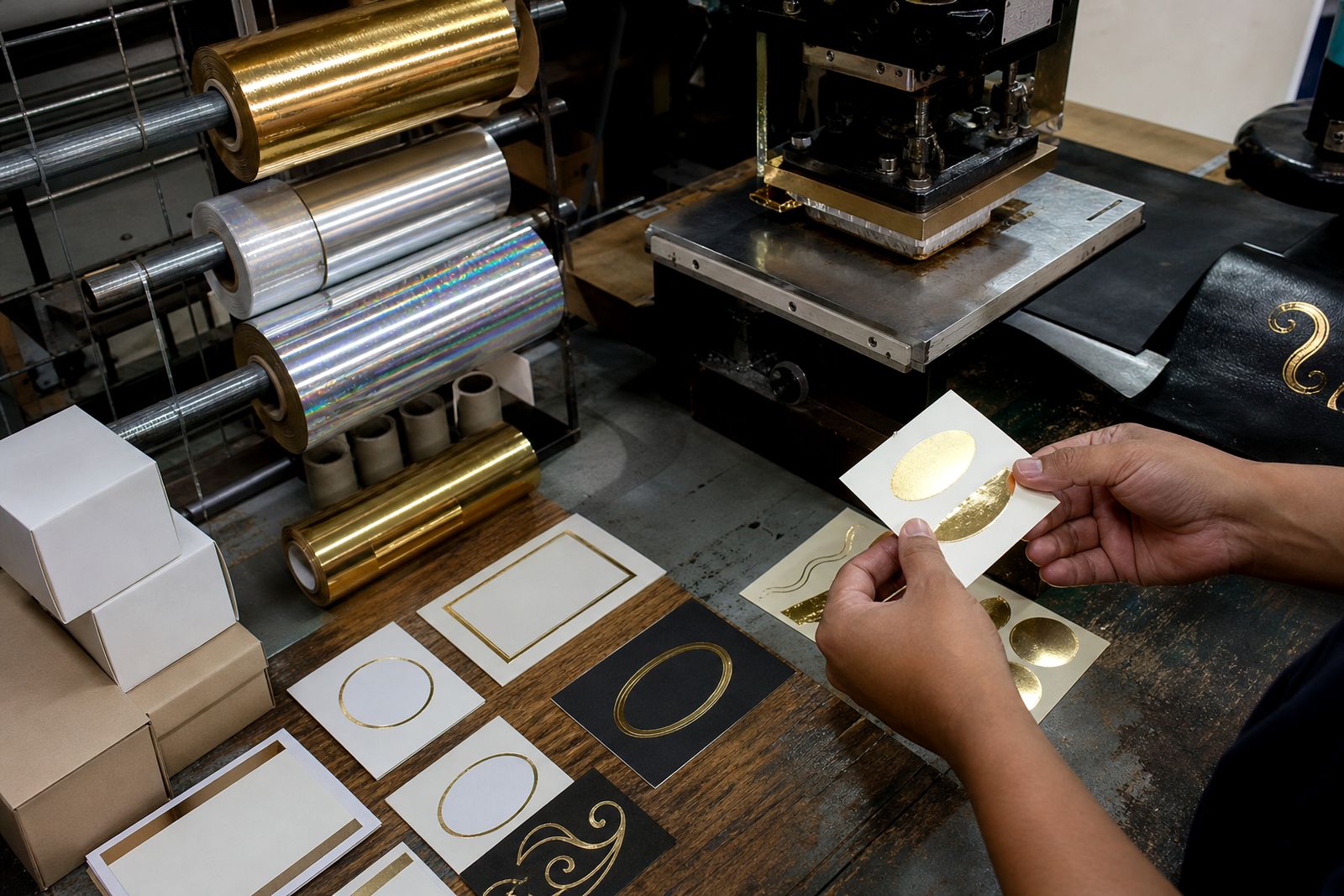
For help matching foil to the die and press type, see Packaging & Boxes or Corporate Stationery.
Common faults to check
Most cover faults come from a mismatch between foil, substrate and setup rather than from the design itself. Poor release can leave gaps in letters or ornaments. Too much heat can cause dulling, haze or excessive spread. Too little heat or pressure can give a patchy image, weak edges or incomplete transfer.
- Poor adhesion often points to the wrong release profile or an unsuitable surface
- Fill-in on fine type can mean the die is too hot or the detail is too tight
- Patchy coverage may mean the dwell or pressure is too low
- Dull finish can happen when the substrate or laminate is not suited to the foil
If the cover includes a laminate, coated board or cloth wrap, test first and change only one variable at a time. That makes fault-finding much faster.
Ordering and support
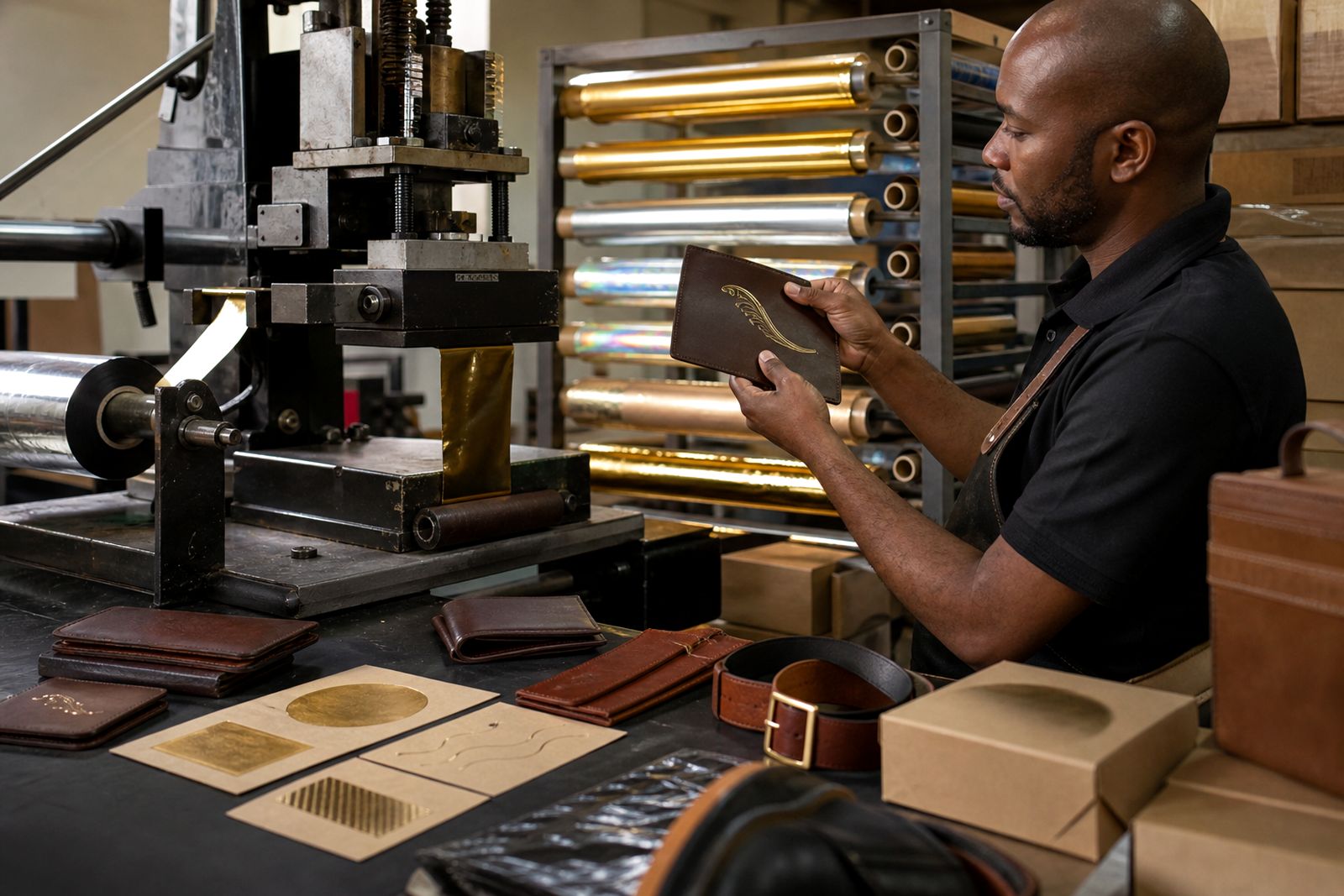
Foil is supplied slit to roll width, with swatch books and samples available for matching a title, border or ornament to the cover stock. When a job needs a practical answer, ask for press-side advice on foil choice, temperature window, dwell, pressure, release profile and make-ready.
If you are preparing a new book cover job, or changing from paper to cloth or laminate, it helps to discuss the substrate before you start. Use the contact form to ask for a quote or to request samples. You can also explore related applications such as Labels & Stickers and Certificates & Awards.
For a wider view of foil finishing options, visit Applications or browse Products.
What our Hot Stamping Foil customers say
Verified Google reviews
Also worth a look
Ask about a foil for your job
Send a note through our contact form with the substrate, the press you run (platen, cylinder or roll-to-roll), the finish you are after and the run length, and we will come back with a foil grade, a sample and a quote.
Open the contact form