

Corporate stationery
Use hot stamping to add crisp foil detail to letterheads, folders and invitation suites. The right foil, die and make-ready keep the finish clean on paper and board.
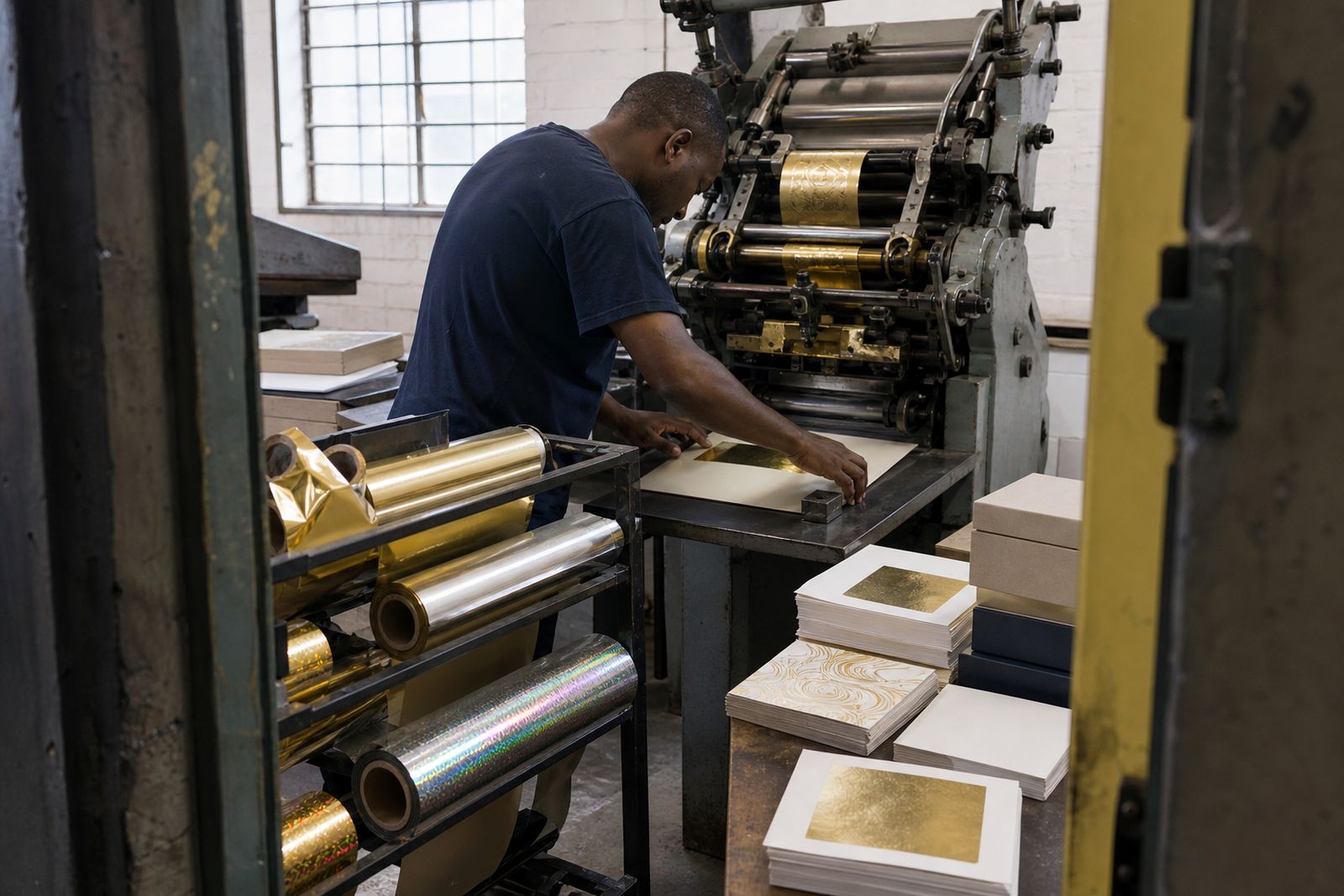
Foils that suit stationery
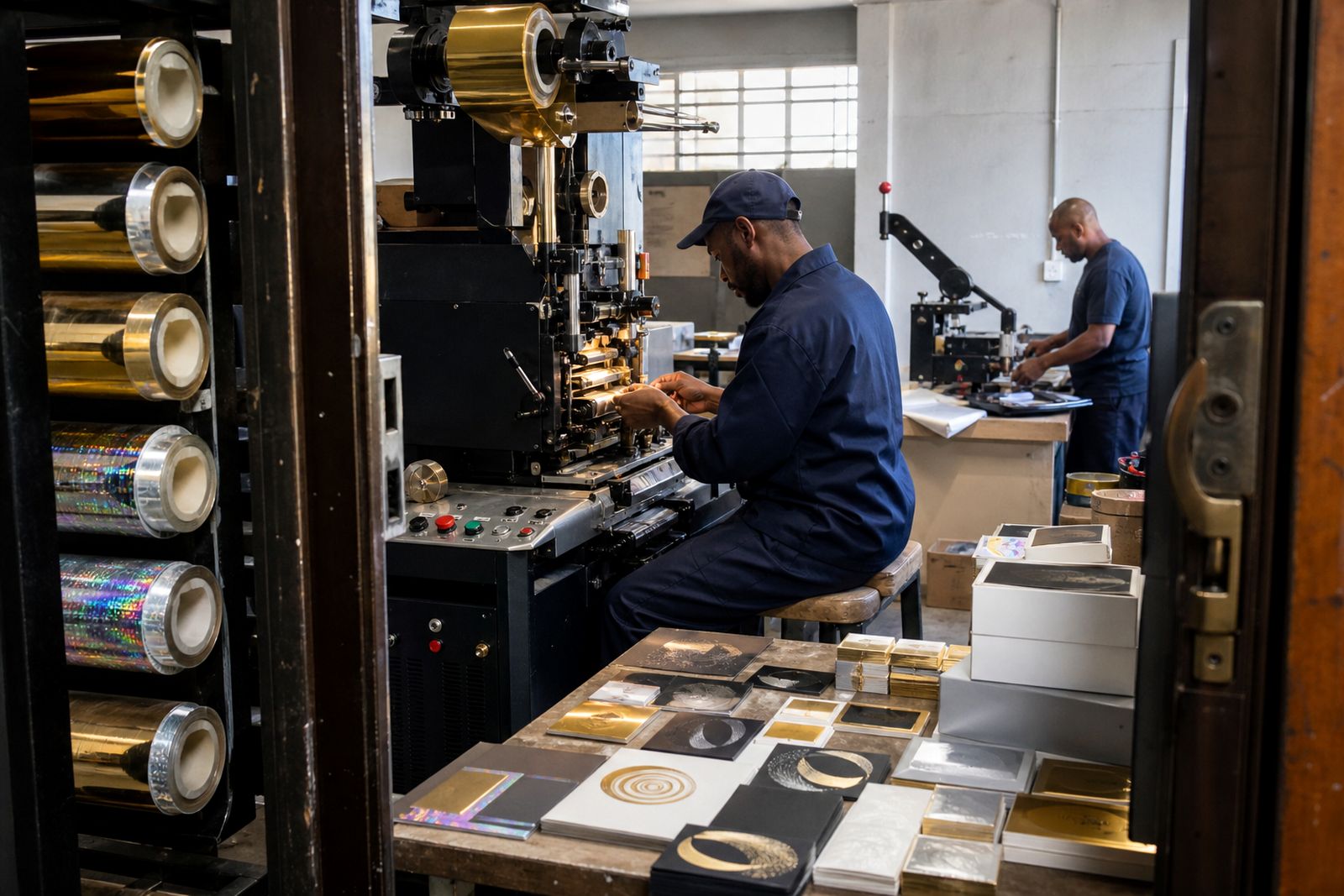
Corporate stationery usually calls for a controlled, neat finish. Metallic gold, silver, copper, bronze, mirror and satin foils are common choices for logos, borders, monograms and fine type. Pigment foils in black, white and process colours can be used where the design needs a flat solid look rather than shine.
For work that needs extra detail or contrast, holographic and diffraction foils can be used in accents, while security foils may suit controlled documents or numbered items. For papers with coatings or soft-touch laminate, check the surface first so the release and bond suit the board rather than fight it.
If the artwork must carry through from letterheads to folders and invitations, keep the foil family consistent across the set. Business cards and certificates & awards often use the same discipline in type size, foil width and positioning.
Dies and detail
Stationery jobs often include small type, fine rules and close registration. Magnesium dies are commonly used for shorter runs and simpler detail, while copper and brass dies are better when the artwork needs sharper line work, deeper relief or longer production use. The die choice should match the press, the stock and the amount of detail in the design.
On invitation suites and folded folders, keep clear margins around the hot stamp area so the press can land evenly and the foil can release cleanly. Thin strokes, reversed text and tight spacing may need artwork changes before the die is cut.
- Keep lines and lettering bold enough for the chosen die
- Avoid crowded elements near folds, creases and glued sections
- Check that the foil area fits the press bed and chase
Press and setup checks
Corporate stationery is often run on platen, cylinder or roll-to-roll presses depending on the format. Start with a trial at a suitable temperature window for the stock and foil, then adjust dwell, pressure and release profile until the impression is even. The right make-ready matters as much as the foil itself.
Board caliper, coating, fibre direction and any laminate all affect transfer. A coated letterhead may need less heat than an uncoated stock, while soft-touch laminate often needs careful testing to avoid dull edges or incomplete release. Ask for swatch books, samples and press-side advice before a full run. Use the contact form to request support or a quote.
| Press check | What to look for |
|---|---|
| Temperature | Start with a test window and adjust only as needed for clean release |
| Dwell | Too short can leave weak transfer, too long can mark the stock |
| Pressure | Even pressure helps solid fills and fine type |
| Release profile | A smooth release reduces picking and patchy foil |
Common faults
Most faults on stationery come from setup, not from the artwork alone. Patchy transfer can mean not enough heat, poor dwell or uneven pressure. Haloing may point to too much heat or pressure, while smudging can happen when the stock is not suited to the foil or the die edge is not clean.
On coated board and laminated covers, watch for poor adhesion at corners, pinholes in solid areas and light pull-back on fine detail. Dust, low-quality make-ready and worn dies can all leave their mark. If the same design is being stamped across a full suite, test the worst substrate first so the rest of the set can be matched to it.
- Poor transfer usually means the press settings need re-checking
- Fine type may need a bolder foil area or a larger die line
- Soft-touch laminate should always be tested before production
Related applications
Corporate stationery often sits alongside other print finishing jobs that need the same foil discipline. Folder covers, invitation packs and document sets may share foil colours, die rules and press setup with other board-based work.
For more finishing ideas, see Packaging & boxes, Books & diaries, Labels & stickers and Security finishes. For wider product and finishing guidance, visit Products, Applications or contact Stampingfoil through the enquiry form.
What our Hot Stamping Foil customers say
Verified Google reviews
Also worth a look
Ask about a foil for your job
Send a note through our contact form with the substrate, the press you run (platen, cylinder or roll-to-roll), the finish you are after and the run length, and we will come back with a foil grade, a sample and a quote.
Open the contact form