

Cosmetics cartons
Beauty cartons need clean foil, tight registration and a stable substrate. Use the right foil family and press setup to keep decoration sharp on coated or soft-touch stock.
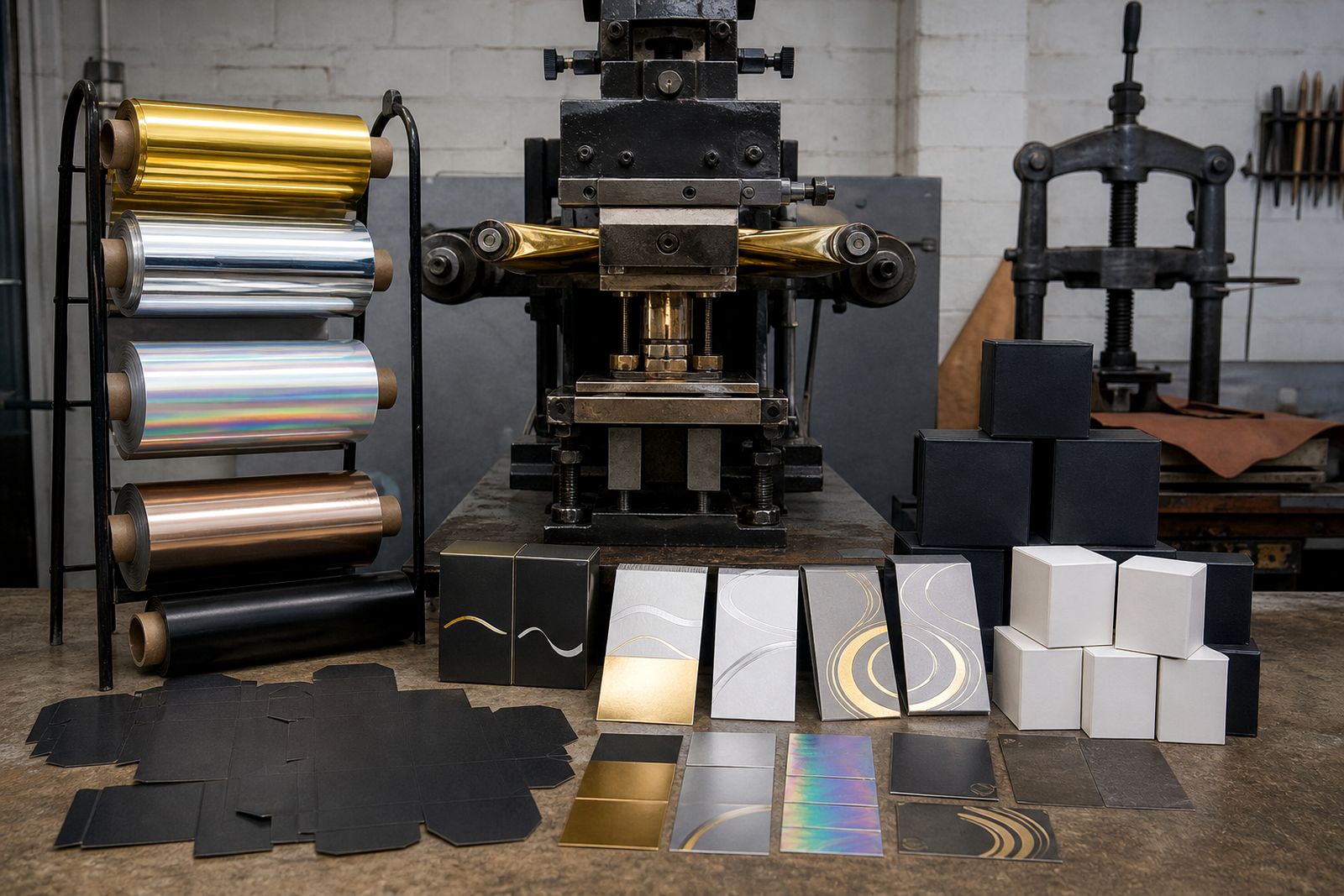
Foil choices for beauty cartons
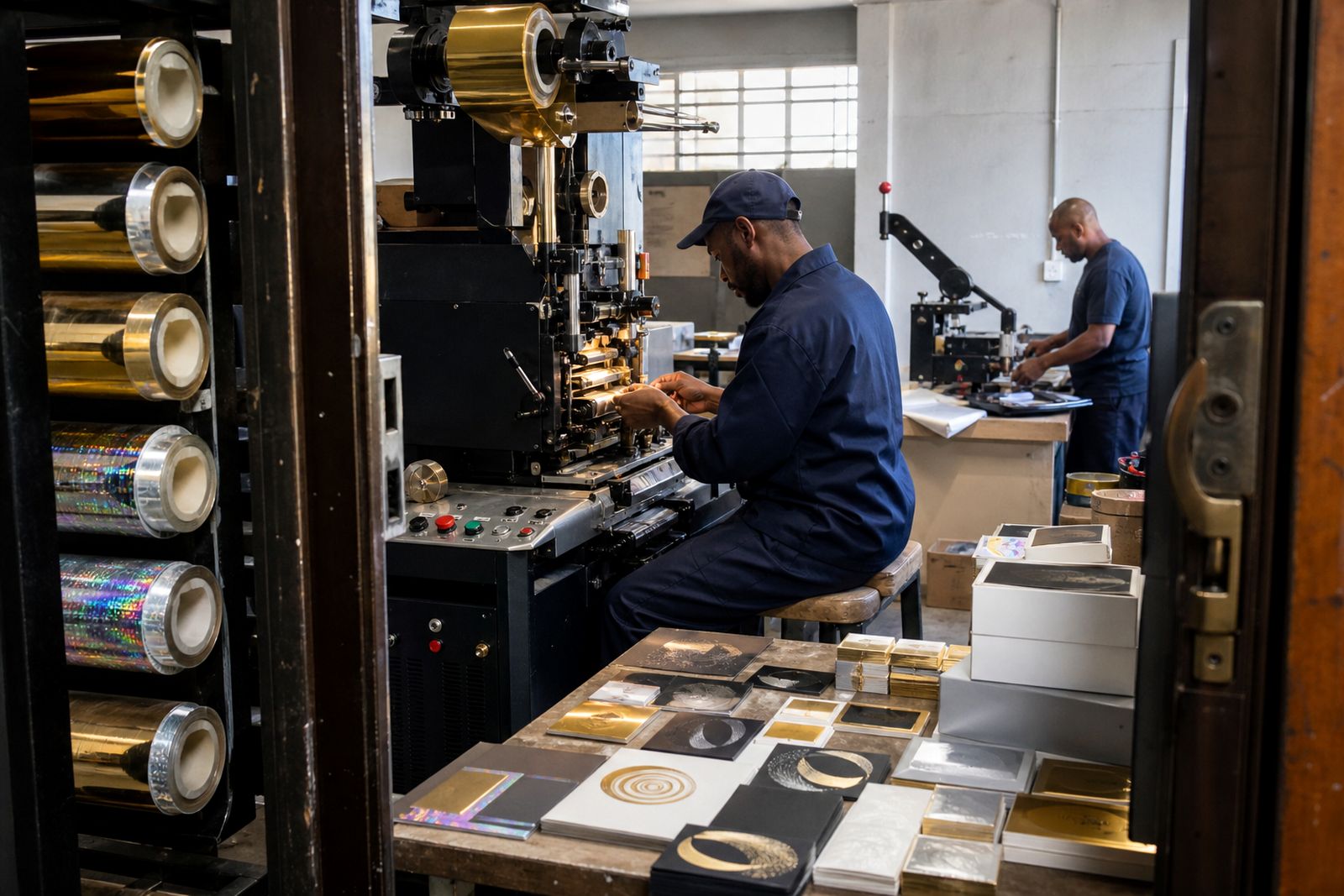
Cosmetics packaging often asks for a mix of gloss, contrast and fine detail. Metallic foils are commonly used for gold, silver, copper, bronze, mirror and satin effects, while pigment foils suit black, white and process-colour accents. Holographic and diffraction foils can be used for selective highlight areas, but they need careful artwork and register control.
For carton work, start with the finish the brand wants and then check whether the board, coating and artwork can carry it cleanly. Soft-touch laminate, matt coated board and high-gloss coated cartons all behave differently under heat and pressure. Packaging & Boxes is a useful related application when you are planning carton finishing across a wider range of pack styles.
- Use metallic foil for logo panels, borders and fine type.
- Use pigment foil where solid colour and contrast matter more than shine.
- Keep holographic foils to controlled areas with enough clear space around them.
- Check swatches against the printed carton board before final approval.
Board and laminate checks
Cosmetics cartons can fail at the foil stage if the substrate is not consistent. Coated boards, soft-touch laminate and overprinted surfaces may need different temperature windows, dwell times and pressure levels. The release layer in the foil must match the surface so the image transfers cleanly without skipping or over-pulling.
Before the run, test the exact stock, not just a similar sheet. Look at coating smoothness, tack, fibre lift, surface slip and any varnish or laminate that may block release. If the carton has a soft-touch finish, expect to test more carefully because the surface can affect adhesion and edge sharpness.
| Check | Why it matters |
|---|---|
| Coating or laminate type | Changes release and adhesion |
| Board smoothness | Affects solid areas and fine detail |
| Artwork density | Influences dwell and pressure needs |
| Panel placement | Helps avoid cracking on folds and creases |
Dies and press setup
For carton finishing, the die choice should suit the level of detail and the press style. Magnesium dies can be used for shorter runs and simpler decoration, while copper and brass dies are better where sharper detail, longer run consistency or more durable tooling is needed. The press type also matters, whether the job runs on platen, cylinder or roll-to-roll equipment.
Set the job up with a practical make-ready. Check nip, alignment, dwell and release profile before committing to a full run. Start with typical testing ranges rather than fixed settings, because the right balance depends on foil, board, laminate and artwork coverage. Keep swatch books and samples close at hand so the production team can compare results quickly.
- Use a die that matches the detail in the artwork.
- Check the die face for clean edges and consistent depth.
- Confirm the foil roll width before setup to avoid waste and misfeeds.
- Test register on each carton panel before full production.
Common faults to watch for
Most foil faults on cosmetics cartons can be traced to heat, pressure, dwell or surface mismatch. Poor transfer can show up as light images, pinholes, rough edges or areas where the foil does not release fully. Too much pressure can crush board fibres or distort fine details, especially on lighter carton stocks.
Soft-touch laminate can also lead to patchy adhesion if the surface has not been tested properly. If the foil seems to lift at edges or on solid areas, review the release profile and the compatibility of the surface finish. For guidance on related finishing problems across other substrates, see Plastic Parts and Textiles & Apparel, where surface behaviour can also affect transfer.
- Light transfer often points to too little heat or dwell.
- Ragged edges may indicate excess pressure or a poor die face.
- Poor adhesion can come from an unsuitable laminate or coating.
- Patchy coverage usually means the setup needs more testing.
Get the right foil spec
Cosmetics cartons often need more than one foil effect across a range, so it helps to match the foil family to the board and the press before production begins. Stampingfoil can supply metallic, pigment, holographic, diffraction, security and specialty foils slit to roll width, with samples, swatch books and press-side advice for practical setup.
If you are working on a new carton range, bring the printed sample, substrate details and die plan together before the run. That makes it easier to check temperature windows, pressure, dwell and release behaviour on the actual board. For a broader view of finishing choices, you may also want to compare with Labels & Stickers or the contact form for a quote request and technical support.
- Use the same stock, laminate and artwork for test approval.
- Confirm roll width before ordering foil for the press.
- Ask for samples if you are comparing metallic, pigment or holographic finishes.
- Use the contact form for technical questions or a quote request.
What our Hot Stamping Foil customers say
Verified Google reviews
Also worth a look
Ask about a foil for your job
Send a note through our contact form with the substrate, the press you run (platen, cylinder or roll-to-roll), the finish you are after and the run length, and we will come back with a foil grade, a sample and a quote.
Open the contact form