

Plastic parts
Plastic parts need the right foil, die and press setup to hold a clean mark and stay readable in use. Start with test pieces and practical checks before production.
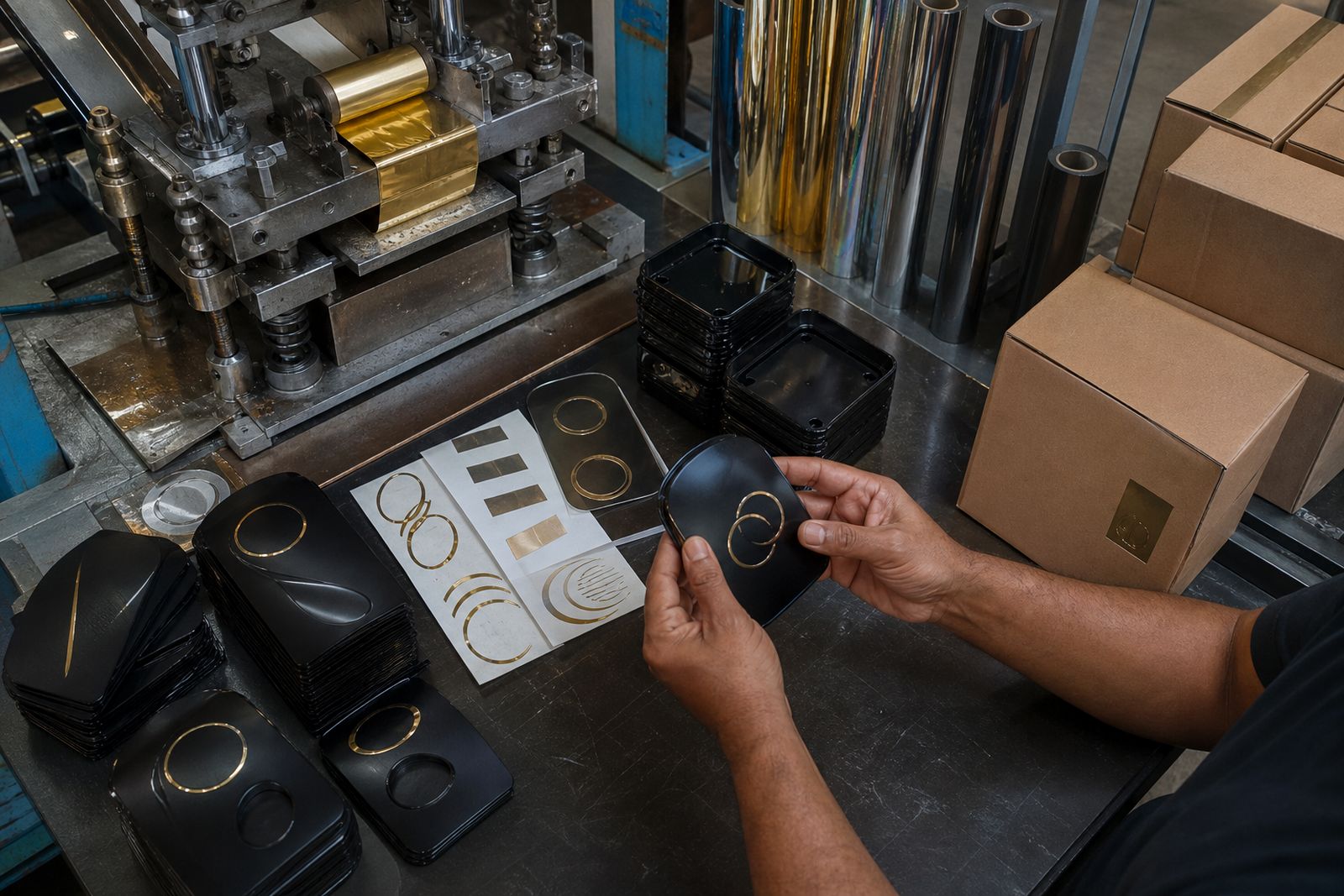
Choose the right foil
Plastic parts can take metallic, pigment, holographic or security foils, but the substrate must suit the foil chemistry and the finish you want. For closures, panels and consumer goods, start by matching the surface energy, texture and any coating to the foil range.
Common foil choices for plastics
- Metallic foils for gold, silver, copper, bronze, mirror or satin effects
- Pigment foils for black, white and process colours
- Holographic and diffraction foils where a patterned visual effect is needed
- Security foils when the mark must be difficult to copy
If the part has a soft-touch laminate or a special coating, ask for a sample strip first. A simple test on the actual plastic grade is safer than assuming the same setup will work across all moulded parts.
Check the substrate first
Plastic mouldings vary in finish, release, curvature and heat response. Smooth flat areas are easier than recessed panels, ridges or curved faces, which can affect pressure, foil release and the edge of the image.
Before production, check for mould release residues, dust, oil, anti-static treatment and any paint or print already on the part. These can all interfere with adhesion. On treated plastics, a quick test should confirm whether the foil sits cleanly or needs a different window.
For difficult shapes, it helps to review the part with the press operator and compare the contact area to the die face. Small changes in surface texture or mould line position can alter the result.
Set up the press and die
Platen, cylinder and roll-to-roll presses all need different make-ready, but the same basics apply: enough pressure to transfer the foil, controlled heat, and dwell long enough for the adhesive layer to bond without overcooking the film.
Starting points to test
| Factor | Practical starting point |
|---|---|
| Temperature | Test a normal starting range for the foil and plastic grade, then adjust in small steps |
| Dwell | Keep it long enough for transfer, but not so long that the image blurs or ghosts |
| Pressure | Use firm, even contact across the full die face |
| Die material | Magnesium, copper or brass dies may suit different detail, volume and wear needs |
If the image is fine but patchy, or the foil is only releasing in parts, review heat and pressure together rather than changing one item at random.
Fix common faults
Most plastic stamping faults come from setup, not the foil itself. Light marks can mean low pressure, a cold die or poor surface preparation. Smudging or blurred edges usually point to too much dwell, excessive heat or an uneven part surface.
- Poor adhesion can come from low surface energy, contamination or the wrong foil grade
- Pinhole breaks often point to too little pressure, a worn die or an uneven substrate
- Ghosting may mean the dwell is too long or the part moves during transfer
- Over-release can happen when heat is too high for the plastic or laminate
Keep one sample from each test run and note the setup used. That makes it easier to repeat a good result on the same plastic family later.
Plan the job flow
For production work, the best results come from a short approval loop: check the part, choose the foil, test the die and confirm the release profile before full run. This is especially important where one product family has several colours, finishes or moulded variations.
Foil can be slit to roll width for different equipment and format sizes, which helps when the job moves from prototype to production. For repeat work on labels, cartons, book covers and leather goods, the same practical method applies: substrate check, sample approval, then controlled press setup.
If you need help choosing a foil for a specific plastic or laminate, use the contact form and send a sample or job description. You can also browse related uses in labels and stickers, packaging and boxes or security finishes.
What our Hot Stamping Foil customers say
Verified Google reviews
Also worth a look

Ask about a foil for your job
Send a note through our contact form with the substrate, the press you run (platen, cylinder or roll-to-roll), the finish you are after and the run length, and we will come back with a foil grade, a sample and a quote.
Open the contact form