

Textiles and apparel
Choose the right foil and make-ready for fabric, trim and heat-transfer work. The right settings, die and substrate check help avoid poor release, weak adhesion and crushed detail.
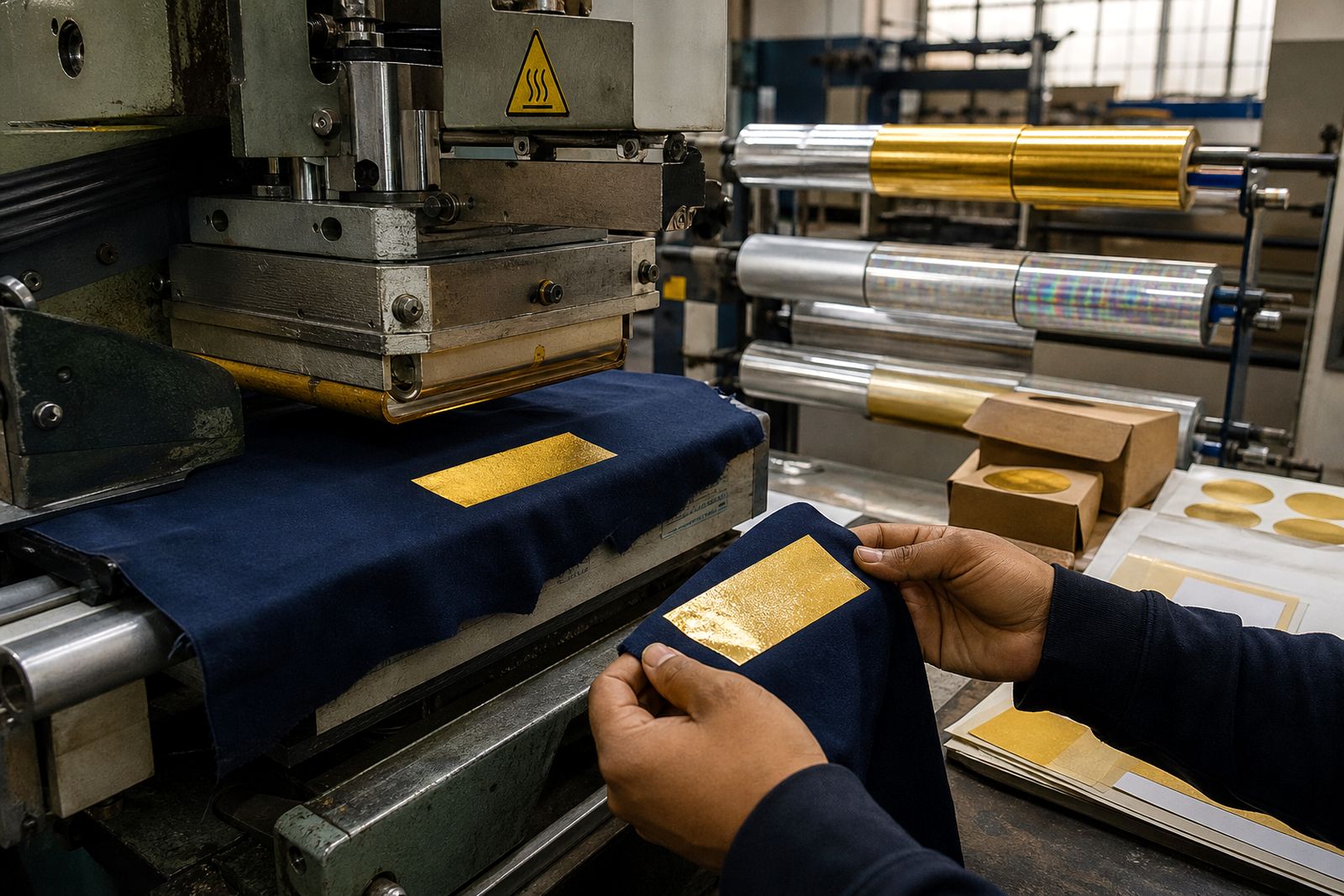
Foils for soft goods
Textiles and apparel need foils that release cleanly and sit neatly on the surface without blocking the handle of the fabric. For soft goods, the starting point is to match the foil to the material and the finish you want.
Common foil choices for textile work
- Metallic foils for gold, silver, copper, bronze, mirror and satin effects
- Pigment foils for black, white and process colours
- Holographic and diffraction foils for pattern and visual interest
- Specialty foils for leather, plastics, textiles and soft-touch laminate
On garments, bags and fabric accessories, the substrate matters as much as the foil. A woven textile, coated trim or laminated panel will all behave differently under heat and pressure. If you are unsure, ask for swatch books or samples and compare the result on your exact cloth or trim before production.
Check the substrate first
Before a run, check the fabric construction, any coating, and whether the item has print, finish or adhesive already on it. Heat-transfer friendly work depends on how the top surface accepts release and how much heat it can take without marking.
Soft-touch laminate, coated synthetics and some textile blends can change how the foil releases. A clean, dry surface is important. Dust, finish residue and uneven fabric tension can all show up in the final impression.
For mixed-material items, test the exact area to be stamped, not only a spare offcut. If the piece has seams, stitching, folds or stretch, plan the impression so the die lands on a flat, stable area. For related substrate guidance, see Plastic Parts and Leather products.
Die and press setup
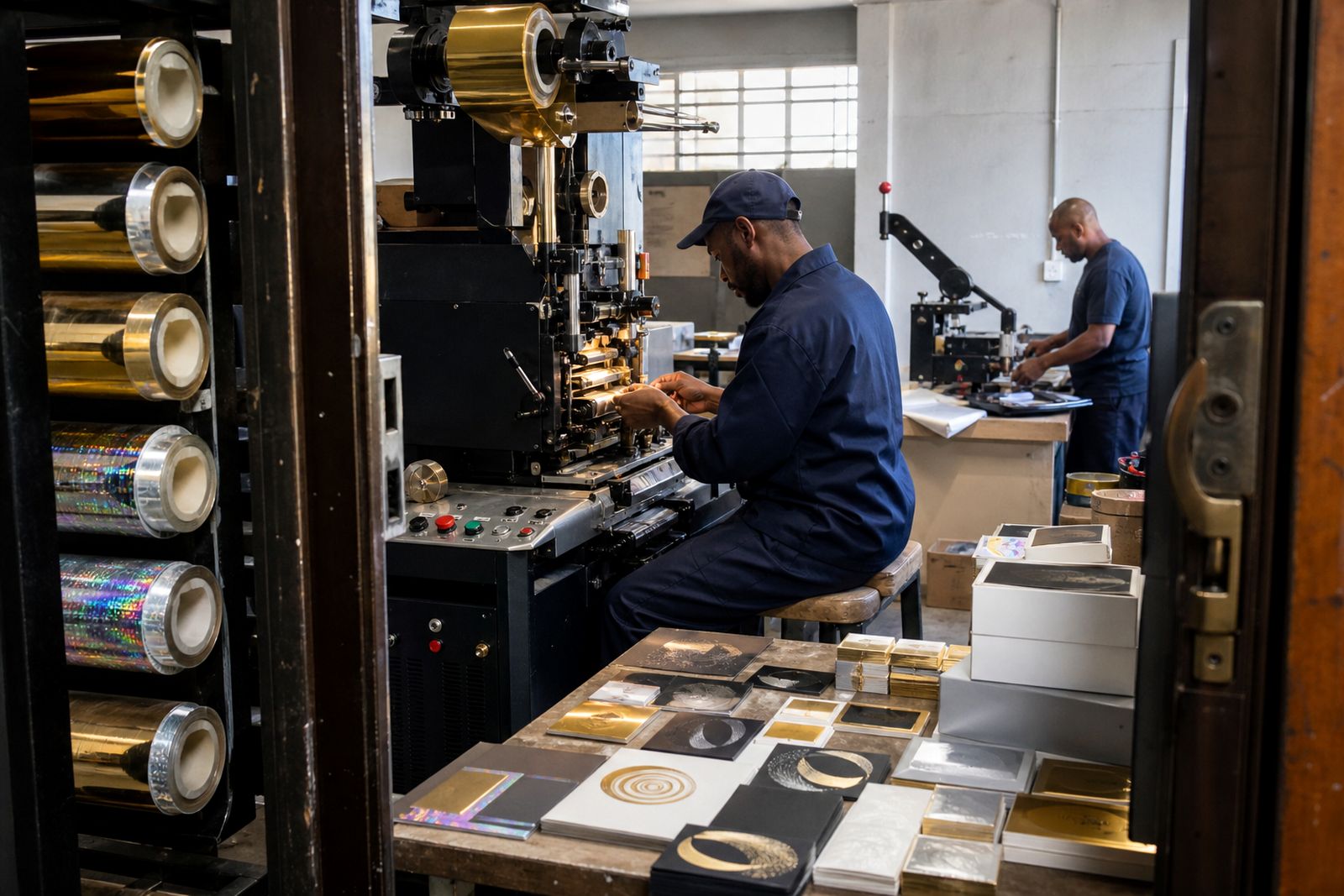
Textile and apparel jobs are usually set up on platen, cylinder or roll-to-roll presses, depending on the format of the work. Die choice affects detail, pressure transfer and how well the foil releases from the carrier.
Useful starting checks
- Use a die material suited to the job detail and press type, such as magnesium, copper or brass
- Set a clean, even impression area with good make-ready under the die
- Check that the die face is level and that pressure is balanced across the image
- Keep foil slit to the correct roll width for the machine and artwork repeat
For fine lettering, small logos and repeat work on fabric trims, a well-made die and careful make-ready matter more than extra heat. If the press is overpacked, the impression can distort the textile or crush the detail.
Set the temperature window
Heat, dwell and pressure need to work together. For textile applications, start with a test strip and move in small steps until the foil releases cleanly and the image holds on the material.
A practical starting range for testing is often around 90 to 140 degrees Celsius, but the correct setting depends on the fabric, foil type, die and press. Dwell should be just long enough to transfer the foil without scorching, gloss change or impression spread.
Watch for these signs during testing
- Poor release or patchy transfer
- Blurring from too much heat or dwell
- Cracking or lifting after flexing the fabric
- Marked or shiny compression around the image
Press-side advice on temperature windows, dwell, pressure and release profiles can save time before a production run. If you need to compare options, see Labels & Stickers and Packaging & Boxes.
Fix common faults
Most textile faults come from the same few causes: the wrong foil for the substrate, uneven pressure, a contaminated surface or an incorrect release profile. Start by checking one variable at a time so the result is easy to read.
| Fault | Likely cause | What to check |
|---|---|---|
| Poor foil transfer | Low heat, short dwell or wrong foil | Temperature window, foil type, surface condition |
| Pitted or broken image | Uneven pressure or poor make-ready | Die level, packing, press alignment |
| Image lifts after handling | Adhesion issue on the substrate | Fabric finish, coating, test area, release profile |
| Scorched or distorted fabric | Too much heat or dwell | Reduce heat, shorten dwell, re-test |
Keep notes on the foil used, the die, the press and the settings that worked. For a follow-up sample or to ask for a quote through the contact form, go to Contact.
What our Hot Stamping Foil customers say
Verified Google reviews
Also worth a look
Ask about a foil for your job
Send a note through our contact form with the substrate, the press you run (platen, cylinder or roll-to-roll), the finish you are after and the run length, and we will come back with a foil grade, a sample and a quote.
Open the contact form