

Foil on soft-touch laminate
Soft-touch laminate can stamp beautifully when the foil, die and press settings are matched carefully. The aim is a clean bond without pulling the coated surface.
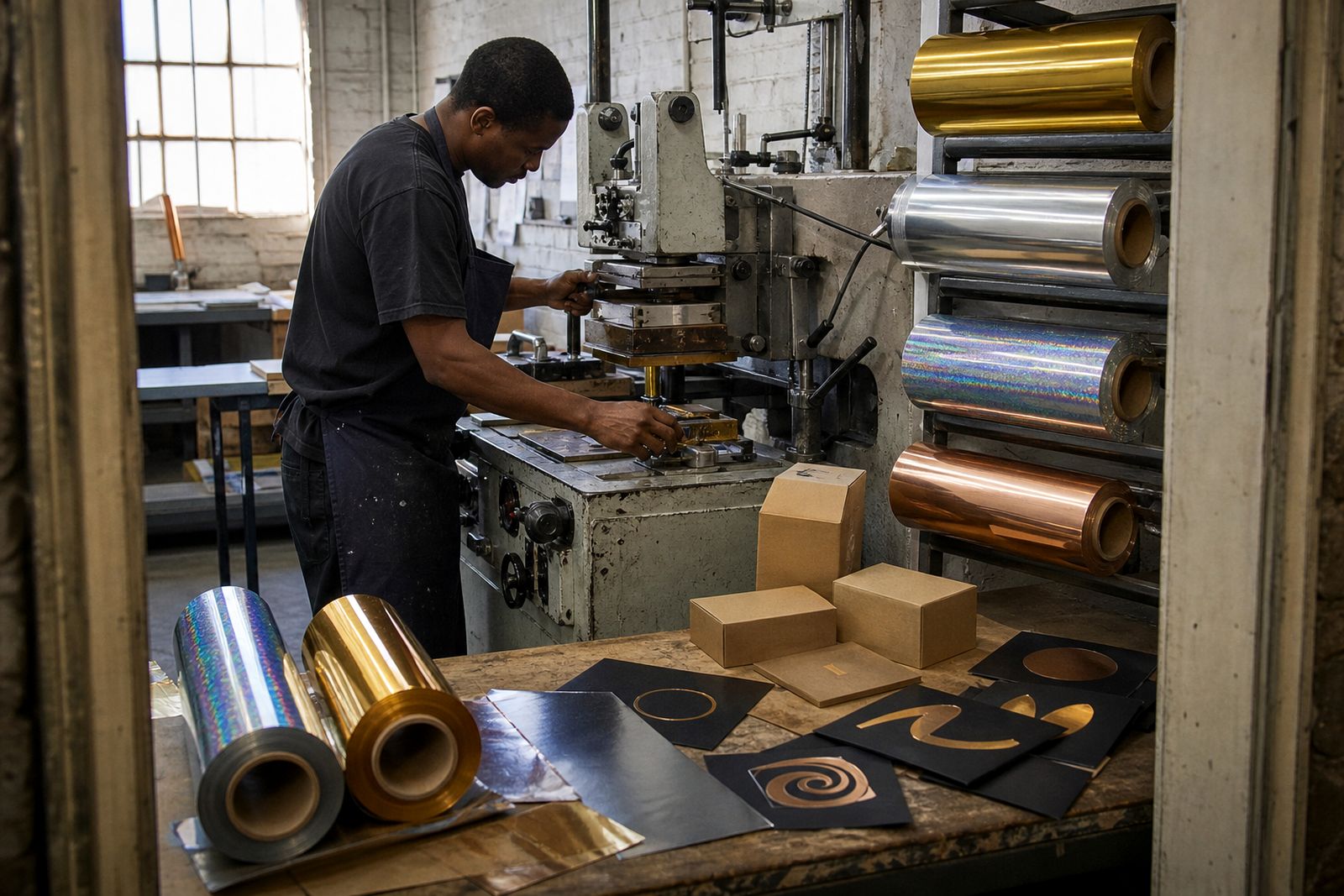
Start with the surface
Soft-touch laminate can behave differently from standard coated board. The top layer is designed to feel smooth and velvety, so it can mark or lift if the foil, pressure or heat are too aggressive.
Before a full run, test the actual board, the actual die and the actual press setup. A small trial tells you more than a generic setting sheet ever will. On soft-touch work, good results usually come from controlled heat, even pressure and a foil that releases cleanly without overworking the surface.
If you are planning foil on cartons, book covers or sleeves, start by checking the coating condition, the grain direction if any, and whether the laminate has been handled or creased. Clean substrate handling matters as much as the foil choice.
Choose the right foil grade
Not every foil grade behaves the same on soft-touch laminate. Some metallic foils give a crisp finish with a firmer release, while some pigment and specialty foils may need a narrower process window to avoid haze or surface disturbance.
- Metallic foils are often used for gold, silver, copper, bronze, mirror and satin effects.
- Pigment foils are useful where opaque colour matters more than shine.
- Holographic and diffraction foils need careful pressure control to keep detail sharp.
- Specialty foils can be useful where the laminate needs a particular look or finish response.
For soft-touch jobs, ask for swatch books or samples and compare the finish under the same lighting the customer will use. If you need help matching a finish to the substrate, use the contact form.
Set the press carefully
Soft-touch laminate usually rewards a measured setup rather than a heavy one. Typical starting tests often sit around a moderate temperature window, with enough dwell to transfer the image but not so much that the laminate softens around the edges. Pressure should be even across the die face, not just high.
For platen, cylinder and roll-to-roll presses, begin with a short test strip and inspect edge definition, foil release and any surface drag. If the image is patchy, the issue may be heat distribution, dwell or make-ready rather than the foil itself.
Press-side advice matters here because the right result often comes from small adjustments. A slight change in release profile can improve detail and reduce scuffing on the soft layer.
Match die and make-ready
Die choice is a practical part of the result. Magnesium, copper and brass dies all behave differently, and the most suitable one depends on the image, run length and press setup.
For fine type, thin rules and solid fills on soft-touch laminate, the die face must be clean, level and properly prepared. Make-ready should support even contact without overpacking the form. Too much pressure in one area can crush the surface and make the foil look dull or broken.
If the image is large or detailed, check that the die is not dragging at the corners. A clean chase, correct packing and careful register all help reduce tearing and improve the appearance of the foil finish.
Plan the job around the application
Soft-touch laminate is used on labels, cartons, book covers and other premium printed work where the touch of the material is part of the finish. The foil should suit the use, not fight the substrate.
| Application | What to check |
|---|---|
| Labels | Web tension, fine detail, foil width and consistent release |
| Cartons | Board structure, laminate condition and pressure across flat areas |
| Book covers | Large solids, edge definition and surface scuff resistance |
| Short runs | Fast setup, sample approval and stable make-ready |
For slit-to-width foil rolls, samples and practical guidance on soft-touch work, see Choosing release profiles, Temperature windows explained, and Die prep checklist. More articles are available in the Journal.
What our Hot Stamping Foil customers say
Verified Google reviews
Also worth a look
Ask about a foil for your job
Send a note through our contact form with the substrate, the press you run (platen, cylinder or roll-to-roll), the finish you are after and the run length, and we will come back with a foil grade, a sample and a quote.
Open the contact form