

Temperature windows explained
A small temperature miss can change foil colour, sharpness and release. Here is how to test for the right window before production runs.
What the temperature window does
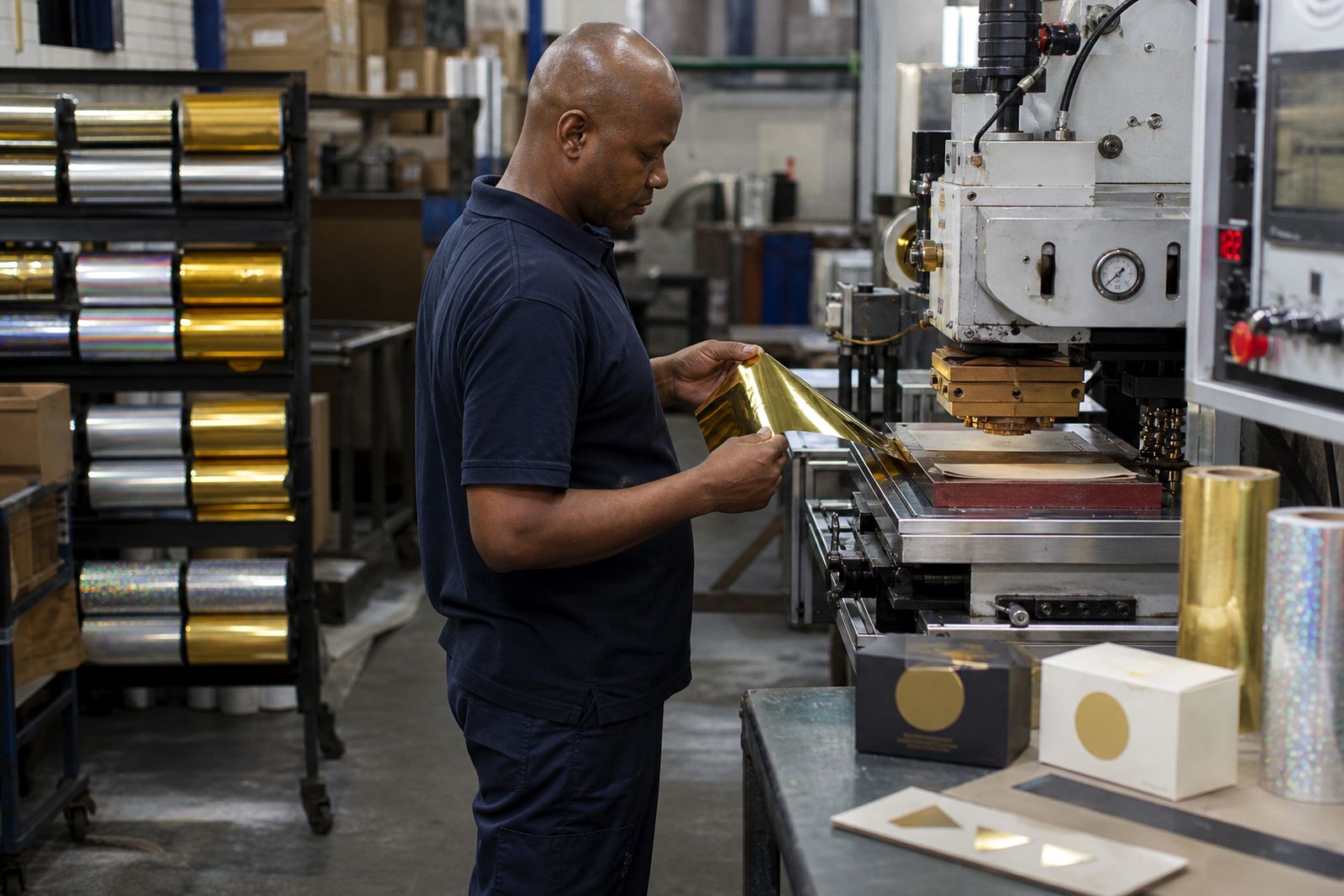
The temperature window is the range where the foil releases cleanly from the carrier and bonds to the substrate without dulling, over-burning or patchiness. It is not one fixed setting. Different foils, dies, board coatings and press speeds can move the working point.
For metallic foils, especially gold and silver, a setting that looks fine on a sample can shift once the press runs faster or the stock changes. Pigment foils, holographic foils and security foils also need their own checks because each face film and adhesive system reacts differently.
Start by testing a narrow range and record what changes in colour, shine, edge clarity and pickup. If you need help choosing a starting point, see Choosing release profiles or browse the products range.
What changes the temperature setting
Temperature is only one part of the job. The actual window depends on dwell, pressure, foil type, substrate and the die face. A heavy solid on coated board behaves differently from a fine line on a label or a broad panel on a carton.
- Substrate coated board, soft-touch laminate, plastics, textiles and leather all transfer heat differently
- Press type platen, cylinder and roll-to-roll machines each carry heat and dwell in a different way
- Die metal magnesium, copper and brass respond differently during make-ready
- Foil type metallic, pigment, holographic, diffraction, security and specialty foils all have their own release behaviour
When a job is sensitive, test under production conditions rather than relying on a bench sample alone. For application-specific notes, see applications or Narrow web label tips.
How to test on press
Use the sample as a guide, then test in small steps. Change only one variable at a time if possible. Keep the same foil roll, same die and same material while you check heat, pressure and dwell.
| What to check | What you are looking for |
|---|---|
| Temperature | Clean release without dullness or scorching |
| Dwell | Even transfer across solid areas and fine detail |
| Pressure | No crushed edges, pinholes or broken lines |
| Speed | Stable adhesion at the chosen run speed |
Typical starting ranges can differ widely, so treat any setting as a test point, not a promise. If your first impression is that the gold looks right but feels flat, check dwell and pressure before pushing heat higher. More on finish choices in gold stamping foil types.
How to read the results
A good result should give a crisp image, consistent tone and full coverage where intended. If the foil looks pale, the bond may be underdeveloped. If it looks dark, matte or smeared, the setting may be too hot or the dwell too long. If the image breaks at the edges, look at die detail and make-ready as well as heat.
On coated board, watch for over-polishing and loss of fine texture. On soft-touch laminate, do not assume the same temperature that worked on plain board will transfer correctly. On leather and plastics, small changes can affect release and surface marking, so check in short runs and inspect the surface after cooling.
For material-specific notes, see Foil on soft-touch laminate and Leather stamping basics.
When to ask for help
If a foil looked perfect on the swatch but fails on press, the issue may be the window rather than the foil itself. Press-side advice can save time when the problem is release, not artwork. That is especially useful on narrow web labels, mixed-stock cartons and jobs that combine fine detail with solid areas.
Stampingfoil supplies foil slit to roll width with swatch books, samples and practical guidance for temperature, dwell, pressure, release profiles and die setup. For a new job or a difficult substrate, ask through the contact form and share the press type, foil family and substrate. Related reading: Die prep checklist and Storage and shelf life.
What our Hot Stamping Foil customers say
Verified Google reviews
Also worth a look
Ask about a foil for your job
Send a note through our contact form with the substrate, the press you run (platen, cylinder or roll-to-roll), the finish you are after and the run length, and we will come back with a foil grade, a sample and a quote.
Open the contact form