

Narrow-web label tips
Keep narrow-web labels crisp with the right foil width, steady tension and clean make-ready. Small setup choices make a visible difference on press.
Start with foil width
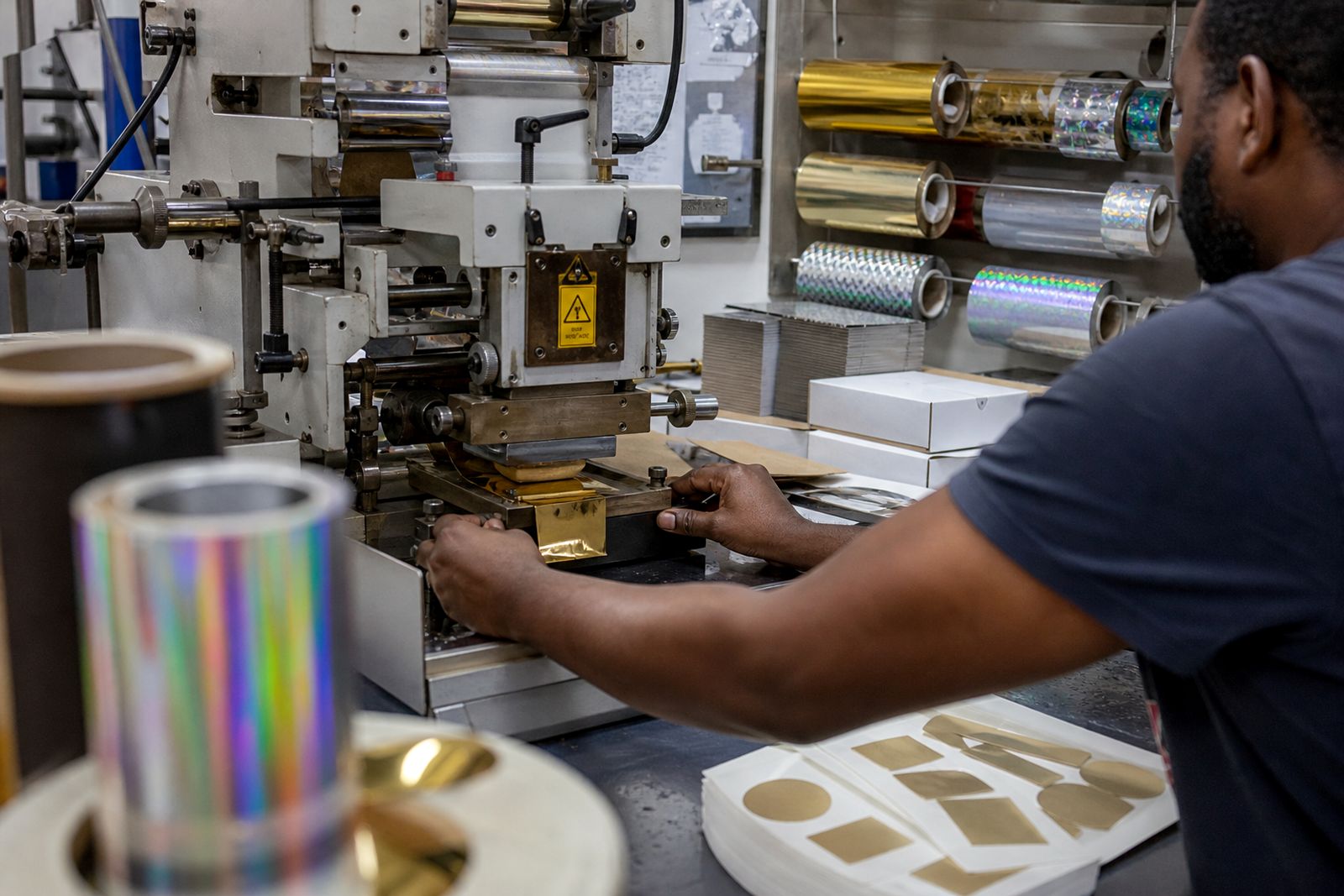
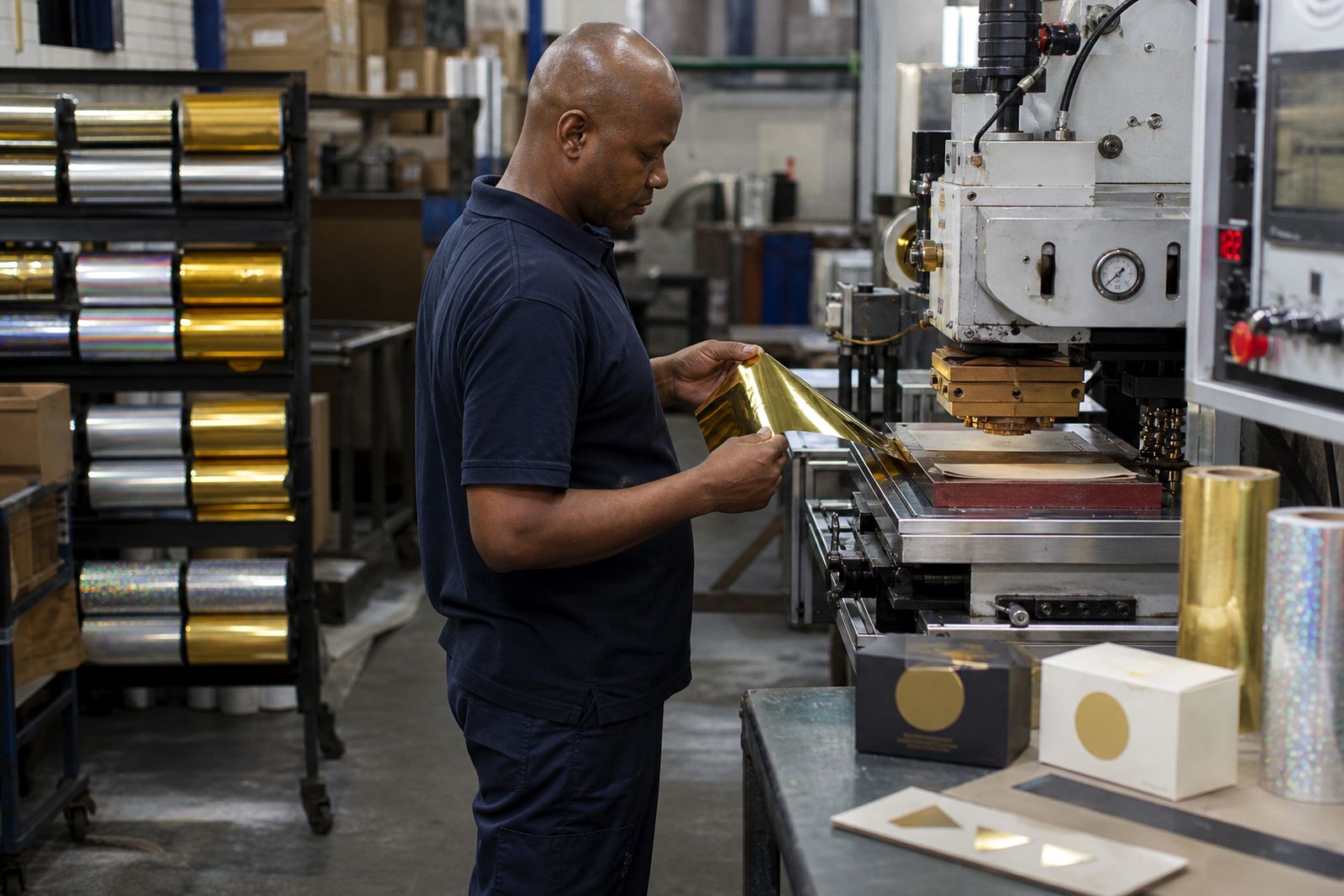
Narrow-web work needs the foil to match the label width closely. If the roll is too wide, you waste material and invite tracking issues. If it is too tight, you risk edge marks and missed image areas.
Choose foil slit to the width that suits the repeat and the press setup, then check that the web route gives stable unwind and rewind. For labels with repeated panels, confirm that the repeat sits cleanly across the die line and across any side lay used on the press.
For metallic gold, silver, copper and bronze, a neat width choice helps keep the image sharp at the edges. If you are running small labels or fine detail, ask for swatch books or samples before you commit to production. See the main products range for foil types and finishes.
Control tension early
Tension is often the first place narrow-web labels go off balance. Too much tension can stretch the web, disturb register and cause poor release. Too little tension can lead to slack, wrinkling and uneven laydown.
Set a simple, repeatable route from unwind to rewind and test at press speed before full production. Keep the foil stable across the impression, especially on fine text, borders and small reverse-outs. On coated board, synthetic labels and soft-touch stocks, the starting point should always be a short trial with the actual substrate.
For practical setup notes, review Choosing release profiles and Temperature windows explained. If the press has a tendency to drift during longer runs, recheck tension after the first few hundred metres.
Match the repeat to the label
Step-and-repeat habits matter more on narrow webs because the usable image area is tight. Keep the repeat length aligned to the die, the register marks and the label pitch so the foil lands where it should every time.
When the artwork includes small type, fine rules or holographic details, avoid pushing the design right to the edge of the available image area. Leave enough margin for die movement and normal press variation. This is especially useful on sleeve labels, carton panels and short-run promotional labels where the layout changes often.
If you are preparing a new job, a die prep check can save time later. See Die prep checklist for practical points to confirm before make-ready.
Use the right starting settings
There is no single setting for every label stock. As a starting point, test within a normal hot stamping foil window rather than chasing maximum heat. Start low enough to protect the stock, then adjust dwell and pressure in small steps until release is clean and solid.
Platen, cylinder and roll-to-roll presses all behave differently, so keep notes for each press and each substrate. Magnesium, copper and brass dies also carry heat differently, so the same artwork may need different make-ready details from one job to the next. On soft-touch laminate and certain coated boards, a lighter touch can give a cleaner result than extra heat.
For related guidance, read Foil on soft-touch and Storage and shelf life.
Check the finish and next steps
Once the first sheets or metres are off press, inspect the seals under normal light and look closely at edges, counters, solids and fine detail. A good result should show even coverage, clean release and no obvious lift on handling.
If the job needs security features, a special effect or a different stock, it is worth checking the foil family before the next run. Stampingfoil supplies metallic, pigment, holographic, diffraction, security and specialty foils for leather, plastics, textiles and soft-touch laminate, with press-side advice when needed.
For samples, swatch books or a quote, use the contact form. You can also return to the Journal for more setup notes, or browse applications and finishes for related uses.
What our Hot Stamping Foil customers say
Verified Google reviews
Also worth a look
Ask about a foil for your job
Send a note through our contact form with the substrate, the press you run (platen, cylinder or roll-to-roll), the finish you are after and the run length, and we will come back with a foil grade, a sample and a quote.
Open the contact form