

Why pigment foil still matters
Pigment foil gives solid colour where metallics are not the right fit. It is a useful choice for labels, cartons, covers and specialist finishing.
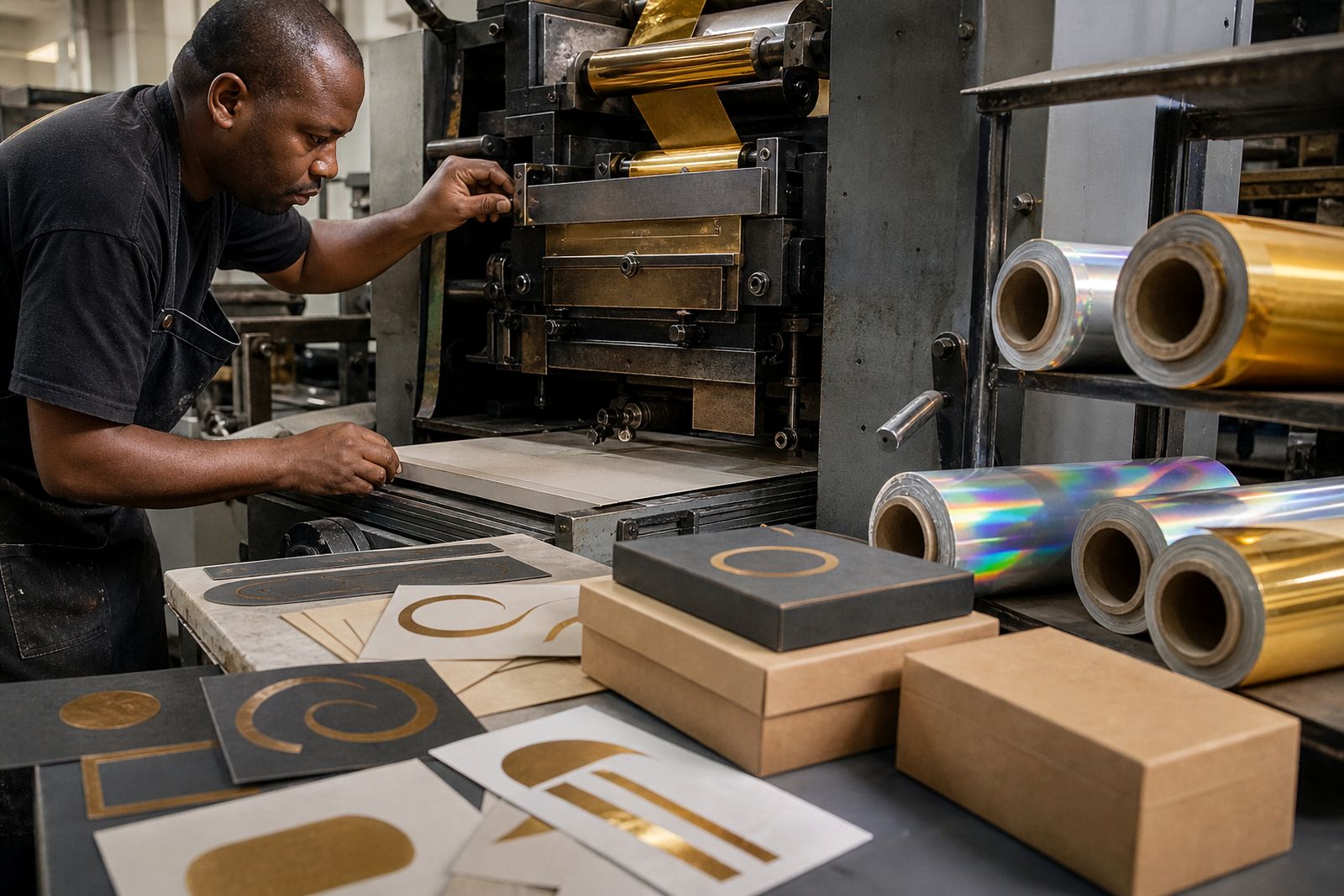
What pigment foil does
Pigment foil is used when you need a flat, opaque colour finish rather than a reflective metallic effect. It helps keep brand colours readable and controlled on jobs where gold, silver or holographic foil would compete with the artwork.
It is commonly used on cartons, labels, book covers, leather goods and other print and finishing work where a clean colour block matters. When the substrate and artwork need a calmer result, pigment foil can be the better choice.
For wider context on foil options, see Key Types of Gold Stamping Foil and the main Journal.
Where it works well
Pigment foil is often specified for coated board, soft-touch laminate, plastics, textiles and leather, depending on the press setup and the foil selected. It is also useful on short-run work where you need a strong colour without metallic reflection.
- Labels that need clear brand colours
- Cartons with bold type or blocks of colour
- Book covers that need a restrained finish
- Leather and specialty applications
- Soft-touch laminate where adhesion must be checked carefully
On difficult surfaces, test first and confirm the behaviour on the exact stock. For laminate work, see Foil on Soft-Touch and Narrow-Web Label Tips.
Press setup matters
Good results depend on matching the foil to the press, the die and the substrate. Start with practical test windows for temperature, dwell and pressure, then adjust to suit the job.
As a general starting point, many pigment foil tests begin in the lower to mid heat range for the press, but the right setting depends on the stock, the image area and the release profile. The goal is clean transfer without crushing detail or scorching the substrate.
- Check the die face and image detail
- Set a starting temperature and test in small steps
- Adjust dwell and pressure before changing too many variables
- Confirm the release profile on the actual stock
If you need a practical checklist, see Die prep checklist and Temperature windows explained.
Dies and make ready
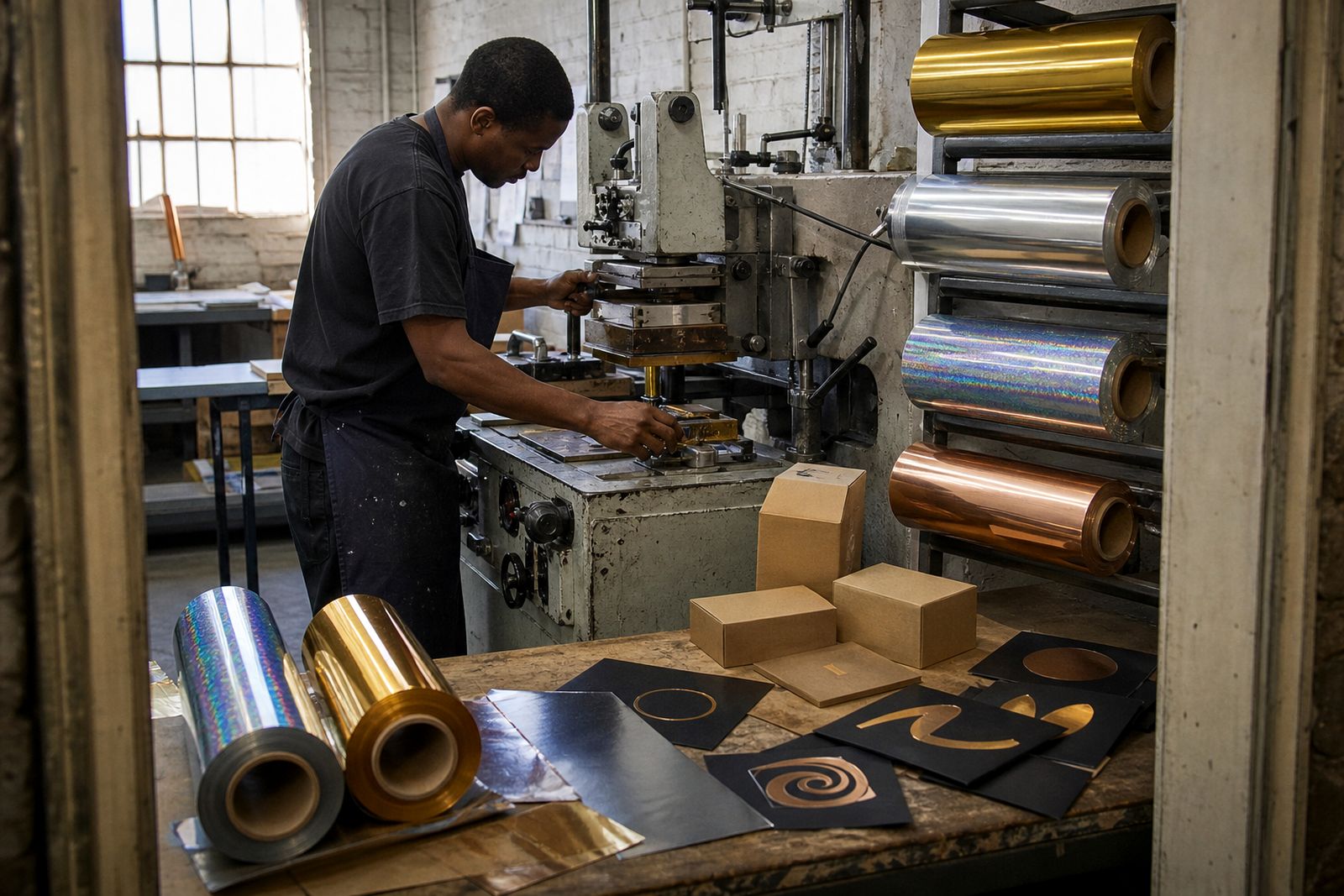
Pigment foil can be run on platen, cylinder and roll-to-roll presses, but setup discipline still matters. Magnesium, copper and brass dies each behave differently, so make-ready should suit the press type and the level of detail in the image.
Small changes in pressure or dwell can affect edge sharpness, solid coverage and fine text. On narrow web label work, check registration and repeat consistency carefully. On larger carton or cover work, watch for uneven heat across the form.
For related setup guidance, see Choosing release profiles and Narrow-Web Label Tips.
Getting the right foil
Stampingfoil supplies pigment foils in black, white and process colours, slit to roll width for trade work. If you are matching a brand, ask for swatch books or samples so you can check the colour under your own press conditions.
For jobs that need more than pigment foil, there are also metallic, holographic, diffraction, security and specialty foils available for leather, plastics, textiles and soft-touch laminate. Press-side advice is available on temperature windows, dwell, pressure, release profiles, dies and make-ready.
Use the contact form if you need a quote or want to talk through a specific substrate, press or application. You can also browse the products and solutions sections for broader options.
What our Hot Stamping Foil customers say
Verified Google reviews
Also worth a look
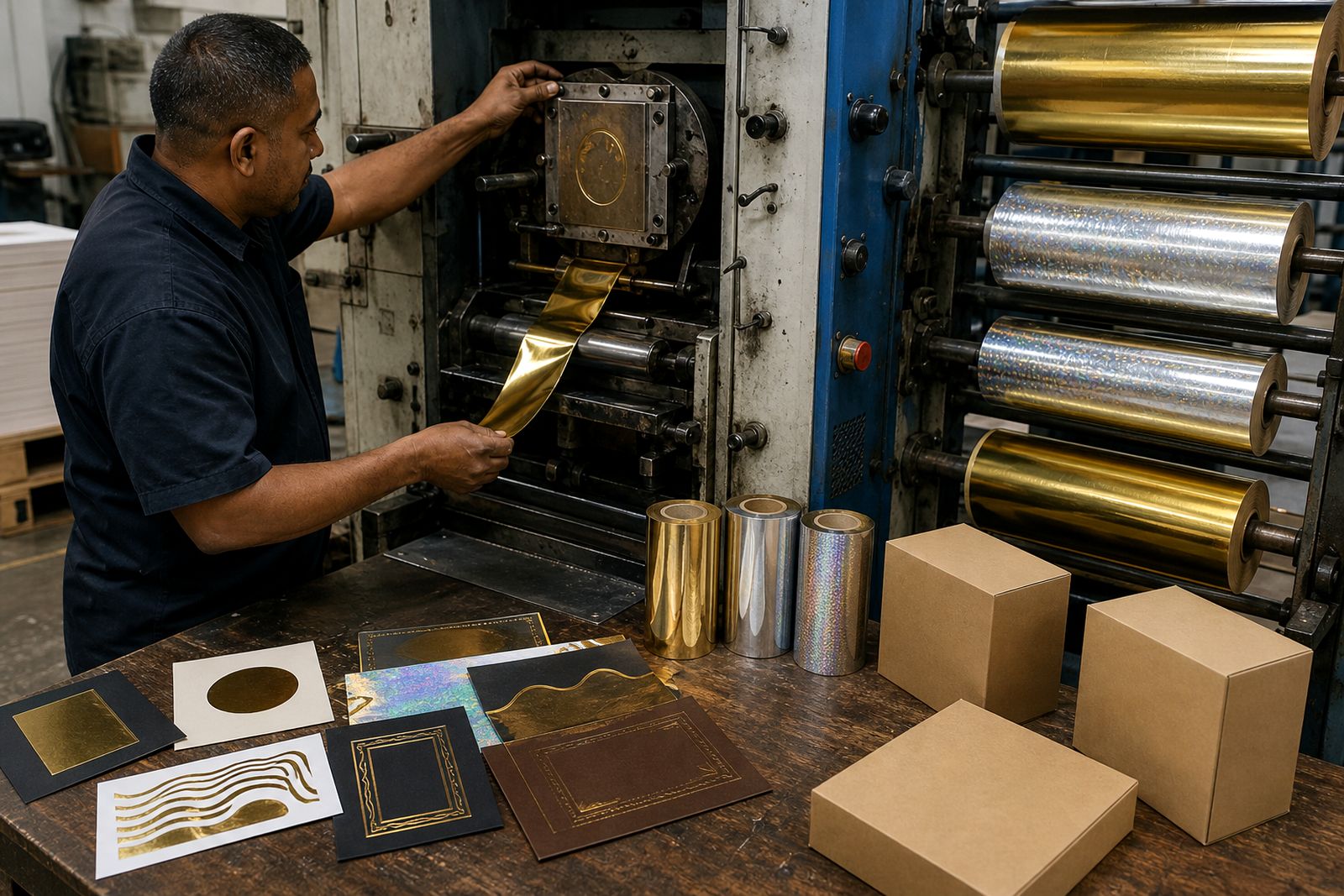
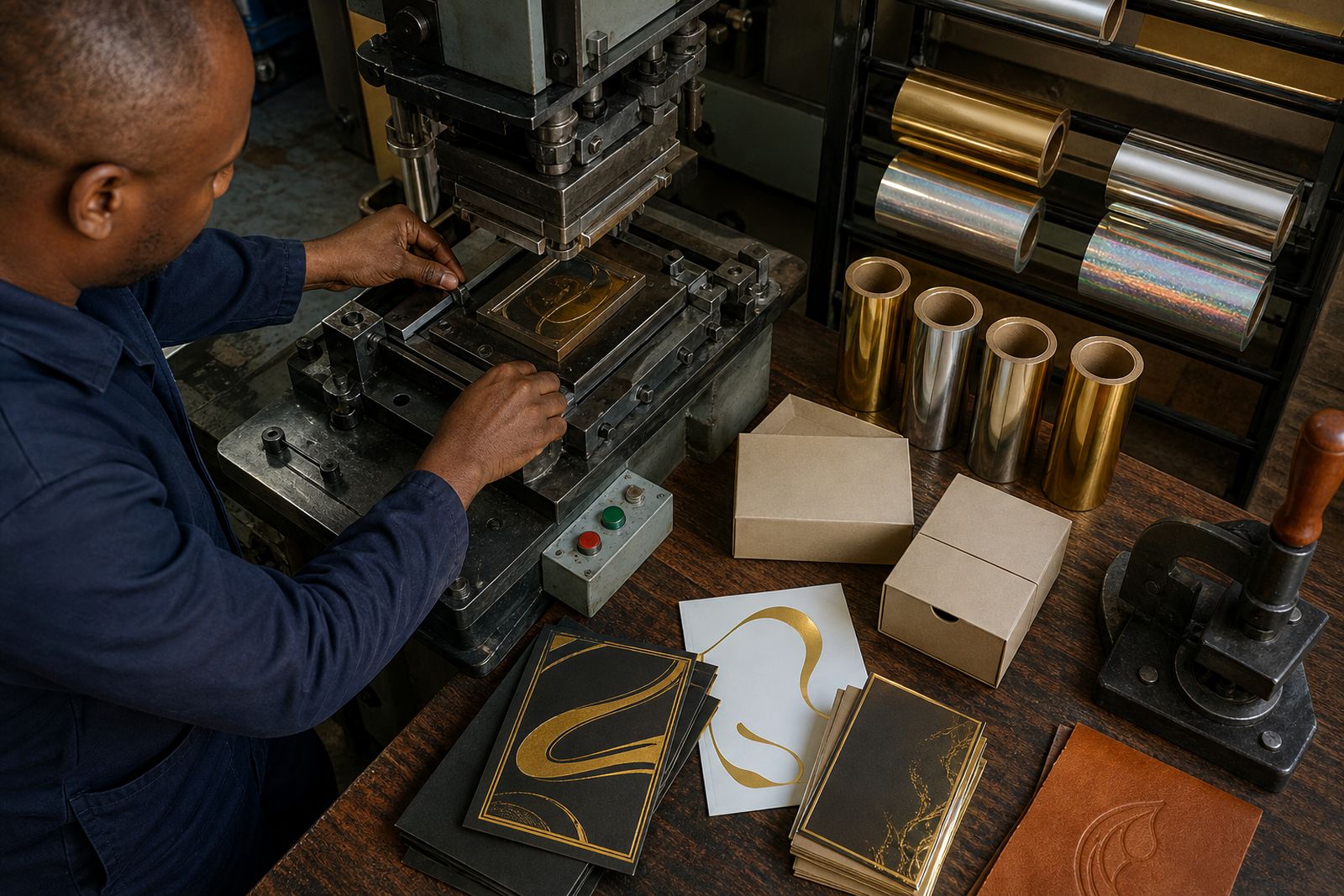
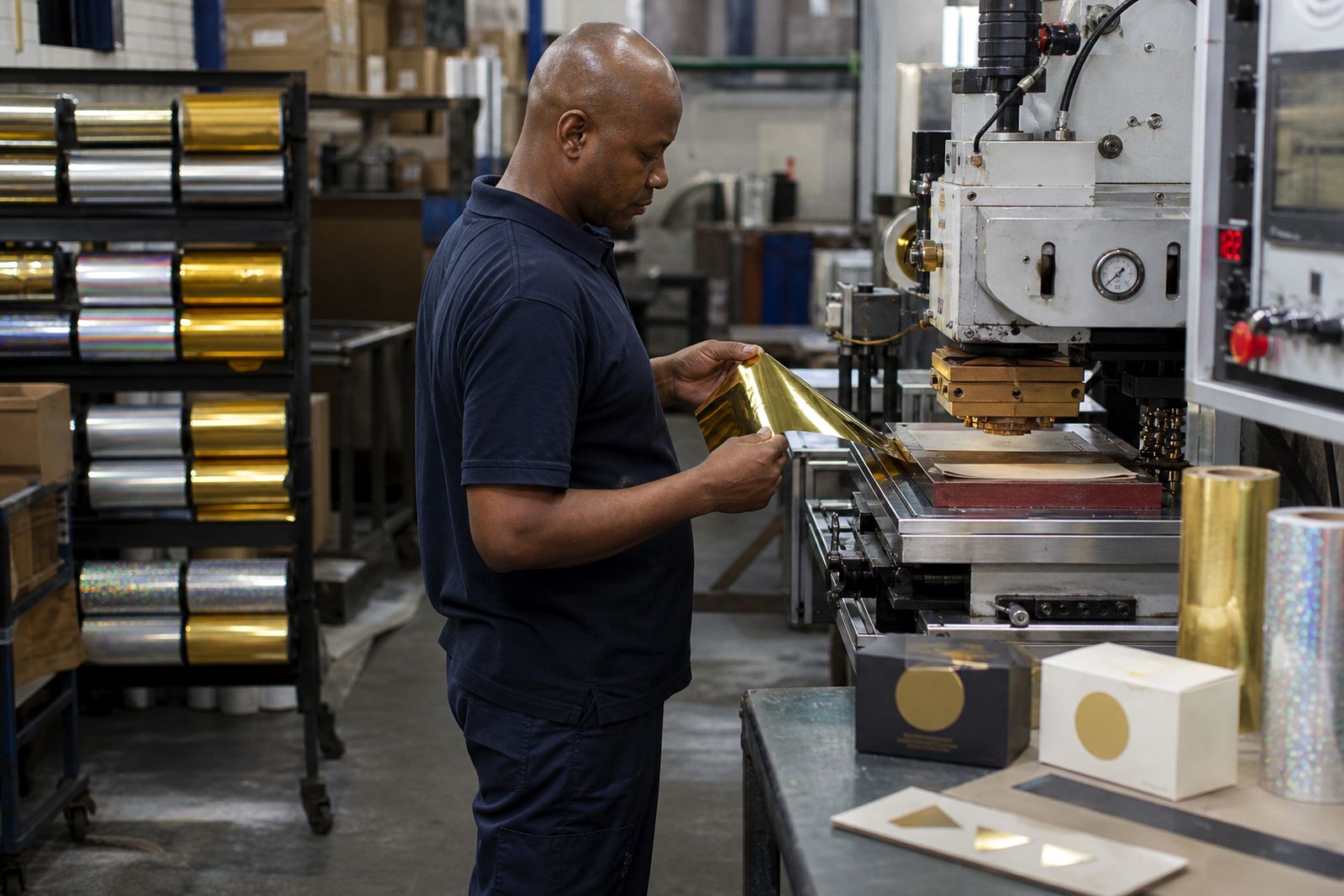
Ask about a foil for your job
Send a note through our contact form with the substrate, the press you run (platen, cylinder or roll-to-roll), the finish you are after and the run length, and we will come back with a foil grade, a sample and a quote.
Open the contact form