

Key types of gold stamping foil
Gold foil is not one finish. Different grades behave differently on board, labels, leather and laminate. This guide helps you choose the right gold for the press and substrate.
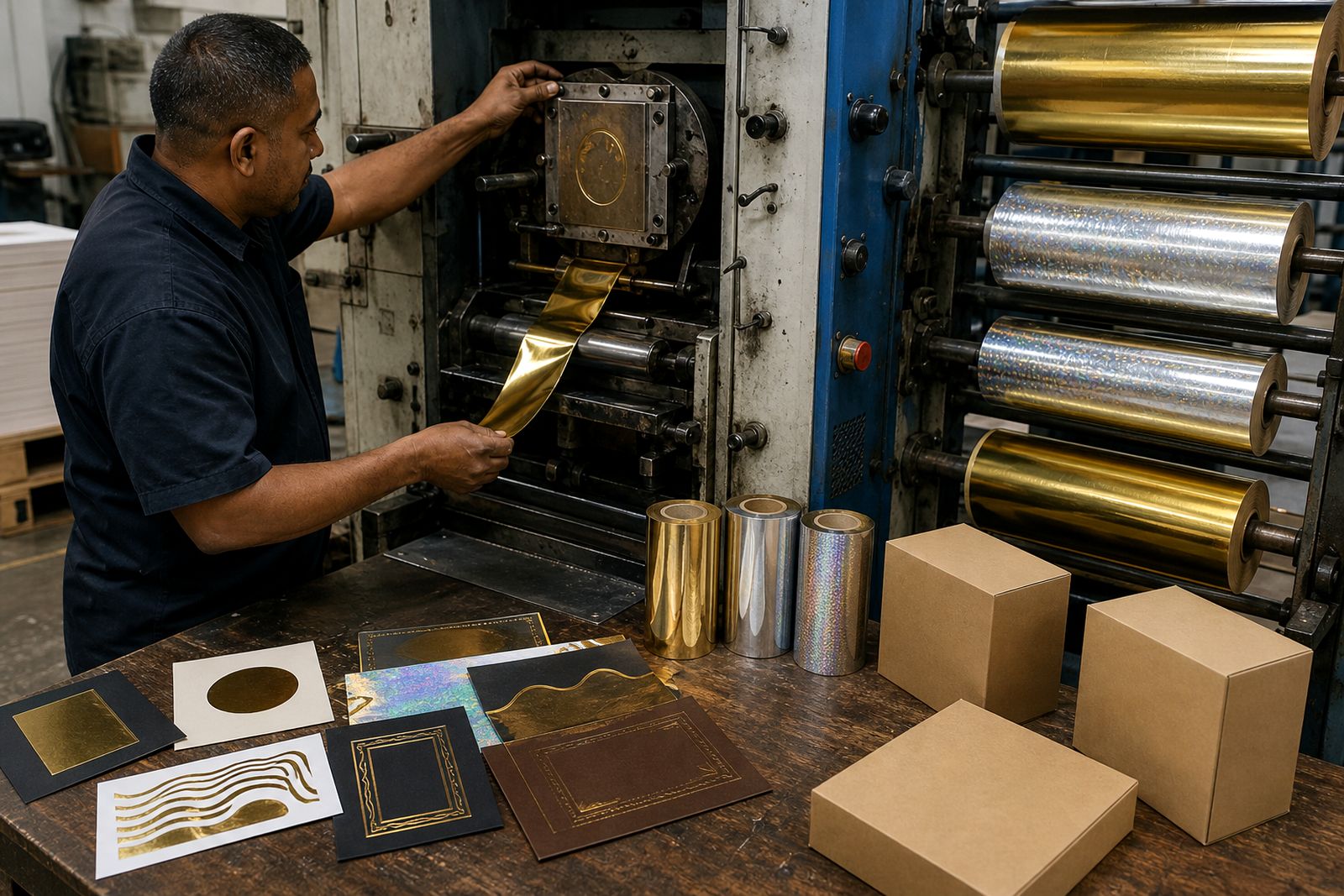
Bright gold, antique gold and satin gold
Gold foils are usually chosen for the look first, then matched to the press and substrate. Bright gold gives a clean reflective finish. Antique gold is softer and more muted. Satin gold sits between the two, with less shine and a smoother visual texture.
On coated board, carton work and label stock, bright gold is often used where a strong metallic hit is needed. Antique and satin grades suit projects that need a calmer finish, or where the artwork should feel less glossy. For a quick starting point, compare the foil against the actual printed stock and not just a white sample sheet.
- Use bright gold for high reflectivity and strong contrast
- Use antique gold for a warmer, older look
- Use satin gold for lower shine and a more restrained finish
For more on foil types, see Why pigment foil still matters and products.
How substrate changes the result
Gold foil does not transfer the same way on every material. Coated board usually gives a cleaner release than rough or uncoated stock. Soft-touch laminate often needs more careful testing because the surface feel can affect release and adhesion. Leather, plastics and textiles each need their own trials as well.
When the surface is difficult, the issue is often not the foil alone. Make-ready, die condition, pressure, dwell and temperature all affect the final image. Start with a narrow test strip and check whether the foil is filling solid areas, fine lines and small type in the same way.
| Substrate | What to check |
|---|---|
| Coated board | Fill, edge sharpness and release on solids |
| Soft-touch laminate | Adhesion, scuff resistance and clean release |
| Leather | Heat tolerance, grain detail and press pressure |
| Plastics | Surface response and consistent transfer |
For a related guide, see Foil on soft-touch laminate and Leather stamping basics.
Set up the press correctly
Gold foil usually rewards careful setup more than aggressive settings. The practical starting point is to test a sensible temperature window, then adjust dwell and pressure until the foil releases cleanly without smudging or overcooking. The right setting can change from one board to another, even if the artwork stays the same.
Platen, cylinder and roll-to-roll presses behave differently, so do not copy settings blindly across machines. Dies also matter. Magnesium, copper and brass dies each bring their own heat behaviour and detail level. Fine detail often needs a cleaner, sharper die face and more controlled make-ready.
- Start with a small test area before running the full job
- Check release at both light and solid coverage
- Review temperature, dwell and pressure together, not one at a time
- Confirm whether the die suits the press and the artwork detail
Helpful references: Temperature windows explained and Choosing release profiles.
Choose the right roll width
Gold foil is often supplied slit to roll width so it can be matched to the machine and the job width. That helps reduce waste and makes setup easier on narrow-web and larger-format work. The important point is to choose a roll size that suits the press, the repeat and the amount of coverage needed.
For labels, narrow-web work and carton jobs, a neatly slit roll can make feeding more consistent. Wider work on platen or cylinder equipment may need a different roll plan, especially if the design uses several foil zones or multiple passes. Sample testing helps confirm whether the foil lays down evenly across the full width.
If you need help matching a roll to the job, ask for a quote through the contact form. You can also review Narrow-web label tips and applications.
When gold is not just decorative
Gold foil is sometimes chosen for more than appearance. Security work may use special foils where detail, placement and consistent release matter. Book covers, packaging and branded goods may need a gold finish that supports both design and function. In some projects, gold is combined with other foils to create contrast and hierarchy across the artwork.
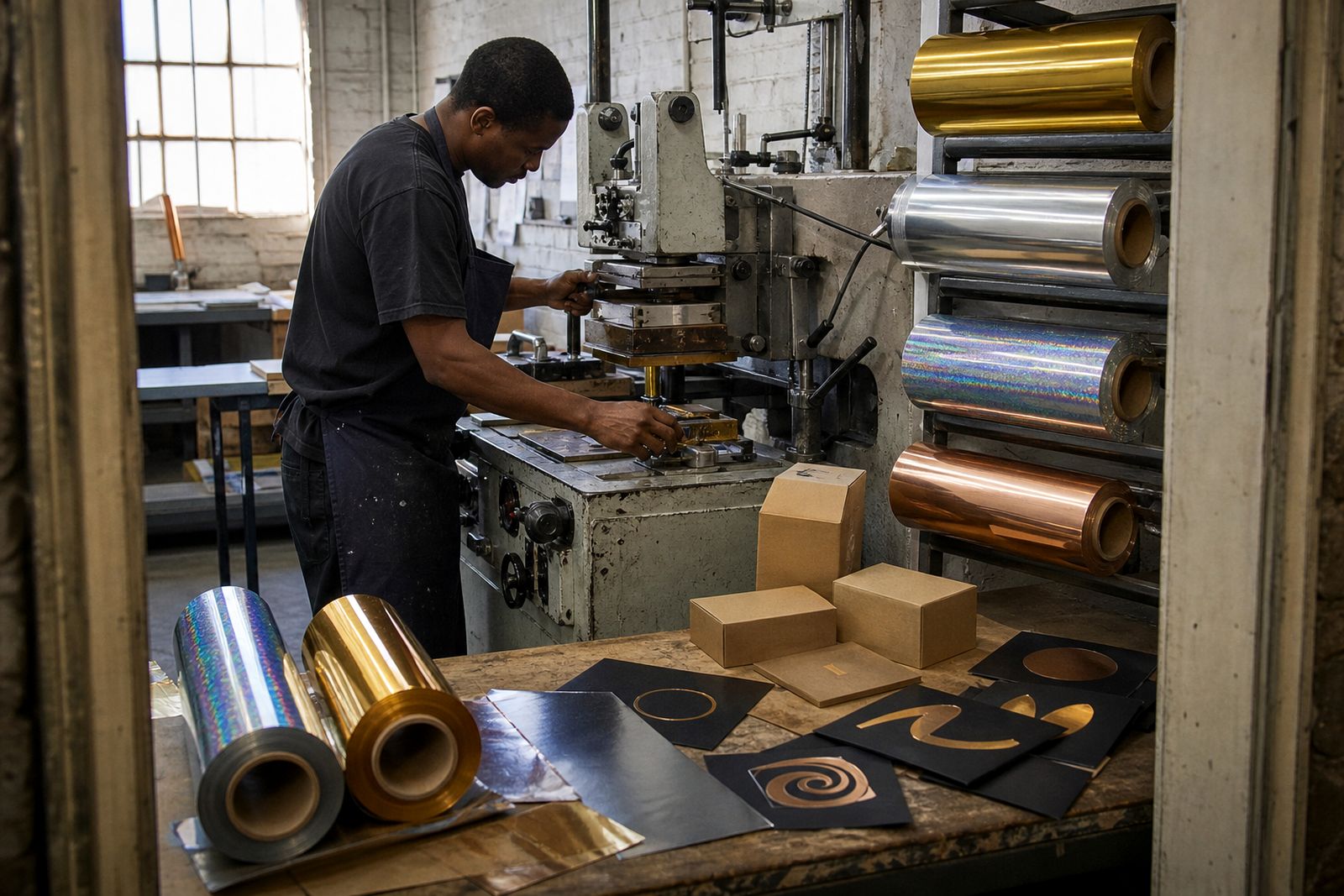
For technical jobs, it helps to keep swatch books and samples close at hand. That way you can compare gold grades against the actual substrate, the ink sequence and any overprint or laminate. If the job needs a different surface effect, there are also metallic foils in silver, copper, bronze, mirror and satin, plus holographic, diffraction and pigment ranges.
- Use samples to compare finish before production
- Keep the substrate, die and press type constant during trials
- Check whether the foil needs protection from later finishing steps
See also Holographic without the gimmick, Storage and shelf life and Journal.
What our Hot Stamping Foil customers say
Verified Google reviews
Also worth a look
Ask about a foil for your job
Send a note through our contact form with the substrate, the press you run (platen, cylinder or roll-to-roll), the finish you are after and the run length, and we will come back with a foil grade, a sample and a quote.
Open the contact form