

Holographic without the gimmick
Diffraction can add movement, but it must still print cleanly and read well. Here is where holographic foil helps, and where it gets in the way.

When diffraction earns its place
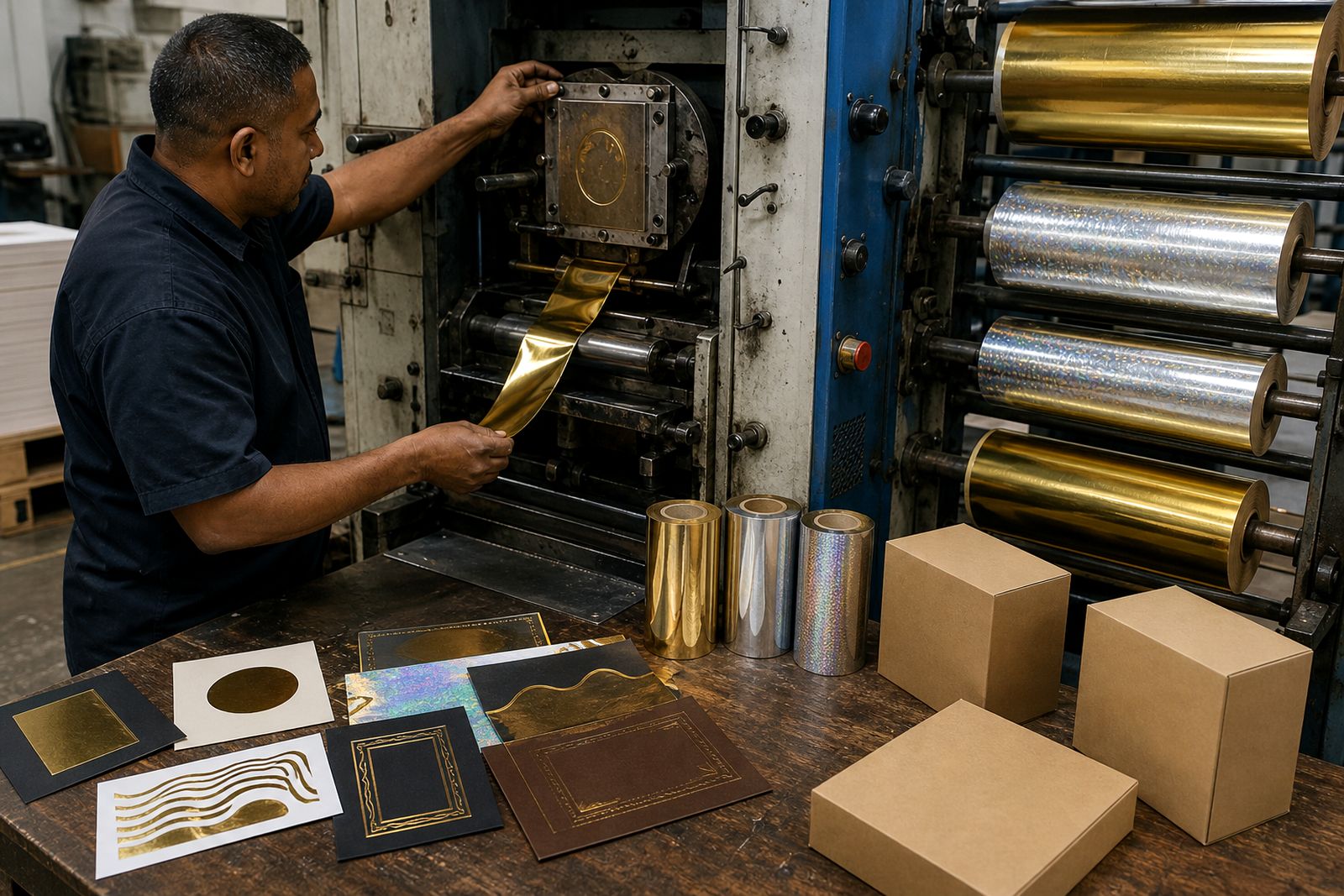
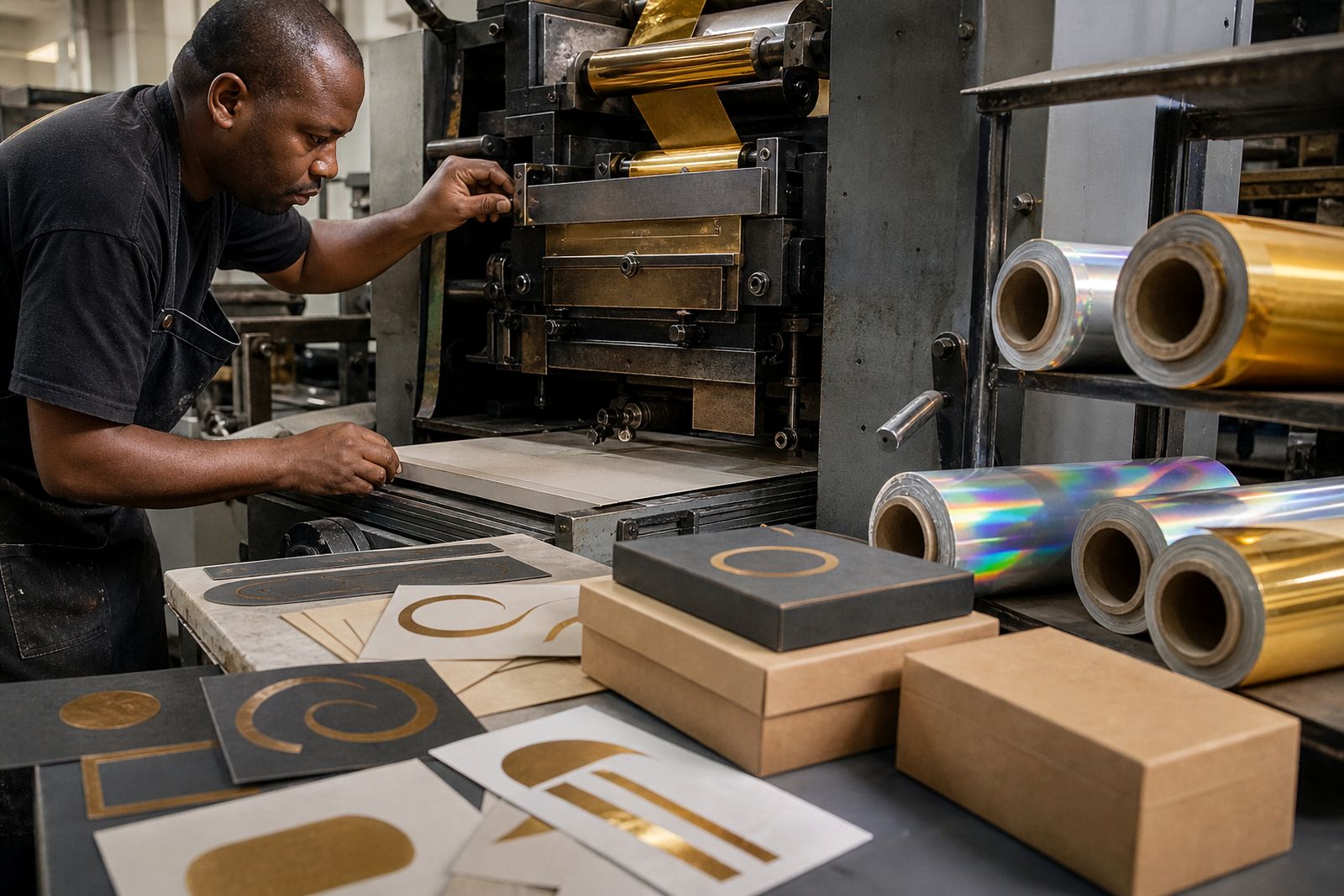
Holographic and diffraction foils are useful when the finish must do more than decorate. On cartons, labels, book covers and security pieces, they can add visible movement, quick shelf impact and a harder-to-copy surface detail.
The key is to decide whether the pattern supports the artwork or fights it. Fine lettering, dense tonal images and very busy layouts can lose clarity if the foil pattern is too active. In those cases, a simpler metallic foil or pigment foil may be a better fit. For a broader view of foil families, see Key Types of Gold Stamping Foil and Why Pigment Foil Still Matters.
Where it works best
These foils are often chosen for youth brands, promotional packs, cosmetic cartons, event packaging and security applications where a visual signal matters. They also suit short text panels, panels with simple logos, and areas where the foil can breathe around the artwork.
On soft-touch laminate, the effect can be especially noticeable, but adhesion and release need close testing. A clean result depends on the board, the laminate, the die and the press set-up all working together. See Foil on Soft-Touch Laminate for more on that surface, or go back to the applications overview for other print uses.
How to test it properly
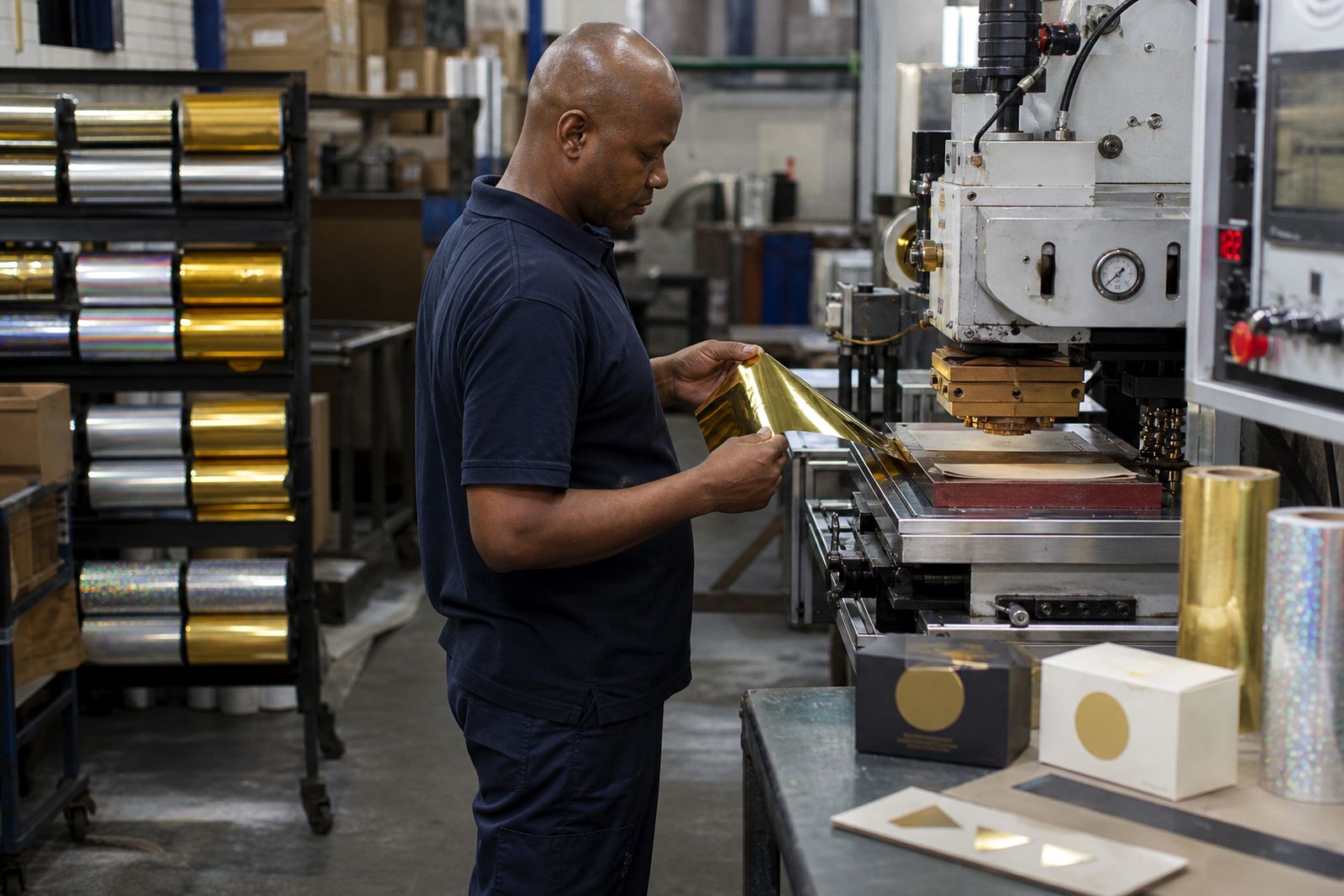
Start with a short press test rather than a full run. Use the same stock, same artwork size and same press conditions you expect to use on production. Typical starting points may sit around 90 to 130 degrees Celsius, but the exact window depends on the foil, substrate and press.
- Check release on solid areas and fine lines
- Watch for over-transfer on sharp edges
- Confirm detail on halftones and small type
- Inspect the foil under angled light for pattern distortion
For timing and set-up detail, Temperature windows explained and Choosing release profiles are useful starting points.
Dies, pressure and make-ready
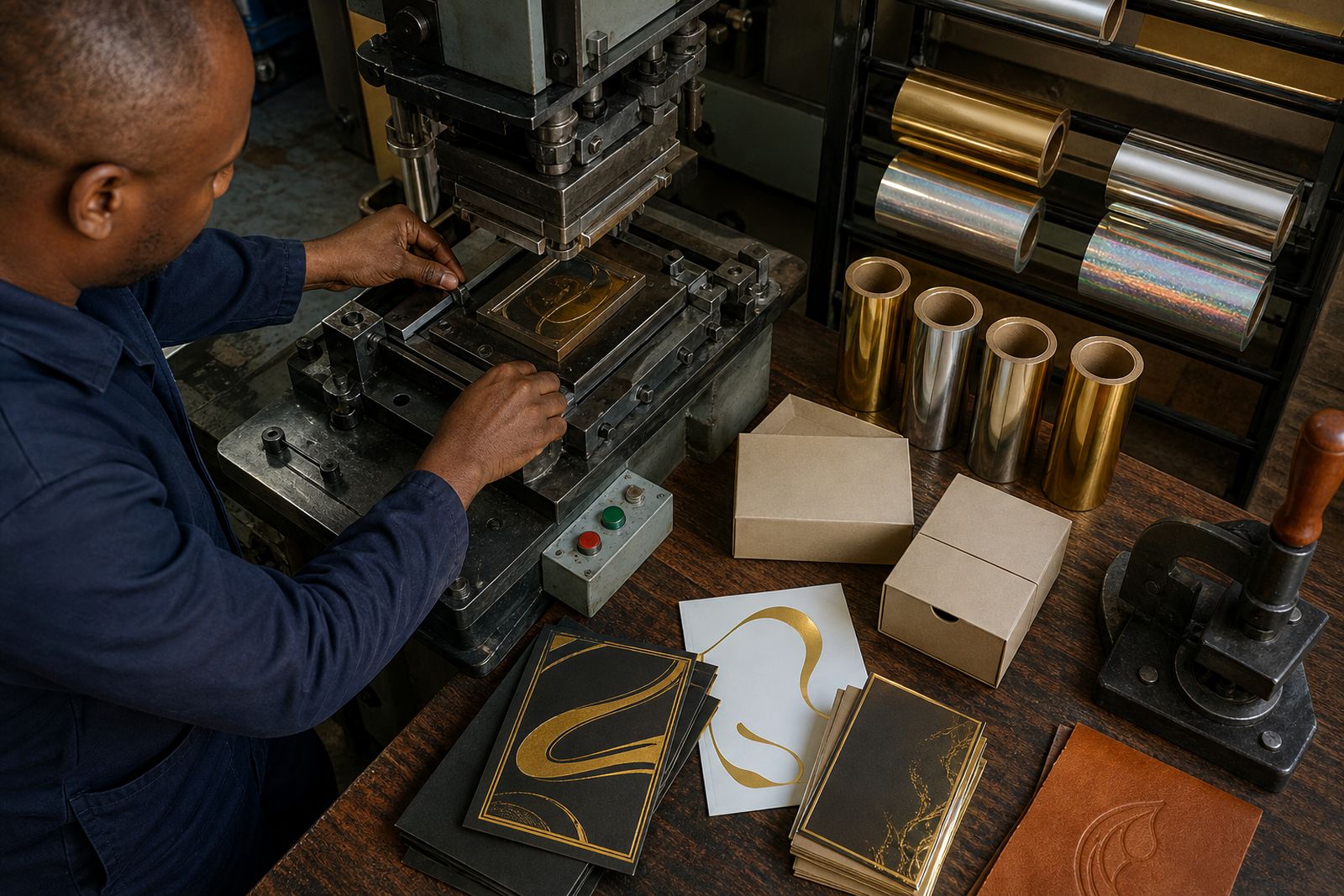
Holographic work is sensitive to die condition and pressure balance. Magnesium, copper and brass dies can all be used, but the artwork, run length and press type should guide the choice. A clean edge is easier to hold when the die face is prepared properly and the press pressure is even.
On platen, cylinder and roll-to-roll presses, the make-ready should account for dwell, pressure and substrate recovery. Too little pressure can leave patchy transfer. Too much can flatten the pattern or mark the stock. If you are checking tooling, the die prep checklist is a practical place to start.
Choosing the right finish
Not every design needs diffraction. If the message needs clarity first, metallic gold, silver, copper or satin foils may be the better option. If colour accuracy matters more than visual sparkle, pigment foils can give a flatter, more controlled result. For leather, plastics and textiles, the foil must also suit the material, because the surface energy and texture change how the foil behaves.
| Use case | What to consider |
|---|---|
| Security print | Pattern visibility, repeat control and line sharpness |
| Youth brands | Artwork balance and how much motion the pattern adds |
| Labels and cartons | Legibility, adhesion and press speed |
| Leather and special substrates | Surface texture, heat sensitivity and release profile |
If you need a sample pack or press-side guidance, ask through the contact form. For related practical notes, see Narrow-Web Label Tips and Storage and Shelf Life.
What our Hot Stamping Foil customers say
Verified Google reviews
Also worth a look
Ask about a foil for your job
Send a note through our contact form with the substrate, the press you run (platen, cylinder or roll-to-roll), the finish you are after and the run length, and we will come back with a foil grade, a sample and a quote.
Open the contact form